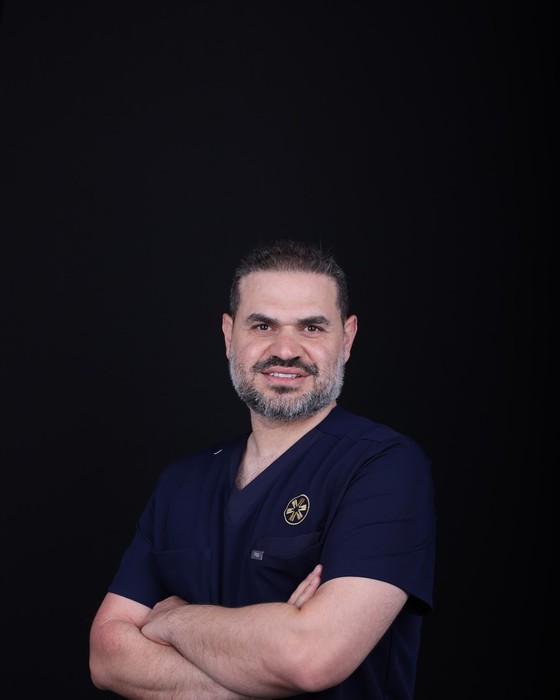

Oral & maxillofacial surgeon
Plans and performs implant surgery, bone grafts, sinus lifts, wisdom-tooth and other surgical extractions in the clinic's operating rooms, after a CBCT scan. About three decades of practice in Russia, Syria and the UAE.
Dental implants with an oral & maxillofacial surgeon, Dr. Firas Osman.
WhatsApp+971 4 342 4444Your first consultation is complimentary.
Related: what a CBCT scan is
Related: Can Teeth Grow Back? Where the Tooth Regrowth Drug Stands in 2026
The first visit is an examination, a 3D scan where needed and a written plan. Nothing is booked for surgery until you have agreed to it.

Filmed at Creative Arts in Jumeirah: a full-arch implant bridge, its fitting and the final result.

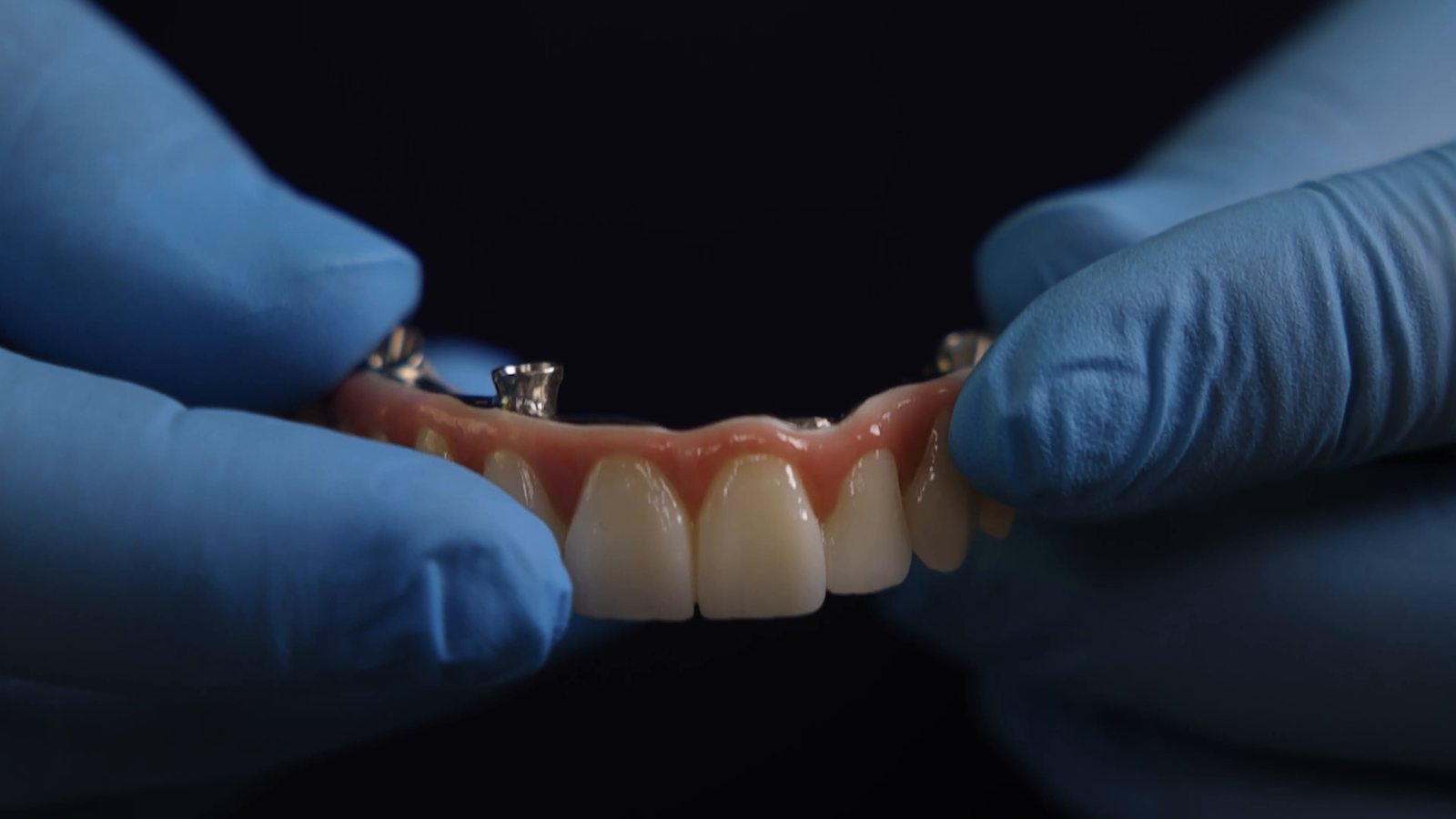

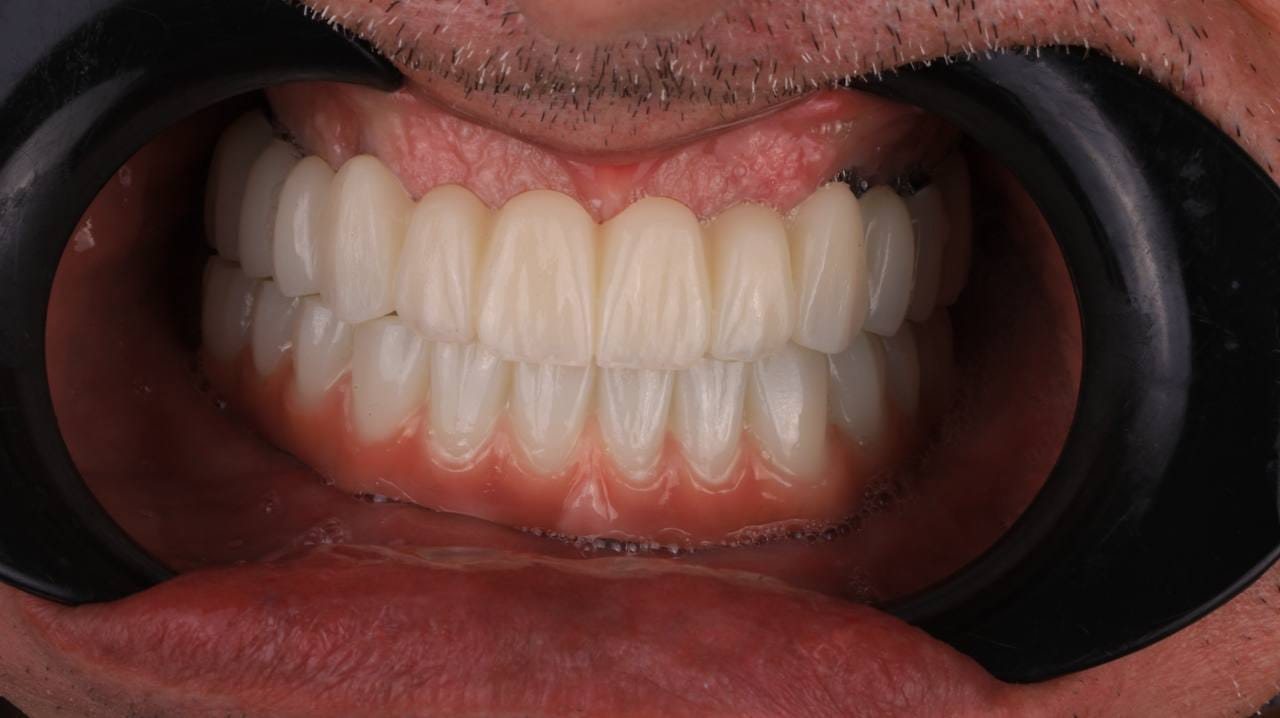
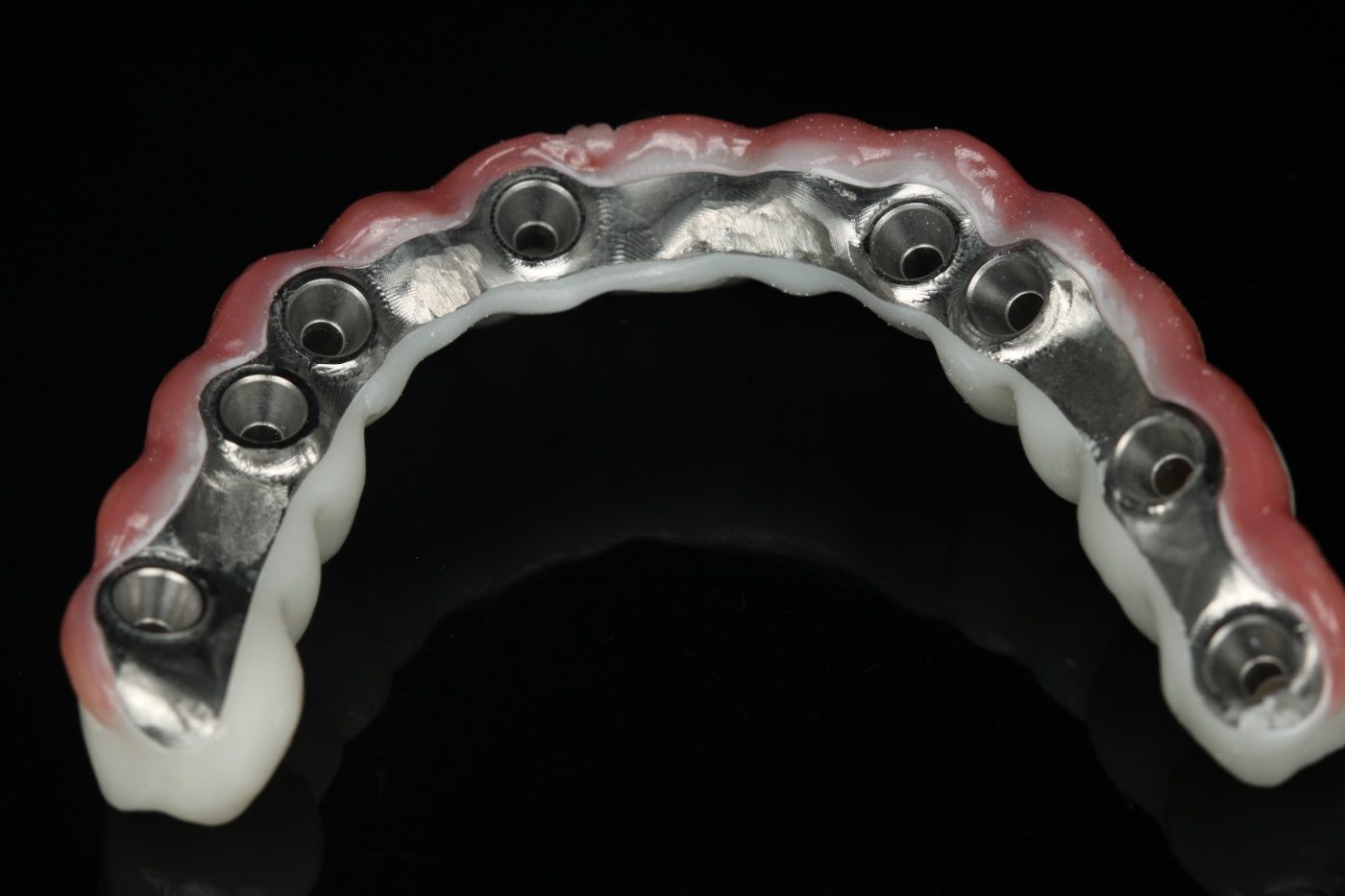
Designed in the clinic and made by hand in Creative Art Dental Lab, in the same building in Jumeirah, Dubai.


Your surgeon
Oral & maxillofacial surgeon
Plans and performs implant surgery, bone grafts, sinus lifts, wisdom-tooth and other surgical extractions in the clinic's operating rooms, after a CBCT scan. About three decades of practice in Russia, Syria and the UAE.
Implant surgery worries people more than any cosmetic treatment. These are the usual concerns and what the clinic does about each.
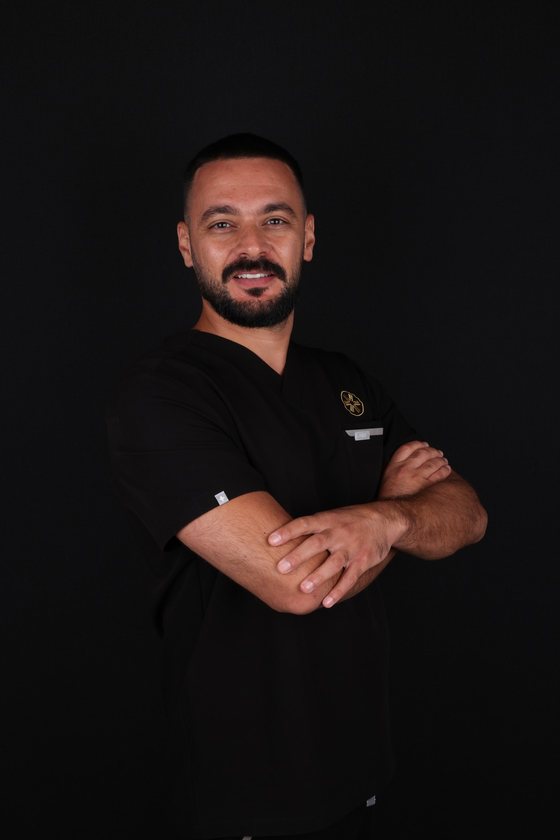
Dr. Khalid Saeed and Dr. Kinan Bonni also plan and place implants; see Dr. Firas Osman's profile.


Laboratory photographs show work on models, not patients.
An implant is a titanium post placed in the jawbone to replace a tooth root; once bone bonds to it, usually over 3–6 months, it carries a crown or bridge. Each implant is planned from a 3D CBCT scan, and your written plan lists exactly what is included for your case (implant, crown, any bone graft).
Who treats you here Dr. Firas Osman Oral & Maxillofacial Surgeon · Dr. Khalid Saeed Co-founder & Dentist · Dr. Kinan Bonni Dentist
Every dentist’s licence can be checked on the DHA Sheryan medical directory.
Implant surgery is planned with a 3D scan and carried out by an oral & maxillofacial surgeon, Dr. Firas Osman; the crowns and bridges are made in Creative Art Dental Lab, in the same building.
Implants are placed under local anaesthetic, so most people feel pressure rather than pain; IV sedation is available for anxious patients after assessment.
Tell us what you would like to change. A dentist reviews it, and you receive a written plan with prices before any treatment.
Tell us what you would like to change. We reply on WhatsApp or by phone during opening hours.
Prefer to chat? Send a photo on WhatsApp
Four things that change how your implant is planned, placed and finished here.
Dr. Firas Osman, an oral and maxillofacial surgeon, works alongside Dr. Khalid Saeed and Dr. Kinan Bonni. Straightforward implants and complex bone work are planned by the same team.
Every implant is planned on a CBCT scan against where the finished tooth must sit. Where the case calls for it, a surgical guide is 3D-printed from that plan in our laboratory.
Creative Art Dental Lab, in the same building, makes the crown, bridge or full-arch bridge. For a front tooth, the ceramist can see your teeth in person to match the shade.
The scan decides whether you need a graft, and whether an implant can go in when a tooth is removed. Neither is promised before the examination.
Implants replace anything from one tooth to a whole mouth. Start from what is missing, how much bone is left and whether an existing implant needs attention.
A single implant with an abutment and a crown, shade-matched to the teeth beside it.
Protecting bone and gum shape, what you wear while it heals and how the crown is matched.
Neighbouring gaps can often be restored with a bridge on fewer implants than missing teeth.
A fixed full-arch bridge on four implants, the back two angled to use the bone that remains.
Every option for replacing all the teeth in one or both jaws, side by side.
How a CBCT scan, digital plan and printed surgical guide transfer the plan to the mouth.
Laughing gas, tablet or IV sedation, chosen after a medical review; general anaesthesia, if needed, is arranged in a hospital.
Loose crowns, bleeding gums around an implant, or implants placed elsewhere or abroad.
An implant has three parts: the fixture, a titanium post inside the bone; the abutment, the connector that passes through the gum; and the restoration, the crown or bridge you see. What makes it work is osseointegration, living bone bonding to the implant surface. It typically takes three to six months and cannot be hurried: loading an implant before it has integrated is one of the common causes of early failure.
When a tooth is lost, the bone that held it starts to shrink, fastest in the first year, because bone keeps its volume in response to the load passed through a root. A conventional bridge replaces the visible tooth but sends no load into the bone under the gap, and a denture rests on the gum and can speed up the shrinkage. An implant carries biting load into the bone much as a root does, which is why it helps keep the ridge, and over the years the support it gives to the lips and lower face.
Most adults with a missing tooth can be assessed for an implant. Health, gums and bone decide whether it is the right choice now, later or not at all.
Timings are typical for a single implant without grafting. Your written plan gives your own sequence; the dental implant process guide covers each stage in more depth.
The scan shows bone height, width and density, and the position of the nerve in the lower jaw and the sinus floor in the upper. Placing an implant from a flat X-ray would mean estimating anatomy that must not be estimated.
Visit 1The implant position is planned from where the finished crown must sit, not where the bone is easiest to drill. You receive an itemised written plan with alternatives before committing.
Before any surgeryThe site is prepared to precise dimensions and the implant placed to a measured insertion torque: too little and it lacks stability, too much and the bone can be compressed. Sedation can be added if you need it.
Usually under an hourBone integrates with the implant. Where a tooth is missing from the smile, a temporary tooth can normally be worn during this period, so you are not left with a gap.
Typically 3–6 monthsA digital scan of the implant goes to Creative Art Dental Lab in our building, where the crown is designed and made. For a front tooth, the shade can be checked with the ceramist present.
Lab time typically 3–5 working daysThe crown is fitted and the bite adjusted. Maintenance visits then check the gum around the implant; aftercare is set out in the implant aftercare guide.
Then regular reviewsA graft is needed when the remaining bone cannot hold an implant securely. It adds months and cost, so the 3D scan decides, not habit. Where angled or shorter implants can achieve stability without grafting, that is discussed with you.
| What it does | Usually considered when | What it adds | |
|---|---|---|---|
| Socket preservation | Graft placed in the socket when a tooth is removed | An implant is planned later and the socket walls are thin | The least invasive graft; preventing bone loss is easier than rebuilding it |
| Ridge augmentation | Widens or builds up a ridge that has shrunk | A tooth has been missing for years and the ridge is too narrow | Extra healing time before or alongside the implant |
| Sinus lift | Adds bone height under the sinus in the upper back jaw | The sinus has expanded down after back teeth were lost | Extra healing time; crestal or lateral approach chosen from the scan |
A 2014 Cochrane review of sinus augmentation found that no technique was clearly better than another, and that short implants can be an alternative with fewer complications in some cases. Results vary between patients. Recovery is covered in our bone grafting and sinus lift guide.
Sometimes, and it depends on the case. An implant can occasionally be placed in the same appointment as the extraction (immediate placement), and a temporary tooth can occasionally be attached soon afterwards (immediate loading). Both need no active infection, enough bone around the socket and an implant that is firmly stable when it goes in. Many cases do better when the socket heals first, sometimes with a graft to keep the bone, and the implant is placed later.
Your dentist decides this from the examination and 3D scan; it is never promised beforehand. Our guide to immediate implants explains the trade-offs.
Creative Arts has its own operating rooms for minor and major oral surgery and for implant surgery — implants, bone grafts, sinus lifts, surgical extractions and wisdom teeth. Oral & maxillofacial surgeon Dr. Firas Osman assesses and plans surgical cases, with 3D (CBCT) imaging and, where the case calls for it, surgical guides 3D-printed in our own laboratory.
Our operating rooms · IV sedation · Dental anxiety · When general anaesthesia is needed
The implant is placed in the clinic; the crown or bridge it carries is designed and made in the laboratory in the same building, so planning, shade and fit are checked by people working side by side.


Dr. Firas Osman assesses and plans surgical and bone-grafting cases; Dr. Khalid Saeed and Dr. Kinan Bonni plan and place implants and look after the teeth that go on them.
A typical course after a single implant. Grafting or several implants can lengthen each stage.
Bite on gauze as directed and use ice on and off. Do not rinse hard, spit or use a straw, which disturb the clot. No smoking.
Day 1Swelling and some bruising are normal. Eat soft, cool food and take the medication you were prescribed.
Days 2–3Swelling subsides. Most people return to work within two to three days after a single implant.
Days 4–7Bone integrates with the implant, then the final crown or bridge is fitted.
Months 3–6Pain that increases after the third day instead of easing; swelling that worsens after day four; bleeding that does not stop with pressure; fever, or a bad taste with discharge; or any feeling that the implant moves. The clinic is open daily 10:00–20:00. Facial swelling with difficulty breathing or swallowing needs a hospital emergency department straight away.
A 2019 systematic review in the Journal of Dentistry estimated 10-year implant survival at about 96% (about 93% in a stricter sensitivity analysis), lower in patients aged 65 and over. These are study averages, not a promise for any one patient. The implant itself is meant to stay long term; the crown on it may need replacing over the years. See how long implants last.
It is the largest risk factor you can change, and it raises the chance of healing problems and of inflammation around the implant later.
High blood sugar slows healing and integration, and raises the risk of infection.
Peri-implantitis, inflammation with bone loss around an implant, is a main cause of late failure. Bleeding gums are treated before an implant goes in.
An implant has no ligament around it, so it has no shock absorber. A guard protects the implant and its crown from grinding forces.
Implants need cleaning with suitable instruments; ordinary metal scalers can scratch the surface. See implant cleaning and maintenance.
Nothing on this list is added without being written into your itemised plan first. The dental implant cost guide explains how to compare quotes fairly.
An implant is not automatically the answer. This is how the three main options compare; the honest choice depends on your bone, health and priorities.
Over a long horizon an implant often becomes the more economical choice, but not always. Compare in detail in implants vs bridges and implants vs dentures; if a damaged tooth might still be saved, see root canal vs implant.
If the gums are actively inflamed, an infection is present, diabetes is poorly controlled or the bone cannot be rebuilt predictably, an implant placed now carries more risk than benefit. In those cases we treat the cause first, suggest a different option such as a bridge, or refer you to your doctor before surgery. Saving a natural tooth, where it is realistic, comes before replacing it.
One missing tooth? How a single implant compares with a bridge or leaving the gap, each step from 3D scan to crown, and…
Two to four teeth missing side by side? How implant bridges work in Dubai, how many implants you need, what bone loss…
Replacing a front tooth with an implant in Dubai: protecting bone and gum shape, what you wear while it heals, and how the…
How 3D guided implant surgery works in Dubai: CBCT and intraoral scans, digital planning and a surgical guide printed in our…
Implant surgery under sedation in Dubai: local anaesthesia plus laughing gas, tablet or IV sedation in our operating rooms…
All-on-4 vs All-on-6 compared by a Dubai implant team: bone needed, tilted implants, support, cleaning and cost direction…
Zygomatic implants explained: how they anchor in the cheekbone, who is considered for severe upper-jaw bone loss, the risks…
Immediate implant placement and loading explained: how they differ from early and delayed timing, what has to be true, the…
The dental implant process step by step: consultation, CBCT scan, plan, any grafting, surgery, healing, abutment, crown and…
Who can get dental implants: how diabetes, smoking, osteoporosis medicines, gum disease, bone loss and age affect…
Does dental implant surgery hurt? What you feel under local anaesthetic, when sedation helps, what recovery feels like day…
How long do dental implants last? Why the implant usually outlasts its crown, what shortens an implant's life, and the…
Signs of a failing dental implant: what bleeding, pus, recession, pain or movement can mean, early vs late failure, and…
Dental implant aftercare stage by stage: the first 24 hours, the first two weeks, the healing months and long-term cleaning…
Types of dental implants explained: single, implant bridge and All-on-4 full-arch, immediate or delayed timing, guided and…
Socket preservation in Dubai: a bone graft placed when a tooth is removed to limit jaw shrinkage before an implant. Who…
Ridge augmentation in Dubai rebuilds a jaw too thin or too low for implants: guided bone regeneration, block grafts, CBCT…
Sinus lift surgery in Dubai to add bone height for upper back-teeth implants: crestal vs lateral approach, CBCT planning…
Dental bone graft types explained: your own bone, donor bone, bovine and synthetic grafts, plus membranes. Pros, cons and…
Recovery after a dental bone graft or sinus lift, day by day: swelling, graft granules, sinus precautions, eating, exercise…
Professional dental implant cleaning in Dubai with GBT: why implants need maintenance, early signs of peri-implantitis…
Dr. Firas Osman, oral & maxillofacial surgeon at Creative Arts Dubai: implant surgery, bone grafts, sinus…
How to choose an implant dentist in Dubai: CBCT planning, who places the implant, surgical setting and sedation, implant…
Bitewing, periapical, panoramic (OPG) and 3D CBCT dental scans explained: what each shows, when it is justified, radiation…
Dental implants in Jumeirah 3, Dubai: an oral surgeon on site, 3D CBCT planning, operating rooms with sedation options, and…
A smile makeover with missing teeth in Dubai: combining implants or bridges with veneers and crowns, the order of treatment…
What sets the cost of All-on-4 per arch in Dubai: implant count, extractions, grafting, provisional teeth and bridge…
Replacing a missing molar with an implant in Dubai: sinus and nerve checks on CBCT, when a sinus lift is needed, healing…
Implant done in Turkey or abroad? How a crown or repair is done in Dubai: checking the implant, identifying its system…
All-on-6 in Dubai: a fixed full-arch bridge on six implants, planned on a CBCT scan, with sinus lift or grafting only if…
Same-day dental implants in Dubai: implant and a fixed temporary tooth or bridge on the same day when bone and stability…
Clinical statements on this page are consistent with these independent sources. They describe averages from studies, not a promise for any one patient.
Creative Arts offers same-day dental implants in Dubai: the implant is placed and a fixed temporary tooth or bridge is attached on the same day, which is called immediate loading. It is offered only when bone quality and implant stability allow, decided after a CBCT scan and examination and confirmed during surgery. Nobody is promised it before assessment.
This is different from placing an implant on the day of an extraction; immediate implants explains immediate placement and immediate loading. The price depends on your case and is written in your treatment plan after the examination. See: All-on-4. Everything else is on same-day implants.
Creative Arts offers All-on-6 full-arch implant bridges in Dubai alongside All-on-4: a fixed, screw-retained bridge for a whole jaw, carried on six implants instead of four. Which one suits you is not decided in advance; it depends on your bone, your bite and the CBCT scan.
| Factor | Points towards four implants | Points towards six implants |
|---|---|---|
| Bone at the back | Limited bone behind, so the two back implants are angled to use bone further forward | Enough bone in more positions, or bone that can be provided by a sinus lift or graft |
| Biting force | An ordinary bite | A heavy bite or grinding, where spreading the load over more implants helps |
| Bridge support | Shorter support at the back | Support that reaches further back |
Either way, Creative Art Dental Lab in the same building makes the final bridge with screw-access channels so it can be removed at reviews, and pink gingival ceramic where gum and bone have been lost; see implant restorations. A fixed temporary bridge may be attached on the day when stability allows. Full-arch treatment is priced in your written plan after the scan. For a detailed comparison read All-on-4 vs All-on-6, and for the treatment itself All-on-6 implants.
Dr. Firas Osman has joined the implant team at Creative Arts as Oral & Maxillofacial Surgeon. According to his published professional profile:
At Creative Arts he assesses and plans surgical cases on CBCT: implants where bone is limited, sinus lifts and bone grafts, full-arch treatment, and the decision on whether a fixed temporary can be attached the same day. Dr. Khalid Saeed and Dr. Kinan Bonni also place implants, so simple and complex cases are planned within the same team.
Surgery takes place in the clinic's own operating rooms under local anaesthetic, with conscious sedation where needed; see implants under sedation. General anaesthesia is not given at the clinic; when a case needs it, Dr. Firas Osman arranges for it to take place in a hospital. His full surgical scope is on oral and maxillofacial surgery.
Searches for dental implant cost in Dubai turn up figures that are hard to compare, because each quote includes different things. This is how you get to your own number:
All-on-4, All-on-6 and same-day implants are priced in the written plan after the scan. The price depends on your case and is written in your treatment plan after the examination. See: dental implant cost · implant vs bridge cost · dental prices in Dubai.
Laser dental implants are a common search in Dubai, but the implant itself is not placed with a laser. In standard practice the site is prepared in the bone with calibrated surgical drills and cooling, often through a printed guide made from a 3D plan, and the implant is then fitted into place.
How you feel afterwards depends on the bone, the number of implants and any graft, not on the tool used on the gum; does implant surgery hurt? describes what most people feel day by day. The role of lasers is covered in more detail in laser dental implants.
When you compare any dental implant clinic in Dubai, these are six things you can check for yourself, here and elsewhere, before you book surgery:
| Check | Why it matters | At Creative Arts |
|---|---|---|
| CBCT before planning | A flat X-ray does not show bone width or exactly where the nerve and sinus are | Every implant is planned on a 3D scan |
| Who performs the surgery | Complex cases need surgical experience | Dr. Firas Osman, Oral & Maxillofacial Surgeon, with Dr. Khalid Saeed and Dr. Kinan Bonni |
| Where surgery happens, and comfort options | Grafts and sinus lifts need a surgical setting | Own operating rooms; local anaesthetic with conscious sedation where needed; general anaesthesia is arranged in a hospital |
| Who makes the final tooth | A crown is more predictable when it is designed with the implant plan | A lab in the same building makes crowns and full-arch bridges |
| A written, itemised plan | Verbal figures cannot be compared | Each stage priced, with alternatives |
| Maintenance after fitting | Peri-implantitis is a common cause of late failure | Implant cleaning and maintenance at regular reviews |
More criteria are in how to choose an implant dentist in Dubai, and you can see where surgery happens on our operating rooms.
An implant plan is a set of decisions made before surgery, and each one can be checked. At Creative Arts, Dr. Firas Osman, Oral & Maxillofacial Surgeon, reviews plans made here and plans patients bring from other clinics. A sound plan states clearly:
Our guide to reading a treatment plan explains the rest of the document, and choosing an implant dentist lists the questions to ask. The price depends on your case and is written in your treatment plan after the examination. See: implant cost. You can send any plan for a surgeon's second opinion.
Once the crown or bridge is fitted, the bite is checked and you receive written aftercare. An implant is meant to stay long term, and what happens over the following years decides most of that.
A missing tooth can be left, replaced on price alone, or planned from the final tooth backwards. This compares approaches, not clinics.
| Postponing treatment | Choosing the lowest quote | How Creative Arts plans it | |
|---|---|---|---|
| Appearance | A visible gap, and neighbouring teeth can drift or tip into it | Depends on who makes the crown and whether it is matched to your teeth | Crown made in the lab in the same building; front teeth shade-matched in person |
| Risk of redoing work | Bone under the gap shrinks, fastest in the first year, which can mean a graft later | Higher if the implant is placed without a 3D scan or a plan for the final tooth | Every implant planned on a CBCT scan from where the final tooth must sit |
| Number of visits | None for now | Can look shorter if healing time is squeezed | Set by your bone and healing; bone usually needs 3–6 months to bond to the implant |
| Control over shade and shape | Not applicable | Ask who designs the crown and whether it is planned with the implant | Designed with the implant plan, made and adjusted in the same building |
| Aftercare | Watch the teeth around the gap | Ask who maintains the implant and keeps your records | Review, written aftercare and maintenance with implant-safe instruments |
More detail: dental implant cost, how to choose an implant dentist and implants vs bridges.
Patients often ask
Dental implants: the questions people ask before replacing missing teeth
Our dentists answer your questions on All-on-4, bone grafts, sinus lifts, pain, healing and risks.
Related guide
Dental Implants in Dubai for UK Patients: How the Two-Trip Plan Works
Dental implants in Dubai for UK patients: usually two trips, placement then the crown after typically 3–6 months of healing.
There is no official ranking, so compare what you can check: the dentist’s DHA licence on the Sheryan register, before-and-after photos of their own patients, and a written, itemised price before treatment starts. For implants, also ask who places them, whether the surgery is planned on a 3D scan and what the price includes. Book on WhatsApp: +971 56 677 7537.
Sometimes, if bone quality and implant stability allow. This is assessed on a CBCT scan and at examination before surgery, then measured during it. If stability is sufficient, a fixed temporary tooth or bridge is attached the same day and the final teeth follow after healing. If it is not, the implant heals first under a different temporary, and this possibility is explained before your appointment.
A CBCT scan shows the height and width of bone at each position, and where the sinus sits in the upper jaw and the nerve in the lower. From that scan and an examination of your bite, the dentist works out how many implants your bone can carry and whether a sinus lift or graft would be needed to reach six. You receive both options in writing, each with its cost, before deciding.
Dr. Firas Osman assesses and plans the surgical cases, particularly where bone is limited, a sinus lift or bone graft is needed, a whole jaw is being replaced, or a same-day temporary is being considered. Routine single implants may also be placed by Dr. Khalid Saeed or Dr. Kinan Bonni. Your treating dentist is named in your written plan after the examination and CBCT scan.
Additional implants, bone grafting, a sinus lift, an extraction or temporary teeth during healing can raise the total. Every item and the reason for it are written down before you commit, and nothing is added that is not in the plan.
Ask exactly which step the laser is used for, gum or bone, how the bone will be prepared for the implant, whether the implant is planned on a CBCT scan, and whether guided surgery with a printed guide will be used. Ask for a written plan that names each stage and its cost. Clear answers about the bone and the planning matter more than the name of the tool.
Ask whether the implant will be planned on a 3D CBCT scan, who will perform the surgery and what experience they have with cases like yours, where it takes place and which anaesthesia and sedation options are available, who makes the final tooth, which stages appear in the written plan with their prices, and what maintenance follows. A clinic that answers clearly and in writing makes comparison much easier.
Yes. Send the written plan with the CBCT scan, or the X-ray if no CBCT was taken, on WhatsApp or by email. Dr. Firas Osman, Oral & Maxillofacial Surgeon, checks the bone, the nerve and sinus positions, the number and position of the implants and any graft, and tells you what the images support and what needs an examination. If the plan is sound, he says so.
You can start without coming in: send a photo or a recent X-ray on WhatsApp for a free first opinion. When you do visit, the first consultation is free, it starts with talking rather than treatment, and you can agree a stop signal. Sedation is used only where it helps and is chosen after a medical-history review; implants themselves are placed under local anaesthesia.
A local dentist can usually handle routine cleaning and check-ups. Before you fly, Creative Arts gives you a summary of the treatment carried out and aftercare instructions, which your local dentist will need. If something feels wrong after you travel, send photos on WhatsApp at +971 56 677 7537, and the clinic can tell you what to do next.
It can. The bone that held the tooth starts to shrink, fastest in the first year, because it is no longer loaded through a root, and neighbouring teeth can drift into the gap. A delay does not always rule out an implant, but it can mean a bone graft first. A CBCT scan shows how much bone you have now.
It is done under local anaesthetic, so you should feel pressure rather than pain during the procedure. Most people describe the following days as similar to having a tooth out, managed with over-the-counter pain relief. Swelling peaks at about 48–72 hours and then settles. If you are anxious, sedation can be arranged after a medical review; see does implant surgery hurt.
From placement to the final crown is typically three to six months, because bone has to integrate with the implant. A single implant is usually placed in under an hour, and a temporary tooth can normally be worn while it heals. A bone graft or sinus lift first adds several months, which your written plan sets out.
Only if there is not enough bone to hold the implant securely, and that is decided from your CBCT scan rather than by looking. Many cases need no graft. Where the bone is borderline, angled or shorter implants can sometimes avoid grafting. If a graft is needed, it is priced and scheduled as its own stage.
A 2019 systematic review estimated 10-year implant survival at about 96% in its main analysis and about 93% in a stricter one, with lower figures in people aged 65 and over. Those are averages. The implant is designed to stay long term; the crown on it may need replacing. Smoking, uncontrolled diabetes and untreated gum disease are the main threats.
Age on its own is rarely the deciding factor; bone quality, general health, medicines and healing capacity matter more. Studies do show somewhat lower long-term survival in people over 65, so the assessment looks carefully at those factors. For a whole arch, options such as All-on-4 are planned around the bone that remains.
Often yes, but both raise the risk. Well-controlled diabetes is usually compatible with implants; poorly controlled blood sugar slows healing and raises infection risk, so your dentist may coordinate with your doctor. Smoking does not rule implants out automatically, but stopping before and after surgery helps. Your individual risk is discussed honestly at the assessment.
From a single tooth to a full mouth. One implant can carry one crown; a few implants can carry a bridge across several missing teeth; four or more implants in a jaw can carry a fixed full-arch bridge. The number for your jaw comes from the 3D plan; see full mouth dental implants.
The total then depends on how many implants and teeth are involved, whether grafting or extractions are needed, the type of crown or bridge, and whether you choose sedation. Your written plan lists exactly what is included for your case (implant, crown, any bone graft), with alternatives, so you can compare it fairly.
That depends on your insurer and your plan; many policies limit or exclude implants. Ask your insurer what your policy covers, and ask us for the written, itemised plan, which sets out each stage of the treatment separately so you can check it against your policy.
Bleeding or swelling of the gum around it, pain, a bad taste, a crown that moves, or metal showing as the gum recedes. A loose crown is often a loose screw and is usually fixable; it is different from a loose implant. See implant repair and signs of a failing implant.
Usually at least two stages, months apart. First come the assessment with a 3D CBCT scan and the placement under local anaesthetic; the bone then heals, typically for about 3–6 months, or longer after grafting. The crown is then scanned and fitted, usually in two visits about a week apart. Assessment and placement can sometimes be close together when no extraction or graft is needed. Plan a quiet few days after surgery.
It can work if the plan allows for the healing months and for maintenance after you return home. Implants usually involve two stages several months apart, and someone has to look after them for years. Our guide compares dental implants in Dubai and Turkey.
Creative Arts has a single clinic on Jumeira Street (Jumeirah Beach Road). Ask about parking when you book.
Our clinic in Jumeirah Open in Google Maps · Rated 4.8 on Google from 242 patient reviews (October 2026) — read them
Tell us what you would like to change. The clinic replies within working hours with an appointment time.
Or call us +971 4 342 4444Or message us on WhatsApp
A consultation ends with a diagnosis and a written, itemised plan — not a sales pitch. Book online, message us on WhatsApp, or call the clinic.
Implants replace anything from one tooth to a whole mouth. The starting point is what is missing, how much bone is there, and whether any existing work needs attention.
A single implant with an abutment and a crown. The crown is made in our building and shade-matched to the teeth beside it. See what a single implant quote should include.
Neighbouring gaps can often be restored with a bridge on fewer implants than missing teeth. Compare a conventional dental bridge in our implant vs bridge guide.
A fixed full-arch bridge on implants, such as All-on-4, or another full mouth implant option. Dentures remain an option: implants vs dentures.
The 3D scan shows whether bone can hold an implant. If not, bone grafting or a sinus lift may come first.
Loose crowns, bleeding or swollen gums around an implant, or implants placed abroad: implant repair and peri-implantitis treatment.
Sometimes. An implant can occasionally be placed in the same appointment as the extraction (immediate placement), and a temporary tooth can occasionally be attached soon afterwards (immediate loading). Both depend on there being no active infection, enough bone around the socket, and the implant being firmly stable when it is placed. Many cases are better served by letting the socket heal — sometimes with a graft to preserve the bone — and placing the implant later.
Your dentist decides this from the examination and 3D scan; it is never promised before then. For a whole arch, the All-on-4 page explains how a provisional bridge is used during healing.
Rated 4.8 on Google from 242 patient reviews (October 2026).
Tap a film to play it. Ceramic veneers and implant bridges are designed, milled, layered and finished by Creative Art Dental Lab, then fitted in the clinic.
Often yes, if diabetes is well controlled. Poorly controlled blood sugar slows healing and raises the risk of infection and, later, of peri-implantitis around the implant. Your dentist will ask about your recent control and may coordinate with your doctor before surgery.
Smoking does not automatically rule implants out, but it raises the risk of healing problems, implant failure and gum inflammation around implants later. Stopping before and after surgery helps. The dentist will discuss your individual risk honestly at the assessment.
From a single tooth to a full mouth. One implant can carry one crown; a few implants can carry a bridge across several gaps; four or more implants per jaw can carry a fixed full-arch bridge. See full mouth dental implants.
Bleeding or swelling of the gum around it, pain, a bad taste, a crown that moves, or metal becoming visible as the gum recedes. A loose crown is often a loose screw and is usually fixable. See implant repair.
It can work if the plan allows for healing time and for maintenance after you return. Implants usually need two stages several months apart, and someone has to look after them for years. Our guide compares dental implants in Dubai and Turkey.