Measured, not guessed
Every gum assessment includes charting of pocket depth, bleeding, recession and mobility, with X-rays for the bone level. Without it, "your gums look fine" is an opinion rather than a finding.
Gums and bone hold everything else in place. Bleeding gums can be reversed early; later, treatment stops the damage and protects the teeth and implants you have.
The first visit is a gum examination with charting and X-rays where needed, then a written plan. Nothing is booked until you have agreed to it.
Designed in the clinic and made by hand in Creative Art Dental Lab, in the same building in Jumeirah, Dubai.
Related: Nicotine Pouches and Your Gums: What the Evidence Shows




Gum disease treatment starts with measuring it: periodontal charting of the pockets around every tooth and X-rays of the bone. Gingivitis is reversed with thorough professional cleaning and better home care. Periodontitis is treated by cleaning the root surfaces below the gum line, re-measuring after healing and regular maintenance. At Creative Arts in Dubai this is led by Dr. Taban Ameen, using Guided Biofilm Therapy.
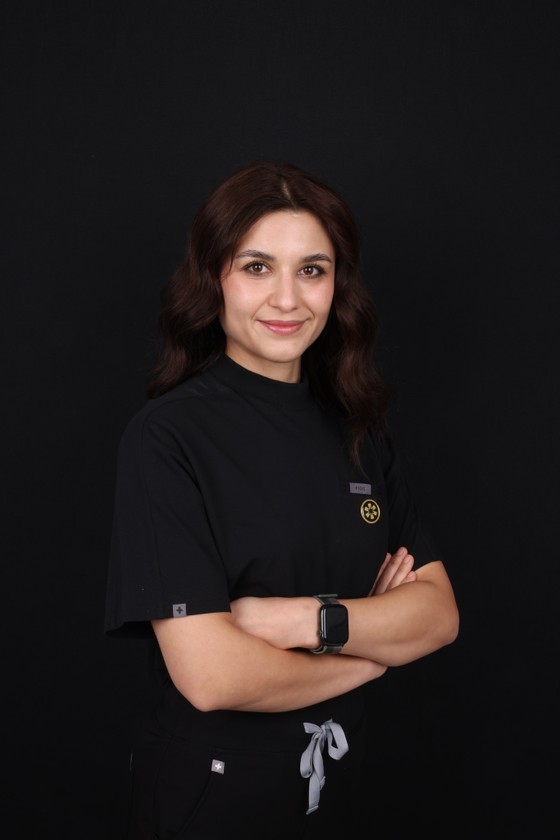
Who treats you here Dr. Taban Ameen Dentist
Every dentist’s licence can be checked on the DHA Sheryan medical directory.
Four things that change how your gums are assessed and treated here.
Every gum assessment includes charting of pocket depth, bleeding, recession and mobility, with X-rays for the bone level. Without it, "your gums look fine" is an opinion rather than a finding.
Biofilm is disclosed with a dye, removed with air, warm water and fine powder, and cleaned below the gum line where needed; ultrasonic scaling is kept for the tartar that remains.
Crowns, veneers and implants are only as stable as the gum and bone around them. We check gum health before any restorative or cosmetic plan, and will tell you when a smile makeover has to wait.
After treatment the pockets are measured again. That measurement decides the next step and how often you need maintenance, rather than a fixed six-month routine.
Treatment starts with periodontal charting and X-rays. Gingivitis is reversed with thorough professional cleaning and better home care; periodontitis is treated by cleaning the root surfaces below the gum line, re-measuring after healing and regular maintenance. At Creative Arts it is led by Dr. Taban Ameen.
Tell us what you would like to change. A dentist reviews it, and you receive a written plan with prices before any treatment.
Tell us what you would like to change. We reply on WhatsApp or by phone during opening hours.
Prefer to chat? Send a photo on WhatsApp
Biofilm (plaque) forms on teeth within hours. Where it sits undisturbed at the gum margin, the body responds with inflammation.
Gingivitis is that inflammation confined to the gum: redness, swelling and bleeding gums when you brush or floss. It is reversible with thorough cleaning; nothing has been permanently lost yet.
Periodontitis is what happens when the inflammation extends below the gum and starts destroying the ligament and bone that hold the tooth. Pockets deepen, giving bacteria a protected space a toothbrush cannot reach. Lost bone does not grow back on its own; treatment stops the process and stabilises the support that remains.
The difficult part is that periodontitis often causes little or no pain until it is advanced. Many people only notice when teeth begin to loosen or drift, which is late. The World Health Organization estimates that severe periodontal disease affects over a billion people worldwide, with poor oral hygiene and tobacco use as the main risk factors.
Early periodontitis is far easier to control than advanced disease. If you notice any of these, the useful next step is a full gum assessment rather than another routine clean.
Periodontal charting measures pocket depth at six points around every tooth, and records bleeding, recession and mobility. A healthy gum crevice is typically one to three millimetres deep; deeper readings with bleeding point to active disease.
X-rays show the bone level, which is what actually tells us how much support has been lost. Together, the chart and the X-rays stage the disease and become the baseline every later measurement is compared with.
Your dentist also asks about smoking, diabetes and medicines, because they change both the risk and the plan. If something points to a medical cause, such as bleeding that does not fit the gum picture, we will suggest you see your doctor.
Most cases respond well to the first stage. Your written plan sets out which steps you need and how many visits to expect.
Biofilm and tartar are removed from the root surfaces below the gum line so the tissue can tighten and pockets can shallow. For pockets, this is deep cleaning (scaling and root planing), usually under local anaesthetic, one area at a time.
1 to several visitsYou are shown how to clean between the teeth and along the gum margin with the right tools for your mouth. Treatment does not hold without it.
From day oneThe pockets are charted again once the gums have healed, usually some weeks later. This measurement, not a guess, decides what comes next.
After healingWhere deep pockets remain, further cleaning or a surgical gum procedure may be considered; your dentist explains whether it suits you and who would carry it out.
Only if neededPeriodontitis is controlled, not cured. Recall visits every three to four months are typical, because that is roughly how long the bacteria in a treated pocket take to re-establish.
Ongoing
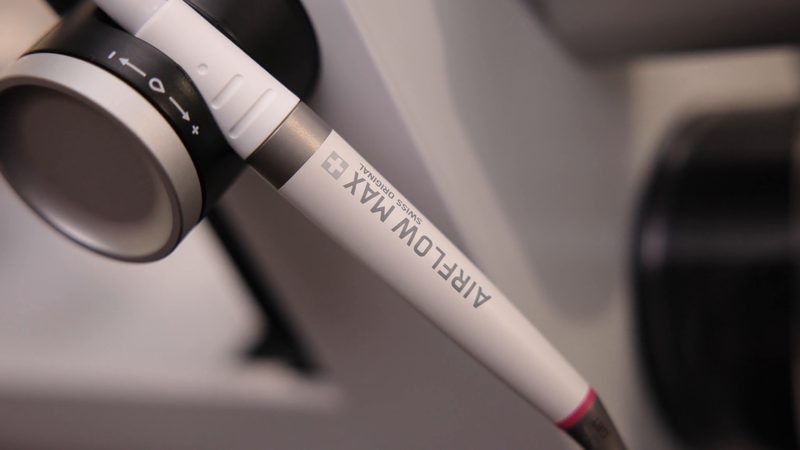
Guided Biofilm Therapy (GBT) is the cleaning protocol we use for gum care. The biofilm is first coloured with a disclosing dye so it can be seen, then removed with AIRFLOW air-polishing using fine powder and warm water. Where pockets need it, a fine nozzle cleans below the gum line. Ultrasonic scaling is used only for the tartar that remains, and the result is checked before you leave.
It is worth being clear about what the evidence says. A 2022 systematic review of erythritol air-polishing in non-surgical periodontal therapy found results comparable to other non-surgical methods, not better. GBT does not replace deep cleaning where pockets need it; it is the way the cleaning is carried out and maintained. See GBT vs traditional cleaning for the differences.
Listed from the most conservative upwards. Not everyone needs every step; the charting decides.
| Treatment | What it does | Usually for |
|---|---|---|
| Professional cleaning (GBT) | Removes biofilm and tartar above and just below the gum line | Healthy gums and gingivitis; maintenance after treatment |
| Deep cleaning | Cleans root surfaces inside pockets, under local anaesthetic | Periodontitis with pockets |
| Maintenance visits | Keeps treated pockets clean and re-measures them | Anyone treated for periodontitis, and implant patients |
| Surgical gum treatment | Gives direct access to deep pockets that did not respond | Selected cases after re-evaluation; may be considered |
| Gum graft | Covers an exposed root with gum tissue | Some cases of recession; may be considered |
| Laser gum contouring | Reshapes the gum margin | Excess gum tissue in a gummy or uneven smile, once gums are healthy |
Surgical treatment and grafting are discussed only where the assessment shows they would help; your dentist explains whether they suit you.
Gum recession exposes the root surface, which can cause sensitivity, a higher risk of root decay and teeth that look longer. Causes include brushing too hard with a hard brush, gum disease, naturally thin gum tissue and orthodontic movement beyond the bone. Recession does not reverse on its own. A gum graft may be considered for some cases, and your dentist will explain whether it suits you. Not every recession needs surgery: stable recession that causes no symptoms may only need a change in brushing technique and monitoring, and we will tell you when that applies.
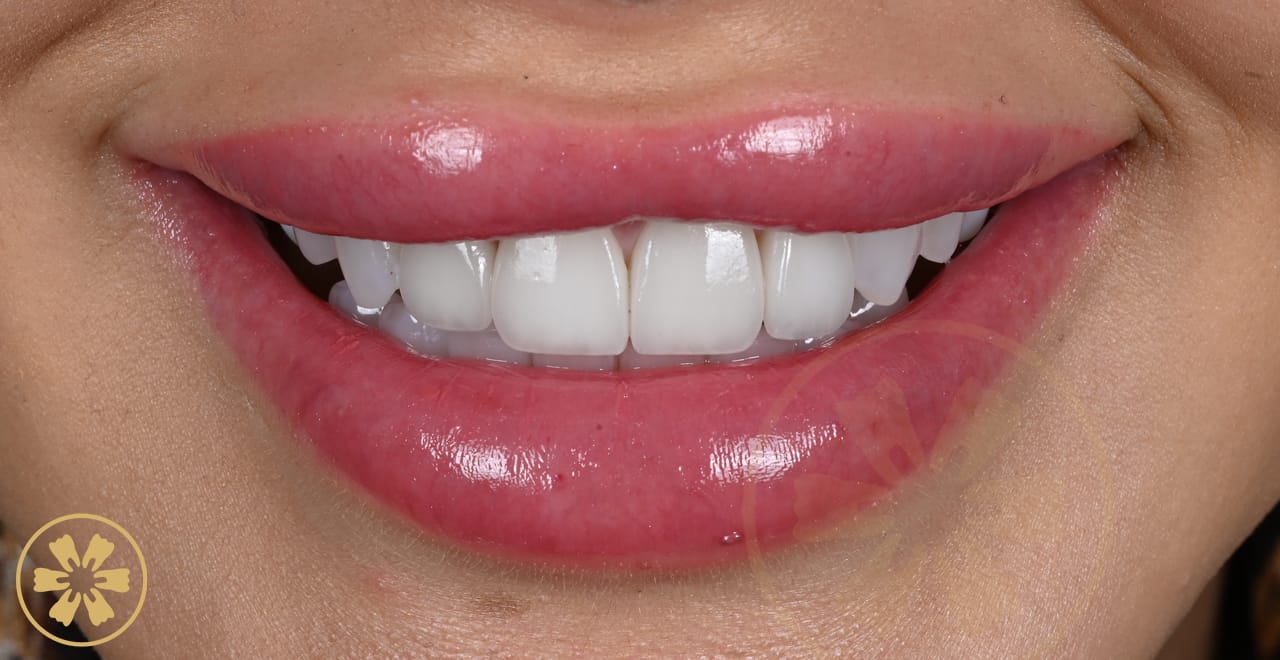
A gummy smile or an uneven gum line can dominate otherwise well-shaped teeth. The key question is why the smile is gummy: excess gum tissue, a very mobile upper lip or the position of the jaw. Only the first is treated by laser gum contouring; the others need a different approach, and contouring will not fix them. Our guide to gummy smile causes explains how the cause is identified.
A crown is only as stable as the bone holding the tooth, a veneer edge is only as clean as the gum it meets, and an implant can fail when the tissue around it becomes inflamed. That is why gum health is assessed before any restorative or cosmetic plan, and why we will sometimes say a smile makeover has to wait until the gums are treated. Building on an unstable foundation wastes money and can speed up the loss underneath.
Implants do not decay, but the gum and bone around them can become inflamed in the same way as around teeth.
Inflammation with bone loss around an implant is called peri-implantitis. Smoking, poor plaque control, uncontrolled diabetes and a history of gum disease raise the risk.
If you are planning dental implants, active gum disease is treated and stabilised before an implant is placed.
Implants need regular professional cleaning with methods that are safe on implant surfaces; see implant cleaning and maintenance.
Dr. Taban Ameen (laser and cosmetic dentistry, gum treatment) assesses, treats and maintains gum health, and carries out laser gum contouring where it is suitable.
Gum treatment is priced on what your charting shows, not as a fixed package. Your written plan itemises each stage; for cleaning alone see teeth cleaning cost.
When a regular clean is not enough: how deep cleaning (scaling and root planing) treats gum pockets in Dubai, what the…
How tartar forms, why it cannot be brushed or safely scraped off at home, and how a dentist removes calculus above and below…
Professional dental implant cleaning in Dubai with GBT: why implants need maintenance, early signs of peri-implantitis…
Scale and polish, GBT, air-polishing stain removal, deep cleaning and gum, implant or braces maintenance compared: what each…
GBT vs a traditional scale and polish, side by side: disclosing, air-polishing, how much scaling, comfort, and what each…
Six months is a starting point, not a rule. How often to have your teeth cleaned with gum disease, implants, braces, smoking…
Laser gum treatment in Dubai at Creative Arts: soft-tissue uses such as contouring and overgrown gum, why it does not…
What sets gum contouring cost in Dubai: the cause of a gummy smile, how many teeth, laser soft-tissue work or bone…
What sets gum treatment cost in Dubai: gingivitis or periodontitis, how many areas need deep cleaning, re-evaluation…
Clinical statements on this page are consistent with these independent sources. They describe averages from studies, not a promise for any one patient.
Many people search for a periodontist in Dubai when their gums bleed, recede or feel loose. At Creative Arts, gum care is provided by Dr. Taban Ameen, who is a dentist rather than a registered periodontist. She charts the gums, takes X-rays where needed and treats most gum disease in the order the evidence supports:
An opinion from a dentist registered in periodontics makes most sense for advanced or fast-progressing disease, or when gum surgery is needed, and Dr. Taban Ameen explains if your findings point that way. Our guide to choosing gum care in Dubai sets out the difference, gingivitis versus periodontitis explains the stages, and gum treatment cost shows what the written plan covers.
Patients often ask
Gums: what people ask about bleeding, receding and gum disease
Bleeding gums are usually the first sign of gum disease and often reverse with cleaning. Clear answers on receding gums, loose teeth, bad breath and laser care.
Often, yes. Bleeding gums, gingivitis and many cases of early to moderate periodontitis are diagnosed and treated by general dentists who chart the gums properly and follow up with re-measurement and maintenance. At Creative Arts this is done by Dr. Taban Ameen. An opinion from a dentist registered in periodontics is most useful for advanced or rapidly worsening disease, or when surgery is being considered, and you can check any dentist's licence category on the DHA Sheryan directory.
No. Healthy gums do not bleed when you brush or floss. Bleeding is the earliest visible sign of gum inflammation, and at the gingivitis stage it is reversible with thorough cleaning and better home care. Treating it as normal is how gingivitis can progress to periodontitis, where bone loss does not reverse.
Gingivitis is inflammation of the gum only and is reversible with proper cleaning. Periodontitis is when the inflammation has damaged the ligament and bone holding the tooth. Lost bone does not grow back on its own; gum disease treatment stops the progression and stabilises what remains, followed by regular maintenance.
Not if it is diagnosed and kept under control. Periodontitis is a common cause of tooth loss in adults, but it is manageable. What decides the outcome is how much support has already been lost, how well the infection is controlled and whether you keep to your maintenance visits and home care.
Recession does not reverse on its own. Where it causes sensitivity, a risk of root decay or an aesthetic concern, a gum graft may be considered for some cases, and your dentist will explain whether it suits you. Some recession is stable and only needs monitoring and a change in brushing technique.
A professional clean is usually comfortable. Deep cleaning inside pockets is done under local anaesthetic, one area at a time, so you should feel pressure and vibration rather than sharp pain. Gums can be tender and teeth slightly sensitive for a few days afterwards, which usually settles with over-the-counter pain relief.
Often every three to four months at first, because that is roughly how long the bacteria in a treated pocket take to re-establish. The interval is set from your re-measured pockets and can sometimes be lengthened when the gums stay stable. See our guide on how often to have your teeth cleaned.
Yes. The gum and bone around an implant can become inflamed, a condition called peri-implantitis, and the risk is higher with smoking, poor plaque control, uncontrolled diabetes or a history of gum disease. Active gum disease is treated before implants are placed, and implants need regular maintenance cleaning.
If the gums are inflamed, yes. Veneer and crown edges sit at the gum line, and inflamed gums bleed, change shape and can shrink after the restorations are fitted. We assess gum health first and treat it before cosmetic work, so the final result sits on stable tissue.
It depends on your policy. Ask us before your appointment and we will tell you what we need from your insurer. Treatment of gum disease is usually considered necessary care, while cosmetic gum procedures such as contouring are often not covered.
Creative Arts has a single clinic on Jumeira Street (Jumeirah Beach Road). Ask about parking when you book.
Our clinic in Jumeirah Open in Google Maps · Rated 4.8 on Google from 242 patient reviews (October 2026) — read them
Tell us what you would like to change. The clinic replies within working hours with an appointment time.
Or call us +971 4 342 4444Or message us on WhatsApp
A consultation ends with a diagnosis and a written, itemised plan — not a sales pitch. Book online, message us on WhatsApp, or call the clinic.
Rated 4.8 on Google from 242 patient reviews (October 2026).