Granules in your mouth
A few sand-like particles in the first days are common and not a sign of failure. A steady loss of material, or the dressing coming away early, is worth a call.
When a tooth comes out, the bone that held it starts to shrink. A graft placed in the socket at the same visit helps keep the ridge in shape for an implant later.
The first visit is an examination and scan review. You receive a written plan, including whether a graft is needed at all.
Socket preservation is a bone graft placed in the empty socket at the moment a tooth is removed, usually covered with a membrane or collagen dressing, to limit the shrinkage of the jaw ridge that follows every extraction. It keeps more bone width and gum contour for a future implant or bridge. At Creative Arts in Dubai, whether you need it is decided from the tooth, the socket walls and a CBCT scan.
The bone around a tooth, the alveolar bone, exists to hold the root. Once the root is gone, the body remodels it. The outer wall on the cheek or lip side is often very thin, especially at upper front teeth, and it is the part most likely to resorb. Most of the change happens in the first few months: the ridge narrows, drops slightly and collapses inwards from the cheek side.
For an implant this matters. An implant needs bone all around it, and at the front of the mouth the gum line follows the bone underneath. A collapsed ridge can mean a ridge augmentation later, a larger operation with a longer wait. Socket preservation does not stop remodelling completely, but it reduces it, and grafting an open socket is far simpler than rebuilding bone afterwards.
Typical ranges; infection, smoking and your general health change them.
It is proposed for a reason, not added to every extraction.
The graft takes minutes at the extraction visit. The months that follow are what make it worthwhile.
The tooth, bone and gum are assessed, and the scan shows how thick the socket walls are. The written plan states whether a graft is proposed, which material, and the alternatives.
Before extractionUnder local anaesthesia the tooth is removed with as little force on the walls as possible; a multi-rooted tooth may be divided first.
Same visitAny infected tissue is removed, the socket is filled with graft granules and covered with a collagen membrane or dressing, held with a few stitches.
Same visitDiscomfort is usually similar to a routine extraction. Stitches are checked or removed at one to two weeks.
Weeks 1–2Your own bone grows through the graft. For a front tooth, how the gap is covered meanwhile is agreed at planning.
Around 3–4 monthsAn X-ray or scan confirms the bone before the implant is placed. The crown is made at Creative Art Dental Lab, in the same building as the clinic.
After healingThree ways to handle a socket when an implant is a possibility. Which fits depends on the tooth and the bone around it.
| Extraction alone | Extraction + socket preservation | Implant at extraction (case by case) | |
|---|---|---|---|
| What happens | The socket fills with a blood clot and heals naturally | The socket is filled with graft material and covered | An implant goes into the socket at the same visit, often with graft around it |
| Ridge after healing | Narrower and often lower, especially on the cheek side | Better preserved, though some remodelling still happens | Depends on the walls; the outer wall still remodels |
| When the implant goes in | After healing; grafting may then be needed with it | Usually after around three to four months | Same visit, but only if the implant is firmly stable |
| Suits | Teeth that will not be replaced, or sites with plenty of bone | Implants or bridges planned later, especially at the front | Intact socket walls, no acute infection and enough bone beyond the root tip |
General patterns. The choice is made tooth by tooth from the examination and the scan, and placing an implant at extraction is never promised in advance.
Recovery is usually close to that of an ordinary extraction. These are the details patients ask about most.
A few sand-like particles in the first days are common and not a sign of failure. A steady loss of material, or the dressing coming away early, is worth a call.
A collagen dressing or healing tissue over the socket can look white or yellow for a week or so. This is expected; do not brush or pick at it.
Usually mild, peaking on the second or third day and managed with over-the-counter pain relief and any medicines your surgeon prescribes.
Chew on the other side, avoid smoking and straws, and keep any temporary tooth off the graft. The bone graft recovery guide covers each stage.
Socket preservation has to be decided before or during the extraction. If an implant is even a possibility, say so before any tooth is removed, so the extraction can be planned to protect the bone. Our guide to types of dental bone graft explains the materials used.
It is priced as part of the extraction and the later implant plan. The dental implant cost guide explains the implant side.
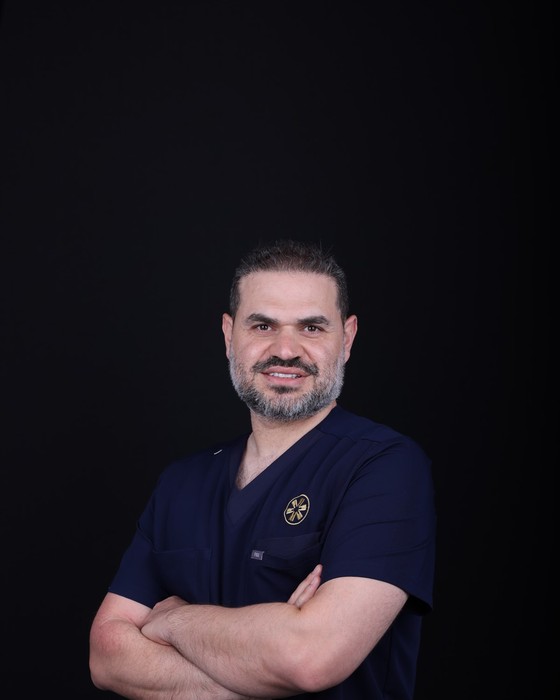
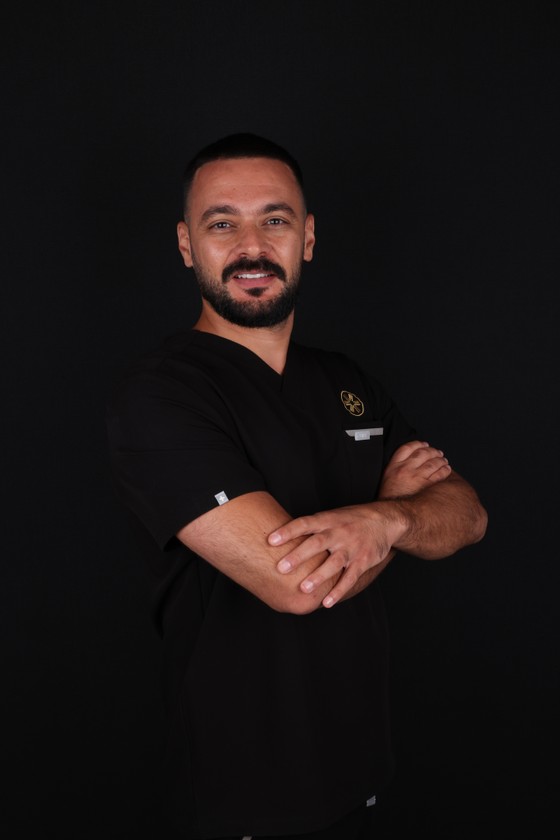
Dr. Firas Osman, Oral & Maxillofacial Surgeon & Implantologist, carries out extractions with grafting, including surgical extractions. Dr. Khalid Saeed and Dr. Kinan Bonni, who plan and place implants, also preserve sockets in routine cases. See the full range of oral and maxillofacial surgery at the clinic.
No. It is worth considering when an implant or a front-tooth bridge is planned and the implant will not go in on the day. For a wisdom tooth, or any tooth that will not be replaced, the socket is usually left to heal naturally.
Typically around three to four months, sometimes longer for a large socket or when healing is slow. An X-ray or CBCT scan confirms that enough bone has formed before the implant is placed, and the implant then needs its own healing time before the final crown is fitted.
Usually only slightly. It is done under local anaesthesia in the same visit as the extraction, and most people find the following days similar to a routine extraction, with soreness managed by over-the-counter pain relief. Sedation can be discussed if you are anxious.
Most often granules of processed bovine or donor bone, or a synthetic material, sometimes mixed with your own bone, then covered with a collagen membrane or dressing. If you prefer to avoid animal-derived or donor material, say so before surgery.
Often yes, once the infected tissue has been thoroughly cleaned out of the socket. With an acute abscess or spreading infection, the infection is controlled first and the surgeon may choose a different plan, explained to you before the tooth is removed.
No. Socket preservation is done at extraction to limit shrinkage while the socket walls are still there. Ridge augmentation rebuilds a ridge that has already narrowed or lost height, usually months or years after a tooth was lost, and is generally a larger procedure with a longer healing period.
Many healed sites still have enough bone. If the ridge has narrowed too much, a small graft can often be placed with the implant, or a separate ridge augmentation may be needed first. A CBCT scan shows which applies.
Tell us what you would like to change. The clinic replies within working hours with an appointment time.
Or call us +971 4 342 4444Or message us on WhatsApp
A consultation ends with a diagnosis and a written, itemised plan — not a sales pitch. Book online, message us on WhatsApp, or call the clinic.