The bone at the front
The bone covering the front of upper roots is often very thin and shrinks quickly after extraction. Without it the gum recedes, so it is protected at extraction or rebuilt with a graft.
A front tooth implant is judged by the gum line and the shade as much as by the implant. How bone and gum are protected, what you wear while it heals, and how the crown is matched.
If the tooth is still in place, an assessment before it is removed lets the extraction be planned to protect the bone.
A front tooth implant sits in the most visible part of the smile, where the bone over the roots is often thin and the gum shape is unforgiving. Success is judged on the gum line, the shade and the edge as well as the implant itself. At Creative Arts in Dubai the position is planned from a 3D CBCT scan, a temporary tooth is arranged for healing, and the crown is shade-matched in our in-house laboratory.
The implant itself is hidden. What shows is the gum around the crown and the crown beside your own teeth.
The bone covering the front of upper roots is often very thin and shrinks quickly after extraction. Without it the gum recedes, so it is protected at extraction or rebuilt with a graft.
Thin gum can let a grey shadow show through, and the small points of gum between teeth are hard to regrow once lost. Your gum type is assessed before planning.
Planned on the CBCT, often with a 3D-printed guide, so the crown emerges from the gum like a natural tooth and the screw access stays off the visible surface.
Matching one crown to natural neighbours in colour, translucency and surface texture is among the hardest shade jobs in dentistry.
Typical ranges, not promises; the examination and scan decide your plan.
Front teeth often have more stages than back teeth, because each one protects the gum line.
Your smile line, gum thickness, the bone over the root and the neighbouring teeth are recorded before anything is removed.
Visit 1If the tooth is still present it is removed so as to preserve the thin front bone, often with a socket graft to limit shrinkage.
If neededUnder local anaesthetic, at extraction or after healing. Placing it at extraction is considered only when bone and gum allow.
SurgeryThe bone bonds to the implant, usually over about 3–6 months, while you wear a temporary tooth.
3–6 monthsIn some cases a temporary crown on the implant is adjusted over a few weeks to shape the gum before the final crown.
Some casesA scan, a shade appointment, a try-in, then fitting with the bite checked so the front crown is not overloaded.
Final stageA front gap is not left open. These are the usual temporary options; which suits you depends on your bite and how the healing site needs protecting.
| Temporary option | How it works | Good to know |
|---|---|---|
| Tooth on a clear retainer | A tooth-coloured tooth set into a thin clear retainer | Removable; taken out to eat; puts no pressure on the healing site |
| Small removable plate | A thin plate carrying one tooth, held by small clasps | Removable; adjusted so it does not press on the implant site |
| Bonded temporary bridge | A false tooth bonded to the back of the neighbouring teeth | Fixed; needs a suitable bite and can come unstuck |
| Temporary crown on the implant | Fitted soon after placement and kept out of the bite | Only when the implant is very stable at surgery; decided case by case, never promised |
Your dentist recommends the option that best protects the healing site. Whatever is used, avoid biting into hard food with that tooth until the final crown is fitted.

A single front crown sits beside teeth that are warmer near the gum, lighter through the body and translucent at the edge. Creative Art Dental Lab, in the same building as the clinic, makes it, and for clinic patients the ceramist sees your teeth in person under the same light as your dentist rather than relying on a photograph. If you want your natural teeth whiter, whitening comes first, because a ceramic crown will not change colour afterwards. See custom shade matching.
Often it is, but not always. These points come up at the assessment; the dental implants page covers the wider choices.
Unretouched photographs of patients treated at our clinic. The method used for each gap depends on the case, and results vary.


Individual results vary. Photographs are shown with patient consent.
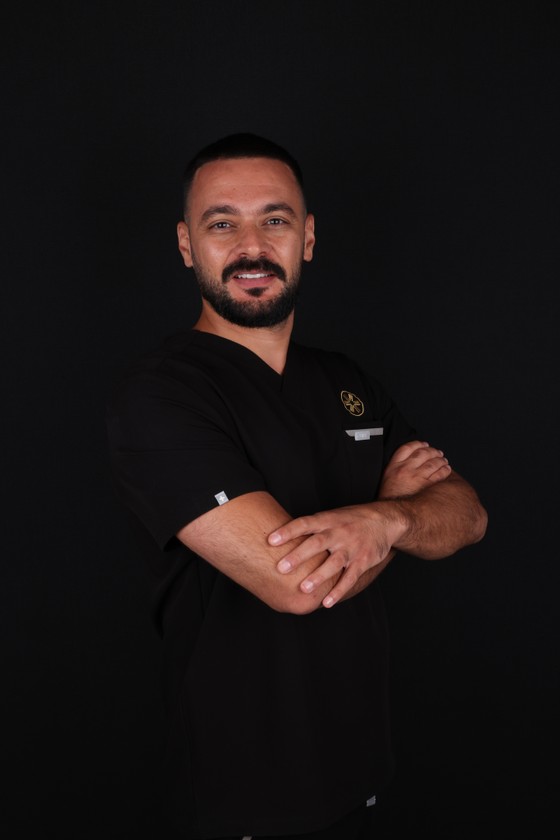
Dr. Firas Osman, Oral & Maxillofacial Surgeon & Implantologist, assesses bone and grafting needs. Dr. Khalid Saeed and Dr. Kinan Bonni plan and place implants and work with the laboratory on the crown.
When bone and gum are healthy and the crown is well matched, most people will not notice. The tell-tale signs are a longer crown, a dark line or grey tint at the gum, or a shade that looks different in daylight. Protecting bone at extraction, planning the implant position and matching the shade in person reduce these risks.
It depends on the socket. Placing the implant at extraction can shorten treatment and help support the gum, but only when there is no active infection, the thin front bone is intact and the implant is firmly stable. If the bone is damaged or infected, waiting for healing, often with a graft, is the safer route to a natural gum line. The decision is made case by case.
The bone covering the front of the upper roots is often very thin and shrinks after the tooth is lost. Without enough bone in front of the implant, the gum can recede and show metal or a grey tint. A graft at extraction, or with the implant, helps support a natural gum line over the long term.
A grey tint or receding gum usually means thin gum or bone over the implant. The cause is assessed with an examination and X-ray. Depending on the case, options can include managing gum inflammation, changing the crown or, for some cases, a gum graft; your dentist will explain whether it suits you.
Usually once jaw growth has finished, often in the late teens or early twenties. An implant placed in a growing jaw stays where it is while natural teeth keep erupting, so it can end up looking short. Until then, a bonded bridge or a tooth on a retainer holds the space, sometimes with orthodontic help.
Front teeth often add steps that back teeth skip: a socket graft at extraction, extra healing if the front bone is damaged, a temporary tooth, sometimes a few weeks of gum shaping with a temporary crown, and a shade appointment before the final crown. Each step protects the gum line or the colour match, so the whole timeline can run longer than bone healing alone.
Tell us what you would like to change. The clinic replies within working hours with an appointment time.
Or call us +971 4 342 4444Or message us on WhatsApp
A consultation ends with a diagnosis and a written, itemised plan — not a sales pitch. Book online, message us on WhatsApp, or call the clinic.