
Zirconia vs Titanium Implants: Strength, Evidence, Appearance and Allergy
Titanium is the implant material with the longest clinical record. Zirconia (ceramic) implants are a metal-free alternative with a shorter one. Here is what actually differs, and why a zirconia crown is not the same as a zirconia implant.
- 3D CBCT implant planning
- Oral & maxillofacial surgeon on the team
- Written plan before treatment
Tell us about any documented metal allergy when you book.
Are zirconia implants better than titanium implants?
Not overall. Titanium implants have decades of evidence, the widest choice of parts and suit almost every case, from one tooth to a full arch. Zirconia (ceramic) implants are white and metal-free and show promising results, but with shorter follow-up and fewer design options. True titanium allergy appears rare. At Creative Arts in Dubai implants are planned on titanium; whether a ceramic implant suits you is decided at an assessment.
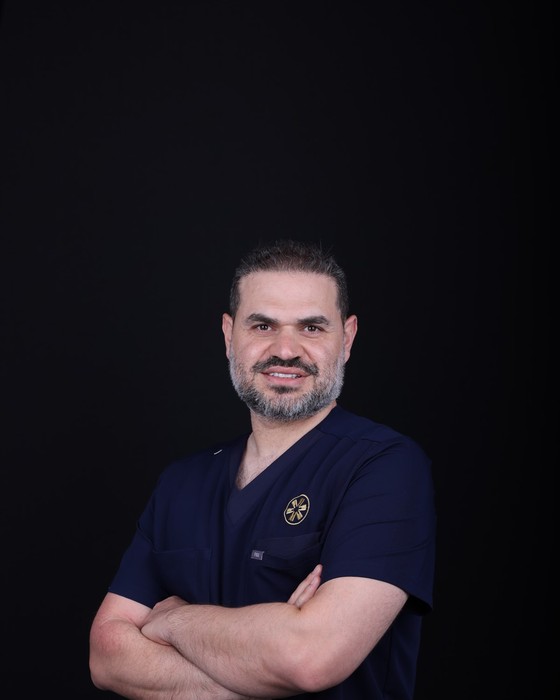
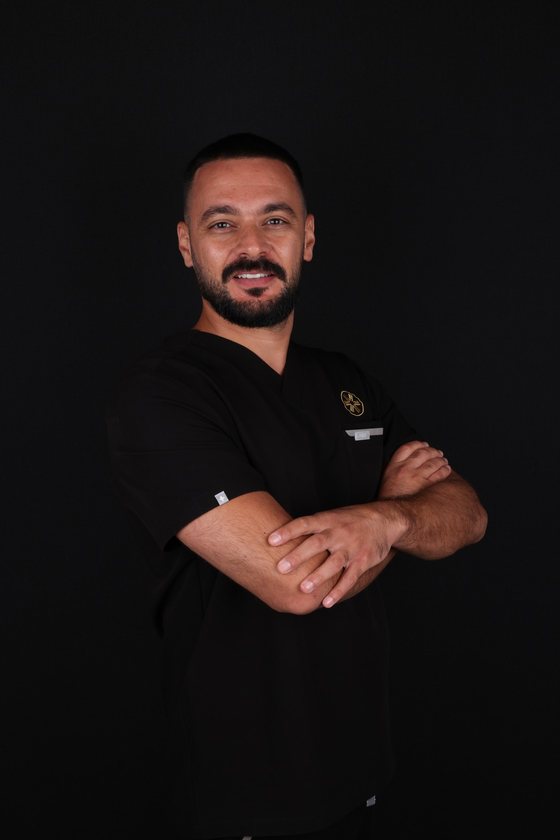
Who treats you here Dr. Firas Osman Oral & Maxillofacial Surgeon & Implantologist · Dr. Khalid Saeed Co-founder & Dentist · Dr. Kinan Bonni Dentist
Every dentist’s licence can be checked on the DHA Sheryan medical directory.
Zirconia vs titanium implants: how do they compare?
Both materials can bond with bone. The differences are in the length of the evidence, the design options and how each behaves under load.
| Titanium implants | Zirconia (ceramic) implants | |
|---|---|---|
| Material | Commercially pure titanium or a titanium alloy | Zirconium dioxide ceramic, usually stabilised with yttria |
| Clinical record | Several decades of research and long-term follow-up | Promising results, but most studies follow patients for about five years or less |
| Design | Mostly two-piece: implant plus a separate connector (abutment) chosen for the angle and gum height | Many are one-piece (implant and abutment together); two-piece designs exist with fewer options |
| Behaviour under load | Strong and slightly flexible; very rarely fractures | Very hard but brittle; fracture is one of the recorded reasons for failure |
| Colour | Grey; can show through very thin gum at a front tooth | White; no grey show-through |
| Full-arch and grafted cases | The standard for All-on-4 and most grafted sites | Limited evidence for full-arch and complex cases |
| Allergy | True titanium allergy appears rare | Metal-free; an option some patients with a documented metal allergy consider |
| At Creative Arts | Used for implant treatment | Not confirmed as offered; suitability and referral discussed at assessment |
A general comparison of materials, not of any brand. Your surgeon recommends a material from your examination, 3D scan and medical history.
Is titanium allergy real?
It exists, but it appears to be uncommon. In a clinical study of fifteen hundred consecutive implant patients published in Clinical Oral Implants Research in 2008, nine people (0.6%) tested positive for titanium allergy, and most of them belonged to a group that already had allergy-type reactions or unexplained implant failures. That is one study rather than a final figure, but it fits the general view that titanium is among the most widely tolerated metals used in medicine.
Allergy testing for titanium is not straightforward, and results need interpreting by an allergy doctor rather than an online test. If you have a documented metal allergy, bring the report to your implant assessment. If you simply prefer to avoid metal, that is a legitimate preference to discuss, but it is a different question from allergy.
Claims that titanium implants cause widespread illness in people without an allergy are not supported by robust clinical evidence. Problems around implants of either material are far more often caused by gum inflammation, described on our peri-implantitis page.
Are zirconia implants as strong as titanium?
Zirconia is very hard and resists bending well for a ceramic, which is why it is used for crowns. But ceramics do not flex the way metals do, so when a zirconia implant is overloaded it is more likely to crack than to bend. A 2024 systematic review in Clinical Oral Investigations, covering about four thousand zirconia implants, estimated 10-year survival at 95.1% and found bone levels around them similar to titanium; fractures accounted for a share of the failures. The authors noted that most studies followed patients for five years or less, and that zirconia implants have not yet been studied as extensively as titanium.
For comparison, a 2019 systematic review in the Journal of Dentistry estimated 10-year survival of implants in general at about 96% (about 93% in a stricter analysis), based largely on titanium. These are averages across studies, not a prediction for one patient, and they cannot be compared directly because the patients and follow-up differ.
In practice this means titanium is usually preferred where forces are high: back teeth, people who clench or grind, and full-arch bridges.
What is the difference between a zirconia crown and a zirconia implant?
This is the most common confusion. An implant has three parts: the implant in the bone, the abutment that comes through the gum, and the crown you see. A zirconia crown on a titanium implant is very common, and it looks the same as a crown on a ceramic implant. What changes with a "zirconia implant" is the part hidden in the bone.
So if your main concern is a white, natural-looking tooth, you do not need a zirconia implant to get it. A ceramic crown, and where the gum is thin a tooth-coloured abutment, can usually achieve that on titanium. Our zirconia crowns page and the guide what is zirconia explain the material itself. The brand of implant is a separate question again; see dental implant brands.
Who might consider a metal-free implant, and who is usually better with titanium?
These are starting points for a conversation with your surgeon, not a self-diagnosis.
Situations where a ceramic implant may be discussed
- A documented titanium or metal allergy confirmed by an allergy doctor
- A strong personal wish to avoid metal, after understanding the shorter evidence
- A single front tooth with thin gum, where grey show-through is a concern and the bite is light
Situations where titanium is usually preferred
- Back teeth and heavy biting forces
- Clenching or grinding (bruxism)
- Full-arch treatment such as All-on-4
- Sites needing angled abutments or complex grafting
- When the widest choice of restorative parts matters for the future
What Creative Arts does and does not offer
Implant treatment at Creative Arts is planned on titanium implants, with ceramic crowns made by the lab in the same building. Ceramic (zirconia) implants are not confirmed as available here. If you are interested in one, raise it at your assessment: whether it suits you, and whether it would be done here or by referral, is decided then.
What should I ask before choosing zirconia vs titanium implants?
- Is there a clinical reason, such as a confirmed allergy, to avoid titanium in my case?
- Is the implant you propose one-piece or two-piece, and how will it be protected from biting while it heals?
- How long has this implant system been followed in published studies?
- If a part breaks or loosens in ten years, will replacement parts still be available?
- Can a tooth-coloured abutment and ceramic crown give me the look I want on titanium?
- Does anything change for MRI scans? See MRI with implants or braces.
The answers matter more than the material label. Implant risks that apply to both materials are set out in our guide to dental implant risks.
Not sure which implant material suits you? An assessment with a 3D scan and your medical history gives you a written plan, with the reasons for the material chosen.
Dental implants in DubaiWho assesses implant cases at Creative Arts
Implant surgery is planned by Dr. Firas Osman, Oral & Maxillofacial Surgeon & Implantologist, with Dr. Khalid Saeed and Dr. Kinan Bonni.
Sources
Clinical statements on this page are consistent with these independent sources. They describe averages from studies, not a promise for any one patient.
- Sicilia A et al.. Titanium allergy in dental implant patients: a clinical study on 1500 consecutive patients. Clinical Oral Implants Research, 2008.
- Mohseni P, Soufi A, Chrcanovic BR. Clinical outcomes of zirconia implants: a systematic review and meta-analysis. Clinical Oral Investigations, 2024.
- Howe MS, Keys W, Richards D. Long-term (10-year) dental implant survival: A systematic review and sensitivity meta-analysis. Journal of Dentistry, 2019.
Frequently asked questions
Is titanium allergy real with dental implants?
It exists but appears rare. In one study of fifteen hundred implant patients, 0.6% tested positive, mostly people who already had allergy-type reactions or unexplained failures. Testing is not straightforward, so a suspected allergy should be assessed by an allergy doctor and the report brought to your implant consultation.
Are zirconia implants as strong as titanium implants?
Zirconia is very hard but brittle, so under heavy load it is more likely to crack, while titanium flexes slightly and very rarely fractures. Reviews show promising survival for zirconia implants over about five years, but titanium has a much longer record, especially for back teeth and grinders.
Who might consider metal-free zirconia implants?
Mainly people with a confirmed titanium or metal allergy, those who strongly prefer to avoid metal after understanding the shorter evidence, and some single front-tooth cases with thin gum and a light bite. Full-arch cases, back teeth and grinders are usually better served by titanium.
Does Creative Arts place zirconia implants?
Creative Arts plans implant treatment on titanium implants, with ceramic crowns made by the lab in the same building. Ceramic implants are not confirmed as available. If you want one, raise it at your assessment, where suitability, and whether it would be done here or by referral, is discussed.
Is a zirconia crown on a titanium implant the same as a zirconia implant?
No. The implant is the part in the bone; the crown is the tooth you see. A zirconia crown on a titanium implant is very common and looks the same as a crown on a ceramic implant. A zirconia implant changes only the hidden part in the bone.
Do titanium implants show grey through the gum?
Occasionally, at a front tooth where the gum is very thin. It can often be managed with a tooth-coloured abutment, careful positioning of the implant and, where needed, gum or bone grafting. Your surgeon assesses gum thickness at the planning stage.
Do zirconia vs titanium implants cost the same?
Costs vary with the system, the parts and the planning involved, so they are not directly comparable. At Creative Arts the written plan itemises the implant, abutment, crown and any grafting. Our implant cost page explains what changes a quote.
Related treatments
One clinic, in Jumeirah 3 / Umm Suqeim 1
Creative Arts has a single clinic on Jumeira Street (Jumeirah Beach Road). Ask about parking when you book.
- Address614 Jumeira St, Jumeirah 3, Umm Suqeim 1, Dubai
- Opening hoursDaily 10:00–20:00, including Friday and Sunday
- Neighbouring areasJumeirah 1–3, Umm Suqeim 1–3, Al Wasl, Al Safa, Al Manara
Our clinic in Jumeirah Open in Google Maps · Rated 4.8 on Google from 238 patient reviews (October 2026) — read them
Request a consultation
Tell us what you would like to change. The clinic replies within working hours with an appointment time.
- Address614 Jumeira St, Jumeirah 3, Umm Suqeim 1, Dubai · Our clinic in Jumeirah 3 / Umm Suqeim 1
- Opening hoursClinic open daily, 10:00–20:00
- Phone+971 4 342 4444 · WhatsApp +971 56 677 7537
Book Your Consultation
Or call us +971 4 342 4444Or message us on WhatsApp
Talk to a dentist about your case
A consultation ends with a diagnosis and a written, itemised plan — not a sales pitch. Book online, message us on WhatsApp, or call the clinic.