Class III bite correction

Underbite Correction in Dubai

Lower front teeth that close in front of the upper ones can come from tipped teeth or from the jaws themselves. That diagnosis decides whether orthodontics alone can correct it.

  • Diagnosed by specialist orthodontists
  • Jaw-surgery opinion from Dr. Firas Osman
  • Written plan before treatment
Call +971 4 342 4444

The first visit is an examination with a specialist orthodontist, records and an explanation of what is causing your underbite.

Teeth or jaws?The cause decides whether orthodontics alone is enough.
Quick answer

How is an underbite corrected?

It depends on the cause. When the lower front teeth are tipped forward or the upper ones tipped back, fixed braces or clear aligners, often with elastics, can usually restore a normal overlap. When the lower jaw is too long or the upper jaw too small, an adult may need orthodontics combined with jaw surgery. At Creative Arts in Dubai, specialist orthodontists make that diagnosis, and Dr. Firas Osman assesses cases where surgery may be needed.

27 yearsIn-house dental laboratory in the same building
Written planItemised treatment plan before you commit
Open daily10:00–20:00, seven days a week
Jumeirah 3614 Jumeira St, Umm Suqeim 1, Dubai
At a glance

Underbite correction at Creative Arts in brief

Who diagnoses it
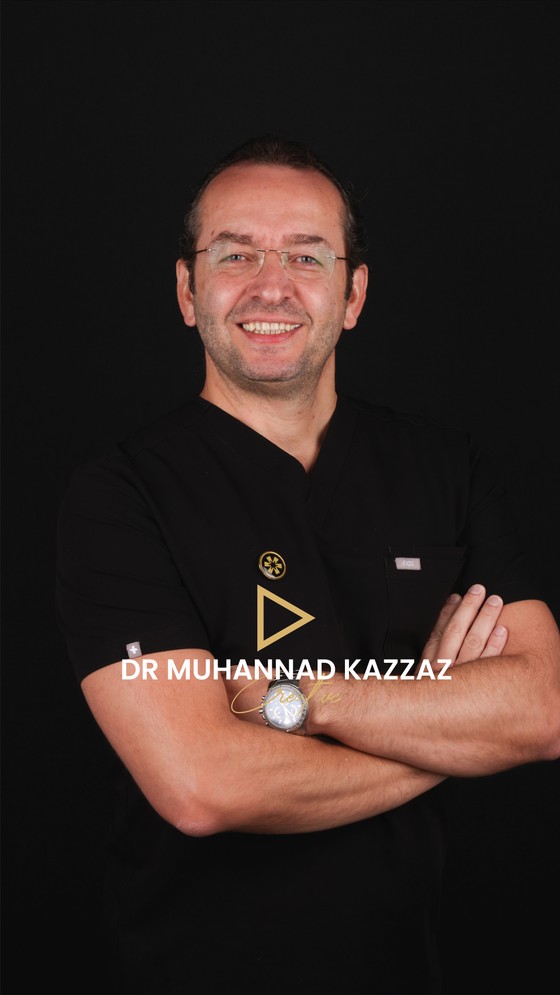
Specialist orthodontists Dr. Muhannad Kazzaz and Dr. Valeriia Kozachenko
Surgical opinion
Dr. Firas Osman, Oral & Maxillofacial Surgeon & Implantologist, when the jaws are the cause
Records
Examination, photographs, a 3D intraoral scan and X-rays, usually including a side-view (cephalometric) X-ray of the jaws
Appliances
Fixed braces or Invisalign, with elastics or temporary anchorage devices when needed
Typical length
Orthodontics alone often 12–24 months; a pathway that includes jaw surgery takes longer
If jaw surgery is needed
Under general anaesthesia in a hospital setting, planned with the orthodontists
After treatment
Long-term retainers

Timelines are typical ranges, not promises.

Diagnosis

Dental or skeletal underbite: what is the difference?

They can look the same in the mirror. Examination and X-rays tell them apart, and that decides what treatment can achieve.

Dental underbiteSkeletal underbite
Where the problem isThe teeth: lower incisors tipped forward or upper incisors tipped backThe jaws: lower jaw longer, or upper jaw smaller or further back, than usual
ProfileUsually balancedOften a prominent chin or a flat middle third of the face
A useful clueOften the front teeth can be guided edge to edge; the jaw slides forward to get past a tooth contactThe front teeth cannot be brought edge to edge
During growthUsually stableCan keep worsening until jaw growth finishes, which may be the late teens or later
Usual treatmentBraces or clear aligners, often with elasticsMild: orthodontic camouflage. Marked, in adults: orthodontics with jaw surgery

Many underbites are a mix of both; the side-view X-ray shows how much lies in each jaw. See also bite problems compared.

Treatment options

What can correct an underbite?

Listed from least to most involved. Some plans combine them, and not every option suits every case.

01

Braces with elastics

Fixed braces move the upper incisors forward and the lower incisors back, while elastics worn between the jaws help shift the bite. This is the usual approach for a dental underbite, because brackets give precise control of the roots.

02

Clear aligners for selected cases

Invisalign can correct some mild dental underbites, usually with elastics too, when the trays are worn 20–22 hours a day. Larger corrections are generally more predictable with fixed braces.

03

Orthodontic camouflage

For a mild skeletal underbite, the teeth are angled to compensate: upper incisors tilted forward, lower incisors back, sometimes with extractions. The bite works, but the jaws are unchanged, and the gum and bone around the lower incisors limit how far they can move.

04

Orthodontics with jaw surgery

When the jaw difference is too large to disguise, braces prepare the teeth, corrective jaw surgery repositions one or both jaws, and orthodontics then finishes the bite. This pathway is planned with Dr. Firas Osman; see surgical orthodontics.

The key decision

Orthodontics alone, or orthodontics with jaw surgery?

How the decision usually falls. The final answer comes from your records, not from a photograph.

Orthodontics alone is often enough when

  • The underbite comes mainly from tipped teeth
  • You can bring your front teeth edge to edge
  • The skeletal difference is mild and you are happy with your profile
  • The gum and bone around the lower incisors can support the movement
  • Only one or two teeth bite the wrong way round; see crossbite correction

Jaw surgery is usually discussed when

  • The lower jaw is markedly long or the upper jaw clearly underdeveloped
  • Camouflage would tip the teeth further than their bone and gum can support
  • Facial balance, not only the bite, is part of your concern
  • The chin or lower jaw is shifted to one side
  • You are an adult whose jaw growth has finished; surgery is not planned while the jaws are still growing
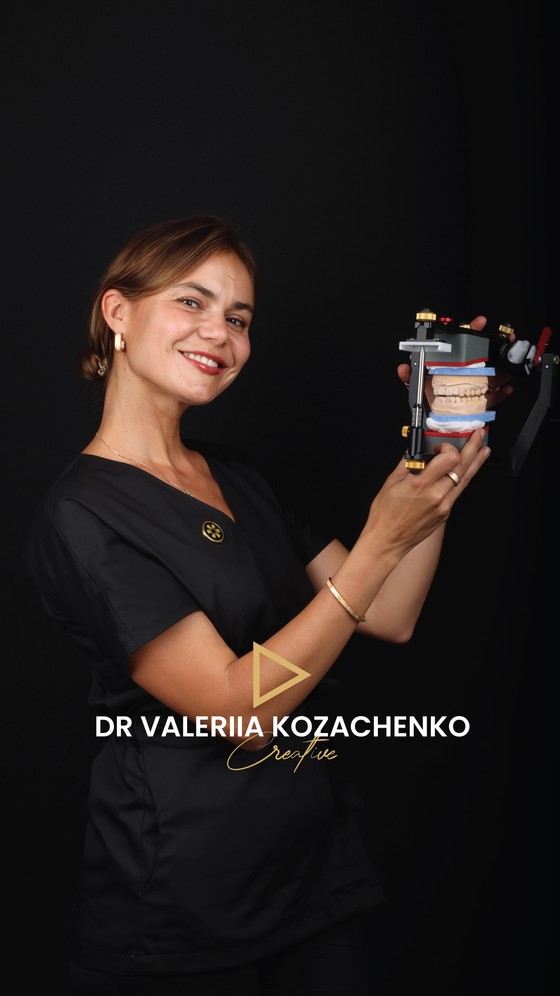
Dr. Valeriia Kozachenko holding dental models mounted in an articulator
Dr. Valeriia Kozachenko, specialist orthodontist, with dental models mounted in an articulator, a device that reproduces how the jaws meet.
Beyond the teeth

Why an underbite is checked for wear, gums and jaw joints

An underbite changes how biting forces travel through the teeth and jaws, so the assessment covers more than alignment.

  • Wear and chipping: front teeth meeting edge to edge or in reverse wear in a way a normal overlap prevents. See worn teeth.
  • Gum on the lower incisors: lower front teeth pushed forward by the bite can lose gum on their outer surface.
  • Jaw joints: clicking, pain or limited opening are examined first, with a TMJ assessment where needed.

Dr. Valeriia Kozachenko has a particular focus on TMJ and jaw function, which matters even more when jaw surgery is being considered.

The process

How underbite correction works, from first visit to retainer

The appliance, and whether surgery belongs in the plan, is chosen after the diagnosis.

  1. Examination

    How the teeth meet, whether the jaw slides forward on closing, the jaw joints, gums and wear.

    Visit 1
  2. Records

    Photographs, a 3D intraoral scan and X-rays that measure the jaws; CBCT 3D imaging where surgery is being planned.

    Visit 1
  3. Diagnosis and options

    Whether the underbite is dental, skeletal or both, and what each option could achieve. If surgery is an option, you meet Dr. Firas Osman.

    Review
  4. Written plan

    Appliance, timeline, cost, retention and alternatives, itemised before you commit.

    Before treatment
  5. Active treatment

    Adjustments or aligner changes, with elastics as instructed. In a surgical case, this phase prepares the teeth for the operation.

    Months
  6. Retention

    Retainers hold the corrected bite; younger patients are reviewed until growth settles.

    Long term

Children and teenagers: why growth changes the plan

A skeletal underbite can keep developing while the jaws grow, so a child with an underbite is worth an orthodontic assessment around age seven. Most children are monitored; if an early step could help, the specialist explains what it involves and what it cannot do. Jaw surgery, when needed, is planned only once growth has finished.

Who treats you

Who corrects underbites at Creative Arts

The specialist orthodontists diagnose and treat the bite. Dr. Firas Osman joins the plan when the jaws themselves need repositioning.

Patient questions

Frequently asked questions

Can an underbite be corrected without jaw surgery?

Often, yes. Dental underbites and many mild skeletal ones are corrected with braces or aligners, using elastics and sometimes extractions to compensate. Orthodontics cannot shorten a long lower jaw or bring a small upper jaw forward, though; when the difference is large, surgery gives a more stable, balanced result than tipping the teeth further.

Which underbites can Invisalign realistically correct?

Mainly mild dental underbites, where the teeth need tipping rather than large root movements, usually with elastics and only if the aligners are worn 20–22 hours a day. Skeletal underbites are generally more predictable with fixed braces. The specialist tells you at the assessment which applies to you.

How long does underbite correction with braces take?

Orthodontic treatment for an underbite commonly takes 12–24 months, depending on how far the teeth must move and how consistently elastics are worn. A pathway that includes jaw surgery is longer, because braces are worn before and after the operation. Your written plan gives an estimate for your own case.

Should my child's underbite be checked early?

Yes. An underbite is one of the problems an orthodontic assessment around age seven looks for, because a skeletal underbite can keep developing with growth. Most children are monitored rather than treated straight away; the specialist explains whether any early step would help and what it could achieve.

Can veneers or crowns fix an underbite?

Not when the jaws are the cause. Veneers or crowns can reshape teeth in a mild edge-to-edge bite, but they cannot change which jaw sits in front, and ceramic placed in a reverse bite tends to chip. Restorative work is usually considered after the bite has been corrected, for example to rebuild worn edges.

Will my underbite come back after treatment?

A corrected dental underbite usually stays stable with retainers. A skeletal underbite corrected during growth can partly return if the lower jaw keeps growing, which is why young patients are reviewed and surgery waits until growth has finished. Retainers are worn long term after every type of underbite correction.

Who performs underbite jaw surgery, and where?

Dr. Firas Osman, Oral & Maxillofacial Surgeon & Implantologist, assesses and plans the surgery with the specialist orthodontists. The operation is performed under general anaesthesia, given by an anaesthesiologist, in a hospital setting, and he explains where it takes place. The operation and recovery are covered on our orthognathic surgery page.

Book a consultation

Request a consultation

Tell us what you would like to change. The clinic replies within working hours with an appointment time.

Book Your Consultation

Or call us +971 4 342 4444Or message us on WhatsApp

Talk to a dentist about your case

A consultation ends with a diagnosis and a written, itemised plan — not a sales pitch. Book online, message us on WhatsApp, or call the clinic.

Call +971 4 342 4444
CallWhatsApp