
Bone grafting and sinus lifts: when they are actually needed
When bone grafting is genuinely needed before an implant, the difference between socket preservation, ridge augmentation and sinus lift, and how long each adds to treatment.
Last medically reviewed: 12 October 2026

Smiles made at Creative Arts
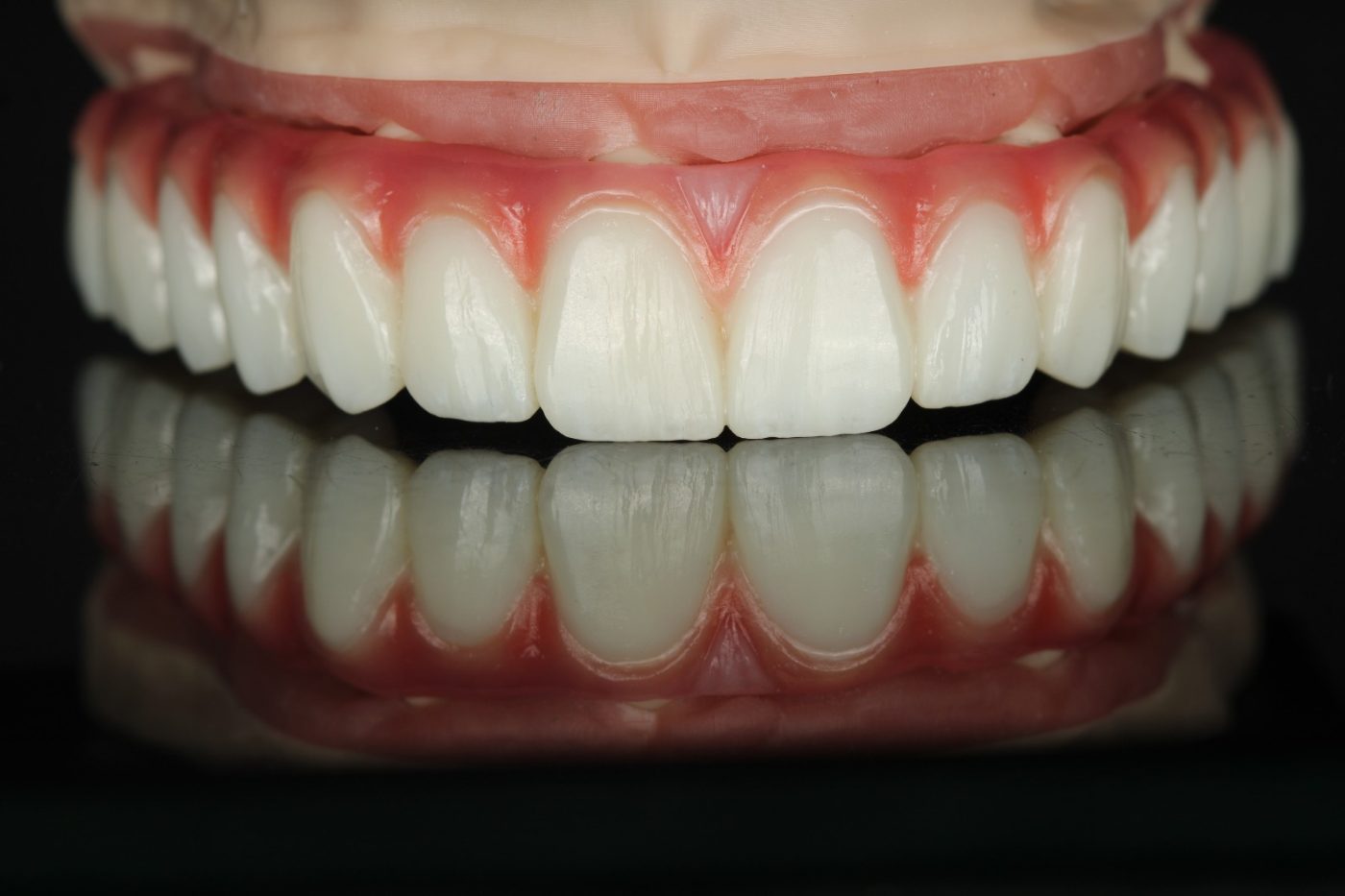
Designed in the clinic and made by hand in Creative Art Dental Lab, in the same building in Jumeirah, Dubai.




Your surgeon

Oral & maxillofacial surgeon
Plans and performs implant surgery, bone grafts, sinus lifts, wisdom-tooth and other surgical extractions in the clinic's operating rooms, after a CBCT scan. About three decades of practice in Russia, Syria and the UAE.
Bone grafting is one of the most over-recommended procedures in implant dentistry — and also one of the most genuinely necessary in the right case. Knowing which situation you are in requires a scan, not an opinion.
Why bone disappears after a tooth is lost
Bone maintains its volume in response to load. A tooth root transmits chewing forces into the surrounding bone, and that stimulus is what tells the body to keep the bone there.
Remove the root and the stimulus stops. Resorption begins immediately and is fastest in the first year, with studies typically showing significant width loss in the first six months. The ridge narrows from the outside in, which is why an extraction site that looked fine at the time can be too thin for an implant two years later.
This is the single most important reason not to delay indefinitely after losing a tooth.
Questions about your own teeth? Send a photo on WhatsApp and the clinic will tell you what an examination would check.
WhatsApp usThe three procedures, and when each applies
Socket preservation
Graft material placed into the socket at the time of extraction.
This is the least invasive and, arguably, the highest-value option — because preventing bone loss is far easier than rebuilding it. If you know an implant is likely, discuss this before the extraction, not after.
Adds roughly three to four months before implant placement.
Ridge augmentation
Used when a ridge has already narrowed over years without a tooth. Graft material and often a membrane are placed to widen it, and the site is left to consolidate.
Adds around four to six months, sometimes more for larger defects.
Sinus lift
The upper posterior jaw sits beneath the maxillary sinus. When those teeth are lost, the sinus tends to expand downward — a process called pneumatisation — reducing available bone height.
There are two approaches:
- Internal (crestal) lift — the sinus floor is gently raised through the implant site itself. Suitable where a modest gain is needed, and often done at the same appointment as implant placement.
- Lateral window lift — access through the side of the jaw, allowing a larger, more predictable gain. More involved, more swelling, longer healing.
Adds roughly four to nine months depending on technique.
When grafting can be avoided
This is worth stating plainly, because it is where patients are most often oversold.
Techniques that work with available bone rather than adding to it:
- Angled implants — tilting the fixture to engage denser bone and avoid the sinus. This is the principle behind All-on-4.
- Shorter implants — modern short implants perform well in situations that once demanded augmentation.
- Narrower implants in a thin but adequate ridge.
- Zygomatic implants in severe maxillary atrophy, anchoring into the cheekbone.
Our position: the CBCT decides. Where technique can achieve primary stability without graft material, we use technique — it means less surgery, less cost and a shorter timeline for you.
What the healing actually involves
Graft material is a scaffold, not new bone. Your own osteoblasts migrate into it, lay down new bone, and gradually replace or incorporate the material. That biological process cannot be accelerated, which is why waiting periods are measured in months.
Loading an implant into a graft that has not consolidated is a reliable way to lose both.
Recovery
First 48 hours. Swelling builds. Ice intermittently. Sleep with your head elevated. Soft diet.
After a sinus lift specifically: do not blow your nose, sneeze with your mouth closed, or fly for the period we specify. Pressure changes across a healing sinus membrane can disrupt the graft. Sneeze with your mouth open.
Weeks 1–2. Swelling settles; bruising resolves. Avoid chewing on the site.
Months 3–9. Consolidation. A follow-up scan confirms readiness before the implant is placed.
Questions worth asking
- May I see the scan and where the deficiency is? A reasonable clinic will show you.
- Is there an option that avoids grafting in my case? If the answer is a flat no, ask why.
- What material is proposed, and what are the alternatives?
- How long before the implant can be placed and loaded?
- What happens if the graft does not take?
If you are being told you need extensive grafting, a second opinion with a fresh CBCT is reasonable and we would say the same about our own plan.
Bone graft dental treatment in Dubai: who does it, where, and how the material is chosen
If you are looking for bone graft dental treatment in Dubai, start with the CBCT 3D scan, because it shows whether there is enough bone for an implant and which procedure would add it. At Creative Arts grafting is planned by Dr. Firas Osman, Oral & Maxillofacial Surgeon, with Dr. Khalid Saeed and Dr. Kinan Bonni for routine graft and implant cases, and carried out in the clinic's operating rooms under local anaesthetic, with sedation if you need it.
- On the day of an extraction: socket preservation fills the socket so the ridge shrinks less.
- After the ridge has narrowed: ridge augmentation rebuilds width or height.
- Upper back teeth near the sinus: a sinus lift, crestal or lateral, makes room for bone under the sinus floor.
The material is most commonly a processed bone substitute from a bank or a bovine source, which acts as a scaffold your own bone grows into; synthetic options exist, and sometimes bone is taken from elsewhere in your jaw. You can ask which material and membrane are planned and discuss alternatives, as bone graft materials and halal questions explains. Whether you need a graft, which type and how long it adds are written into your plan; the factors are on bone graft cost.
Further reading from independent sources
Independent sources for readers who want the wider evidence on this topic. Study figures are averages, not a promise for any one patient.
- Cochrane. Interventions for replacing missing teeth: augmentation procedures of the maxillary sinus, 2014.
- Cochrane. Interventions for replacing missing teeth: horizontal and vertical bone augmentation techniques for dental implant treatment, 2009.
- Clinical Oral Implants Research. A systematic review of post-extractional alveolar hard and soft tissue dimensional changes in humans, 2012.
- Cleveland Clinic. Dental Bone Graft, 2024.
Frequently asked questions
Which dental bone graft material is used in Dubai at Creative Arts?
It depends on the site and the procedure. Most commonly a processed bone substitute from a bone bank or a bovine source is used, acting as a scaffold that your own bone grows into; synthetic minerals are an option, and in some cases bone is harvested from elsewhere in your own jaw. Membranes vary in the same way. The surgeon tells you which material and membrane are proposed and why, and you can discuss non-animal or non-porcine alternatives before surgery.
Do I definitely need a bone graft?
Only your CBCT scan can answer that. Many implant cases need no graft at all. Grafting is indicated when bone volume is insufficient to hold the implant securely — and that is a measurement, not a judgement call made by looking at your mouth.
How long does a sinus lift add to treatment?
Typically four to nine months before the implant can be loaded, depending on the technique and graft material. A lateral window sinus lift usually needs the longer end; an internal lift performed at the same time as implant placement adds less.
Where does the graft material come from?
Most commonly processed bone substitute from a bank or a bovine source, which acts as a scaffold your own bone grows into. Synthetic options exist, and in some cases bone is harvested from elsewhere in your own jaw. We explain which is proposed and why.
Is grafting painful?
Socket preservation adds very little to the discomfort of the extraction itself. A lateral sinus lift is more involved and causes more swelling for several days. Both are done under local anaesthetic, with sedation available for anxious patients.
Can implants be placed without a bone graft?
Often. Many sites have enough bone, and careful planning — choosing implant position and angle on the 3D scan, as All-on-4 does with its angled back implants — can avoid grafting in some jaws with limited bone. A graft is added only where bone cannot hold an implant securely.
How long after a bone graft can an implant be placed?
It depends on the graft. Small grafts are sometimes placed at the same time as the implant. Larger grafts and some sinus lifts need several months of healing first. Your dentist gives you the expected timeline in the written plan.