Bleeding on brushing
Healthy gum around an implant does not bleed. Bleeding when you brush or use an interdental brush is the earliest and most common sign.
Implants cannot decay, but the gum and bone around them can become inflamed. Caught early it is reversible; left alone it slowly destroys the bone the implant depends on.
If your implant was placed elsewhere, bring any implant card, X-rays or notes you have.
Peri-implantitis is inflammation around a dental implant that has spread from the gum into the supporting bone, usually triggered by bacterial plaque. Its earlier stage, peri-implant mucositis, affects only the gum and is reversible with cleaning. Peri-implantitis treatment aims to stop bone loss: thorough cleaning of the implant surface, fixing anything that traps plaque and, where needed, surgery. At Creative Arts in Dubai, X-rays and a 3D CBCT scan where needed show how much bone is affected.
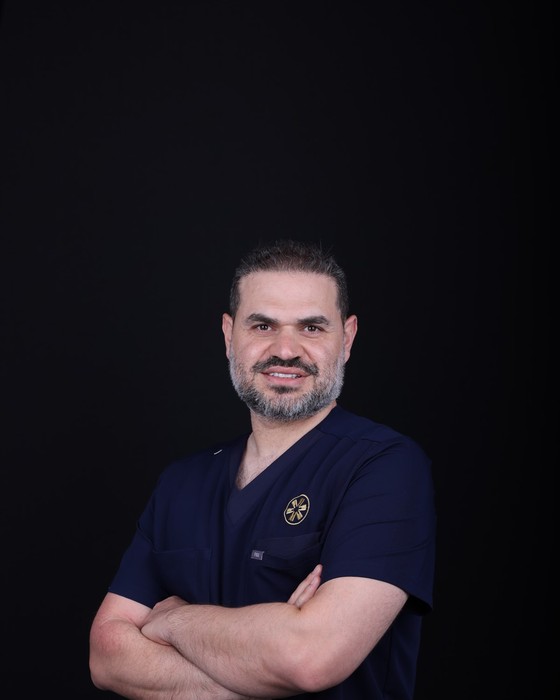
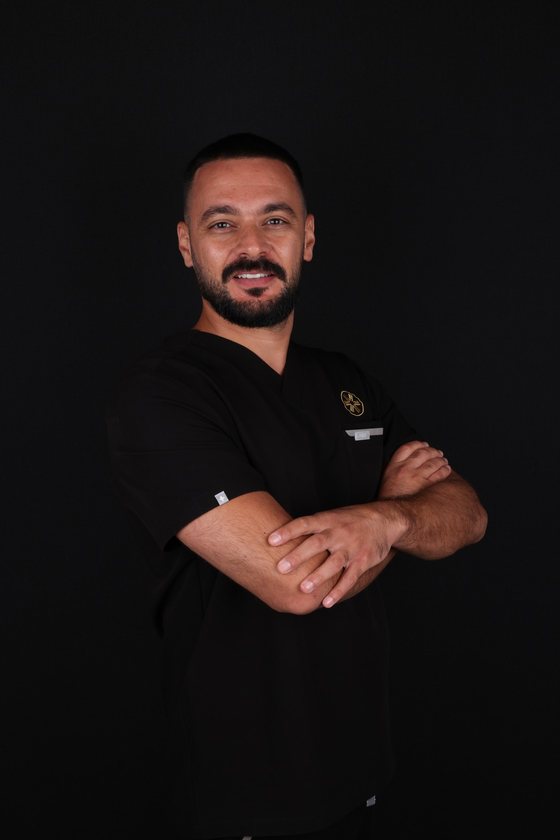
Who treats you here Dr. Firas Osman Oral & Maxillofacial Surgeon & Implantologist · Dr. Khalid Saeed Co-founder & Dentist · Dr. Kinan Bonni Dentist
Every dentist’s licence can be checked on the DHA Sheryan medical directory.
Peri-implantitis often causes little or no pain until late, because an implant has no nerve inside it. These are the signs to act on.
Healthy gum around an implant does not bleed. Bleeding when you brush or use an interdental brush is the earliest and most common sign.
The gum looks puffy or darker than around your natural teeth, and may be sore to touch or when chewing.
Discharge when you press the gum, or a persistent bad taste or smell from one area, suggests infection in a pocket around the implant.
As bone is lost, the gum can recede so the metal collar or threads of the implant become visible.
If the implant itself moves, not just the crown, the bone bond has been lost. This is a late sign and needs prompt assessment.
Mostly by bacteria, not by the implant material. Plaque that collects where the crown meets the gum triggers inflammation in the same way it causes gum disease around natural teeth. The American Academy of Periodontology lists a previous diagnosis of periodontal disease, poor plaque control, smoking and diabetes as risk factors, and notes that regular cleaning and check-ups help prevent it. A systematic review by Mustapha and colleagues (2022) also found that implants in smokers failed more often and lost more bone than implants in non-smokers.
Some causes sit with the restoration rather than the patient. Excess cement left under the gum when a crown is cemented, a crown shaped so that a brush cannot reach the gum line, or an implant placed too close to a neighbouring tooth can all hold plaque where it cannot be removed at home. Heavy grinding adds overload. That is why treatment looks at the whole implant, crown and bite, not only the gum.
Several implant problems feel similar. An examination and X-ray tell them apart.
| What is happening | Typical signs | What it usually needs | |
|---|---|---|---|
| Peri-implant mucositis | Gum inflammation without bone loss | Bleeding and swelling; X-ray bone level unchanged | Professional cleaning and better home care; reversible |
| Peri-implantitis | Inflammation with progressive bone loss | Bleeding or pus, deeper pocket, bone loss on X-ray | Cleaning of the implant surface, often surgery |
| Loose crown or screw | The crown or its screw has loosened; implant still bonded | Crown moves or clicks; gum may be sore | Retightening or replacing the screw or crown |
| Failed implant | The implant has lost its bond with the bone | The implant itself moves | Removal, healing and planning a replacement |
Our guide to signs of a failing implant covers early failure in the months after surgery.
The aim is to measure how far the inflammation has gone and to find what is feeding it.
When and where the implant was placed, what has changed, smoking and medical history, and any implant card or earlier X-rays.
Visit 1Checking for bleeding or pus, pocket depth around the implant, and whether the crown or implant moves.
Visit 1The bone level along the implant is compared with earlier images if available. A 3D CBCT scan is used where the shape of the bone loss matters for planning.
Visit 1Excess cement, a crown that cannot be cleaned, a loose screw or overload from grinding are identified, since they must be fixed for treatment to work.
Where neededMost treatment plans combine several rows. The choice depends on how much bone is lost and the shape of the defect.
| Option | When it fits | What it involves |
|---|---|---|
| Home-care changes | Every case; on its own only for mucositis | Interdental brushes or a water flosser around the implant, and technique coaching |
| Professional non-surgical cleaning | Mucositis and early peri-implantitis | Removing biofilm and deposits from the implant and crown surfaces, including GBT implant cleaning |
| Antiseptic or antibiotic support | Selected cases, alongside cleaning | Chosen by the dentist for your health; never a substitute for cleaning |
| Fixing the restoration | Excess cement, a crown that traps plaque, a loose screw | Removing cement, reshaping or remaking the crown, adjusting the bite |
| Surgical cleaning | Bone loss that non-surgical care cannot reach | Opening the gum under local anaesthetic to clean the implant surface directly |
| Bone grafting of the defect | Contained, crater-shaped defects | Filling the defect with graft material during surgery, decided case by case |
| Removal and later replacement | The implant moves or too much bone is lost | Removing the implant, healing, grafting if needed, then planning a new one |
Treatment is planned with you in writing, including the alternatives, before anything starts. See also implant repair at Creative Arts.
Often, if it is still firmly bonded and treatment starts before too much bone is lost. Mucositis is reversible. Peri-implantitis can frequently be stabilised so the bone loss stops, although bone that has already gone does not fully return in most cases, and the gum may sit lower afterwards. Results are better when the cause is removed: stopping smoking, improving diabetes control, fixing the crown and keeping regular maintenance visits.
An implant that moves has lost its bond with the bone and cannot be re-attached. It is removed, the site heals, and in many cases a new implant can be placed later, sometimes after bone grafting. If a new implant is not suitable, a bridge or other option is discussed. Our guide to dental implant risks puts peri-implantitis alongside the other long-term problems to know about.
you have facial swelling with fever, difficulty swallowing or breathing, or swelling spreading towards the eye or neck: go to a hospital emergency department. For bleeding, pus or a loose implant without these signs, contact the clinic during opening hours, daily 10:00–20:00.
Dr. Firas Osman, Oral & Maxillofacial Surgeon & Implantologist, with Dr. Khalid Saeed and Dr. Kinan Bonni, who place and restore implants at the clinic, assess implant problems, including implants placed at other clinics or abroad, and plan the treatment.
Clinical statements on this page are consistent with these independent sources. They describe averages from studies, not a promise for any one patient.
The earliest sign is usually bleeding from the gum around the implant when you brush or clean between the teeth. Swelling, redness, a bad taste or pus can follow. Because the implant has no nerve, pain often comes late. Any bleeding around an implant deserves a check, since at the mucositis stage it is still fully reversible with cleaning.
Treatment starts with an examination and X-rays to measure the bone loss, then thorough cleaning of the implant surface and correction of anything trapping plaque, such as excess cement or a crown that cannot be cleaned. More advanced cases may need surgical cleaning, sometimes with a bone graft. At Creative Arts the plan is written out with alternatives before treatment begins.
No. Peri-implantitis is driven by bacteria in a pocket around the implant, and the bone loss usually continues until the cause is treated. Better brushing can calm early mucositis, but once bone is involved, professional treatment is needed. Waiting for it to settle tends to mean more bone lost and fewer options.
Surgical cleaning is carried out under local anaesthetic, so the area is numb during the procedure. Afterwards there is usually some soreness and swelling for a few days, typically managed with over-the-counter pain relief taken as directed on the pack. Sedation can be discussed for anxious patients after a medical-history review.
It can. Pus or discharge when the gum is pressed, or a persistent bad taste from one implant, suggests an infected pocket around it. This needs examination and an X-ray. If there is facial swelling with fever or difficulty swallowing or breathing, go to a hospital emergency department instead of waiting for a dental appointment.
Yes, the gum and bone around it can be assessed and treated in the same way. Bring any implant card, X-rays and notes, because knowing the implant system helps if the crown or abutment needs removing or replacing. If the system cannot be identified, the plan explains the alternatives before anything is done.
Creative Arts has a single clinic on Jumeira Street (Jumeirah Beach Road). Ask about parking when you book.
Our clinic in Jumeirah Open in Google Maps · Rated 4.8 on Google from 238 patient reviews (October 2026) — read them
Tell us what you would like to change. The clinic replies within working hours with an appointment time.
Or call us +971 4 342 4444Or message us on WhatsApp
A consultation ends with a diagnosis and a written, itemised plan — not a sales pitch. Book online, message us on WhatsApp, or call the clinic.