What are the most common dental implant myths?
The most common dental implant myths are that the body rejects implants, that there is an age limit, that implants set off airport scanners, and that they last forever without care. In fact, implant failure is not rejection and titanium allergy appears rare, health matters more than age, implants rarely trouble security scanners, and implants can lose bone to gum infection. At Creative Arts in Dubai, each case is planned on a 3D CBCT scan.
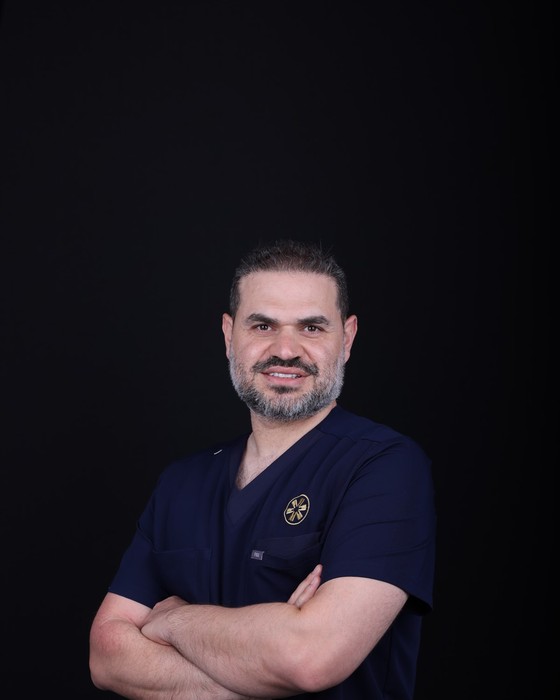
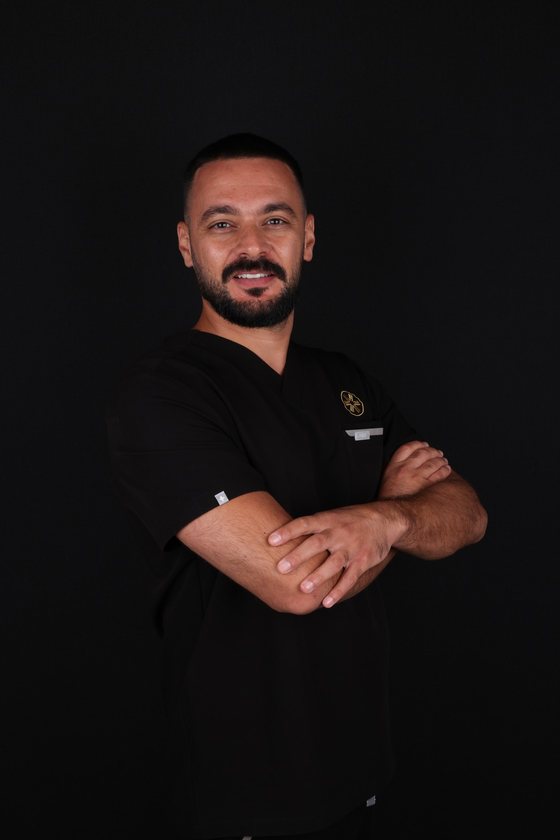
Who treats you here Dr. Firas Osman Oral & Maxillofacial Surgeon & Implantologist · Dr. Khalid Saeed Co-founder & Dentist · Dr. Kinan Bonni Dentist
Every dentist’s licence can be checked on the DHA Sheryan medical directory.
Dental implant myths vs facts: which are true?
Ten beliefs we hear at implant consultations, with a short verdict on each.
| The myth | What is actually true | Verdict |
|---|---|---|
| The body rejects implants | Implants can fail to bond with bone, but that is not rejection like a transplanted organ; true titanium allergy appears rare | False |
| You can be too old for implants | There is no upper age limit; general health, bone and medicines matter more | False |
| Implants set off airport scanners | They are small and rarely flagged; saying you have implants is normally enough | Mostly false |
| Implants last forever | Most last many years, but they can be lost to infection around them, and the crown on top wears | False |
| Implants cannot get gum disease | Peri-implantitis is gum and bone infection around an implant | False |
| Implant surgery is very painful | It is done under local anaesthetic, with sedation options; soreness afterwards is usually short-lived | Mostly false |
| No bone means no implants | Bone grafting or a sinus lift can often create enough bone | Mostly false |
| Smokers and diabetics cannot have implants | Risk is higher, but many can, with planning and good control | False |
| Implants always look fake | The look depends on the crown and the gum around it | False |
| You need one implant per missing tooth | Two implants can carry a bridge, and four or more can carry a full arch | False |
These are general statements. Your own suitability depends on an examination, a 3D CBCT scan and your medical history.
Does the body reject dental implants?
Not in the way the word suggests. Organ transplants can be rejected because the immune system attacks foreign living tissue. A titanium implant is not living tissue, and the body does not mount that kind of response to it. What can happen is that an implant fails to integrate: the bone does not grow tightly onto its surface in the first weeks and months, and the implant stays mobile and has to be removed. The usual reasons are infection, overloading the implant before it has healed, poor bone quality, smoking, and some medical conditions.
Titanium allergy is the other worry patients raise. It exists, but appears uncommon. In a study of fifteen hundred consecutive implant patients published in Clinical Oral Implants Research in 2008, nine people (0.6%) tested positive, most of them in a group that already had unexplained failures or allergy-type reactions. If you have a documented metal allergy, bring the report to your assessment. Our guides to dental implant risks and to zirconia vs titanium implants explain the options.
Is there an age limit for dental implants?
There is a lower limit, not an upper one. Implants are not placed in children and young teenagers whose jaws are still growing, because the implant would stay put while the teeth around it continue to move. At the other end, there is no age at which implants stop being possible. A healthy seventy- or eighty-year-old may be a better candidate than a younger person who smokes heavily or has uncontrolled diabetes.
Age does show up in the research. A 2019 systematic review in the Journal of Dentistry estimated 10-year implant survival at about 96% overall, with lower figures in patients aged 65 and over. That is a reason for careful planning and good maintenance, not a reason to rule implants out. What is checked instead is general health, the medicines you take (including those for osteoporosis), the amount of bone, and whether you can clean around implants. Our guide to dental implants over 60 covers this in detail.
Do dental implants set off airport scanners or stop you having an MRI?
Implants are small, and airport scanners are designed to pick up larger metal objects, so they rarely cause a problem at security. If something is flagged, explaining that you have dental implants is normally enough; no letter is needed for routine travel.
MRI is a separate question. Titanium is not magnetic, and dental implants are generally not a reason an MRI cannot go ahead, but metal near the jaw can distort the images close to it. A 2022 laboratory study in Scientific Reports found titanium implants produced moderate artefacts on MRI, while ceramic and zirconia crowns barely did. Always list dental work on the MRI form. Our guide to MRI with implants or braces goes through what to tell the radiology team.
Do dental implants last forever?
Implants are among the longest-lasting treatments in dentistry, but "forever" is the wrong expectation, and it is a dangerous one because it makes people relax their cleaning. Two separate things can wear out or fail:
- The crown or bridge on top can chip, wear or loosen, and may be repaired or replaced over the years without touching the implant.
- The implant in the bone can lose its support if the gum and bone around it become infected.
That second process has a name: peri-implantitis. The American Academy of Periodontology describes it as inflammation in which the supporting bone deteriorates, with risk factors including previous gum disease, poor plaque control, smoking and diabetes. An implant cannot decay, but it is not immune to gum disease; in some ways it is less able to fight it. Daily cleaning around implants and regular reviews are what make them last. Our guide to how long implants last explains the factors.
The most harmful myth
"Implants can't get gum disease, so I don't need to clean them like teeth." Plaque around an implant inflames the gum just as it does around a tooth, and if it reaches the bone, the implant can be lost. Brush twice daily, clean between and around every implant, and keep your review appointments.
What else do people get wrong about implants?
Shorter answers to other beliefs that come up often.
"Implant surgery is agony"
Implants are placed under local anaesthetic, and sedation can be discussed for anxious patients. Most people describe pressure rather than pain, and soreness afterwards usually settles within days. See does implant surgery hurt.
"I've lost too much bone"
Bone loss after an extraction is common. Grafting or a sinus lift can often rebuild enough, and the 3D scan shows what is needed. See bone grafting and sinus lift.
"Smokers can't have implants"
Smoking clearly raises the risk of failure and bone loss, and stopping helps. Well-controlled diabetes does not usually rule implants out. See who can get implants.
"The brand is what matters"
An established system with available parts matters, but planning, surgery and maintenance matter more. See dental implant brands.
Do implants look fake, and do you need one for every tooth?
An implant is never seen; what you see is the crown and the gum around it. A crown that is the wrong shade, too bulky, or sitting under a dark or receded gum looks artificial. Front teeth are the hardest, because the gum and bone contour matter as much as the crown, which is why front tooth implants are planned with the gum line in mind. At Creative Arts, implant crowns are made by Creative Art Dental Lab in the same building, with the shade matched to your own teeth.
As for numbers, one implant per missing tooth is only one option. Two implants can support a three- or four-tooth bridge, and a full arch of teeth can be carried on four or more implants, as in All-on-4. The number is decided by planning on a 3D scan, not by counting gaps.
Want to know whether implants suit you, rather than what the myths say? An assessment with a 3D CBCT scan and your medical history gives you a written, itemised plan with the alternatives explained.
Dental implants in DubaiWho plans implant treatment at Creative Arts
Implant surgery is planned and carried out by Dr. Firas Osman, Oral & Maxillofacial Surgeon & Implantologist, with Dr. Khalid Saeed and Dr. Kinan Bonni.