A shade with nothing to compare against
When every visible tooth is covered, the shade is judged against the whites of your eyes, your skin tone and your lower teeth. Lower teeth are often whitened so they do not look yellow beside the new smile.
A full set of veneers can look like your own teeth on a very good day. That depends on choices made across the whole arch: shade, translucency, texture, proportion and gum line, all tested on you first.
The first visit covers examination, photographs and a written plan. Nothing irreversible happens until you approve a mock-up.

Yes. A Hollywood smile looks natural when the shade suits your skin and eyes rather than the whitest tab, the edges stay slightly translucent, the surfaces have texture, the teeth step down in size from the centre and the gum line is even. At Creative Arts in Dubai the full smile is designed digitally and tested as a mock-up on your own teeth before any preparation.
Gum or bite treatment needed first adds time. Your written plan sets out the visits for your case.
A single veneer only has to match its neighbours. A full smile has no neighbours left to copy, so these details are designed from scratch.
When every visible tooth is covered, the shade is judged against the whites of your eyes, your skin tone and your lower teeth. Lower teeth are often whitened so they do not look yellow beside the new smile.
Natural canines are slightly deeper in colour than the front teeth, and every tooth is warmer near the gum and clearer at the edge. One flat colour across ten teeth is what makes a smile look like a denture.
The two front teeth lead, the side incisors are smaller and the canines turn back. Teeth of identical width look artificial. Our guide to smile proportions explains the ratios.
The biting edges usually curve with the lower lip when you smile, with small natural gaps between the tips. A dead-straight edge line looks manufactured.
A slight shadow at the corners of the smile is normal. Pushing the veneers outward to fill it widens the arch and gives the over-full look people associate with bad Hollywood smiles.
Gum heights frame the teeth. Uneven gums show through even excellent ceramics, so gum contouring is sometimes planned with the veneers.

Natural enamel is not white paint. Light passes into it, scatters and comes back, which is why real teeth look slightly see-through at the edges and deeper in colour near the gum. Ceramic can copy that only when it is built in layers: a deeper body colour, a more translucent edge and fine characterisation where it suits you.
Surface texture matters just as much. Fine ridges break up reflections the way enamel does, so the smile catches light softly instead of shining like glass. The finish is then glazed and polished to a natural lustre, not a mirror.
Thickness is the hidden factor. Ceramic needs some thickness to carry colour and translucency, but too much makes teeth look bulky. Design, preparation and layering are balanced so the veneers stay as thin as your colour change allows. See how a Hollywood smile is made in the lab.
Neither is wrong. Many patients choose something in between, and the mock-up lets you compare.
| Design choice | Natural Hollywood smile | Very bright Hollywood smile |
|---|---|---|
| Shade | Lighter than before, judged against eyes and skin | The lightest shades available |
| Edges | Slightly translucent, softly irregular | Opaque and uniform |
| Surface | Fine texture, natural lustre | Smooth, high shine |
| Tooth sizes | Front teeth lead; sizes step down | Often more uniform widths |
| Colour across the arch | Canines slightly deeper; warmer near the gum | One colour throughout |
| In daylight and photos | Reads as healthy natural teeth | Striking, but can look artificial in daylight |
Choosing a shade is covered in detail in choosing the right tooth shade; material and preparation options in types of Hollywood smile.
A full-arch smile is a long-term commitment. Sometimes a smaller treatment gives the natural result you want.
Every stage before preparation can still be changed.
Examination, gum check, photographs and video of you talking and smiling, and an intraoral scan.
Visit 1Shade direction, tooth proportions, edge line and midline are drawn against your face. See digital smile design.
DesignThe design is built on a model and copied onto your teeth in temporary material. You check it in daylight, on camera and while speaking. More on the wax-up and mock-up.
Before preparationTeeth are prepared under local anaesthetic, guided by the approved mock-up, and temporaries copy the design.
Preparation visitThe ceramics are tried in together and checked in natural light before bonding. Small shade and surface adjustments can often be made the same day.
FittingBite, gums and speech are checked, and a night guard is made if you grind.
Follow-up
The laboratory that makes your ceramic work is in the same building as the clinic. The ceramist can see your teeth under the same light as your dentist, rather than working from photographs sent to an outside supplier — which is where shade, surface texture and edge translucency are decided.
The photograph at the top of this page shows veneers before and after, treated by Dr. Khalid Saeed. More real cases treated at the clinic are in our veneers before and after library.
If you already have a Hollywood smile that looks too white, too bulky or too uniform, it can often be redesigned with a natural approach, though it usually means replacing the veneers. Our page on redoing unnatural veneers explains what can be adjusted and what needs replacing. If only one or two teeth need attention, natural-looking veneers covers matching a few veneers to your own teeth.
To see how a smile design moves from photos to a mock-up and then to finished ceramics, read about smile design with Dr. Kinan Bonni.
A natural Hollywood smile can be clearly brighter than your teeth are now. What keeps it believable is not a dull shade but variation: translucent edges, texture, colour that deepens towards the gum and teeth that are not all identical.
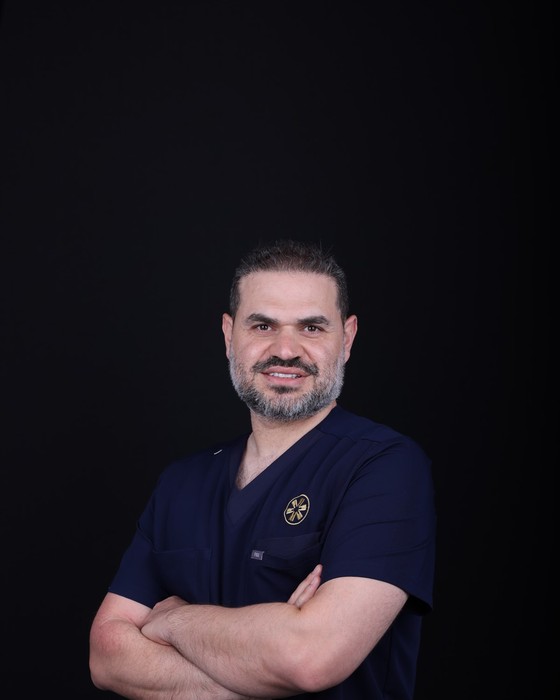
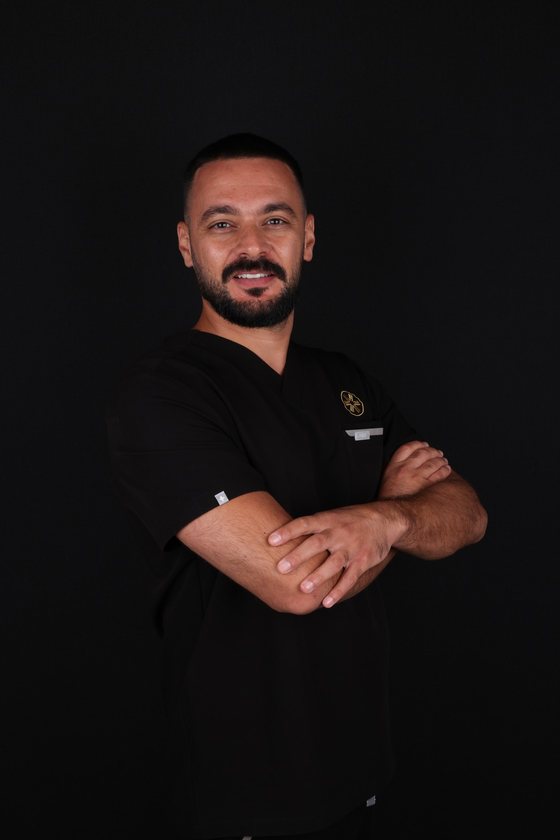
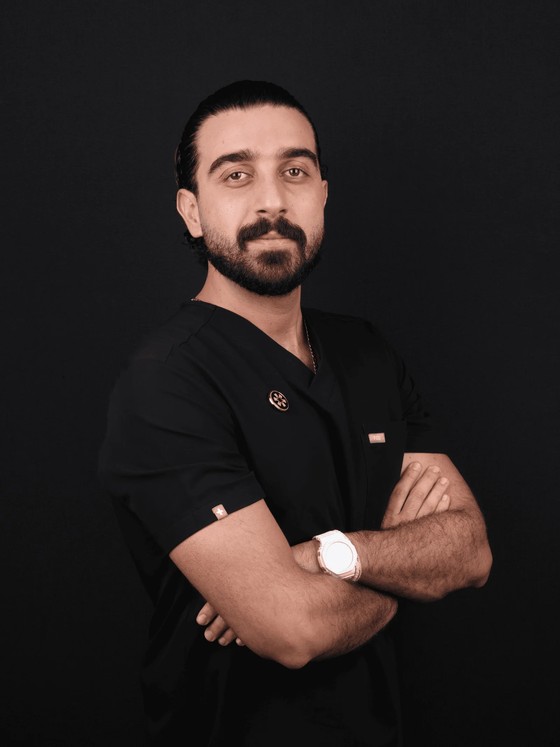
Dr. Khalid Saeed, Dr. Kinan Bonni and Dr. Somar Dahdal plan, prepare and fit Hollywood smiles, working with the ceramists at Creative Art Dental Lab, part of Creative Art Group, whose CEO Basem Tobaji is a Celebrity Smile Designer.
A useful guide is the whites of your eyes: teeth noticeably whiter than them tend to look artificial in daylight. Skin tone, age and your lower teeth also matter. The mock-up and try-in let you compare shades on your face, and the final choice is yours once you have seen the options.
Thin E.max or feldspathic porcelain usually gives the most lifelike translucency on teeth with good colour and enamel. Darker or crowned teeth may need layered zirconia or more masking ceramic. Design, layering and surface texture affect a natural look more than the material name.
Enough that the change ends where it is not noticed. For many people that means eight to ten upper teeth, so the transition to the back teeth sits in the shadow at the corners of the smile. A narrow smile may need fewer. Photographs of your full smile decide it.
Many people will notice your smile looks better without assuming veneers. Clues that give veneers away are extreme whiteness, identical tooth sizes, opaque edges, bulky thickness and a mismatched gum line. A natural design avoids each of these deliberately.
Yes. The design is copied onto your teeth as a temporary mock-up so you can see it in the mirror, in daylight and on camera, and hear how you speak. Shape, length and shade direction can be changed at this stage, before anything irreversible is done.
Often, if your lower teeth are noticeably darker than the planned upper shade. Whitening is done before the upper shade is finalised so both arches can be matched. If the lower teeth are worn or uneven, the plan may include bonding or veneers there too.
Natural-looking veneers usually means matching one or a few veneers to your remaining natural teeth. A natural Hollywood smile covers the whole visible arch, so there is no natural tooth left to copy and the shade, colour gradient, proportions and gum line are designed from scratch.
Tell us what you would like to change. The clinic replies within working hours with an appointment time.
Or call us +971 4 342 4444Or message us on WhatsApp
A consultation ends with a diagnosis and a written, itemised plan — not a sales pitch. Book online, message us on WhatsApp, or call the clinic.