
Single Tooth Implant in Dubai
One implant in the bone, one crown on top, and the teeth either side left untouched. How it compares with a bridge, what each visit involves and how long healing usually takes.
- 3D CBCT planning
- Crown made in the same building
- Written plan before treatment
The first visit is an examination with records. Nothing surgical happens until you have a written plan.
What is a single tooth implant?
A single tooth implant replaces one missing tooth with three parts: a post placed in the jawbone, a connector called an abutment, and a crown. The teeth on either side are not cut down, which is its main advantage over a bridge. At Creative Arts in Dubai the implant is planned from a 3D CBCT scan, the bone usually needs about 3–6 months to bond to it, and the crown is made in the laboratory in our building.
Single tooth implant in brief
- What it replaces
- One missing tooth, front or back, without cutting down the teeth either side
- The three parts
- The implant in the bone, an abutment through the gum, and the crown you see
- Anaesthesia
- Local anaesthetic; sedation can be discussed after a medical-history review
- Healing before the crown
- Usually about 3–6 months, often quicker in the lower jaw and longer after a bone graft
- Typical visits
- Assessment and scan, surgery, a healing check, then usually two short visits for the crown
- Who treats you
- Dr. Firas Osman, Dr. Khalid Saeed or Dr. Kinan Bonni plan and place the implant
- Where
- 614 Jumeira St, Jumeirah 3 — clinic and crown laboratory in the same building
Typical ranges, not promises. Your written plan sets out the timeline for your tooth.
Implant, bridge or leaving the gap: what changes for one missing tooth?
All three are legitimate choices. The right one depends on the teeth either side, the bone, and what you most want to avoid.
| Single implant | Tooth-supported bridge | Leaving the gap | |
|---|---|---|---|
| Teeth either side | Left untouched | Usually crowned to hold the false tooth | Untouched, but they can tilt into the space and the opposing tooth can over-erupt |
| Bone under the gap | Loaded through the implant, which helps keep it | Continues to shrink slowly | Shrinks gradually |
| Surgery | Minor surgery under local anaesthetic | None | None |
| Time to the final tooth | Usually 3–6 months or more | Usually a few weeks | — |
| Daily cleaning | Brush and floss as for a natural tooth | A threader or small brush under the false tooth | No change |
| Often chosen when | Neighbours are healthy and bone is adequate or can be rebuilt | Neighbours already need crowns, or surgery is not suitable | A last back tooth is missing and nothing bites against it |
For the detailed comparison read implant vs bridge for a missing tooth; for every tooth-replacement route see dental implants in Dubai.
Who is a single tooth implant suitable for?
Age alone rarely rules anyone out. These are the points the examination looks at; the implant candidates guide covers each in depth.
Usually a good starting point
- One missing tooth with healthy, unfilled teeth either side
- Healthy gums, or gum disease treated and stable
- Enough bone, or bone that can be rebuilt with a graft
- Jaw growth complete — usually from the late teens or early twenties
Treated first, or planned differently
- Active gum disease or decay elsewhere in the mouth
- Smoking or poorly controlled diabetes, which raise the risk of problems around implants
- Some osteoporosis or cancer medicines that affect jaw healing — your medical history is reviewed first
- Neighbouring teeth that already need crowns, where a bridge may make more sense
- Too little space between the neighbouring roots — orthodontics may come first
How a single tooth implant is done, visit by visit
Times vary with bone and healing. If the tooth is still present, its removal and any socket graft come first.
Examination and 3D scan
Gums, bite and neighbouring teeth are checked; a CBCT scan measures the bone and locates the nerve or sinus.
Visit 1Written plan
Implant, abutment, crown and any graft are itemised, with the alternatives, before you commit.
Before treatmentImplant placement
Under local anaesthetic, using a lab-printed surgical guide where the case calls for it. Discomfort afterwards is usually managed with over-the-counter pain relief.
SurgeryHealing
The bone bonds to the implant, usually over about 3–6 months, with a gum check a week or two after surgery.
3–6 monthsScan and shade
A scan body records the implant's exact position, and the shade of the neighbouring teeth is taken for the crown.
Crown stageCrown fitted
The crown is screwed or cemented on and the bite adjusted so the implant is not overloaded.
Final visit

Your implant crown is made in the same building
The crown is designed for your gap rather than taken from a stock shape. Creative Art Dental Lab, a separate business in the same building as the clinic, designs it from the scan of your implant, mills it in ceramic and finishes it by hand. For a visible tooth the ceramist sees your neighbouring teeth in person, under the same light as your dentist. More on how implant restorations are made.
- 1Scan — a scan body records the implant's exact position and angle
- 2Design — contour, contacts and bite designed on screen
- 3Material — often zirconia for back teeth, layered ceramic where the tooth must match its neighbours
- 4Fitting — screw-retained or cemented, chosen by your dentist
Back tooth or front tooth: does it change the plan?
Yes. A missing molar takes the heaviest chewing forces and, in the upper jaw, often sits just below the sinus, so a wider implant or a sinus lift may be planned. A missing front tooth is mainly an appearance challenge: thin bone, gum shape and shade decide the result. See front tooth implants.
What decides the cost of a single tooth implant?
We do not publish a single figure, because a complete quote depends on the tooth. See the implant cost guide for how each part is priced.
- Extraction first or notRemoving a failing tooth, and preserving the socket with a graft, adds a stage.
- Bone grafting or sinus liftNeeded only where the CBCT scan shows too little bone for the implant.
- Abutment and crown materialChosen for the position: strength for molars, appearance for front teeth.
- Temporary toothUsually needed for a visible gap, rarely for a back tooth.
- Surgical guideItemised when the case calls for guided placement.
Who places single tooth implants at Creative Arts?
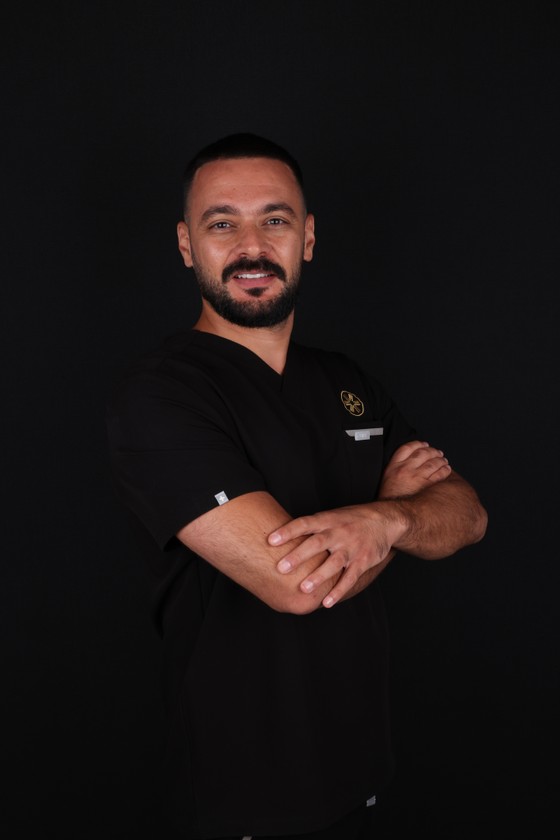
Dr. Firas Osman, Oral & Maxillofacial Surgeon & Implantologist, Dr. Khalid Saeed and Dr. Kinan Bonni plan and place implants. The plan starts from the finished tooth, and the crown is made in the laboratory in our building.

Frequently asked questions
How long does a single tooth implant take from start to finish?
From placement to the final crown usually takes about 3–6 months, because the bone needs time to bond to the implant. If the tooth still has to be removed, or a bone graft is needed, add the healing time for those steps. The lower jaw often heals faster than the upper. Your written plan gives the timeline for your tooth.
Do I need a bone graft for a single tooth implant?
Not always. The CBCT scan shows whether the bone is tall and wide enough. Bone shrinks after a tooth is lost, so a gap left for years, a tooth lost to infection or a thin ridge at the front more often needs grafting. Small grafts can often be placed with the implant; larger ones are done first and left to heal.
Can a single implant replace a missing back tooth?
Yes. Molars carry the heaviest chewing forces, so a wider implant and a strong crown, often zirconia, are usually chosen. In the upper jaw the sinus can sit close to where the roots were; if bone height is short, a sinus lift may be planned. The bite is checked carefully so the implant crown is not overloaded.
Will I have a gap while my single implant heals?
For a back tooth, most people simply leave the gap for the healing months. For a visible tooth, a temporary tooth is planned, such as one on a clear retainer or bonded to the neighbours. A temporary crown on the implant itself is possible only when the implant is very stable, and is decided case by case.
How long should a single tooth implant last?
An integrated implant can last many years, often decades, when it is kept clean and reviewed. The crown on top is more likely to need attention over time through wear, chipping or a loose screw. Smoking, poor cleaning around the implant and untreated grinding shorten the life of both, so reviews and professional cleaning matter.
Can I have a single implant if my teeth have drifted into the gap?
An implant needs enough room between the neighbouring roots and crowns. If teeth have tilted or drifted into the gap, there may be too little space, or the crown would look too narrow. Orthodontic treatment to reopen the space is sometimes recommended first; the CBCT scan and models show whether it is needed.
Related treatments
Request a consultation
Tell us what you would like to change. The clinic replies within working hours with an appointment time.
- Address614 Jumeira St, Jumeirah 3, Umm Suqeim 1, Dubai
- Opening hoursClinic open daily, 10:00–20:00
- Phone+971 4 342 4444 · WhatsApp +971 56 677 7537
Book Your Consultation
Or call us +971 4 342 4444Or message us on WhatsApp
Talk to a dentist about your case
A consultation ends with a diagnosis and a written, itemised plan — not a sales pitch. Book online, message us on WhatsApp, or call the clinic.