
Single implant crown
Replaces one tooth without touching its neighbours. Often the first choice when the teeth either side are healthy. See front tooth implants.
When a smile has a missing tooth and other teeth you want to improve, the replacement and the cosmetic work have to be designed as one smile, in the right order, so everything matches at the end.
The first visit includes an examination, X-rays or a CBCT scan where needed, and a written, itemised plan with alternatives.
Yes. The missing teeth are replaced with implants or a bridge as part of the same plan as any veneers, crowns or whitening. At Creative Arts in Dubai the whole smile is designed first, the foundations are treated, implants heal (typically 3–6 months), and the final ceramics are made together in our lab so the shade and shape match across natural teeth, veneers and implant crowns.
The right option depends on the neighbouring teeth, the bone and how many teeth are missing. Each one changes the plan for the rest of the smile.
Replaces one tooth without touching its neighbours. Often the first choice when the teeth either side are healthy. See front tooth implants.
Uses the neighbouring teeth as supports. Worth considering when those teeth need crowns anyway as part of the makeover. See dental bridges.
For two or more missing teeth in a row, fewer implants can sometimes carry a short bridge. See multiple teeth implants.
Sometimes orthodontics closes a small gap or moves space to where a replacement looks better. Your dentist will say if this is realistic.
The order matters more than in a makeover without gaps, because implants take time to heal and ceramics cannot be whitened afterwards.
Examination, photographs, an intraoral scan and CBCT imaging to assess the bone where teeth are missing.
Visit 1The final tooth shapes are designed and tried as a mock-up, so the implant can be positioned for the tooth that will sit on it.
Before surgeryGum treatment, fillings or root canal work on teeth that are staying. Whitening, if planned, is done now, before any shade is chosen.
Implant surgery, with bone grafting if needed, and a temporary tooth for the gap.
SurgeryThe implant integrates with the bone, typically over 3–6 months, often longer after grafting.
3–6 monthsVeneers, crowns and the implant crown are prepared, made and tried in together, then fitted and reviewed.
Final stage
Nobody should have to walk around with a visible gap for months. A temporary tooth is planned before surgery, and the type depends on the case:
The temporaries also work as a second mock-up: you live with the new length and shape before the final ceramic is made. Read more in our guide to temporary veneers.
Each restoration type gets its colour in a different way. That is why they are planned and made together, not one at a time.
| Restoration | What affects its colour | How the lab handles it |
|---|---|---|
| Natural tooth (whitened or not) | Its own enamel and dentine | Used as the reference; whitening is finished before shade is chosen |
| Veneer on a natural tooth | The tooth behind it shows through the thin ceramic | Thickness and layering set so the result matches its neighbours |
| Crown on a darker or root-treated tooth | The darker core underneath | More masking in the body of the crown, translucency kept at the edge |
| Implant crown | The abutment and metal underneath, and the gum around it | Material and abutment colour chosen so no grey shows through the gum |
| Gum-coloured ceramic | Lost gum and bone height in the gap | Pink ceramic considered where a tooth would otherwise look too long |
Our guide to matching veneers, crowns and implants explains these differences in more detail.

Veneers, crowns and implant crowns are designed and made at Creative Art Dental Lab, in the same building as the clinic. Making them as one set lets the ceramist balance thickness, layering and translucency across different materials. The ceramist can see your teeth in person, under the same light as your dentist, and same-day adjustments are possible at try-in.
Most adults with missing teeth can be treated, but some things change the plan or the timing.
An implant is a fixed point. Once it has integrated, it cannot be moved, and the crown on it can only be shaped within limits. If the implant is placed before the smile is designed, the final tooth may end up too long, too far forward or with a gum line that does not match its neighbours.
For that reason the finished smile, including any veneers that will change the length or width of the teeth around the gap, is designed and tried first. The surgical plan then works backwards from that design, using CBCT imaging and, where the case calls for it, a 3D-printed surgical guide. If the bone has shrunk since the tooth was lost, ridge augmentation may be needed first.
If you are still deciding between an implant and a bridge, our comparison of implants vs bridges sets out the trade-offs.
A smile makeover here starts with an examination and a digital plan. Dr. Kinan Bonni is one of the dentists at Creative Arts who works on smile makeovers and digital smile design with the in-house lab.
The plan is priced as the sum of its parts after examination. See the smile makeover cost guide for how quotes are built.
Your dentist designs the smile and the restorations; implant surgery is carried out by our implant team, with Dr. Firas Osman, Oral & Maxillofacial Surgeon & Implantologist, for more complex surgical cases.
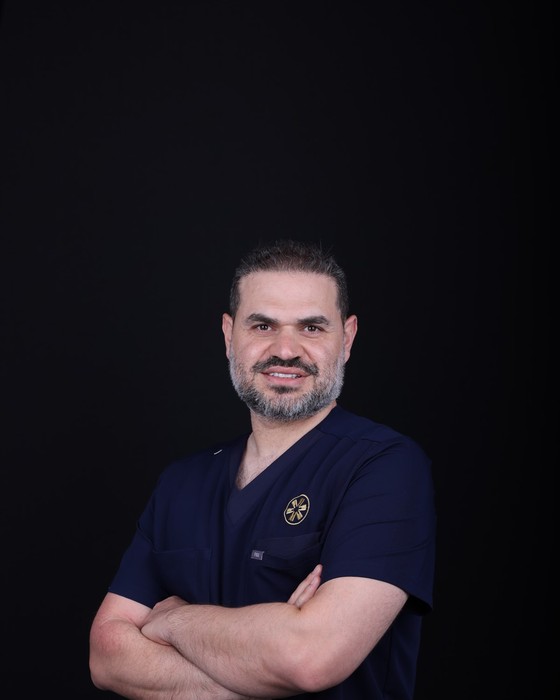 Dr. Khalid SaeedCo-founder & DentistCosmetic dentistry, veneers & implants
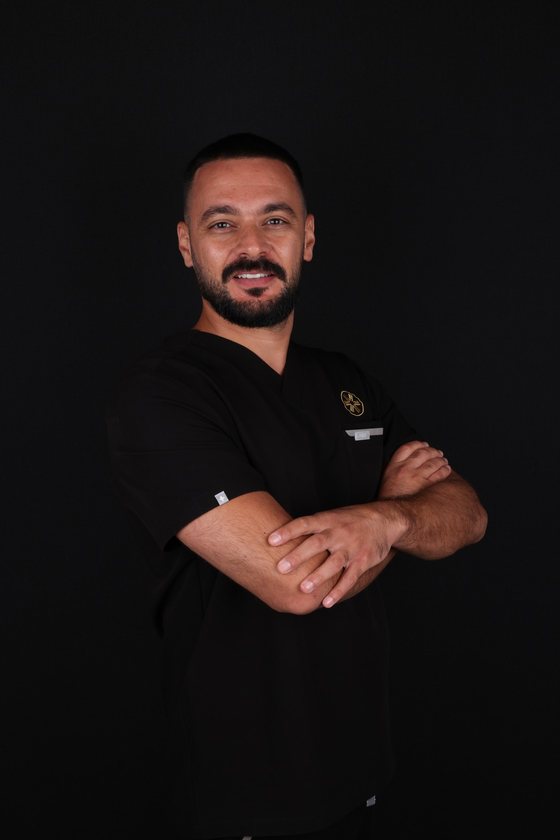 Dr. Kinan BonniDentistVeneers, cosmetic & implant dentistry, full mouth rehabilitation
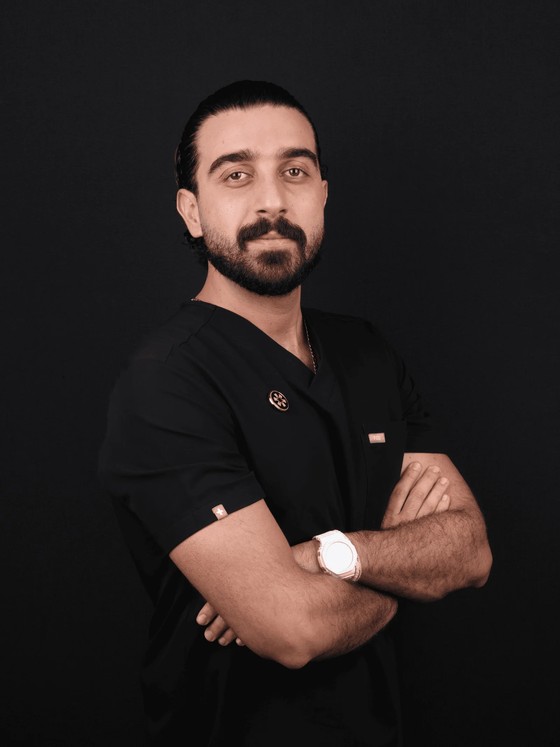 Dr. Somar DahdalGeneral DentistVeneers & smile makeovers
 Dr. Firas OsmanOral & Maxillofacial Surgeon & ImplantologistOral & maxillofacial surgery, implants, bone grafting
The smile is designed first, then the implant is placed, and the veneers and implant crown are made last, together. Placing veneers before the implant has healed risks a shade or shape mismatch with the implant crown. Whitening, if planned, comes before any ceramic shade is chosen.
With implants, usually several months, because an implant typically needs about 3–6 months to integrate, longer after bone grafting. A plan that uses a bridge instead can often be completed in weeks. Your written plan sets out each stage and its timing.
That is the aim of making them together. An implant crown and a veneer get their colour in different ways, so the ceramist adjusts thickness and layering for each. With the lab in the same building, the units are checked in your mouth at try-in and adjusted if needed.
Yes. If the teeth either side of the gap need crowns anyway, a bridge can be a sensible choice and is quicker. If they are healthy, an implant avoids preparing them. Your dentist will explain both options for each gap.
A temporary tooth is planned so the gap is not left open. Depending on the case it may be part of a temporary bridge, a removable temporary tooth, or occasionally a temporary crown on the implant if stability allows.
Yes. Back teeth matter for chewing and for supporting the bite, which protects new front veneers. Missing back teeth are often replaced as part of the plan even though they show less in the smile.
Yes. Implant surgery is done under local anaesthetic, and conscious sedation or other options can be discussed. The choice is made after a medical-history review and is given and monitored by an appropriately qualified clinician.
Tell us what you would like to change. The clinic replies within working hours with an appointment time.
Or call us +971 4 342 4444Or message us on WhatsApp
A consultation ends with a diagnosis and a written, itemised plan — not a sales pitch. Book online, message us on WhatsApp, or call the clinic.