
A talk-first visit
Your first appointment can be just a conversation and an examination. Seeing the room and meeting the dentist removes much of the unknown.
If fear has kept you away, start with a conversation, not a procedure. We explain each step, agree a stop signal, keep early visits short and offer sedation only where it genuinely helps.
You can tell us on WhatsApp that you are anxious before you arrive. Nothing is done on the first visit unless you agree to it.
At Creative Arts in Dubai, care for nervous patients starts with a conversation and an examination, with no treatment unless you agree. We explain each step before it happens, agree a stop signal, numb the gum with gel before a slow injection, and keep early visits short. If that is not enough, laughing gas, tablet sedation, IV sedation or, for selected cases, general anaesthesia can be discussed after a medical review.
Dental anxiety is common: a tight feeling before appointments, dread of the injection or the sound of the drill, a bad night's sleep beforehand. Most anxious people still attend, uncomfortably. Dental phobia is stronger: the fear is intense enough that you avoid the dentist altogether, sometimes for years, until pain forces a visit.
The difference changes the approach. Anxiety usually responds to explanation, control and good numbing. Phobia often needs a slower start and, for some treatment, sedation. Avoidance also feeds itself: problems grow, treatment becomes bigger and the next visit feels even more daunting. One manageable appointment is how that cycle breaks.
None of these needs medication, and for many people they are enough on their own.
Your first appointment can be just a conversation and an examination. Seeing the room and meeting the dentist removes much of the unknown.
You raise a hand and the dentist stops. Fear is largely about losing control; a signal that is always respected gives it back.
You are told what is about to happen, what you will hear and feel, and how long it lasts, so nothing comes as a surprise.
Numbing gel first, then local anaesthetic given slowly, because a rushed injection is a common source of pain. If you feel anything sharp, we stop and top up.
Early appointments are kept short, with breaks whenever you need them. Bigger treatment comes once you know what to expect.
Fear is rarely general. Naming what bothers you most lets the dentist plan around it.
| What you fear | What usually helps | When sedation is worth discussing |
|---|---|---|
| Needles and injections | Numbing gel, a slow injection, not having to look, being told just before it starts | If even the thought of the needle is overwhelming, laughing gas first can take the edge off |
| Pain during treatment | Checking you are numb before starting, and stopping to top up if you feel anything sharp | Rarely needed for pain itself: local anaesthetic does that job |
| The sound or vibration of the drill | Breaks, knowing what each sound is, music through your own headphones | If the noise still triggers panic |
| Gagging | Breathing techniques, short steps, changing position in the chair | Often eased by laughing gas or tablet sedation |
| Feeling trapped or out of control | The stop signal, sitting up between steps, knowing how long each step takes | Conscious sedation relaxes you while you can still communicate |
| A bad past experience | A first visit with no treatment, and an explanation of what will be different | For longer or surgical treatment, IV sedation, after which many people remember little |
General patterns only; you and the dentist decide together. Any sedation is chosen after a review of your medical history.
The order matters as much as the treatment. This is the usual sequence, adjusted to you.
Mention your anxiety when booking or on WhatsApp, so the first appointment is booked with time to talk.
Before you comeA conversation about what worries you, then an examination, with X-rays only if you are ready. You leave with a written plan in order of priority.
First visitAn aching tooth is treated first, as simply as possible, so the rest of the work is not done under pressure.
If neededA gentle clean or a small filling builds confidence. Guided Biofilm Therapy uses warm water and air-polishing, with ultrasonic scaling only where tartar remains.
Early visitsSurgery, several extractions or implants can be done with laughing gas, tablet or IV sedation; general anaesthesia is kept for selected cases.
LaterRegular short check-ups keep problems small, so appointments stay manageable.
OngoingIn pain right now? Contact the clinic during opening hours; see emergency dental care.
Sometimes, and for surgery it is often the kindest option. But sedation manages fear during one appointment; it does not make the next one easier. For routine care such as check-ups and cleaning, the techniques above usually work better, because each manageable visit builds confidence for the following one.
When sedation does make sense, there are levels. Laughing gas is light and wears off within minutes. Tablet sedation is deeper but less adjustable. IV sedation is the deepest conscious sedation. General anaesthesia, given by an anaesthesiologist, is reserved for selected cases such as extensive surgery, or severe phobia where sedation is not enough. Each option is chosen after a review of your medical history and given and monitored by an appropriately qualified, licensed clinician; tablet sedation, IV sedation and general anaesthesia need an adult escort home. These options are part of our oral and maxillofacial surgery service.
You will not be lectured. Long gaps between dental visits are common, and the only useful question is what to do next. You receive an honest picture of your teeth and gums, the options in order of priority, and a written plan you can work through at your own pace.
Dr. Duaa Ameen provides general and preventive care. Dr. Khalid Saeed, Dr. Kinan Bonni and Dr. Firas Osman plan and carry out implant and surgical treatment, with sedation where it helps.
 Dr. Firas OsmanOral & Maxillofacial Surgeon & ImplantologistOral & maxillofacial surgery, implants, bone grafting
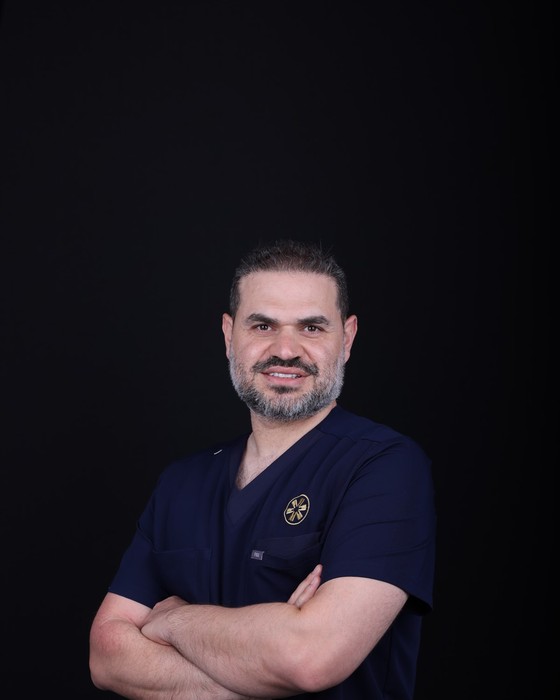 Dr. Khalid SaeedCo-founder & DentistCosmetic dentistry, veneers & implants
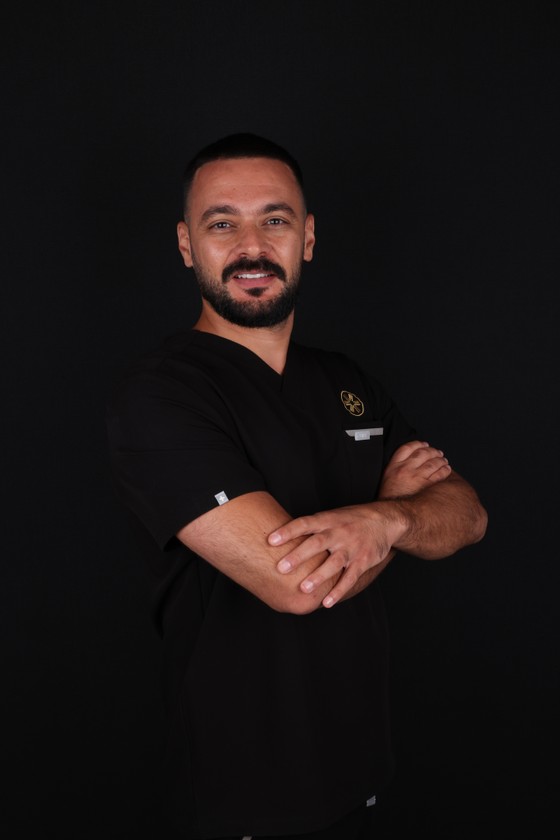 Dr. Kinan BonniDentistCosmetic & implant dentistry, full mouth rehabilitation
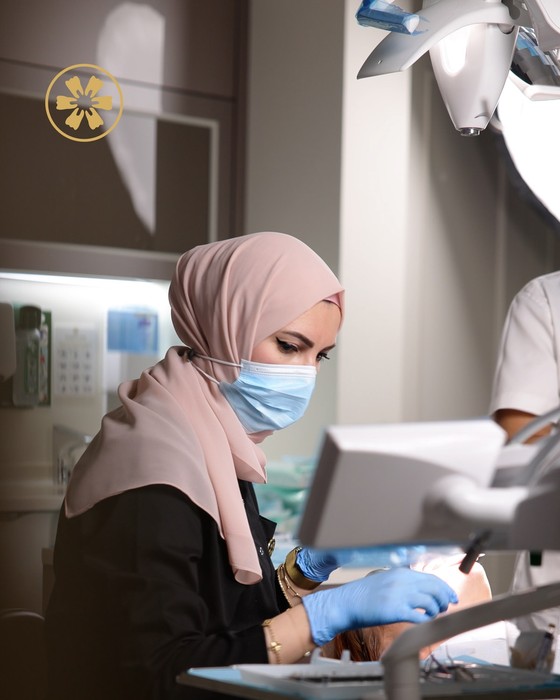 Dr. Duaa AmeenGeneral DentistGeneral & conservative cosmetic care
Yes. A first visit can be just a conversation and an examination, and you decide whether X-rays or anything else happen that day. Meeting the dentist and seeing the room, with no pressure to start treatment, often makes the next appointment much easier to attend.
Say what specifically worries you, such as needles, pain, gagging, sounds, feeling trapped or a previous bad experience, and what has helped before. Mention medical conditions and medicines too, because they affect numbing and sedation options. The more specific you are, the more the visit can be planned around you.
Yes. Before starting you agree a stop signal, usually a raised hand, and the dentist stops when you use it. You can sit up, breathe and ask questions, and continue only when you are ready. Knowing you can stop at any time often reduces the urge to stop at all.
It is possible but rarely necessary. Most anxious patients manage a cleaning with explanation, breaks and gentle techniques; Guided Biofilm Therapy uses warm water and air-polishing first. If the gums are inflamed, numbing gel or local anaesthetic can be used. Laughing gas remains an option if you still need it.
It depends on the treatment and on you. Laughing gas suits milder anxiety and shorter visits; tablet and IV sedation suit stronger fear and longer procedures, and need an adult escort; general anaesthesia is reserved for selected cases. Our sedation dentistry guide compares them, and the choice follows a medical review.
Start with a consultation and examination, not treatment. You receive an honest picture of your teeth and gums and a written plan in order of priority: anything painful or urgent first, then the rest at a pace you can manage. Short early visits build confidence before longer treatment.
Not necessarily. Numbing gel before the injection and a slow delivery make it much easier for most people, and you do not have to watch. If the needle is your main fear, laughing gas beforehand can help. IV sedation also starts with a needle, so it is not always the answer for needle fear.
Tell us what you would like to change. The clinic replies within working hours with an appointment time.
Or call us +971 4 342 4444Or message us on WhatsApp
A consultation ends with a diagnosis and a written, itemised plan — not a sales pitch. Book online, message us on WhatsApp, or call the clinic.