
No-Prep Veneers in Dubai
Ultra-thin ceramic bonded without drilling the tooth. Excellent in the right case, disappointing in the wrong one — and a mock-up can show which one you are before anything is committed.
- Tested with a mock-up first
- Minimal-prep offered as a middle ground
- Thin ceramic made in the same building
The honest answer comes from an examination and a trial smile, not a photo. Many people are better suited to minimal-prep or to bonding.

What are no-prep veneers?
No-prep veneers are very thin ceramic veneers bonded to the front of the teeth without removing enamel first. Because they add thickness, they only look natural on teeth that are small, set back or spaced. At Creative Arts we offer no-prep veneers where the case allows, and test the result with a mock-up before deciding; for many people minimal-prep is the better option.
Who are no-prep veneers actually for?
A no-prep veneer adds a layer to the tooth. That only works if there is room for the layer — in the tooth's size, its position in the arch, or both.
Often suitable
- Teeth that are genuinely small, short or narrow
- Front teeth that sit slightly behind the line of the arch
- Spacing or small gaps that the extra width can close
- Worn edges where length is being added back
- Small or peg-shaped lateral incisors
Usually not suitable
- Normal-sized teeth in a normal position — they end up looking oversized
- Teeth that stick forward or are crowded — see options for crooked teeth
- Very dark teeth, where a thin shell cannot hide the colour underneath
- Heavy grinding without a night guard
- Colour-only concerns, which whitening addresses without any veneer

Why no-prep veneers can make normal-sized teeth look bulky
Even the thinnest veneer has thickness. Bond it to a tooth that is already the right size and in the right place, and that tooth becomes slightly too big and slightly too far forward. Across six or eight teeth, the effect adds up.
- Lips are pushed forward, which can change your profile and how your lips sit at rest.
- The edges look thick, because a veneer has to finish somewhere and there is no step in the tooth to hide it.
- The gum margin is harder to clean if the veneer creates a ledge, which can lead to inflamed gums around otherwise sound work.
This is why clinics in Dubai and elsewhere that offer no-prep "for everyone" produce smiles that look like a row of added teeth. The ceramic is not the problem; the case selection is.
No-prep, minimal-prep or conventional veneers?
These sit on a spectrum. The design decides where on it your teeth fall, and different teeth in the same smile can fall in different places.
| No-prep | Minimal-prep | Conventional prep | |
|---|---|---|---|
| Enamel removed | None | A little, only where the design needs space | A fraction of a millimetre across the front surface |
| Best for | Small, set-back or spaced teeth | Most people who want a conservative veneer | Larger changes in colour, shape or position |
| Risk of bulk | High on normal-sized teeth | Low when design-led | Low |
| Colour masking | Limited | Moderate | Good |
| Anaesthetic | Usually not needed | Sometimes | Usually used |
| Reversibility | Largely reversible | Not fully reversible | Not reversible |
Minimal-prep keeps the reduction within enamel wherever possible, which also gives the strongest bond. See the main veneers page for how preparation is planned.
What are ultra-thin veneers, and do they need drilling?
"Ultra-thin" describes thickness, not a separate treatment. It means ceramic veneers made at the thin end of what the material allows, often only a few tenths of a millimetre. An ultra-thin veneer can be bonded with no preparation or with minimal preparation; the thinness alone does not tell you which, so ask for each tooth.
Two ceramics are used for this work. Feldspathic porcelain is layered by hand and can be made thinnest, which suits highly aesthetic cases with good enamel and a favourable bite. Lithium disilicate (E-max) is stronger and can also be made very thin.
The trade-offs match no-prep veneers: limited masking of dark teeth and reliance on a strong enamel bond.
Are no-prep veneers really reversible?
More reversible than any other veneer, but not quite like taking off a sticker. The ceramic is bonded to enamel with adhesive resin. Removing it later means carefully cutting the ceramic away and polishing off the remaining bonding material, which a dentist can do with the tooth left essentially intact.
The tooth underneath will look much as it did before. "Reversible" means you have not lost tooth structure, not that the tooth returns to a better state.
With minimal-prep the answer changes: a small amount of enamel has been removed, so going back means another restoration, not bare teeth.
How a mock-up tells you whether no-prep will work
The trial smile is effectively a no-prep veneer made of temporary material, which makes it the most honest test there is.
Examination and scan
Tooth size, position, colour, gum health and bite are assessed; a digital scan records the arch.
Visit 1Design
The new tooth shapes are designed against your face and lips using digital smile design.
Design stageTrial smile
The design is placed over your unprepared teeth. If it looks and feels right, no-prep may work. If it looks bulky, preparation will be needed on those teeth.
Before any decisionTooth-by-tooth plan
Some teeth may stay no-prep while others need a little reduction. The written plan states which, and why.
Written plan

Why thin veneers depend on the laboratory
A no-prep veneer can be only a few tenths of a millimetre thick at its edges, and it has to blend into an unprepared tooth with no step to hide the join. That is technician work. The laboratory is in the same building, so the technician can see your teeth in person when choosing shade and deciding how thin each edge can go.
- 1Consultation & records — examination, photographs and the radiographs your case needs
- 2Digital scan — an intraoral scan replaces impression trays for most cases
- 3Design — the restoration or smile is designed digitally and reviewed with you
- 4Lab fabrication — milled from ceramic, then hand-finished for shade and texture
- 5Try-in — shade, shape and fit checked in your mouth, adjusted in-house if needed
- 6Placement & review — bonded or cemented, bite balanced, reviewed afterwards
Lumineers vs lab-made ultra-thin veneers: what is the difference?
Lumineers is a brand name, often used loosely for any thin, no-prep veneer. We do not offer that branded product, so the useful comparison is between a branded system and thin veneers designed for your teeth.
| Branded no-prep veneers (e.g. Lumineers) | Lab-made ultra-thin veneers | |
|---|---|---|
| What it is | A trademarked line of thin veneers made to the brand's system | Thin veneers designed tooth by tooth and made in the laboratory in our building |
| Material | Set by the brand | Chosen for the case, such as E-max or feldspathic porcelain |
| Preparation | Marketed as no-prep; in practice it depends on the teeth | No-prep or minimal-prep, decided by the mock-up |
| Shade | Made from the dentist's prescription | The technician can see your teeth in person when setting the shade |
| Who it suits | The same narrow group as any no-prep veneer | The same narrow group; minimal-prep for most others |
Brand names belong to their owners. The case selection rules on this page apply to any thin veneer, branded or not.
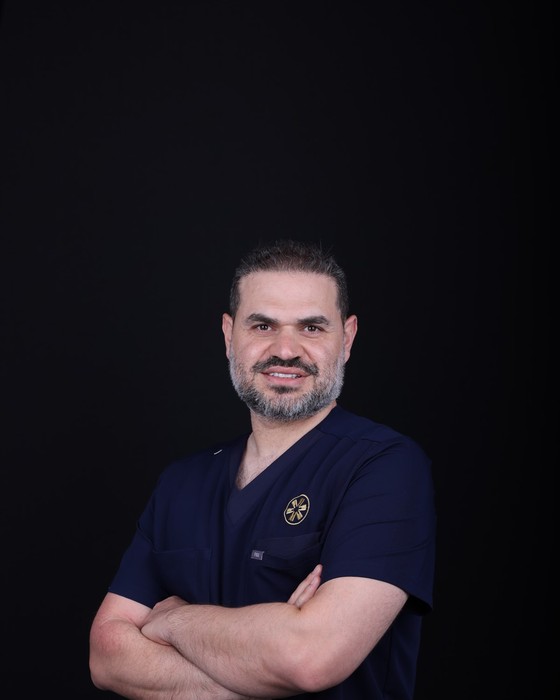
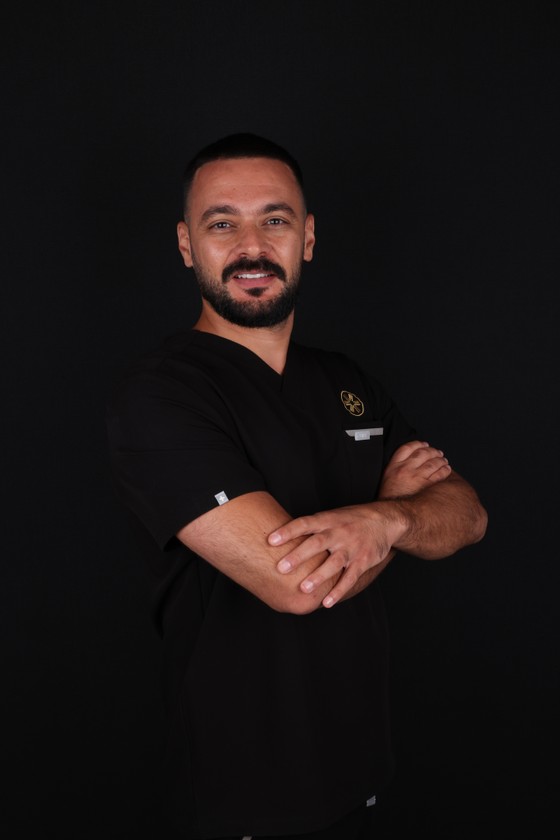
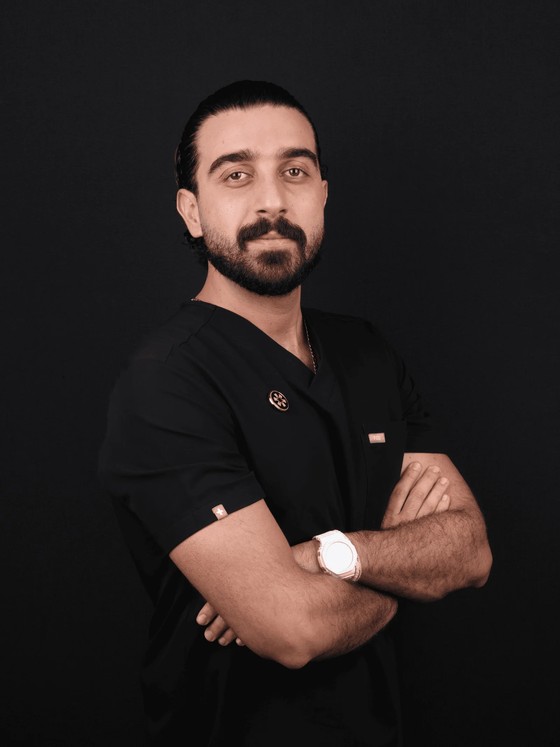
Dentists who plan conservative veneer cases
At our Dubai clinic, whether a tooth needs preparation is decided by the dentist from the design and trial smile, not assumed in advance.
Frequently asked questions
Can anyone get no-prep veneers?
No. They suit a narrow group: teeth that are small, set back in the arch or spaced. On normal-sized teeth in a normal position, adding even a thin layer makes them look larger and pushes the lips forward. A mock-up placed over your unprepared teeth is the clearest way to see whether no-prep will look right for you.
Are no-prep veneers the same as Lumineers?
No. Lumineers is one brand of ultra-thin veneer, and the name is often used for any no-prep veneer. We do not offer the branded product; our thin veneers are made in the laboratory in our building, in lithium disilicate or feldspathic porcelain depending on the case.
Are ultra-thin veneers the same as no-prep veneers?
Not exactly. Ultra-thin describes how thick the ceramic is; no-prep describes whether the tooth is reduced. Most no-prep veneers are ultra-thin, but ultra-thin veneers are also often bonded after minimal preparation, where a little enamel is smoothed so the veneer does not add bulk. Your plan should state which applies to each tooth.
Which material is used for ultra-thin veneers?
Usually feldspathic porcelain or lithium disilicate (E-max). Feldspathic porcelain is hand-layered and can be made thinnest, which suits selected aesthetic cases with good enamel. E-max is stronger and also works well thin. The choice is made at examination, based on your enamel, bite and the colour change you want.
How long do no-prep veneers last?
When the case is chosen well, thin ceramic bonded entirely to enamel can last as long as a conventional veneer — often ten years or more with good care. Problems usually come from poor case selection: bulky margins that trap plaque, or thin edges on teeth that take heavy bite forces.
Do no-prep veneers hurt?
Because no enamel is removed, local anaesthetic is usually not needed and the teeth are not sensitive afterwards the way prepared teeth can be. Fitting involves cleaning, conditioning and bonding the veneers, then checking the bite.
What is minimal-prep, and is it better?
Minimal-prep means removing a small amount of enamel only where the design needs room, often just at the edges or where a tooth sits forward. For most people it is the better balance: it avoids bulk, keeps the bond in enamel and removes far less than conventional preparation. Many smiles combine no-prep and minimal-prep teeth.
Can no-prep veneers cover dark or stained teeth?
Only to a limited degree. A very thin shell lets some of the colour underneath show through. Mild discolouration can often be managed, especially after whitening, but a dark tooth usually needs a slightly thicker veneer or a more opaque ceramic, which means some preparation.
Related treatments
Request a consultation
Tell us what you would like to change. The clinic replies within working hours with an appointment time.
- Address614 Jumeira St, Jumeirah 3, Umm Suqeim 1, Dubai
- Opening hoursClinic open daily, 10:00–20:00
- Phone+971 4 342 4444 · WhatsApp +971 56 677 7537
Book Your Consultation
Or call us +971 4 342 4444Or message us on WhatsApp
Talk to a dentist about your case
A consultation ends with a diagnosis and a written, itemised plan — not a sales pitch. Book online, message us on WhatsApp, or call the clinic.