Bleeding around the implant
Bleeding when you brush or floss beside an implant is the earliest common sign of inflammation.
Implants cannot decay, but the gum and bone that hold them can become inflamed. Regular professional cleaning and the right home tools are what keep an implant healthy.
If your implants were placed elsewhere, bring any implant card or records you have.

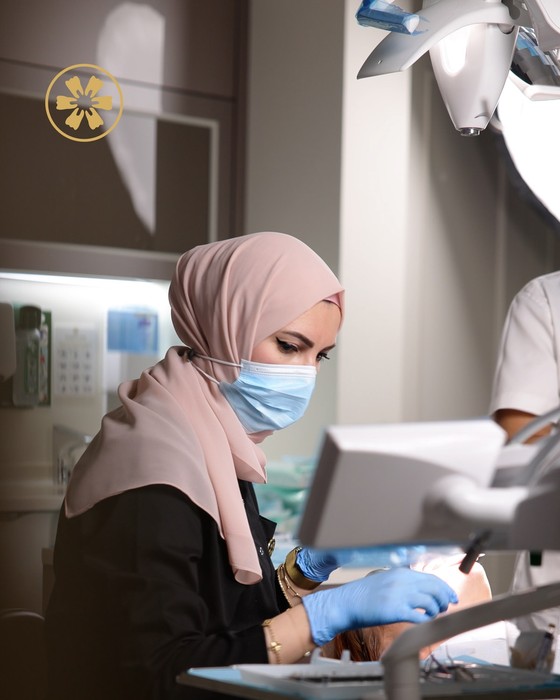
Dental implants are cleaned with methods that remove plaque without scratching the implant or its crown. At Creative Arts in Dubai, implant maintenance uses Guided Biofilm Therapy: plaque is disclosed, removed with warm water, air and fine powder, and cleaned below the gum line where needed, while the gum around each implant is checked for early inflammation. Visits are typically every three to six months, set by your risk.
An implant and its crown cannot get cavities, but plaque sticks to them exactly as it does to natural teeth. What is at risk is the tissue around the implant. A natural tooth is attached to the bone by a ligament with its own blood supply; an implant is fused directly to the bone and the gum seals around it differently, so once inflammation starts it can travel down to the bone.
Risk is higher with smoking, poor plaque control, poorly controlled diabetes, a history of gum disease and restorations that are hard to clean under. Regular cleaning finds mucositis while it is still reversible; see also signs of a failing implant.
Trouble around an implant often causes no pain at first, so watch for these signs.
Bleeding when you brush or floss beside an implant is the earliest common sign of inflammation.
The gum collar around the implant looks puffy or darker than elsewhere, or feels sore.
Discharge, or a bad taste from one spot, suggests infection below the gum and needs prompt assessment.
A grey edge appearing where the gum used to be can mean gum and bone have receded.
Often a loosened screw, usually fixable, rather than a loose implant; both need checking. See implant repair.
A check-up of the implant combined with a clean designed for implant surfaces.
Changes in medication, diabetes or smoking are noted. Each implant is gently probed and bleeding and pocket readings are compared with your last visit.
StartThe restoration is checked for looseness, chips and how it meets the opposite teeth.
StartTaken at intervals, not every visit, to compare the bone level with earlier images.
If duePlaque is coloured, then removed from the crown, implant neck and under bridges with warm water, air and fine powder; a fine nozzle cleans pockets below the gum.
Main stepHard deposits are removed with instruments chosen for implant surfaces, then you are shown the tools that fit your implants and given a recall date.
End
A full-arch bridge on implants replaces a whole row of teeth, and the area where it rests on the gum is the hardest place to keep clean. Plaque collects there out of sight, so inflammation can build unnoticed.
Read more about All-on-4 full-arch implants and full mouth implants.
Most implant problems begin with plaque left at home. Your dentist shows you which of these fit your implants.
| Tool | Best for | Tip |
|---|---|---|
| Soft manual or electric toothbrush | Every implant crown and bridge | Angle the bristles towards the gum line; a hard brush does not clean better |
| Interdental brushes | Gaps beside single implants and under bridges | Use plastic-coated wire in the size chosen at your visit |
| Floss with a threader end | Around implant necks and under bridges | Loop it around the implant neck instead of snapping it down |
| Water flosser | Full-arch bridges, braces, limited dexterity | Flushes debris well, but does not replace brushes for sticky plaque |
| Low-abrasion fluoride toothpaste | Implant crowns and any natural teeth | Avoid charcoal and gritty whitening pastes that can dull the glaze of crowns |
Gritty products can scratch crowns and bridges; see which whitening products are safe.
Visits every three to six months are typical, and the dentist sets your interval from what is found around your implants. Expect to be seen more often if you smoke, have diabetes, have had gum disease, have a full-arch bridge or find cleaning difficult; stable, healthy gums with good home care can allow longer gaps. Our guide on how often to have your teeth cleaned explains risk-based recall, and implant aftercare covers the first weeks after surgery.
If the check finds bone loss, persistent pus, a loose implant or a damaged crown, cleaning alone will not solve it. You are referred within Creative Arts to Dr. Firas Osman, Oral & Maxillofacial Surgeon & Implantologist, or to Dr. Khalid Saeed or Dr. Kinan Bonni, who place and restore implants and set out the options in a written plan.
The fee follows the work your implants need. See our teeth cleaning cost guide for how cleaning appointments are priced.
Dr. Duaa Ameen, Dr. Julia and Dr. Taban Ameen provide Guided Biofilm Therapy and implant maintenance, working with the implant dentists when a problem needs further treatment.
Typically every three to six months. The interval is set by your risk: smoking, diabetes, previous gum disease, full-arch bridges and difficulty cleaning all mean more frequent visits. If your gums stay healthy and stable over time, the dentist may lengthen the interval. Missing visits is how early, reversible inflammation turns into bone loss.
They can. Scratches on the implant or abutment surface give plaque more places to hold on. That is why implant maintenance relies on air polishing with fine powder and on instruments chosen for implant surfaces, with metal scraping avoided around the implant itself. Tell any clinic that cleans your teeth where your implants are.
Usually not. Air polishing feels like a warm spray, and probing around a healthy implant is gentle. If the gum is inflamed it may feel tender, and the dentist can adjust the approach or numb the area if a deeper clean is needed. Bleeding during the clean is a sign of inflammation worth acting on.
Yes. Cleaning and checking implants does not depend on who placed them, so implants from another clinic are maintained in the same way. Bring any implant card, X-rays or treatment notes you have. If a repair or replacement part is ever needed, the implant system has to be identified first, which is much easier with your records.
Not at every visit. Much of the cleaning can be done with the bridge in place. A screw-retained full-arch bridge can be removed by the dentist when a more thorough clean or inspection is needed; how often that happens depends on how well the area stays clean and on what the checks show.
Gum inflammation without bone loss, called peri-implant mucositis, is usually reversible with professional cleaning and better home care. Once bone has been lost, as in peri-implantitis, treatment aims to stop the infection and stabilise the implant; lost bone does not always return. This is why regular checks matter.
Tell us what you would like to change. The clinic replies within working hours with an appointment time.
Or call us +971 4 342 4444Or message us on WhatsApp
A consultation ends with a diagnosis and a written, itemised plan — not a sales pitch. Book online, message us on WhatsApp, or call the clinic.