Decisions made before the day
Distances to the nerve, sinus and neighbouring roots are measured on the 3D model rather than estimated during surgery.
Your implant position is planned on a 3D model of your jaw before surgery, then transferred to the mouth with a guide printed in our laboratory — where the case calls for it.
Whether a guide adds value is decided after the 3D scan. You can see your planned implant position before you agree to treatment.

Guided implant surgery means the implant position is planned on a computer before the operation, using a 3D CBCT scan of the bone and a digital scan of the teeth, then transferred to the mouth with a custom surgical guide that steers the drill. At Creative Arts in Dubai the guides are 3D-printed in our in-house laboratory and used where the case calls for it; the surgeon still checks every step.
The guide is a planning tool; the surgeon remains responsible for every step of the operation.
The plan starts from the tooth you will end up with and works backwards to the implant.
A 3D X-ray shows bone height and width, the nerve canal in the lower jaw, the sinus in the upper jaw and the roots of neighbouring teeth.
RecordsA digital scan records the surface of the teeth and gum, which the X-ray shows poorly.
RecordsThe two scans are aligned and the future crown or bridge is designed, so the implant can be positioned beneath it.
PlanningImplant size, depth and angle are set with safe distances from nerve, sinus and roots, and any grafting need is identified.
PlanningCreative Art Dental Lab 3D-prints a guide that fits over the teeth or gum, with sleeves that direct the drills.
In our labThe guide is seated, its fit confirmed, and the implant placed through it under local anaesthetic, with the surgeon checking position throughout.
SurgeryA guide does not replace the surgeon's judgement. It moves key decisions from the operating chair to the planning screen.
Distances to the nerve, sinus and neighbouring roots are measured on the 3D model rather than estimated during surgery.
The angle is chosen so the crown emerges naturally and, on front teeth, the screw access sits behind rather than on the visible surface.
Where bone and gum are favourable, the implant may go in through a small opening instead of a lifted flap of gum. This is decided per case.
For bridges and full-arch work, implants are placed so the restoration can seat on all of them at once.
Both are established techniques, and both start from a 3D scan. The difference is how the plan is transferred to the mouth.
| Guided (with a surgical guide) | Freehand | |
|---|---|---|
| How position is transferred | Drills pass through sleeves in a custom guide | The surgeon follows the plan by direct vision and measurement |
| Extra steps | Intraoral scan, digital design and guide printing before surgery | None beyond the planning scan |
| Most useful for | Several implants, full arches, front teeth, implants near the nerve or sinus | Straightforward single implants in wide bone with good access |
| Flexibility during surgery | Lower; a change of plan may mean continuing without the guide | Higher; the surgeon adapts to what is found |
| Mouth opening needed | More, because the guide and longer drills need room at the back | Less |
Neither technique changes how long the bone takes to heal. Your surgeon recommends one for your case and explains why.
A guide improves how faithfully a plan is carried out. It does not change biology, and it is only as good as the information behind it.
For the whole sequence from consultation to final crown, read the dental implant process.

Creative Art Dental Lab is a separate business in the same building as the clinic, at 614 Jumeira St, Jumeirah 3. It 3D-prints surgical guides and also designs and makes the crowns, bridges and full-arch prostheses that go on the implants.
Read more about the digital design and milling behind this work, or the wider dental implant service.
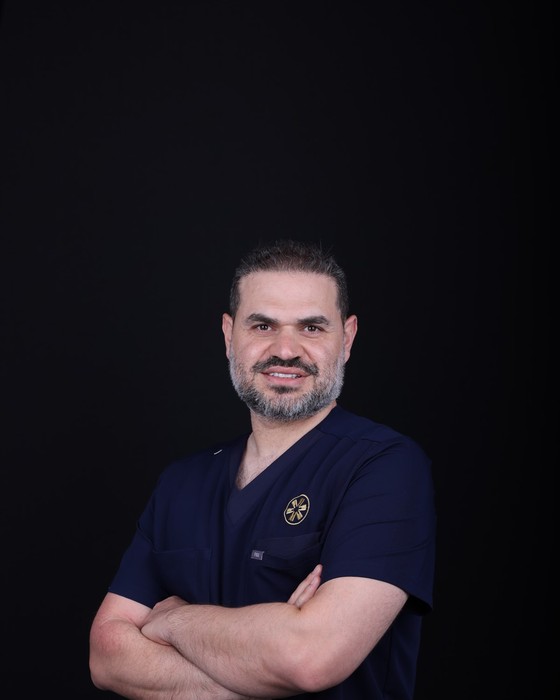
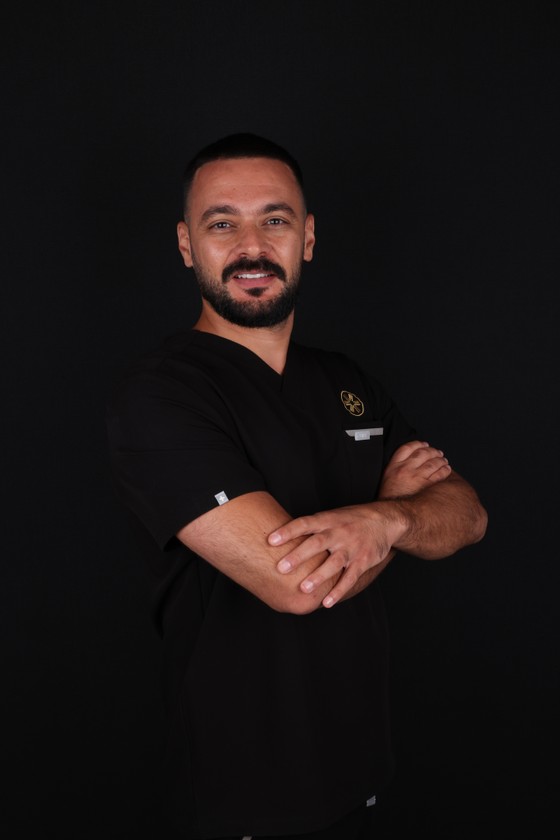
Dr. Firas Osman, Oral & Maxillofacial Surgeon & Implantologist, Dr. Khalid Saeed and Dr. Kinan Bonni plan and place implants and decide, case by case, whether a guide adds value.
A well-fitting guide generally brings the implant closer to its planned position than freehand placement, which matters most in complex cases. It is not perfect: scan quality and how the guide seats affect the result, and small deviations can occur. That is why the surgeon still checks position during the operation.
No. Many single implants in wide bone are placed well freehand from a CBCT plan. A guide is most useful when several implants must line up, when the implant is close to the nerve or sinus, or for front teeth. Your surgeon recommends one where the case calls for it.
Sometimes. With enough bone and healthy gum, a guide can allow the implant to be placed through a small opening instead of lifting a flap, which may mean less swelling. Where bone needs grafting or must be seen directly, a flap is still used. This is decided per case.
The guide needs scans, a digital plan approved by the surgeon and printing in the lab, so it adds a planning stage before surgery. The timing is set out in your written plan; urgent cases are discussed against the lab's current schedule.
A dental CBCT uses X-rays, generally at a lower dose than a medical CT scan of the head, and is taken only when the information is needed for planning. Tell the clinic if you are or may be pregnant. The same scan also shows whether bone grafting will be needed.
Yes. Full-arch cases benefit from digital planning, because the implants must support one bridge while avoiding the nerve and sinus. The number of implants per arch is decided by planning, not fixed in advance; see All-on-4 vs All-on-6.
No. The bone usually needs about 3–6 months to bond to the implant whether or not a guide is used. A smaller opening may mean less swelling in the first days, but that varies. Whether a temporary tooth can be attached early still depends on implant stability, judged case by case.
Tell us what you would like to change. The clinic replies within working hours with an appointment time.
Or call us +971 4 342 4444Or message us on WhatsApp
A consultation ends with a diagnosis and a written, itemised plan — not a sales pitch. Book online, message us on WhatsApp, or call the clinic.