
Surgical Orthodontics in Dubai: Braces with Jaw Surgery
When the jaws, not only the teeth, are out of proportion, braces and corrective jaw surgery work as one plan. Who needs it, and what each phase involves.
- Specialist orthodontists
- Surgical planning with Dr. Firas Osman
- CBCT 3D imaging
The first visit is an assessment with records. You decide on surgery only after a written plan that also explains the alternatives.

What is surgical orthodontics?
Surgical orthodontics combines braces with corrective jaw (orthognathic) surgery for adults whose bite problem comes from the size or position of the jaws. Braces first align the teeth over each jaw, the operation repositions one or both jaws under general anaesthesia in a hospital setting, and orthodontics then finishes the bite. At Creative Arts in Dubai, our specialist orthodontists plan this with Dr. Firas Osman, Oral & Maxillofacial Surgeon & Implantologist.
Surgical orthodontics at Creative Arts in brief
- Who it is for
- Adults whose jaw growth has finished, with a skeletal underbite, severe overbite, open bite or jaw asymmetry
- Orthodontic team
- Specialist orthodontists Dr. Muhannad Kazzaz and Dr. Valeriia Kozachenko
- Surgical assessment and planning
- Dr. Firas Osman, Oral & Maxillofacial Surgeon & Implantologist
- Records
- Photographs, a 3D intraoral scan, a cephalometric X-ray and CBCT 3D imaging
- Appliance
- Fixed braces are the usual appliance around jaw surgery
- The operation
- General anaesthesia given by an anaesthesiologist, in a hospital setting
- Typical overall length
- Commonly about 18 months to 3 years, depending on the case
- Orthodontic visits
- 614 Jumeira St, Jumeirah 3 · open daily 10:00–20:00
Typical ranges, not promises. The hospital stage is explained in your written plan before you commit.
Who needs braces combined with jaw surgery?
Most bite problems are corrected with orthodontics alone. Surgery enters the plan only when records show the jaws themselves are the main problem.
Surgical orthodontics is usually considered when
- Jaw growth has finished, typically in the late teens or early twenties
- X-rays and 3D imaging show the bite problem comes mainly from the size or position of the jaws
- Moving the teeth alone would tilt them beyond what their bone and gum can support
- Biting, chewing or closing the lips comfortably is difficult
- Facial balance, not only the bite, is part of what you want to change
Orthodontics alone, or waiting, is usually advised when
- The jaw difference is mild and you are happy with your profile: underbite and overbite correction explain the non-surgical options
- The jaws are still growing: younger patients are monitored first
- Gum disease or decay needs treatment before any teeth are moved
- You smoke and cannot stop for the healing period, as smoking slows bone healing
Surgical orthodontics or orthodontic camouflage?
For many skeletal bite problems there are two honest routes. Camouflage hides the jaw difference with the teeth; surgical orthodontics corrects the jaws themselves.
| Orthodontic camouflage | Surgical orthodontics | |
|---|---|---|
| What changes | The teeth are tipped to make the bite work; the jaws stay as they are | One or both jaws are repositioned and the teeth are set upright over them |
| Usually suits | Mild skeletal differences | Moderate to marked differences in adults |
| Effect on the face | Little change to the profile | Profile and lower face change, planned together with the bite |
| Anaesthesia and setting | At the clinic; local anaesthetic only if extractions or anchorage screws are needed | Orthodontics at the clinic; the operation under general anaesthesia in a hospital setting |
| Typical length | Often 12–24 months | Commonly about 18 months to 3 years |
| Main limits | Bone and gum around the front teeth limit how far they can tip | Surgical risks such as lip or chin numbness, and a longer recovery |
The operation itself, its risks and recovery are covered on our orthognathic surgery page.

Why the bite looks worse before jaw surgery
When jaws grow out of proportion, the teeth usually compensate. In a skeletal underbite, for example, the upper front teeth tip forward and the lower ones tip back so that they can still meet.
Pre-surgical orthodontics removes these compensations, which orthodontists call decompensation:
- The front teeth are set upright over their own jaw, so the true jaw difference shows and the surgeon can correct all of it.
- The upper and lower arches are shaped and widened so they will fit together once the jaws are moved.
- Crowding is resolved, sometimes with extractions.
During this phase the underbite or overbite usually looks more pronounced for some months. That is expected, and it is why the decision about surgery is made before braces go on: stopping halfway can leave a bite that is worse than at the start. The specialist checks progress with scans and confirms when the arches are ready for surgical planning.
What are the phases of surgical orthodontic treatment?
Assessment, planning and every orthodontic phase take place at Creative Arts; the operation takes place in hospital.
Joint assessment and records
A specialist orthodontist and Dr. Firas Osman examine the bite, face, jaw joints and gums, with photographs, a scan, a cephalometric X-ray and CBCT 3D imaging.
At Creative ArtsWritten plan and decision
Surgical and non-surgical routes, timeline, the hospital stage and cost are set out in writing. Nothing starts until you decide.
Before you commitPre-surgical orthodontics
Fixed braces decompensate the teeth and coordinate the arches, with regular adjustment visits.
Often 12–18 monthsSurgical planning
Updated records are taken, the jaw movements are planned on a 3D model, and the braces are fitted with a firm wire and hooks ready for surgery.
Weeks before surgeryThe operation
One or both jaws are repositioned under general anaesthesia, given by an anaesthesiologist, in a hospital setting.
In hospitalFinishing orthodontics and retention
After initial healing the braces settle the bite in detail, often with light elastics, then retainers hold the result.
Often 6–12 months
Jaw-joint symptoms are checked before surgery is planned
Clicking, pain or limited opening are examined before any surgical plan, with a TMJ assessment by Dr. Valeriia Kozachenko where needed. Jaw surgery corrects the bite and jaw position; it is not a dependable treatment for jaw-joint pain on its own, which usually starts with simpler care (see TMJ treatment options).
Who plans surgical orthodontics at Creative Arts
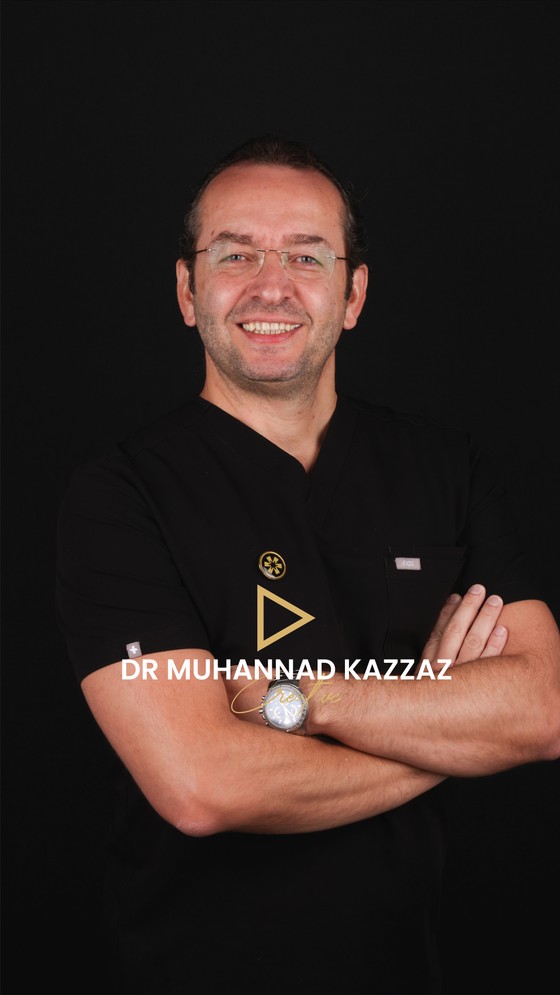
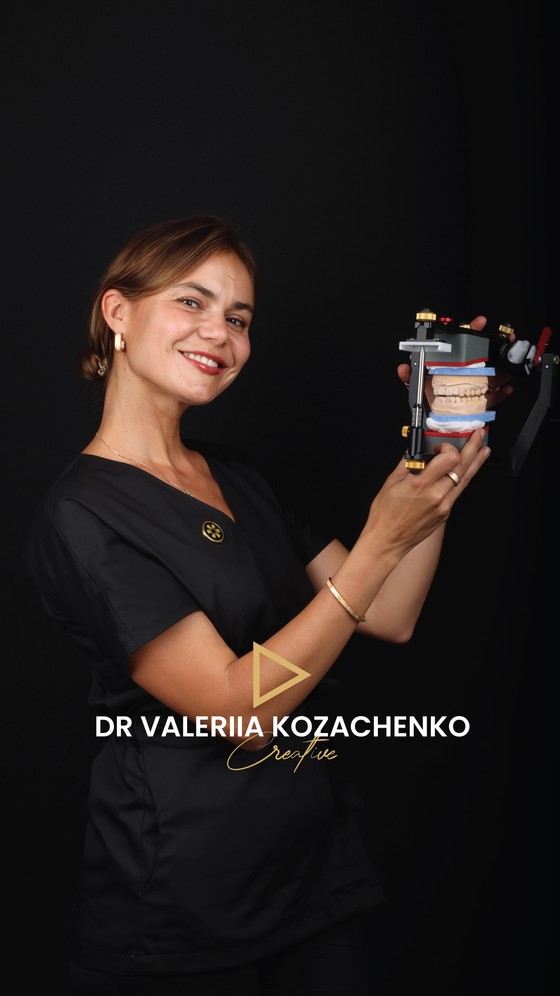
Dr. Muhannad Kazzaz and Dr. Valeriia Kozachenko, specialist orthodontists, diagnose the bite and carry out the orthodontic phases before and after the operation. Dr. Firas Osman, Oral & Maxillofacial Surgeon & Implantologist, assesses and plans the surgical side and explains where the operation takes place and who is involved.
Frequently asked questions
How long does surgical orthodontics take from start to finish?
Commonly about 18 months to 3 years in total. Pre-surgical orthodontics often takes 12–18 months, the operation and early healing follow, and finishing orthodontics often takes another 6–12 months before retainers. Your written plan gives an estimate for your own case, and how closely you follow instructions affects the timeline.
Can I have Invisalign instead of braces for surgical orthodontics?
Fixed braces are the usual appliance around jaw surgery, because the surgical team needs a firm wire and hooks to guide and hold the new bite during and after the operation. Some teams use aligners for selected phases of selected cases. Ask the specialist whether aligners could play any part in yours.
Why does my bite look worse during pre-surgical orthodontics?
Because the braces are undoing the tilts your teeth developed to compensate for the jaw difference. Once the front teeth are upright over their own jaw, the jaw difference shows fully, so the surgeon can correct it completely. The bite usually looks more pronounced for some months before surgery; that is an expected part of the plan.
Is the jaw surgery in surgical orthodontics done at Creative Arts?
No. Assessment, 3D planning and the orthodontic phases before and after surgery take place at Creative Arts. The operation is a major procedure performed under general anaesthesia, given by an anaesthesiologist, in a hospital setting. Dr. Firas Osman explains where it takes place and who is involved before you commit.
At what age can surgical orthodontics start?
Surgery is planned only once jaw growth has finished, typically in the late teens or early twenties; the timing is confirmed from records rather than age alone. A teenager with a marked jaw difference is usually monitored, and braces for a surgical plan start only when the team is confident growth will not undo the result.
Am I too old for braces with jaw surgery?
There is no fixed upper age. What matters is healthy gums and bone, general health suitable for general anaesthesia, and realistic goals. Adults also have existing crowns, implants or missing teeth that are built into the plan; see our page on adult orthodontics.
Can I stop surgical orthodontics halfway and skip the operation?
You always remain free to decide, but stopping after decompensation can leave a bite that is worse than before treatment, and switching to camouflage may then need a new plan. That is why surgical and non-surgical routes are compared in writing before braces go on, so you commit to one direction with full information.
Related treatments
Request a consultation
Tell us what you would like to change. The clinic replies within working hours with an appointment time.
- Address614 Jumeira St, Jumeirah 3, Umm Suqeim 1, Dubai
- Opening hoursClinic open daily, 10:00–20:00
- Phone+971 4 342 4444 · WhatsApp +971 56 677 7537
Book Your Consultation
Or call us +971 4 342 4444Or message us on WhatsApp
Talk to a dentist about your case
A consultation ends with a diagnosis and a written, itemised plan — not a sales pitch. Book online, message us on WhatsApp, or call the clinic.