How do I choose a dental implant clinic in Dubai?
Look for a clinic that plans implants from a 3D CBCT scan, tells you who will place the implant and what their training is, explains the surgical setting and anaesthesia options, records the implant system it uses, and tells you who makes the crown. A written plan with stages, alternatives and maintenance matters more than a headline price. Creative Arts in Dubai is described against these criteria below.
An implant clinic checklist: eight questions to ask
Each question has a clear answer at a careful clinic. Vague answers are information too.
| Ask about | Why it matters | A good answer sounds like |
|---|---|---|
| 3D planning | Bone width, nerves and sinuses cannot be measured on a flat X-ray | "We plan from a CBCT scan before giving you a final plan" |
| Who places the implant | Training and case experience vary widely | A named clinician, with a licence you can look up |
| Surgical setting | Larger cases need a proper surgical environment | Where the surgery happens, and who is in the room |
| Anaesthesia and sedation | Comfort and safety depend on who gives and monitors it | The options, plus who administers each one |
| Implant system | Future repairs need compatible parts | The system is named and recorded in your notes |
| Who makes the crown | The visible result is made by the laboratory | Which lab, and whether the ceramist sees your teeth |
| Grafting and timing | Bone or sinus work changes the timeline | Stages explained, with typical healing times |
| Maintenance | Implants can develop gum and bone problems | A cleaning and review schedule after the crown is fitted |
Integration of an implant into the bone typically takes about 3–6 months, longer after grafting. A plan that skips this explanation is incomplete.
Why should an implant plan start with a 3D CBCT scan?
A standard dental X-ray shows bone height in two dimensions. It cannot show how wide the bone is, how close the nerve in the lower jaw runs, or how thin the floor of the sinus is in the upper jaw. A CBCT scan shows all three, which is why it has become the basis of responsible implant planning.
With a CBCT scan and a 3D intraoral scan, the implant position can be planned digitally around the final crown, rather than the crown being forced to fit wherever the implant ended up. For some cases the plan is turned into a 3D-printed surgical guide; our page on 3D-guided implant surgery explains when that helps. If you want to understand the scan itself, see dental X-rays and CBCT.
Ask to see your scan. A clinician who is confident in the plan can show you the bone, the nerve and the planned implant position on screen.
Who places the implant, and what training should they have?
In Dubai, implants are placed by dentists with implant training and by surgeons. Titles vary: you will see "implant dentist", "implantologist", "oral surgeon" and "specialist". The title on a website is less important than two facts you can check: the clinician's licence category and specialty in the Dubai Health Authority directory, and their experience with cases like yours.
A single implant in good bone is a different procedure from a full-arch reconstruction, a sinus lift or a graft to rebuild a thin ridge. Ask directly: who will plan it, who will place it, who will fit the crown, and who manages complications if they happen. If bone grafting may be needed, ask who does it and whether it is a separate stage; our guide to bone grafting and sinus lifts explains the options.
It is also worth checking that the clinic will tell you when an implant is not the right answer. A tooth that can be saved with root canal treatment, or a gap better served by a bridge, should be offered as an option; see root canal vs implant.
Surgical setting and sedation: what to ask
Most single implants are placed under local anaesthetic in a dental surgery. Longer or more involved procedures, and anxious patients, may benefit from conscious sedation or, for selected cases, general anaesthesia. What matters is not only which options a clinic lists, but who gives them and who monitors you.
- Local anaesthetic numbs the area; you are awake.
- Conscious sedation (inhaled, oral tablet or IV) relaxes you while you can still respond; it should be given and monitored by an appropriately qualified, licensed clinician.
- General anaesthesia should be given by an anaesthesiologist, with fasting rules and an adult escort home.
The choice should follow a medical-history review, not a menu. Our pages on the surgical suite and implants under sedation describe how this works at Creative Arts.
Why the implant system should be named and recorded
An implant is a screw-shaped component in the bone, connected to an abutment and crown. Each implant system has its own connection, tools and parts. If a crown loosens or breaks in ten years, the dentist who repairs it needs to know which system you have in order to obtain compatible components.
Ask the clinic to record the implant system, the implant size and its position in your notes, and to give you a copy. Patients who move countries or change dentists without this information often find that a simple screw repair becomes complicated. Our page on implant repair explains why identifying the system is the first step when an implant placed elsewhere has a problem.
Who makes the implant crown, and why it affects how it looks
The implant is hidden. What you see is the crown, and that is made in a dental laboratory. A crown on an implant has to match neighbouring natural teeth that move slightly and change colour over time, and for a front tooth it also has to sit correctly with the gum. Ask which laboratory makes it, whether the ceramist sees your teeth in person or only from photographs, and whether the crown is screw-retained or cemented and why (the choice is made by the dentist case by case).
At Creative Arts, implant crowns and full-arch implant frameworks are made by Creative Art Dental Lab in the same building; see implant restorations in our lab.
Red flags when choosing an implant dentist
None of these proves a clinic is unsafe, but each is a reason to ask more questions or get a second opinion.
No 3D scan before the plan
A final plan and quote given from a flat X-ray, or none, means bone width and nerve position are being assumed.
Teeth the same day for everyone
Placing and loading an implant immediately depends on bone quality and implant stability. It is decided case by case, never promised in advance; see immediate implants explained.
No system named
If the clinic cannot or will not say which implant system it uses, future maintenance becomes guesswork.
No questions about your health
Smoking, diabetes control, gum disease and some medicines affect implant healing. A plan that ignores them is incomplete.
Only one option offered
Keeping the tooth, a bridge or a removable option should be discussed, even if the implant is the recommendation.
See how implants are planned from a CBCT scan, placed by our surgeon and dentists, and restored by the laboratory in the same building.
Read about dental implants at Creative ArtsAftercare: the part of implant treatment people forget to compare
Implants do not decay, but the gum and bone around them can become inflamed. Peri-implantitis is inflammation with bone loss around an implant; the risk is higher with smoking, poor plaque control, uncontrolled diabetes and a history of gum disease. A good clinic plans maintenance from the start: professional implant cleaning, X-rays at intervals to check the bone, and a night guard if you grind.
Ask how often you will be reviewed in the first year, and what happens if a crown loosens. A loose crown or screw is a different problem from a loose implant and is often straightforward to fix. Our guide on how long implants last covers what shortens and lengthens their life.
How Creative Arts measures up against these criteria
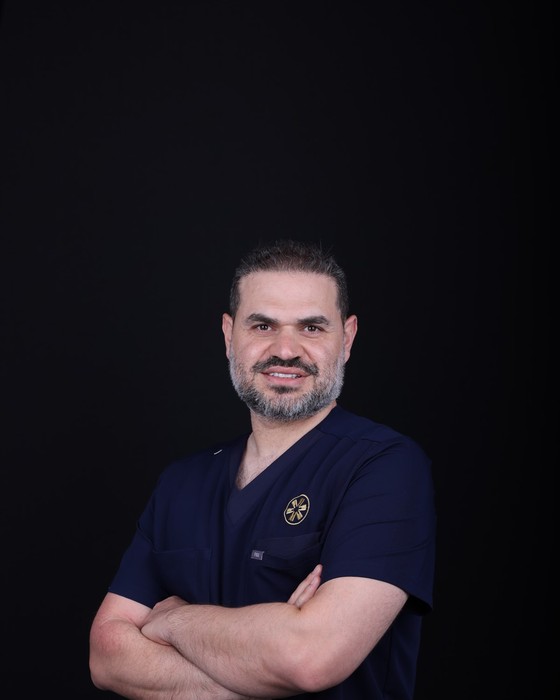
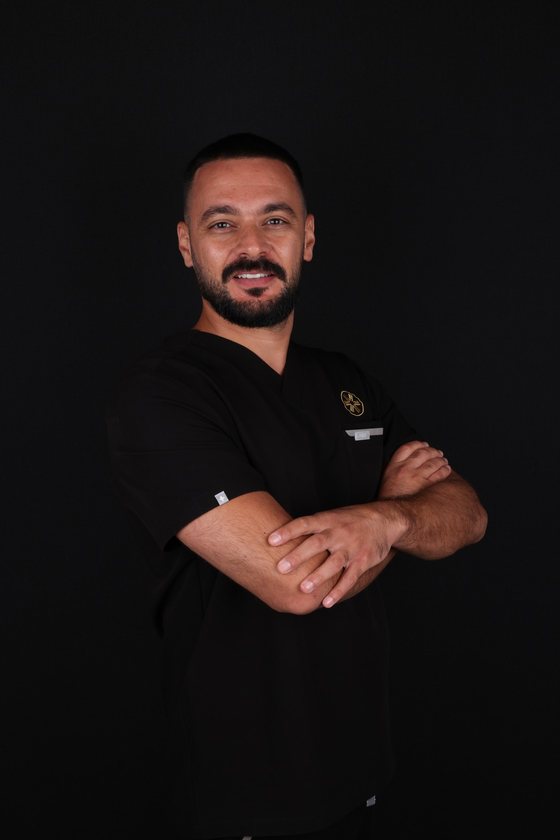
We would rather you check us against this list than take our word for it. Implant surgery at Creative Arts is planned and performed by Dr. Firas Osman, Oral & Maxillofacial Surgeon & Implantologist, together with Dr. Khalid Saeed and Dr. Kinan Bonni. Dr. Firas Osman qualified in dentistry in Moscow, specialised in oral and maxillofacial surgery through the Syrian Ministry of Health, has about three decades of practice in Russia, Syria and the UAE, and speaks Arabic, Russian and English.
Implants are planned from a 3D CBCT scan and intraoral scan; surgical guides are 3D-printed in the laboratory where the case calls for one. The clinic has operating rooms equipped for dental and oral surgery, with local anaesthesia, conscious sedation and general anaesthesia available after a medical-history review, sedation given and monitored by an appropriately qualified clinician and general anaesthesia by an anaesthesiologist. Crowns and full-arch frameworks are made by Creative Art Dental Lab in the same building, and you receive a written, itemised plan with alternatives before committing. The clinic is at 614 Jumeira St, Jumeirah 3; our Jumeirah implants page explains visits for local patients. The same criteria-led approach applies to our guide on choosing an orthodontist.
Who plans and places implants at Creative Arts
Each implant case is planned from 3D imaging by the clinician who will place it, with the laboratory involved in designing the final crown.