
Crown vs Veneer vs Implant vs Bridge: Matching the Treatment to Your Tooth
"Getting teeth fitted" can mean four very different treatments. The first question is simple: is the tooth still there, and how much of it is healthy? The answer narrows the choice quickly.
- Lab in the same building
- Written, itemised plan with alternatives
- 3D CBCT for implant planning
Bring any recent X-rays and photos of the tooth when you book.

What is the difference between a crown, a veneer, a bridge and an implant?
A crown covers a damaged tooth all round; a veneer is a thin facing bonded to the front of a mostly healthy front tooth to change its appearance; a bridge replaces a missing tooth by attaching a false tooth to neighbouring teeth; and an implant replaces a missing tooth's root with a post in the jawbone that carries a crown. At Creative Arts in Dubai the choice starts from whether the tooth is damaged, discoloured or missing.
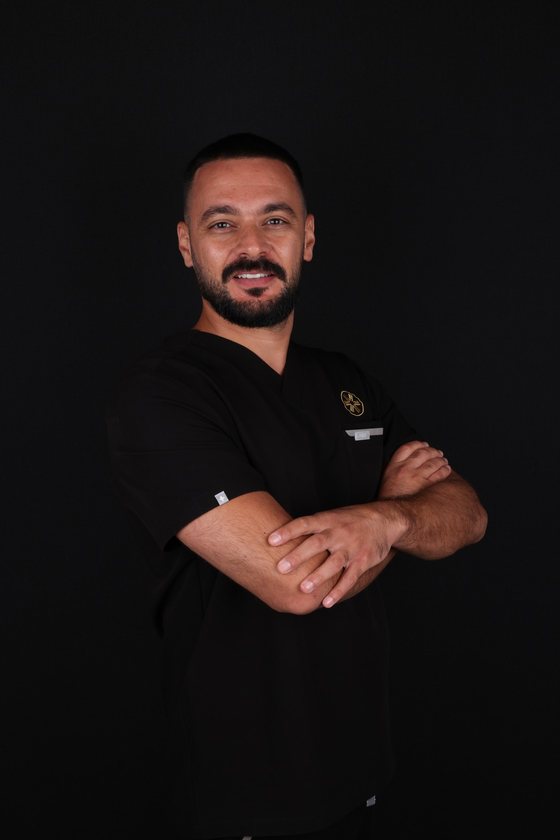
Who treats you here Dr. Khalid Saeed Co-founder & Dentist · Dr. Kinan Bonni Dentist
Every dentist’s licence can be checked on the DHA Sheryan medical directory.
Crown vs veneer vs implant vs bridge: how do they compare?
The four treatments side by side. Each has a different job, so they compete less often than people think.
| Crown | Veneer | Bridge | Implant | |
|---|---|---|---|---|
| Main job | Protect and rebuild a damaged tooth | Change the look of a front tooth | Replace one or more missing teeth | Replace a missing tooth, root and all |
| Is the tooth still there? | Yes | Yes | No; neighbours carry it | No; the implant replaces it |
| Effect on other teeth | None | None | Neighbouring teeth are usually crowned | None; stands on its own |
| Tooth reduction | Moderate, all round | Little, mainly the front; sometimes none | On the supporting teeth | No reduction of teeth; minor surgery instead |
| Typical sequence | Prepare and scan, then fit after lab time | Design and mock-up, prepare, then fit | Prepare supports, then fit after lab time | Placement, healing over months, then the crown |
| Main risks | Decay at the edge, fracture, nerve problems in some teeth | Chipping, debonding, edge staining | Decay or failure of a supporting tooth | Surgical risks, gum and bone problems around the implant |
A Maryland (resin-bonded) bridge is a lighter option for some front gaps: it bonds to the back of one neighbour without crowning it.
Which one for a broken, missing or ugly tooth?
Start from the problem, not the treatment name:
- A broken or heavily filled tooth: a small chip is often fixed with composite bonding or a filling. When much of the tooth is missing, cracked, or has had a root canal on a back tooth, a dental crown holds it together. A veneer is not designed to hold a weak tooth together.
- A front tooth that is discoloured, worn, chipped or slightly uneven, but otherwise healthy: whitening, bonding or orthodontics may be enough; if not, porcelain veneers change shape and colour with less tooth reduction than a crown. Our veneers vs crowns guide covers the borderline cases.
- A missing tooth: the choice is between an implant and a bridge (conventional or Maryland). Our implants vs bridges guide compares them in depth, and our implant vs bridge cost guide explains how the costs compare over time. Leaving a gap is also a choice, with consequences explained in what happens if a missing tooth is not replaced.
- Many missing teeth: options include several implants, implant bridges or full-arch treatment. Creative Arts does not provide removable dentures; our guide to types of dentures explains them neutrally.
Which needs the least drilling?
Roughly, from least to most change to your own teeth:
- Bonding adds material and often needs no drilling.
- No-prep or minimal-prep veneers, where the shape of the teeth allows, add a thin layer with little or no enamel removed.
- Conventional veneers remove a thin layer of enamel, mainly from the front surface.
- A Maryland bridge needs only light preparation on the back of one supporting tooth.
- A crown reduces the tooth on all sides to make room for the ceramic.
- A conventional bridge crowns the teeth on both sides of the gap, which is worth considering when those teeth are healthy.
An implant does not involve drilling other teeth at all, which is its main advantage over a bridge; the trade-off is surgery, healing time and the need for enough healthy bone. The full list of disadvantages of crowns, including when they are avoidable, is in our guide to dental crown disadvantages.
Which lasts longest?
Published survival figures exist for each treatment, but they come from different studies, follow-up periods and patients, so they cannot be ranked directly. A 2021 systematic review estimated a 10-year survival of 95.5% for porcelain laminate veneers, with fracture and debonding the most common problems. A 2015 systematic review of single crowns reported 5-year survival of about 94.7% for metal-ceramic, 96.6% for leucite or lithium disilicate and 92.1% for zirconia crowns. A 2019 meta-analysis put 10-year implant survival at 96.4%, lower in patients aged 65 and over.
In practice, how long any of them lasts depends more on you than on the label: plaque control along the edges, grinding (a night guard protects ceramics), smoking, gum health, regular check-ups, and how much healthy tooth or bone supported the work in the first place. A bridge also depends on the long-term health of the teeth holding it.

How your restoration is designed and made
The laboratory that makes your ceramic work is in the same building as the clinic. The ceramist can see your teeth under the same light as your dentist, rather than working from photographs sent to an outside supplier — which is where shade, surface texture and edge translucency are decided.
- 1Consultation & records — examination, photographs and the radiographs your case needs
- 2Digital scan — an intraoral scan replaces impression trays for most cases
- 3Design — the restoration or smile is designed digitally and reviewed with you
- 4Lab fabrication — milled from ceramic, then hand-finished for shade and texture
- 5Try-in — shade, shape and fit checked in your mouth, adjusted in-house if needed
- 6Placement & review — bonded or cemented, bite balanced, reviewed afterwards
A treatment name is not a diagnosis
Ask why a particular option is recommended for your tooth, what the alternatives are and what happens if you wait. At Creative Arts every patient receives a written, itemised plan with alternatives before any irreversible step, and veneer cases are shown as a design and mock-up first.
How long does each one take?
Crowns, veneers and bridges are made by Creative Art Dental Lab in the same building, typically in 3–5 working days depending on complexity, so they usually need two main visits: preparation and scan, then fitting. Veneers add an earlier design and mock-up stage. Our guide to how long the lab takes to make a crown explains what fills those days. Creative Arts does not make crowns or veneers in a single visit.
An implant takes longer: after placement, the implant usually needs about three to six months to integrate with the bone before the final crown is made, and a bone graft, if needed, adds time. A temporary tooth can often fill the gap meanwhile. Implant planning uses a 3D CBCT scan; see single tooth implants for the steps.
Missing a tooth and weighing an implant against a bridge? An assessment with X-rays or a 3D scan gives you a written plan that compares both for your mouth.
Dental implants in DubaiWho plans crowns, veneers, bridges and implants at Creative Arts
Dr. Khalid Saeed and Dr. Kinan Bonni plan cosmetic and restorative work and implant restorations with the lab in the same building.

Sources
Clinical statements on this page are consistent with these independent sources. They describe averages from studies, not a promise for any one patient.
- Alenezi A et al.. Long-Term Survival and Complication Rates of Porcelain Laminate Veneers in Clinical Studies: A Systematic Review. Journal of Clinical Medicine, 2021.
- Sailer I et al.. All-ceramic or metal-ceramic tooth-supported fixed dental prostheses (FDPs)? A systematic review of the survival and complication rates. Part I: Single crowns (SCs). Dental Materials, 2015.
- Howe MS, Keys W, Richards D. Long-term (10-year) dental implant survival: A systematic review and sensitivity meta-analysis. Journal of Dentistry, 2019.
Frequently asked questions
Crown vs veneer vs implant vs bridge: how do I know which I need?
Start with the state of the tooth. A damaged or heavily filled tooth usually needs a crown; a healthy front tooth you want to change in colour or shape may suit a veneer; a missing tooth is replaced by a bridge or an implant. An examination with X-rays decides between borderline options, and a written plan should explain why one is preferred.
Is a crown or a veneer better for a broken front tooth?
It depends on how much is broken. A small chip is often repaired with bonding. If the break is moderate and the tooth is otherwise strong, a veneer may work. If a large part of the tooth is missing or it has had a root canal, a crown usually protects it better because it covers the tooth all round.
Which lasts longer, a bridge or an implant?
Both can last many years with good care. An implant stands alone and does not rely on neighbouring teeth, while a bridge depends on the health of the teeth that support it; decay or failure of a supporting tooth is a common reason bridges need replacing. Smoking, gum disease and grinding affect both.
Which needs the least drilling: veneer, crown or bridge?
Of the three, veneers usually need the least, because they cover mainly the front surface, and no-prep veneers sometimes need none. A crown reduces the tooth on all sides. A conventional bridge prepares the teeth on both sides of the gap, while a Maryland bridge needs only light preparation on one neighbour.
Can a veneer replace a missing tooth?
No. A veneer is bonded to the front of an existing tooth, so it needs a tooth underneath. A missing tooth is replaced with an implant, a conventional bridge or, for some front gaps, a Maryland bridge. Veneers can be combined with those options when neighbouring teeth also need a change in shape or colour.
Can I have a crown on an implant?
Yes. That is how an implant replaces a tooth: the implant acts as the root, and a crown made by the lab is fixed on top once the implant has integrated with the bone. Implant crowns are designed to match neighbouring teeth and crowns in shade, which the in-building lab helps with.
Does Creative Arts make crowns and veneers in one visit?
No. Crowns, veneers and bridges are made by Creative Art Dental Lab in the same building, typically in 3–5 working days depending on complexity. You wear a temporary in between. Small adjustments at the fitting visit can often be made the same day because the lab is close by.
Related treatments
One clinic, in Jumeirah 3 / Umm Suqeim 1
Creative Arts has a single clinic on Jumeira Street (Jumeirah Beach Road). Ask about parking when you book.
- Address614 Jumeira St, Jumeirah 3, Umm Suqeim 1, Dubai
- Opening hoursDaily 10:00–20:00, including Friday and Sunday
- Neighbouring areasJumeirah 1–3, Umm Suqeim 1–3, Al Wasl, Al Safa, Al Manara
Our clinic in Jumeirah Open in Google Maps · Rated 4.8 on Google from 238 patient reviews (October 2026) — read them
Request a consultation
Tell us what you would like to change. The clinic replies within working hours with an appointment time.
- Address614 Jumeira St, Jumeirah 3, Umm Suqeim 1, Dubai · Our clinic in Jumeirah 3 / Umm Suqeim 1
- Opening hoursClinic open daily, 10:00–20:00
- Phone+971 4 342 4444 · WhatsApp +971 56 677 7537
Book Your Consultation
Or call us +971 4 342 4444Or message us on WhatsApp
Talk to a dentist about your case
A consultation ends with a diagnosis and a written, itemised plan — not a sales pitch. Book online, message us on WhatsApp, or call the clinic.