Full-arch implants

All-on-4 vs All-on-6: How Many Implants Does Your Arch Need?

Four or six implants is not a package choice. Your bone, your bite and the design of the bridge decide the number, and a 3D plan should show why.

  • Number set by CBCT planning
  • Full-arch bridges made in our lab
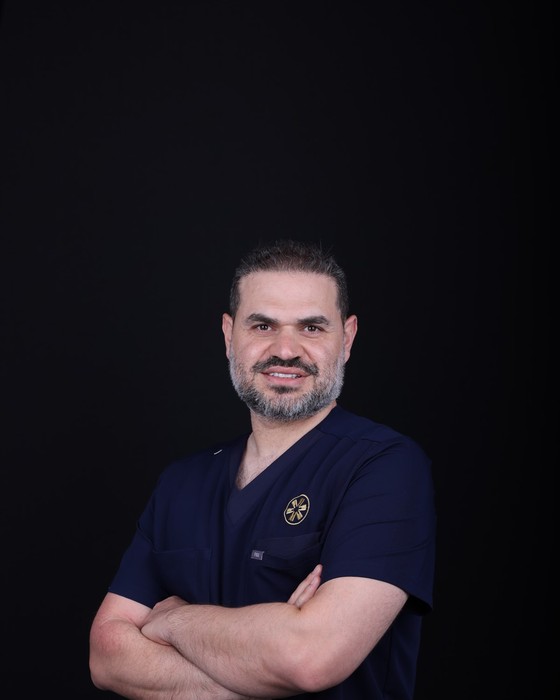
  • Full-arch cases planned by Dr. Firas Osman
Call +971 4 342 4444

The consultation includes an examination and a review of what your bone allows. A CBCT 3D scan is taken when implants are being planned.

Full-arch ceramic implant bridge on a working model at Creative Art Dental Lab in Dubai
The bridge is made next doorFull-arch bridges for our patients are made at Creative Art Dental Lab, in the same building.
Quick answer

What is the difference between All-on-4 and All-on-6?

Both replace all the teeth in one jaw with a fixed bridge screwed onto implants. All-on-4 uses four implants, with the back two usually tilted to avoid the sinus or the nerve; All-on-6 uses six, spreading the bite over more support but needing more bone. At Creative Arts in Dubai, the number of implants per arch is decided by CBCT planning of your bone and bite, not chosen from a menu.

27 yearsIn-house dental laboratory in the same building
Written planItemised treatment plan before you commit
Open daily10:00–20:00, seven days a week
Jumeirah 3614 Jumeira St, Umm Suqeim 1, Dubai
At a glance

Four or six implants: the essentials

What both are
A fixed full-arch bridge on implants that you do not remove at home
Implants per arch
Four, six or another number: decided by planning, not by the name
The real difference
How many supports share the bite, and how much bone each approach needs
Planning
Examination, CBCT 3D scan, bite records and a design that starts from the finished teeth
Healing
Bone usually integrates with implants over about 3–6 months; longer after grafting
Who plans
Dr. Firas Osman, with Dr. Khalid Saeed and Dr. Kinan Bonni
Where
614 Jumeira St, Jumeirah 3, Dubai; the bridge is made at Creative Art Dental Lab in the same building

Timings are typical ranges and depend on your bone, health and healing.

Side by side

All-on-4 vs All-on-6 compared

A general comparison drawn from mainstream implant practice. Your CBCT scan and bite decide which points apply to you.

All-on-4All-on-6
Implants per archFourSix
Implant angleFront two upright; back two usually tiltedMostly upright; tilting used where needed
Bone neededWorks with less bone; tilting avoids the sinus or nerveNeeds adequate bone at more points along the arch
Bone graftingDesigned to reduce the need for itMore likely where bone at the back is thin
Support at the backBack teeth often extend beyond the last implant (a short cantilever)Support usually reaches further back, with less extension
If one implant has a problemFewer reserves; the whole bridge is usually affected until it is resolvedMore supports can leave more options while one implant is treated
SurgeryFewer implant sitesMore implant sites; usually a longer procedure
Daily cleaningFewer implants to clean aroundMore implants to clean around
Cost directionFewer implants and componentsMore implants and components, unless grafting is avoided elsewhere

Neither option is a better product in general. Well-planned bridges on four or on six implants can both serve for many years; maintenance and bite control matter as much as the number.

Why the number of implants is a planning decision

The names All-on-4 and All-on-6 describe a count, not a different kind of treatment. Some clinicians simply say All-on-X, because the right number for an arch can also be five, or more than six. These are the factors that set it:

  • Bone volume and density. The CBCT scan shows where there is enough bone and how dense it is. The upper jaw is usually softer than the lower, which is why many clinicians prefer more implants in the upper arch.
  • The sinus and the nerve. In the upper jaw the sinus often sits low over the back teeth; in the lower jaw the nerve runs through the back of the bone. Tilting the back implants is the All-on-4 way around both.
  • Spread along the arch. The further apart the front and back implants sit, the better the bridge resists rocking, and the shorter the unsupported section at the back.
  • Bite force. Heavy clenching or grinding, and an opposing arch of natural teeth or another implant bridge, put more load on the implants.
  • Health and habits. Smoking, diabetes control and a history of gum disease affect how much margin a plan needs.

If upper-jaw bone is severely reduced, other routes come into the discussion, such as a sinus lift or, for severe bone loss, zygomatic implants, which are assessed by Dr. Firas Osman.

When each is chosen

When is All-on-4 or All-on-6 usually considered?

Typical patterns, not rules. Many arches could be treated either way, and the plan explains why one was preferred.

All-on-4

Four implants, back two tilted

Often chosen when
Bone at the back of the jaw is thin, or close to the sinus or nerve
Main strength
Can avoid or reduce grafting; fewer surgical sites
Main trade-off
Less reserve if an implant has a problem; back teeth often cantilevered
Common in
Lower jaws, and upper jaws with limited bone at the back

All-on-6

Six implants spread along the arch

Often chosen when
Bone is adequate along the arch, or the bite is heavy
Main strength
Load shared by more implants; support further back
Main trade-off
Needs more bone; more surgery and more components
Common in
Upper jaws, where softer bone benefits from extra support

More implants are not automatically better

Every implant needs healthy bone around it and room to clean. An extra implant forced into thin bone, or placed only after grafting that was not otherwise needed, adds surgery and cost without necessarily adding strength. The question is not how many implants you can have, but how many your arch needs.

How we decide

How the number of implants for your arch is decided

Full-arch cases at Creative Arts follow the same sequence, whatever the final count.

  1. Examination & health review

    Remaining teeth, gums, bite, medical history, smoking and any previous implants or dentures.

    Visit 1
  2. CBCT & scans

    A CBCT 3D scan maps bone, the sinus and the nerve; an intraoral scan and photographs record teeth and bite.

    Records
  3. Teeth designed first

    The final tooth positions are planned before the implants, so implants are placed where the bridge needs support.

    Design
  4. Implant plan & options

    Implant positions are planned against the bone. Where the case calls for it, a 3D-printed surgical guide is made.

    Planning
  5. Written, itemised plan

    You receive the recommended number of implants, the alternatives considered and the cost of each.

    Before you commit
  6. Surgery, healing & final bridge

    Implants are placed under local anaesthesia, with sedation if agreed. The final bridge follows once the implants have integrated.

    Treatment
Finished full-arch prosthesis showing the screw access channels on its fitting surface
From dentist to dental lab

The bridge on top is made in the same building

Whether a bridge sits on four implants or six, it has to seat passively on every implant at once, with screw channels placed where the dentist can reach them. Creative Art Dental Lab, in our building, designs and makes full-arch frameworks and bridges, including pink gingival ceramic where gum and bone have been lost. The lab team can see the bite and smile in person rather than from photographs.

  1. 1Implant positions recorded — a digital scan records exactly where each implant sits
  2. 2Bridge designed — tooth positions, bite and screw channels are planned digitally
  3. 3Try-in — the set-up is checked in your mouth for fit, bite and smile line
  4. 4Framework & ceramic — the framework is made and the teeth and gum ceramic are finished by hand
  5. 5Fitting & review — the bridge is screwed in, the bite is balanced and reviewed afterwards
Inside our laboratory

Want to see how a full-arch bridge is planned, placed and maintained at Creative Arts?

Read about All-on-4
Who treats you

Who plans full-arch implant cases

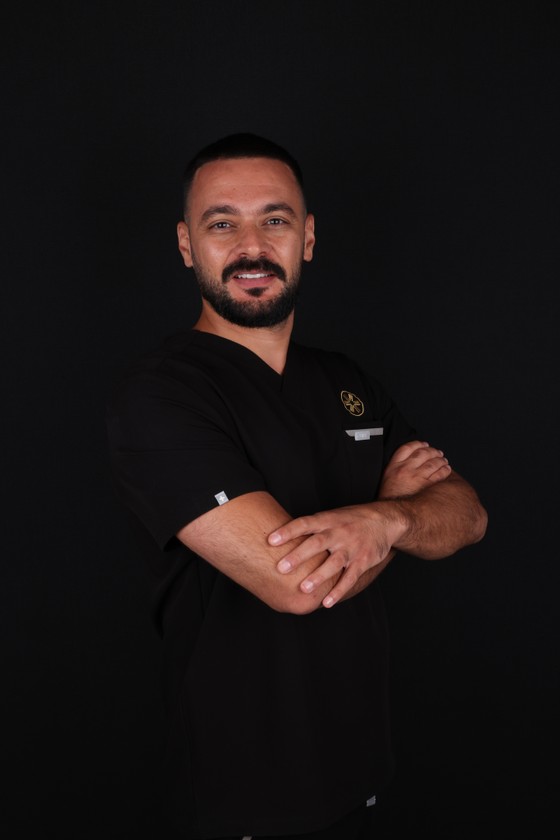
Full-arch cases are planned by Dr. Firas Osman, Oral & Maxillofacial Surgeon & Implantologist, with Dr. Khalid Saeed and Dr. Kinan Bonni, who also plan and place implants. The lab makes the bridge.

Patient questions

Frequently asked questions

Is All-on-6 stronger than All-on-4?

Six implants share the biting load between more supports, which can help in softer bone or with a heavy bite. That does not make All-on-6 stronger for everyone: a well-planned All-on-4 in good bone is a robust solution. The bone, bite and bridge design matter more than the label.

Can All-on-4 be used in the upper jaw?

Yes, when there is enough bone at the front of the upper jaw. The back implants are tilted to avoid the sinus. Because upper-jaw bone is usually softer, some upper arches are planned with more than four implants, or need a sinus lift first.

Do I need bone grafting for All-on-6?

Not always. If the CBCT scan shows enough bone at all six positions, no grafting is needed. Where bone at the back is thin, the choice is between grafting to allow more implants and tilting fewer implants to avoid grafting; the plan explains which suits you.

If one implant fails on All-on-4, do I lose the whole bridge?

Not necessarily, but with four implants every one matters. The bridge usually needs attention until the problem implant is treated or replaced, and a temporary arrangement may be needed. With more implants, there may be more options while one is managed.

Can I ask for six implants instead of four?

You can always discuss it. The surgeon will explain whether your bone supports six implants and whether the extra support justifies more surgery and cost. At Creative Arts the number of implants per arch is decided by planning, and the reasoning is written into your plan.

Which lasts longer, All-on-4 or All-on-6?

There is no simple winner. Both can serve for many years when they are well planned and maintained. Longevity depends more on daily cleaning, regular professional reviews, controlling grinding and not smoking than on whether the arch has four or six implants.

Is All-on-6 more expensive than All-on-4?

Usually, because it involves more implants and components. The difference can narrow if four implants would need grafting that six would not, or the other way round. Your written plan itemises implants, any grafting, the provisional and the final bridge for your case.

Can an All-on-4 or All-on-6 bridge be removed for cleaning?

Not by you. Both are fixed bridges screwed onto the implants. You clean around and under them at home with a brush, floss designed for bridges or a water flosser, and the dentist can unscrew the bridge at maintenance visits when needed.

Book a consultation

Request a consultation

Tell us what you would like to change. The clinic replies within working hours with an appointment time.

Book Your Consultation

Or call us +971 4 342 4444Or message us on WhatsApp

Talk to a dentist about your case

A consultation ends with a diagnosis and a written, itemised plan — not a sales pitch. Book online, message us on WhatsApp, or call the clinic.

Call +971 4 342 4444
CallWhatsApp