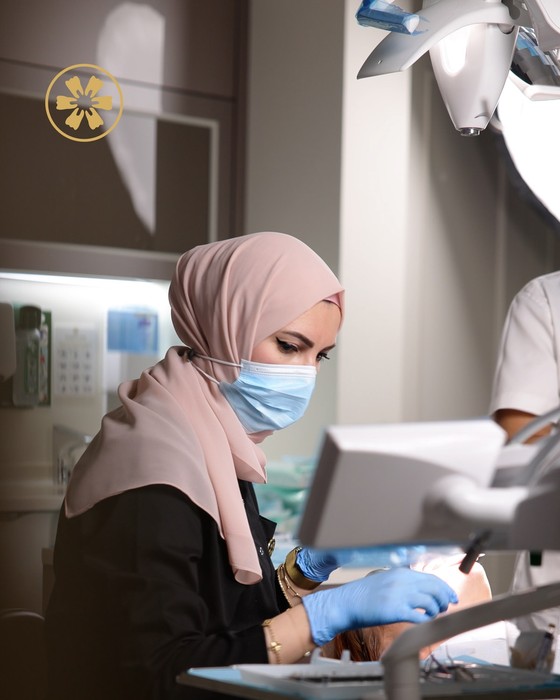
Gingivitis — reversible
Plaque bacteria inflame the gum edge. Gums look red or puffy and bleed on brushing or flossing, but the bone is intact. With cleaning and good home care it typically settles within a few weeks.
Healthy gums do not bleed when you brush. Bleeding is usually the earliest sign of gum inflammation — and at that stage it is fully reversible.
The first visit measures gum health and explains what is causing the bleeding before any treatment is planned.

Gums usually bleed when brushing because plaque along the gumline has caused inflammation, called gingivitis. It is reversible with professional cleaning and better daily cleaning between the teeth. If it is left, it can progress to periodontitis, where bone around the teeth is lost. Creative Arts in Dubai checks gum health, treats the cause and explains when bleeding needs a medical opinion.
Usually, yes. Gum disease has two broad stages, and the difference matters because only one is fully reversible.
Plaque bacteria inflame the gum edge. Gums look red or puffy and bleed on brushing or flossing, but the bone is intact. With cleaning and good home care it typically settles within a few weeks.
Inflammation reaches the bone holding the teeth. Pockets form, gums recede, teeth can loosen or drift, and breath may be persistently bad. Lost bone does not grow back by itself, but treatment can stop the progression.
A hard brush or aggressive scrubbing can make healthy gums bleed and cause recession. A soft brush and gentle technique usually fix this quickly.
Gums often bleed for the first week or two after you start cleaning between the teeth. That is inflammation settling, not a reason to stop.
Bleeding from inflamed gums is common. Some patterns suggest a medical cause, or an urgent problem.
Bleeding is usually the first sign. These are the next ones worth acting on.
Red, shiny or puffy gums usually mean inflammation from plaque (gingivitis). A single swollen spot with a bad taste can be a gum abscess — see tooth abscess.
In adults, a tooth that moves without an injury often means bone support has been lost to gum disease. Seek prompt dental assessment; it is treatable when caught early. After a knock, see emergency care.
Teeth that look longer may be receding gums — sometimes from gum disease, sometimes from brushing too hard.
Persistent breath odour often comes from gum pockets and the tongue. Causes of bad breath.
Treatment is matched to how far the inflammation has gone. Most people with bleeding gums need only the first two rows.
| Option | When it fits | Trade-off |
|---|---|---|
| Better home care | Every case: soft brush, fluoride toothpaste, and daily cleaning between the teeth with floss or interdental brushes. | Works slowly and only if it becomes a habit; it cannot remove hardened tartar. |
| Professional cleaning (GBT) | Gingivitis and routine prevention. Guided Biofilm Therapy stains the plaque with a disclosing dye, then removes it with air, water and fine powder, with instruments for tartar. | Needs repeating at regular intervals; bleeding returns if daily cleaning lapses. |
| Deep cleaning (root surface debridement) | Early to moderate periodontitis with pockets. Tartar and bacteria are removed from root surfaces below the gum under local anaesthetic, often in sections. | Gums can feel tender and teeth sensitive for a few days; some recession may become visible as swelling settles. |
| Periodontal treatment | Deeper pockets, bone loss or areas that do not respond. Planned through periodontics, sometimes including gum surgery. | More involved, with healing time; lost bone may not be fully regained. |
| Periodontal maintenance | Anyone treated for periodontitis. Regular cleanings, often every three to four months, and pocket measurements. | Lifelong commitment; skipping it is the usual reason disease returns. |
Read how the cleaning works in our Guided Biofilm Therapy guide.
The aim is to find out whether you have gingivitis or periodontitis, because the treatment differs.
Smoking, diabetes, pregnancy and medicines are asked about, because they change the risk and the plan.
Visit 1A fine probe measures the pocket depth around each tooth and records where the gums bleed.
Visit 1They show bone levels, which confirm or rule out periodontitis.
Visit 1Many patients have a cleaning the same visit. Deeper treatment is set out in a written plan with alternatives and costs.
Same or next visitGeneral and laser dentists who look after gum health, hygiene and periodontal care.
It is common but not normal. Healthy gums do not bleed with gentle brushing. Occasional bleeding is usually gingivitis from plaque along the gumline, which is reversible. If it continues for more than a couple of weeks despite careful brushing and cleaning between the teeth, have your gums checked.
Yes. Gingivitis affects only the gum, not the bone, so it typically resolves within a few weeks after a professional cleaning and consistent daily cleaning between the teeth. Periodontitis, where bone has been lost, can be controlled but the lost bone does not normally grow back.
No. Stopping lets more plaque build up and makes the inflammation worse. Use a soft brush, clean gently along the gumline and between the teeth every day. Bleeding from gingivitis usually reduces within one to two weeks of consistent cleaning.
Bleeding itself does not, but untreated gum disease can. When gingivitis progresses to periodontitis, the bone holding the teeth is gradually lost, and teeth can loosen, drift and eventually be lost. Treating it early is simpler than treating it late.
Hormonal changes make the gums react more strongly to plaque, so pregnancy gingivitis is common. Careful home care and a professional cleaning help. Tell the dentist you are pregnant so treatment and any X-rays are planned accordingly.
A normal cleaning removes plaque and tartar above and just under the gumline. A deep cleaning, or root surface debridement, cleans root surfaces inside deeper pockets and is usually done under local anaesthetic. Pocket measurements decide which one you need.
Most often because plaque at the gum line is causing inflammation (gingivitis). Other causes include a gum abscess, food trapped under the gum, hormonal changes such as pregnancy, and some medicines. Swelling that spreads to the face, or comes with fever, needs prompt care.
Tell us what you would like to change. The clinic replies within working hours with an appointment time.
Or call us +971 4 342 4444Or message us on WhatsApp
A consultation ends with a diagnosis and a written, itemised plan — not a sales pitch. Book online, message us on WhatsApp, or call the clinic.