3D CBCT imaging
A cone-beam CT scan shows bone height and width, the position of nerves and the sinus, so the implant size and angle are chosen before surgery rather than during it.
Planning, surgery and the final teeth under one roof on Jumeira Street: 3D CBCT imaging, an oral & maxillofacial surgeon, operating rooms, and implant restorations made by the laboratory in the same building.
The first visit is an assessment with imaging where needed and a written plan. Surgery is never carried out at the consultation.
Creative Arts Aesthetic & Dental Center, at 614 Jumeira St, Jumeirah 3, Dubai, plans and places dental implants on site. Dr. Firas Osman, Oral & Maxillofacial Surgeon & Implantologist, Dr. Khalid Saeed and Dr. Kinan Bonni plan each case with 3D CBCT imaging; surgery takes place in the clinic's operating rooms under local anaesthesia, with sedation options; and the final crown or bridge is made by Creative Art Dental Lab in the same building.
Implant treatment involves imaging, surgery and a laboratory-made restoration. At this address all three happen in one building, so your records do not travel between providers.
A cone-beam CT scan shows bone height and width, the position of nerves and the sinus, so the implant size and angle are chosen before surgery rather than during it.
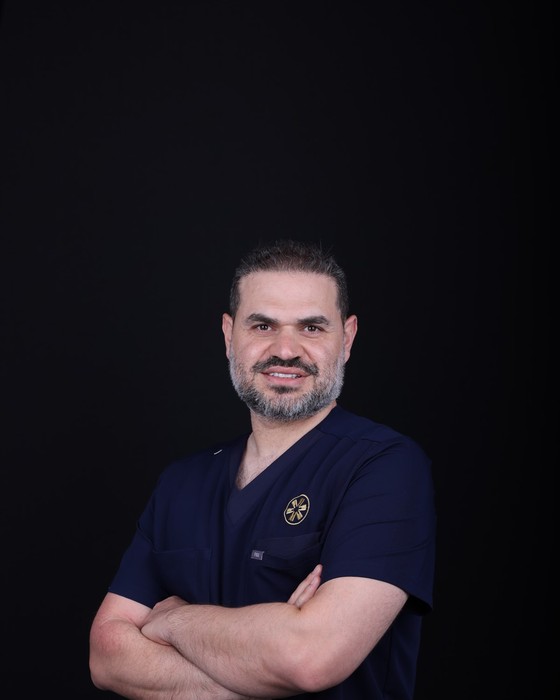
Dr. Firas Osman places implants and handles bone grafting, sinus lifts and surgical extractions, alongside Dr. Khalid Saeed and Dr. Kinan Bonni.
Surgery is done under local anaesthesia; laughing gas, oral tablet sedation or IV sedation can be added, and general anaesthesia is available for selected cases, given by an anaesthesiologist.
Socket preservation, ridge augmentation and sinus lift are carried out here when the scan shows there is not enough bone to hold an implant.
Implant crowns, bridges and full-arch frameworks with pink gingival ceramic are designed and made by Creative Art Dental Lab, a separate business in the same building.
Fitting an implant and its final teeth on the same visit is not offered as a routine. Immediate placement or loading depends on bone and stability and is decided case by case — see immediate implants explained.
This is the typical path for a single implant without grafting. Most of the time is healing, not appointments — which is why many Jumeirah and Umm Suqeim patients fit the visits around a normal working week.
Examination, gum check and a 3D scan. Your options, including a bridge or no treatment, are explained.
Visit 1An itemised plan covering surgery, any grafting, the restoration and the cost. You decide in your own time.
After visit 1The implant is placed under local anaesthesia in the operating room, with sedation if chosen. Plan the rest of the day quietly; after sedation an adult escort takes you home.
Surgery visitHealing is checked and any stitches are removed, usually within the first couple of weeks.
ReviewThe bone bonds to the implant over typically 3–6 months. A temporary tooth can be discussed for visible gaps.
HealingAn intraoral scan is sent to the laboratory in the same building; the crown is made over several working days and then fitted and checked.
Final visitsImplants suit most adults with a missing tooth, but the mouth and general health have to be ready. These are the questions the assessment answers.
The number of implants and the type of restoration follow from what is missing and how much bone there is.
| Situation | Usual approach | What to read |
|---|---|---|
| One missing back tooth | A single implant with a crown | Single tooth implant |
| A missing front tooth | A single implant planned for gum and shade | Front tooth implant |
| Several teeth in a row | Implants supporting a bridge | Multiple teeth implants |
| A whole arch missing or failing | A fixed full-arch bridge on implants | All-on-4 and full arch |
| Anxious about surgery | Implant surgery with sedation | Implants under sedation |
The plan is set at the assessment after the CBCT scan; no option is decided before the bone has been seen.
The clinic is on Jumeira Street in Jumeirah 3, within Umm Suqeim 1. Implant patients come from Jumeirah 1–3, Umm Suqeim 1–3, Al Wasl, Al Safa and Al Manara, and from across Dubai. Ask about parking when you book.
An implant is a project measured in months rather than a single appointment, so being local helps in practical ways. If a temporary tooth loosens, the gum looks sore or you simply want a check during healing, the clinic is open every day from 10:00 to 20:00 and can be contacted during those hours. Once the crown is fitted, regular implant cleaning and reviews help protect the bone around it.
If you already have an implant placed elsewhere that has loosened or needs a new crown, see implant repair: restoring it depends on identifying the implant system and obtaining compatible parts.
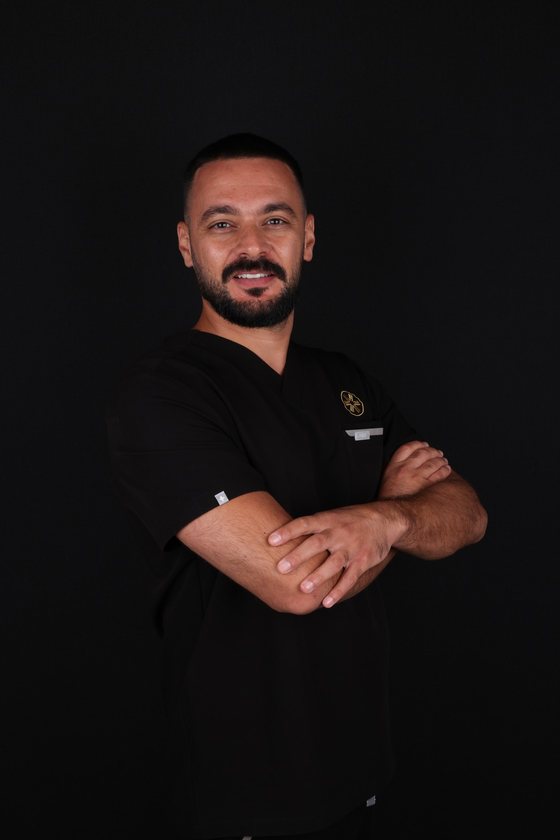
Implant surgery is carried out by Dr. Firas Osman, Oral & Maxillofacial Surgeon & Implantologist, and by Dr. Khalid Saeed and Dr. Kinan Bonni, who also plan the final restoration with the laboratory.
Implants at Creative Arts in Jumeirah 3 are placed by Dr. Firas Osman, Oral & Maxillofacial Surgeon & Implantologist, and by Dr. Khalid Saeed and Dr. Kinan Bonni. Cases involving bone grafting, a sinus lift or more complex surgery are planned with Dr. Firas Osman. The same team plans the final crown or bridge with the laboratory in the building.
For a single implant without grafting, typically an assessment with a CBCT scan, the surgery visit, an early review within the first couple of weeks, then a scan and one or two visits to fit the crown after about 3–6 months of healing. Grafting, several implants or a full arch add stages. Your written plan lists each visit.
Yes. Every implant is placed under local anaesthesia, and the clinic's operating rooms allow laughing gas, oral tablet sedation or IV sedation to be added, with general anaesthesia for selected cases given by an anaesthesiologist. The option is chosen after a medical-history review; fasting rules and an adult escort apply where relevant.
For most implant cases, yes. A CBCT scan shows bone volume and the position of nerves and the sinus in three dimensions, which an ordinary X-ray cannot. It is taken at the clinic and used to choose the implant size, angle and position, and to decide whether grafting or a surgical guide is needed.
Not as a routine. Most implants are left to integrate with the bone for typically 3–6 months before the final crown. In some cases an implant can be placed straight after an extraction, or a temporary tooth attached early, but that depends on bone quality and stability measured during surgery and is never promised in advance.
Often, yes. A loose implant crown is usually a loose screw and is frequently fixable, while a loose implant itself needs assessment. Restoring an implant placed elsewhere depends on identifying the implant system and obtaining compatible components, so bring any records, X-rays or implant cards you have to the assessment.
Ask who places the implant and their surgical background, whether a CBCT scan is used for planning, what happens if bone is short, where the crown is made, and whether the written plan lists alternatives such as a bridge. Our guide to choosing an implant dentist in Dubai sets out these questions in full.
We do not publish a single figure, because the cost depends on the number of implants, whether grafting or a sinus lift is needed, the type of crown or bridge, and any sedation. Your written, itemised plan covers each part before you commit. The implant cost guide explains what changes a quote and how to compare them.
Tell us what you would like to change. The clinic replies within working hours with an appointment time.
Or call us +971 4 342 4444Or message us on WhatsApp
A consultation ends with a diagnosis and a written, itemised plan — not a sales pitch. Book online, message us on WhatsApp, or call the clinic.