A slight lisp, usually temporary
Sounds such as s, t, sh and z can be affected in the first days. Most people adapt within the first few weeks.
Medically reviewed by Dr. Kinan Bonni, Dentist · DHA Professional Unique ID 00180966 · October 2026
Brackets and wires bonded to the inside of your teeth, where people cannot see them, doing the work of fixed braces. Diagnosed and planned by a specialist orthodontist.
The consultation is an examination, photographs, a scan and X-rays where needed, then a written plan comparing the appliances that suit you.

Designed in the clinic and made by hand in Creative Art Dental Lab, in the same building in Jumeirah, Dubai.




Lingual braces are fixed braces bonded to the inside surfaces of the teeth, the side facing the tongue, so they are hidden when you smile and talk. At Creative Arts in Dubai they are provided by our specialist orthodontists, Dr. Muhannad Kazzaz and Dr. Valeriia Kozachenko, when your bite and tooth shape suit them. Expect a few weeks of speech and tongue adjustment; the price is set in your written plan.
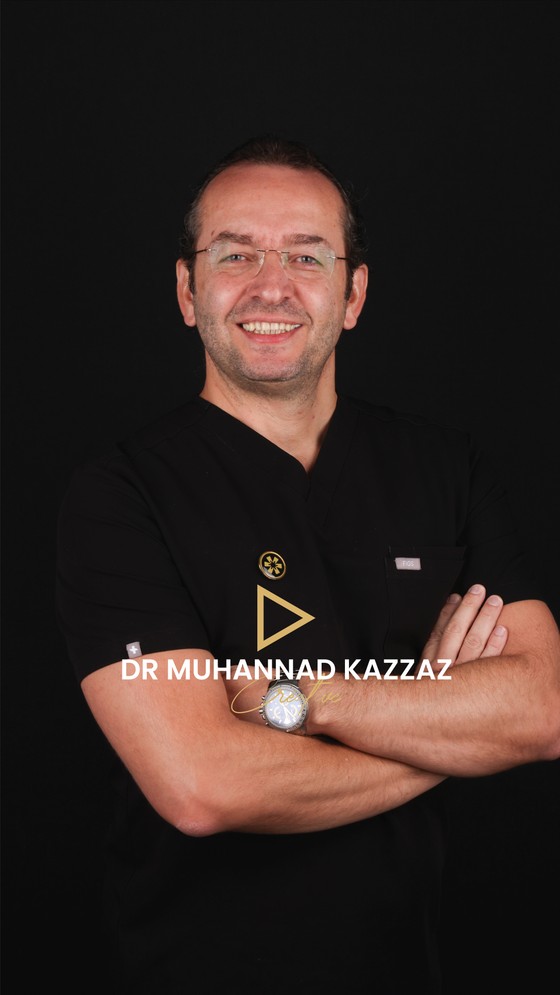
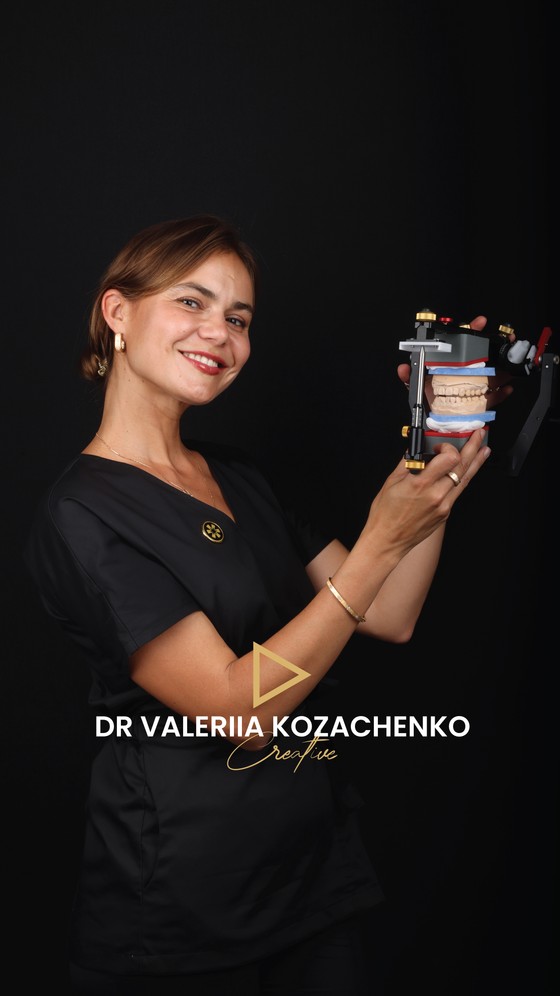
Who treats you here Dr. Muhannad Kazzaz Specialist Orthodontist · Dr. Valeriia Kozachenko Specialist Orthodontist
Every dentist’s licence can be checked on the DHA Sheryan medical directory.
Lingual braces use the same principle as any fixed brace: brackets bonded to each tooth hold a wire that applies gentle, controlled force, and the bone around the roots remodels as the teeth move. The difference is position. The brackets sit on the lingual surfaces, the inside of the teeth, so from the front your teeth look as they do without braces.
Because the inside surfaces of teeth vary far more in shape than the outside, lingual systems are usually designed from a digital scan of your teeth, with brackets and wires shaped for your arch. The specialist orthodontist explains which system is planned for you and why. Lingual mechanics are more demanding than braces on the front, so appointments can take longer, and treatment is planned by the specialist from the start.
For a broader look at less visible options, see our guide to ceramic and lingual braces.
Tell us what you would like to change. A dentist reviews it, and you receive a written plan with prices before any treatment.
Tell us what you would like to change. We reply on WhatsApp or by phone during opening hours.
Prefer to chat? Send a photo on WhatsApp
The diagnosis comes first; the appliance follows. These are the patterns the orthodontist looks at.
All three move teeth well when chosen for the right case. The difference is in visibility, daily effort and what each handles best.
| Lingual braces | Invisalign clear aligners | Fixed metal braces | |
|---|---|---|---|
| Visible from the front | No | Very discreet; attachments may show slightly | Yes |
| Removable | No | Yes, for eating and cleaning | No |
| Depends on wear time | No; works around the clock | Yes, about 20–22 hours a day | No |
| Speech | Most affected in the first weeks | Slight effect at first | Little effect |
| Comfort | Tongue sore at first | Pressure with each new tray | Cheeks and lips sore at first |
| Cleaning | Hardest to see; needs a routine | Easiest; trays come out | Needs care around brackets |
| Food | Avoid hard and sticky food | No limits; trays out to eat | Avoid hard and sticky food |
Treatment time depends mainly on case complexity and attendance, not on where the brackets sit. The Invisalign vs braces guide covers aligners in more depth.
Usually at first. Your tongue touches the inside of your teeth when you speak, so it has to get used to the brackets.
Sounds such as s, t, sh and z can be affected in the first days. Most people adapt within the first few weeks.
Reading aloud and talking normally helps the tongue adapt faster than avoiding speech.
The tip and sides of the tongue can be sore for the first week or two. Orthodontic wax over a bracket and salt-water rinses help.
If you have an important presentation, exam or event, tell the orthodontist so the fitting date can be planned around it.
Comprehensive orthodontic treatment usually takes 12–24 months; simpler cases are shorter and complex bites longer. Your plan gives your own estimate.
Examination of teeth, gums, bite and jaw joints, photographs, a digital scan and X-rays where needed.
First visitThe orthodontist explains what needs to move, whether lingual braces suit your bite, and the alternatives.
PlanningBrackets are positioned from the digital plan and bonded to the inside of the teeth; you leave with cleaning and wax instructions.
FittingWires are changed and progress checked at regular visits, typically every few weeks.
During treatmentBrackets are removed and the teeth polished; retainers are fitted the same visit.
End of treatmentPlaque collects around brackets wherever they are, and behind the teeth you cannot check it in the mirror without effort. A routine that works:
Professional cleaning during orthodontic treatment reaches what brushing misses; see cleaning with braces.
Yes. Teeth tend to drift back after any orthodontic treatment, so retention is planned before the braces go on.
A thin wire fixed behind the front teeth. Invisible, like the braces were, and it needs careful cleaning.
A clear retainer worn as instructed, often every night long term.
Many patients have a bonded wire plus a removable retainer. See retainers after orthodontic treatment.
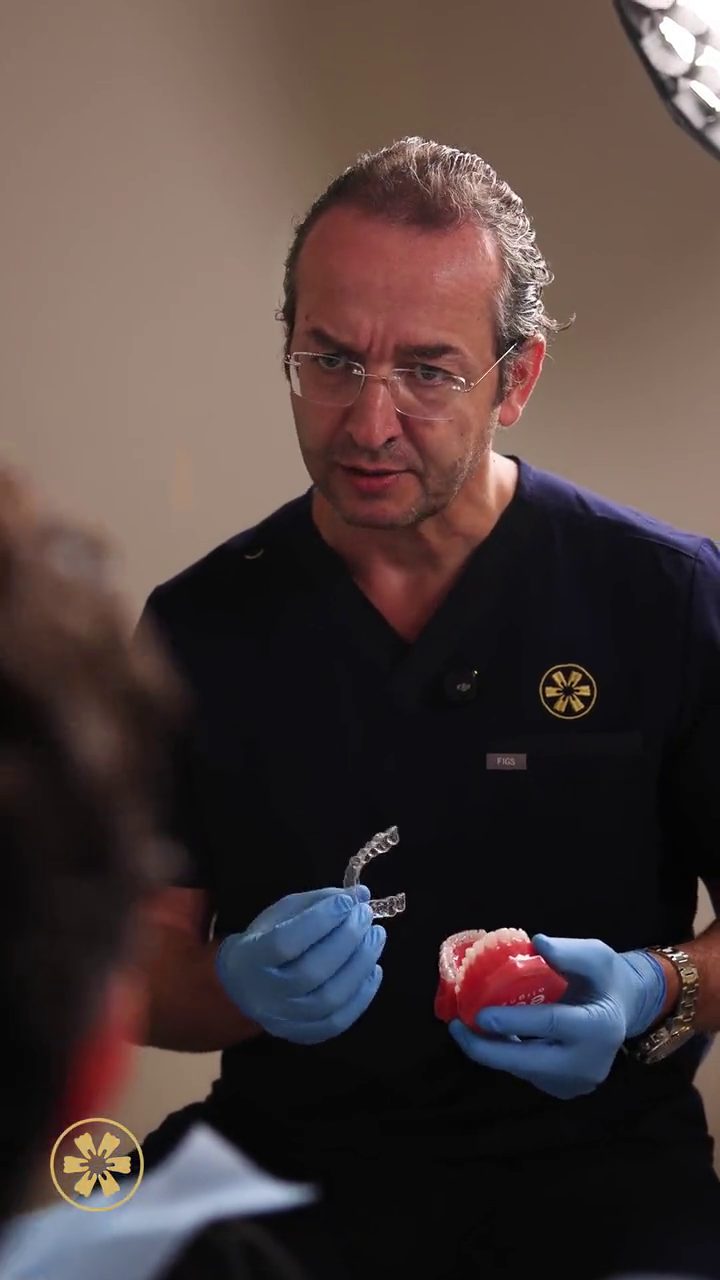
Short clips filmed at our clinic.
Every orthodontic case here is diagnosed and planned by a specialist orthodontist, who also decides whether lingual braces are the right appliance for you.
Lingual braces are priced in your written, itemised plan after a free first consultation, because the cost depends on your case and on the system planned. The braces cost guide explains how orthodontic quotes are built.
Bring the question, not the decision. The specialist will tell you whether lingual braces, Invisalign or conventional fixed braces suit your teeth, and why. You can also ask first on our orthodontic questions page or browse finished smiles in the smile gallery.
Independent sources for readers who want the wider evidence on this topic. Study figures are averages, not a promise for any one patient.
Yes. Lingual braces are provided by our specialist orthodontists, Dr. Muhannad Kazzaz and Dr. Valeriia Kozachenko. Whether they suit you depends on your bite, the shape of the inside of your teeth and your gum health, which are checked at the consultation. If another appliance would treat your case more simply, the orthodontist will explain why.
No. Lingual braces are hidden because of where they sit: behind the teeth. Ceramic braces sit on the front and are tooth-coloured, and clear aligners are removable trays. Ceramic braces are not among the treatments listed here; the hidden options are lingual braces and Invisalign.
Most people find speech and tongue comfort improve within the first few weeks. The first days are usually the hardest: a slight lisp and a sore tongue are common. Wax over a bracket, salt-water rinses and simply talking normally help. Tell the orthodontist if a bracket or wire end keeps rubbing.
Typically every few weeks, for the wire to be changed and progress checked; the orthodontist sets the interval for your case. Lingual appointments can take a little longer than visits for braces on the front, because the brackets are harder to reach. Overall treatment usually takes 12–24 months, depending mainly on complexity and attendance.
Mostly, with the same limits as any fixed braces: avoid hard foods such as nuts and ice, sticky sweets and biting into hard fruit with the front teeth, which can loosen brackets. Cut food into smaller pieces. Soft food is easier in the first days while the tongue and teeth settle.
Sometimes. Some people have lingual brackets on the upper teeth, where visibility matters most, and a different appliance on the lower teeth. Whether that works depends on what needs to move in each arch. Ask the orthodontist at your consultation whether it suits your case.
At Creative Arts, lingual braces are priced in your written, itemised plan after a free first consultation, not from a list, because the figure depends on one or both arches, the system planned, how long treatment will take and the retainers. The plan also shows the alternatives so you can compare them.
Creative Arts has a single clinic on Jumeira Street (Jumeirah Beach Road). Ask about parking when you book.
Our clinic in Jumeirah Open in Google Maps · Rated 4.8 on Google from 238 patient reviews (October 2026) — read them
Tell us what you would like to change. The clinic replies within working hours with an appointment time.
Or call us +971 4 342 4444Or message us on WhatsApp
A consultation ends with a diagnosis and a written, itemised plan — not a sales pitch. Book online, message us on WhatsApp, or call the clinic.
Rated 4.8 on Google from 238 patient reviews (October 2026).
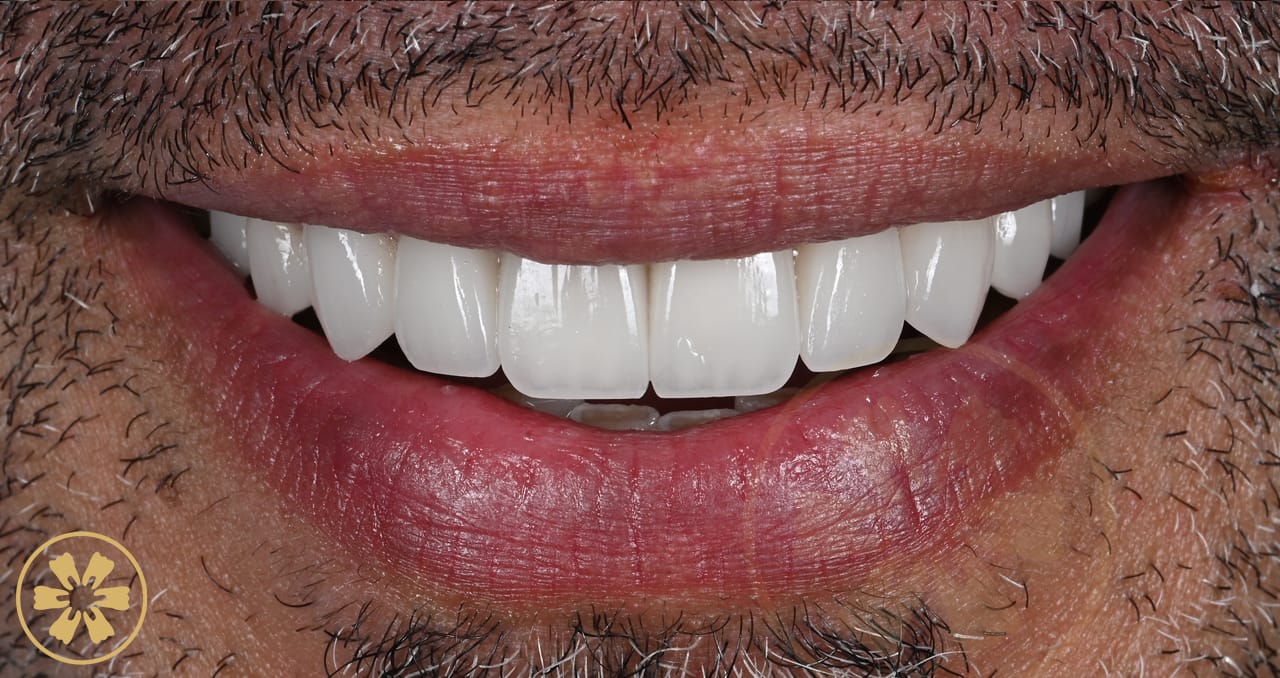
Tap a film to play it. Ceramic veneers and implant bridges are designed, milled, layered and finished by Creative Art Dental Lab, then fitted in the clinic.