One longer session instead of several
Where clinically sensible, extractions, grafting and several implants can be grouped into one sedated appointment.
Implant surgery in our operating rooms with local anaesthesia and, where it suits you, laughing gas, tablet sedation, IV sedation or general anaesthesia, chosen after your medical history is reviewed.
The first visit is an examination and planning discussion. The sedation option is agreed only after your medical history has been reviewed.
Yes. At Creative Arts in Dubai, implant surgery always uses local anaesthesia to numb the area, and sedation can be added if you are anxious, need several implants or a full arch, or face a long session. Options range from laughing gas and tablet sedation to IV sedation and, for selected cases, general anaesthesia given by an anaesthesiologist. The choice follows a review of your medical history.
Sedation is not suitable for everyone. Some medical conditions and medicines change which option is safe, or where treatment should take place.
Sedation is chosen for a reason, not added by default.
Each option changes how aware you are, not whether the area is numb. Local anaesthesia does that job in every case.
| Local only | Laughing gas | Tablet sedation | IV sedation | General anaesthesia | |
|---|---|---|---|---|---|
| How you feel | Awake; the area is numb | Awake, relaxed, light-headed | Drowsy and relaxed | Deeply relaxed but responsive | Unconscious |
| Memory of surgery | Full | Usually full | Often patchy | Many remember little | None |
| Typical implant use | One implant in an easy site | Mild anxiety, shorter procedures | Moderate anxiety, moderate-length sessions | Severe anxiety, several implants, grafting, full arch | Selected extensive cases, or when sedation is not enough |
| Adult escort home | Not needed | Usually not needed | Required | Required | Required |
| Driving afterwards | Usually fine | Often fine once your clinician confirms | Not that day | Not that day | Not that day |
| Fasting | Not needed | Usually not needed | As instructed | As instructed | Strict times given in advance |
General patterns. The clinician giving your sedation sets your exact instructions. For the differences in depth, see sedation vs general anaesthesia, or read about laughing gas, tablet sedation, IV sedation and general anaesthesia.
The implant plan is finished before the surgery date: CBCT 3D scan, implant positions and, where the case calls for it, a 3D-printed surgical guide. The day itself follows these stages.
Medical history, medicines, allergies and past reactions to anaesthesia are reviewed. Written instructions cover eating, medicines and your escort.
Before the dayConsent is confirmed and baseline pulse, oxygen level and blood pressure are recorded.
On arrivalGas through a nasal mask, a tablet, or medicine through a fine cannula. For general anaesthesia, the anaesthesiologist takes over.
StartThe area is numbed and the implants are placed to the plan, with any agreed extractions or grafting. Monitoring continues throughout.
SurgeryYou rest until the clinician is satisfied you are ready, then leave with your escort and written aftercare.
AfterwardsHealing, stitches and any temporary teeth are checked at a review appointment.
Days laterFor one implant, sedation is mostly about how you feel. For bigger plans it can change how treatment is organised.
Where clinically sensible, extractions, grafting and several implants can be grouped into one sedated appointment.
A relaxed patient needs fewer breaks while the surgeon follows planned implant positions across an arch.
With IV sedation many people remember little of the surgery, which helps when anxiety comes from earlier experiences.
Sedation often eases gagging, making work at the back of the mouth manageable.
Pain control during implant surgery comes from local anaesthesia, with or without sedation. Sedation changes awareness: how anxious you feel, how long the appointment seems and how much you remember. It is never a promise that you will feel nothing, and it does not change how the area feels afterwards.
Once the anaesthetic wears off, soreness is usually managed with over-the-counter pain relief, and swelling commonly peaks around two to three days after surgery. Our guide on whether implant surgery hurts covers recovery day by day, and swelling after oral surgery explains which signs need a call to the clinic.
Sedation carries its own small risks, such as drowsiness, nausea and, rarely, slowed breathing. That is why it follows a medical review and is monitored throughout.
Sedation and anaesthesia at Creative Arts are given and monitored by an appropriately qualified, licensed clinician; general anaesthesia is given by an anaesthesiologist. Fasting rules and an adult escort apply where relevant, and breathing, oxygen level, pulse and blood pressure are watched until you are ready to go home.
Sedation adds its own line to an implant plan. The dental implant cost guide covers the implant side.
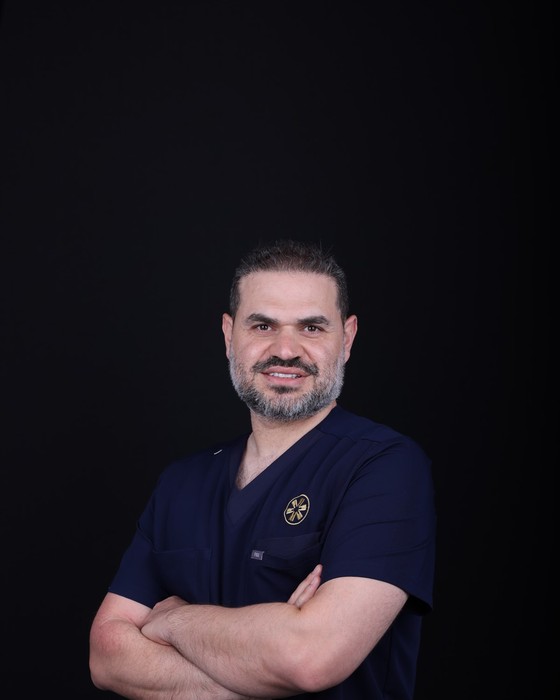
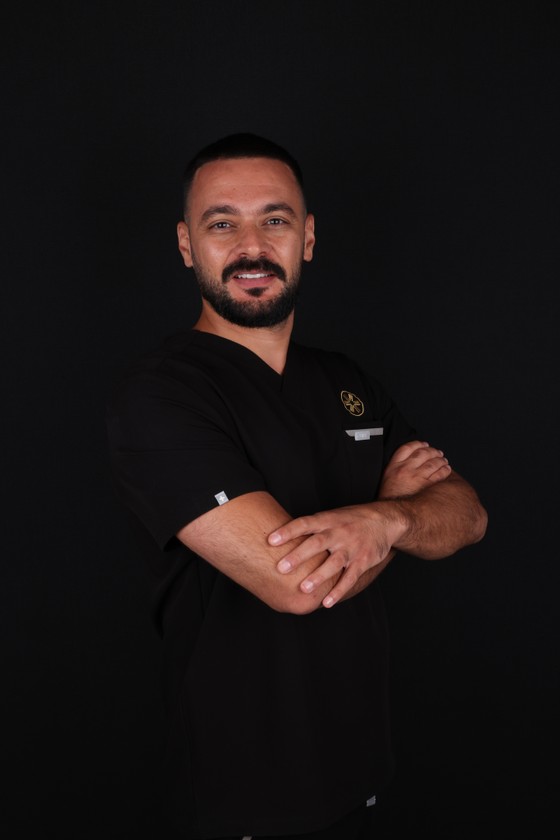
Dr. Firas Osman, Oral & Maxillofacial Surgeon & Implantologist, plans and places implants alongside Dr. Khalid Saeed and Dr. Kinan Bonni. The sedation plan is agreed with you before the surgery date.
With conscious sedation (laughing gas, tablets or IV sedation) you are not asleep. You stay relaxed and able to respond, although with IV sedation many people remember little afterwards. Only general anaesthesia makes you unconscious, and it is given by an anaesthesiologist for selected cases.
Yes. Sedation reduces anxiety and awareness but does not numb the surgical site. Local anaesthesia is given once you are relaxed, so the area is numb during implant placement. Under general anaesthesia a local anaesthetic is often added as well, for comfort when you wake.
Neither is better for everyone. Full-arch implant surgery is commonly done under IV sedation with local anaesthesia, while general anaesthesia is considered when sedation would not be enough or the surgery is especially extensive. Your health, anxiety level and the length of surgery decide, after a medical review.
After laughing gas you can often drive once the clinician confirms the effect has worn off. After tablet sedation, IV sedation or general anaesthesia you must not drive, operate machinery or sign important documents for the rest of the day, and an adult must take you home.
It depends on the option. General anaesthesia needs strict fasting times, and tablet or IV sedation has its own instructions, which you receive in writing. Do not stop regular medicines unless you are told to; diabetes medicines and blood thinners are discussed individually at the medical review.
When it is chosen after a medical review and given and monitored by a qualified, licensed clinician, sedation is a well-established part of oral surgery. It still carries small risks such as nausea, drowsiness and, rarely, breathing effects, which is why conditions like sleep apnoea are assessed beforehand.
Often, yes. Teeth can be removed and implants placed in one sedated session when the sockets are free of infection and the bone allows. Otherwise the teeth are removed, the sockets may be grafted, and implants follow later. Our guide to immediate implants explains how that decision is made.
Tell us what you would like to change. The clinic replies within working hours with an appointment time.
Or call us +971 4 342 4444Or message us on WhatsApp
A consultation ends with a diagnosis and a written, itemised plan — not a sales pitch. Book online, message us on WhatsApp, or call the clinic.