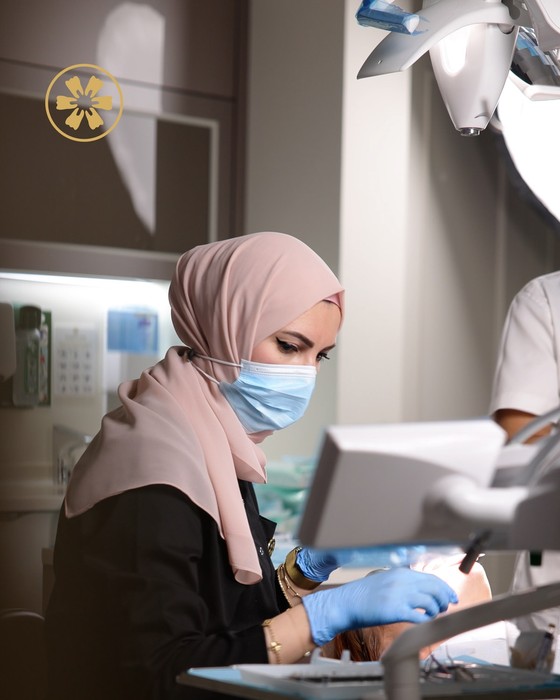
What are the different types of teeth cleaning?
The main types are a routine scale and polish, Guided Biofilm Therapy (GBT), air-polishing stain removal, deep cleaning (scaling and root planing) for gum disease, and maintenance cleans for treated gums, implants and braces. They differ in how far below the gum they reach and what they remove. At Creative Arts in Dubai, routine and maintenance cleans use GBT, and the type you need is decided from a gum check, not from how your teeth look.
Why is there more than one type of teeth cleaning?
Every professional clean has the same aim: remove the bacterial film (biofilm) and the hardened deposits (tartar, or calculus) that home care leaves behind. The types differ in three things: where the deposits are, what has to come off, and how it can be removed without harming the surface underneath.
- Above the gum line, a cleaning deals with plaque, surface stain and visible tartar on the enamel. This is what most people picture when they book a hygiene visit.
- Below the gum line, inside a pocket between gum and root, deposits are hidden, harder to reach and directly drive gum disease. Cleaning there takes different instruments, more time and often local anaesthetic.
- Around restorations and appliances such as implants, veneers, crowns and brackets, the method has to remove biofilm without scratching titanium, ceramic or composite.
So the useful question is not which cleaning sounds most thorough, but where your deposits are and how healthy your gums are. That is answered by an examination with gum measurements (periodontal charting) and, where needed, X-rays. If you are unsure whether your build-up is plaque or tartar, our guide to tartar removal explains the difference.
Types of teeth cleaning compared
A general overview. Your gums, sensitivity and the amount of build-up decide which applies to you.
| Type | What it removes | Where it works | Anaesthetic | Usually for |
|---|---|---|---|---|
| Scale and polish (traditional) | Tartar, plaque and surface stain, finished with a polishing paste | Above the gum and just under its edge | Not usually needed | Healthy gums; the conventional routine clean |
| Guided Biofilm Therapy (GBT) | Disclosed biofilm and stain by air polishing; tartar by ultrasonic only where it remains | Above the gum, and into shallow pockets with a fine nozzle | Not usually needed | Routine and maintenance cleans, especially with restorations, implants or braces |
| Air-polishing stain removal | Surface stain from tea, coffee and tobacco, plus soft plaque | Tooth surfaces above the gum | No | Stained but healthy teeth; often part of a GBT visit |
| First-stage (gross) debridement | The bulk of heavy tartar that hides the teeth and gum margin | Above and just below the gum | Sometimes | Years without a clean; comes before a full gum assessment |
| Deep cleaning (scaling and root planing) | Tartar and bacterial deposits on the root surface inside gum pockets | Below the gum, to the base of each pocket | Local anaesthetic, usually one area at a time | Diagnosed gum disease (periodontitis) |
| Periodontal maintenance | Biofilm that recolonises treated pockets, and any new tartar | Above and below the gum, with pockets re-measured | Occasionally, for sensitive areas | After deep cleaning, often every 3 months at first |
| Implant maintenance | Biofilm on the crown and at the implant neck, without scratching | Around each implant and under bridges | Not usually needed | Anyone with implants or a full-arch bridge |
| Cleaning with braces or aligners | Plaque trapped around brackets, wires and attachments | Around appliances and along the gum line | No | Patients in orthodontic treatment |
Intervals and the need for anaesthetic are typical patterns, not rules; they are set for each patient after examination.
Routine scale and polish: the traditional clean
The conventional hygiene visit has two stages. First comes scaling: tartar is removed with an ultrasonic scaler, a vibrating tip cooled by water, and with fine hand instruments, working around each tooth and just under the gum edge. Then comes polishing: a rotating rubber cup with a gritty paste smooths the surfaces and lifts stain.
Done carefully, it is an effective clean for healthy gums. Its limits are practical: pale plaque is easy to miss, every tooth tends to be scaled whether it carries tartar or not, and polishing paste is mildly abrasive on exposed roots, composite and ceramic glaze. Our GBT vs traditional cleaning guide compares the two methods point by point.
What happens in a GBT cleaning, step by step?
GBT is a protocol rather than a single tool, and it is the method used for routine and maintenance cleans at Creative Arts. The order of the steps is what sets it apart.
Check and disclose
Your gums and medical history are reviewed, then a disclosing solution stains the plaque so the areas your brush misses become visible to you and to the dentist.
Air polishing
An AIRFLOW air-polishing handpiece directs warm water, air and a fine, low-abrasive powder over the teeth, removing stained biofilm and surface stain without a gritty paste.
Below the gum where needed
In shallow pockets and around implants, a slim nozzle carries the same gentle spray just under the gum line. Deeper pockets need deep cleaning instead.
Tartar only where it remains
An ultrasonic scaler is used on the surfaces where hardened tartar is left, rather than on every tooth.
Final check and recall
The teeth are rechecked, you are shown where to focus at home, and your next visit is timed to your risk rather than a fixed calendar.
Air-polishing stain removal: for colour, not for gum disease
Tea, coffee, tobacco and some mouthwashes leave brown or yellow surface stain, especially between teeth and near the gum. Air-polishing stain removal lifts this with the same warm water, air and fine powder used in GBT. People often book it before an event, and it usually forms part of a full GBT clean anyway.
Two limits are worth knowing. Air polishing removes extrinsic stain sitting on the surface; it does not change the natural shade of the tooth or colour inside it, which is a job for professional whitening. And it does not treat gum disease: stain removal on its own is cosmetic. If the goal is a lighter smile, our guide on teeth cleaning vs whitening explains which of the two gets you there.
Deep cleaning (scaling and root planing): treatment for gum disease
When gum disease (periodontitis) has formed pockets between the gum and the root, a routine clean cannot reach the deposits at the bottom of them. Deep cleaning, also called scaling and root planing, removes tartar and bacterial deposits from the root surface down to the base of each pocket, so the gum can settle back against a clean root.
It treats a diagnosed disease rather than preventing one. It is usually done under local anaesthetic, one area at a time, often over more than one visit, and the pockets are re-measured some weeks later. Temporary sensitivity, and gums that look slightly shorter as swelling settles, are common afterwards.
It should be recommended from pocket measurements and X-rays, not appearance. Bleeding when you brush, receding gums, persistent bad breath or teeth that feel loose are reasons to ask for a gum assessment; our page on bleeding gums explains what those signs can mean.
What if there is too much tartar to examine the gums?
After years without a professional clean, tartar can cover the gum margin and hide what lies underneath. The first visit is then a first-stage clean (gross or full-mouth debridement) that removes the bulk of the deposits. Once the gums have settled they are charted, and the plan can go either way: routine maintenance if they are healthy underneath, or deep cleaning if pockets are found.
Maintenance cleans for gums, implants, braces and children
Some mouths need a cleaning routine built around what is already there. These are maintenance types rather than one-off treatments.
Periodontal maintenance
Bacteria recolonise treated pockets within weeks to months. Maintenance visits clean above and below the gum and re-measure the pockets, so relapse is caught early. Gum care sits within our gum treatment service.
Implant maintenance
Implants cannot decay, but the gum and bone around them can become inflamed. Implant cleaning uses low-abrasive methods that do not scratch the implant neck or crown, with checks of bleeding and the bite.
Cleaning with braces or aligners
Brackets, wires and aligner attachments trap plaque along the gum line. Air polishing reaches around them better than a polishing cup; see cleaning with braces or aligners.
Children's cleans
Shorter, gentler visits, usually combined with fluoride and, where suitable, fissure sealants on back teeth, plus brushing coaching for parent and child as part of children's dentistry.
Which type of cleaning fits your situation?
Typical matches between a situation and a cleaning type. An examination confirms which one you actually need.
| Your situation | Usual type of cleaning | Why |
|---|---|---|
| Healthy gums, routine check-up | A routine GBT clean, often about every 6 months; see how often to get a clean | Removes biofilm and early tartar before they cause problems |
| Healthy gums with tea, coffee or tobacco stain | GBT with air-polishing stain removal | Surface stain comes off; the natural shade does not change |
| Gums bleed, recede or feel sore | A gum assessment first, then deep cleaning if pockets are confirmed | Deposits below the gum cannot be reached by a routine clean |
| Gum disease already treated | Periodontal maintenance at a shorter interval | Treated pockets recolonise and need monitoring |
| Dental implants or All-on-4 | Implant maintenance clean | Protects the gum and bone around each implant |
| Braces or aligners | Cleaning around appliances, often more frequent during treatment | Helps prevent gum swelling and white marks on enamel |
| Veneers, crowns or bonding | A low-abrasive clean such as GBT | Protects ceramic glaze and composite from scratching |
| Heavy tartar after a long gap | First-stage clean, then charting and a plan | The gums cannot be assessed under thick deposits |
| Sensitive teeth or nervous about cleaning | GBT with warm water; local anaesthetic for tender areas if needed | See does teeth cleaning hurt |
Smoking, diabetes and a history of gum disease usually shorten the interval between cleans.
A deep cleaning recommendation should come with numbers
If you are told you need a deep cleaning, it is reasonable to ask which teeth are involved, what pocket depths were measured and what the X-rays show. A recommendation based on measurements can be explained tooth by tooth, and you can compare the numbers at your re-evaluation.
See what a GBT hygiene appointment at Creative Arts in Jumeirah involves, from disclosing the plaque to setting your recall, and book a clean or a gum check.
See teeth cleaningHow the type of cleaning is decided at Creative Arts
A first hygiene visit at our Dubai clinic starts with an examination rather than the instruments. The dentist looks at the gums, measures pocket depths where there are signs of inflammation, checks restorations, implants and appliances, and takes X-rays if they are due or bone loss is suspected. You are then told which cleaning you need today, whether deep cleaning is advised, and what interval suits you afterwards. Cost varies with the type and number of visits; our page on teeth cleaning cost explains what changes it.
Who carries out cleaning and gum treatment?
Hygiene visits, GBT and deep cleaning at Creative Arts are carried out by dentists who focus on gum care and prevention.