
Gingivitis vs Periodontitis: The Difference, the Stages and the Treatment in Dubai
Both start with bleeding gums. Gingivitis stays in the gum and goes away with good cleaning; periodontitis destroys the bone that holds teeth and needs treatment to stop. Telling them apart takes a measurement, not a guess.
- Pocket charting and X-rays
- GBT and deep cleaning
- Open daily 10:00–20:00
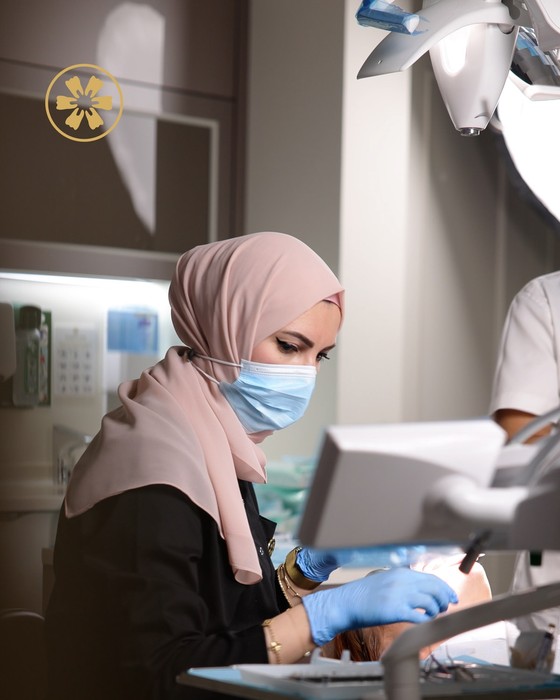
Charting your gums is the only reliable way to tell gingivitis from periodontitis.
What is the difference between gingivitis and periodontitis?
Gingivitis is inflammation of the gum only: it bleeds and may look red or swollen, but the bone around the teeth is intact, and it reverses with professional cleaning and good home care. Periodontitis is the next stage, where inflammation destroys the attachment and bone that hold teeth, forming pockets. It can be stopped but lost bone does not usually return. At Creative Arts in Dubai gum charting and X-rays show which you have.
Who treats you here Dr. Duaa Ameen General Dentist · Dr. Taban Ameen Dentist
Every dentist’s licence can be checked on the DHA Sheryan medical directory.
Gingivitis and periodontitis compared
The same disease process at two different depths. The differences that matter are below the gum line, where you cannot see them.
| Gingivitis | Periodontitis | |
|---|---|---|
| What is affected | The gum margin only | Gum attachment, the ligament and the bone around the roots |
| Bleeding | Common when brushing or flossing | Common, though smokers may bleed less |
| Gum pockets | Normal depth; the gum may swell | Deeper pockets where attachment has been lost |
| Bone on X-ray | Normal level | Bone loss around affected teeth |
| Other signs | Red, puffy gums; bad breath | Receding gums, spaces opening, bad taste, loose or drifting teeth |
| Pain | Usually none | Usually none until late or with an abscess |
| Can it be reversed? | Yes, usually within weeks of good cleaning | It can be stopped; lost bone does not usually grow back |
| Treatment | Professional cleaning and better home care | Deep cleaning, re-evaluation and long-term maintenance |
Our page on gum pockets explains what the pocket numbers on a chart mean.
Does gingivitis always turn into periodontitis?
No. Gingivitis is very common and many people have it on and off for years without it progressing. But periodontitis almost always starts as gingivitis, so gingivitis that is left alone is the main route to it.
The trigger is plaque, the sticky bacterial film that builds up along the gum line. When it is not cleaned away, the gum becomes inflamed. In some people, the body's response to that bacteria starts to break down the fibres attaching gum to root and the bone around it. Why some people progress and others do not depends on risk factors. The National Institute of Dental and Craniofacial Research names smoking or using tobacco as the most significant, with older age, diabetes and genetics also playing a part, and notes that hormonal changes in girls and women are associated with gum disease too. Tartar below the gum line, crowded teeth that are hard to clean and overhanging fillings make it easier for plaque to stay.
Because gingivitis and early periodontitis look and feel almost the same from the outside, the only reliable way to know which you have is to have your gums charted and, where needed, X-rayed.
What are the stages of periodontitis?
The current international classification describes periodontitis in four stages by severity, and grades it by how fast it is progressing. In plain terms:
| Stage | What it means | What it usually needs |
|---|---|---|
| Gingivitis (before periodontitis) | Inflamed gum, no loss of attachment or bone | Professional cleaning and home care; reversible |
| Stage I: initial | Early loss of attachment, shallow pockets | Thorough cleaning below the gum line and home care |
| Stage II: moderate | More attachment and bone loss, pockets of moderate depth | Deep cleaning, re-evaluation and maintenance |
| Stage III: severe | Significant bone loss, deep pockets, some teeth may be lost | Deep cleaning; further treatment may be considered for pockets that do not respond |
| Stage IV: advanced | Severe loss with drifting teeth or a collapsing bite | Gum treatment plus planning to restore the bite, often with several specialties |
The grade (A, B or C) reflects how quickly the disease is progressing and is influenced by factors such as smoking and diabetes. Your dentist can explain your stage and grade from your chart and X-rays.
Which one can be reversed?
Gingivitis can. Once plaque and tartar are removed professionally and you clean along the gum line and between the teeth every day, bleeding usually settles within a couple of weeks and the gums return to health, with no lasting damage. The NIDCR notes that early gum disease caused by plaque can often be reversed by daily brushing and flossing.
Periodontitis can be stopped, but not fully reversed. Treatment removes the biofilm and tartar inside the pockets so inflammation settles and pockets become shallower. The bone that has already been lost does not usually grow back, although in selected cases surgery aims to regenerate some of it. With good home care and regular maintenance, most people keep their teeth stable for many years. Our guide on whether gum disease can be reversed looks at what is realistic at each stage, and the guide to diabetes and gum disease explains why blood-sugar control matters.
How is each one treated at Creative Arts?
Treatment matches the stage, and every step is reviewed with new measurements before the next.
| Treatment | Gingivitis | Periodontitis |
|---|---|---|
| Charting and X-rays | Yes, to confirm no attachment has been lost | Yes, to measure pockets and bone loss |
| Guided Biofilm Therapy | Usually the main treatment | Part of treatment and of maintenance |
| Deep cleaning | Not needed | The core treatment for pockets, under local anaesthetic |
| Re-evaluation | A check that bleeding has settled | Pockets re-measured some weeks after deep cleaning |
| Maintenance | Routine cleaning interval | Often every three months at first |
| Laser gum treatment | Not needed | May be used alongside cleaning in selected areas |
| Surgical gum treatment | Not needed | May be considered for deep pockets that do not respond |
The scaling vs deep cleaning guide explains the difference between the two cleanings.
Bleeding gums are not normal, even if they do not hurt
Gums that bleed when you brush are inflamed. Brushing more gently or stopping in that area makes it worse, not better. Keep cleaning carefully along the gum line and between the teeth, and book a check if the bleeding has not settled within two weeks or if you notice receding gums, bad taste or loose teeth.
Not sure whether your bleeding gums are gingivitis or periodontitis? See how gums are charted and treated at Creative Arts in Jumeirah, from GBT cleaning to deep cleaning and maintenance.
Gum treatment in DubaiDentists who treat gingivitis and periodontitis at Creative Arts
Dr. Duaa Ameen and Dr. Taban Ameen chart gums, carry out GBT and deep cleaning, and plan maintenance so that treated gum disease stays stable.

Sources
Clinical statements on this page are consistent with these independent sources. They describe averages from studies, not a promise for any one patient.
- National Institute of Dental and Craniofacial Research. Periodontal (Gum) Disease. NIDCR / NIH, 2024.
- World Health Organization. Oral health — fact sheet. WHO, 2025.
Frequently asked questions
Is gingivitis the same as periodontitis?
No. Gingivitis is inflammation limited to the gum, with no loss of the bone or attachment holding the teeth, and it is reversible. Periodontitis is a more advanced stage in which that attachment and bone are being destroyed and pockets form. Periodontitis almost always starts as gingivitis, but gingivitis does not always progress.
How long does it take for gingivitis to go away?
With a professional clean and careful daily brushing along the gum line and cleaning between the teeth, gingivitis bleeding usually settles within about two weeks. If it has not, there may be tartar below the gum line, a hard-to-clean area or early periodontitis, and the gums should be checked and charted.
Can periodontitis be cured completely?
Periodontitis can be brought under control so that it stops progressing, pockets become shallower and gums stop bleeding. Bone that has already been lost does not usually grow back, and the disease can return if plaque control or maintenance visits lapse. That is why treatment is followed by long-term maintenance rather than a single course.
How do I know if I have gingivitis or periodontitis?
You cannot reliably tell from bleeding or appearance alone, because both cause red, bleeding gums. The difference is below the gum line. A dentist measures pocket depths around every tooth and checks X-rays for bone loss; normal pockets with bleeding suggest gingivitis, while deeper pockets and bone loss mean periodontitis.
Is chronic gingivitis a type of periodontitis?
Not necessarily. Gingivitis can be long-standing without destroying bone; it is still gingivitis as long as attachment and bone are intact. However, gingivitis that has been present for years deserves charting, because some people with long-term gum inflammation develop periodontitis without noticing any change in symptoms.
Does periodontitis need deep cleaning or surgery?
Most periodontitis is treated with deep cleaning (scaling and root planing) and good home care, followed by re-measurement and maintenance. Surgery may be considered for deep pockets that remain after non-surgical treatment. Your dentist explains the options for your stage before anything is decided.
Can smoking hide the signs of gingivitis and periodontitis?
Yes. Smoking and other tobacco use reduce blood flow to the gums, so they often bleed less even when gum disease is advancing. That can make periodontitis seem milder than it is. Tobacco is also one of the strongest risk factors for progression, so regular charting matters more for smokers and shisha users.
Related treatments
One clinic, in Jumeirah 3 / Umm Suqeim 1
Creative Arts has a single clinic on Jumeira Street (Jumeirah Beach Road). Ask about parking when you book.
- Address614 Jumeira St, Jumeirah 3, Umm Suqeim 1, Dubai
- Opening hoursDaily 10:00–20:00, including Friday and Sunday
- Neighbouring areasJumeirah 1–3, Umm Suqeim 1–3, Al Wasl, Al Safa, Al Manara
Our clinic in Jumeirah Open in Google Maps · Rated 4.8 on Google from 238 patient reviews (October 2026) — read them
Request a consultation
Tell us what you would like to change. The clinic replies within working hours with an appointment time.
- Address614 Jumeira St, Jumeirah 3, Umm Suqeim 1, Dubai · Our clinic in Jumeirah 3 / Umm Suqeim 1
- Opening hoursClinic open daily, 10:00–20:00
- Phone+971 4 342 4444 · WhatsApp +971 56 677 7537
Book Your Consultation
Or call us +971 4 342 4444Or message us on WhatsApp
Talk to a dentist about your case
A consultation ends with a diagnosis and a written, itemised plan — not a sales pitch. Book online, message us on WhatsApp, or call the clinic.