Gums that bleed every time
Bleeding when brushing or flossing that does not settle with better cleaning. See bleeding gums.
When gum disease has formed pockets around the teeth, a routine clean cannot reach the tartar inside them. Deep cleaning treats the root surfaces under local anaesthetic, then the pockets are measured again.
Deep cleaning is recommended only after your gums have been measured. You see the charting and a written plan first.
Deep cleaning, also called scaling and root planing, removes tartar and bacterial deposits from the root surfaces inside gum pockets, below where a routine clean reaches. It treats gum disease (periodontitis), is usually done under local anaesthetic and is often split over more than one visit. At Creative Arts in Dubai it is recommended only after pocket charting and X-rays, and the gums are re-measured once they have healed.
Between each tooth and the gum is a shallow groove. In healthy gums it measures about 1–3 mm, and a routine clean reaches all of it. In gingivitis the gum is inflamed and bleeds, but its attachment to the tooth is intact; a thorough clean and better home care usually reverse it.
In periodontitis the inflammation has destroyed some of the fibres and bone holding the tooth, and the groove deepens into a pocket. Tartar forms on the root inside it, out of reach of a toothbrush and of a routine clean. Pockets of 4 mm or more that bleed, with bone loss on X-rays, are the usual reason deep cleaning is recommended.
Deep cleaning is the first stage of gum disease treatment, not a premium version of a routine clean. If your gums bleed but the pockets are shallow, a routine GBT clean and better home care are usually what you need.
Periodontitis often causes no pain until it is advanced. These signs make a gum assessment worthwhile; only measurement confirms it.
Bleeding when brushing or flossing that does not settle with better cleaning. See bleeding gums.
Bacteria in pockets produce odours that brushing does not remove. See bad breath.
Gums shrinking away from the teeth, or new dark gaps between them near the gum line.
Spacing that was not there before, or a tooth that moves when pressed, needs prompt assessment.
The number of visits depends on how many areas are affected; the stages are the same.
Pocket depth is measured at six points around each tooth, with bleeding and mobility; X-rays show the bone level.
AssessmentA written plan names the areas to treat and the number of visits, and you are shown which interdental brushes fit.
Before treatmentLocal anaesthetic is given in the area being treated, usually one side or one quarter of the mouth at a time.
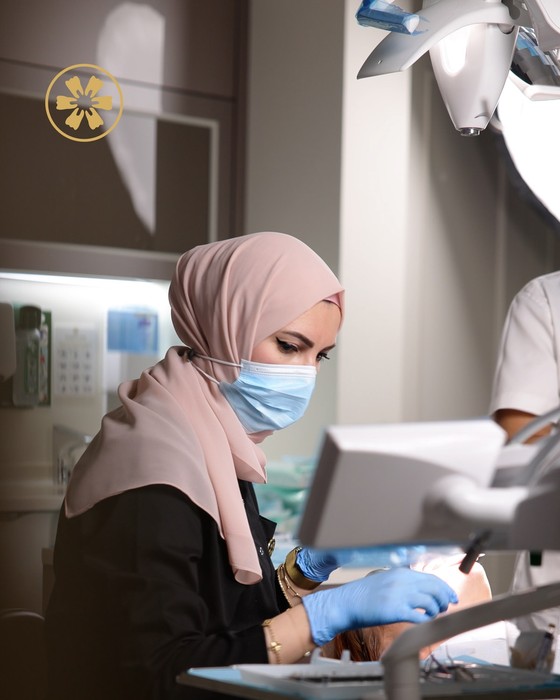
Each visitUltrasonic and fine hand instruments remove tartar and deposits from the roots inside each pocket, leaving a clean surface the gum can tighten against.
Each visitOver the next weeks the gum tightens as inflammation settles. Your daily cleaning matters most here.
WeeksPockets are measured again, usually around 6–12 weeks later. The new numbers decide between maintenance and further treatment.
Re-check
No. They do different jobs and are often used together. Guided Biofilm Therapy stains the plaque, removes it with air, warm water and fine powder, and can reach just below the gum line with a fine nozzle where suitable. It is the routine and maintenance clean at Creative Arts.
Hardened tartar on a root deep in a pocket still has to be removed with ultrasonic and hand instruments; that is what deep cleaning adds. Afterwards, GBT is used for the maintenance visits that keep the gums stable.
See GBT vs a traditional scale and polish, and why tartar cannot be brushed away in tartar removal explained.
It is real treatment for a real disease, and should be recommended on evidence you can see.
Most people return to normal activities the same day. These changes are expected while the gums heal.
Gums may ache once the anaesthetic wears off. Over-the-counter pain relief is usually enough.
Cleaned root surfaces can be sensitive for a few weeks. A desensitising toothpaste helps; see sensitive teeth.
As swelling settles the gum shrinks, so teeth can look slightly longer and small gaps more visible.
Bleeding usually reduces over the following weeks. Keep cleaning gently between the teeth.
Call the clinic, open daily 10:00–20:00, if pain gets worse after the first few days, a gum swelling appears or you develop a fever. Facial swelling with difficulty breathing or swallowing needs a hospital emergency department straight away. Nervous about treatment? See how we look after anxious patients.
Dr. Duaa Ameen and Dr. Taban Ameen look after gum health at Creative Arts, from charting and GBT to deep cleaning, laser soft-tissue care and maintenance.
It is done under local anaesthetic, so during treatment you should feel pressure and vibration rather than sharp pain. Afterwards the gums are often tender and the teeth sensitive for a few days; over-the-counter pain relief is usually enough. Tell the dentist during treatment if anything is uncomfortable, and more anaesthetic can be given.
It depends on how many areas need treatment. Some people need only a few teeth treated in one visit; others have one side or one quarter of the mouth treated per visit. Every case has a re-evaluation several weeks later, when the pockets are measured again.
It can stop active inflammation, and pockets often become shallower as the gum heals. Bone that has already been lost does not grow back by itself, so periodontitis is controlled rather than cured. Keeping it controlled depends on daily cleaning between the teeth and regular maintenance visits.
A regular clean removes plaque and tartar above and just below the gum line, for healthy gums or gingivitis. A deep cleaning reaches the root surfaces inside deeper pockets, is usually done under local anaesthetic, may take more than one visit and is followed by a re-check. Pocket charting decides which you need.
Deep cleaning does not loosen teeth. Heavy tartar can sometimes hold teeth together, so a tooth that was already loose from bone loss may feel more noticeable once it is removed. As the inflammation settles, many teeth become firmer. Any mobility is measured and monitored at your re-evaluation.
Not routinely. Removing the deposits from the roots is the treatment, and antibiotics cannot do that on their own. In selected situations the dentist may prescribe them alongside cleaning, based on your findings and medical history.
Maintenance visits are often every three months at first, because pockets can recolonise with bacteria within weeks. If your measurements stay stable, the interval may be extended. Gum disease can return without maintenance, so these visits matter as much as the deep cleaning itself.
Tell us what you would like to change. The clinic replies within working hours with an appointment time.
Or call us +971 4 342 4444Or message us on WhatsApp
A consultation ends with a diagnosis and a written, itemised plan — not a sales pitch. Book online, message us on WhatsApp, or call the clinic.