How long does pain after deep cleaning last?
Pain after deep cleaning (scaling and root planing) is usually worst on the first day or two, as the anaesthetic wears off and the gums react, and settles within about three to five days. Sensitivity to cold can last a few weeks because cleaned root surfaces are exposed, and usually fades. At Creative Arts in Dubai you get written aftercare; pain that increases after day three, swelling or pus should be checked.
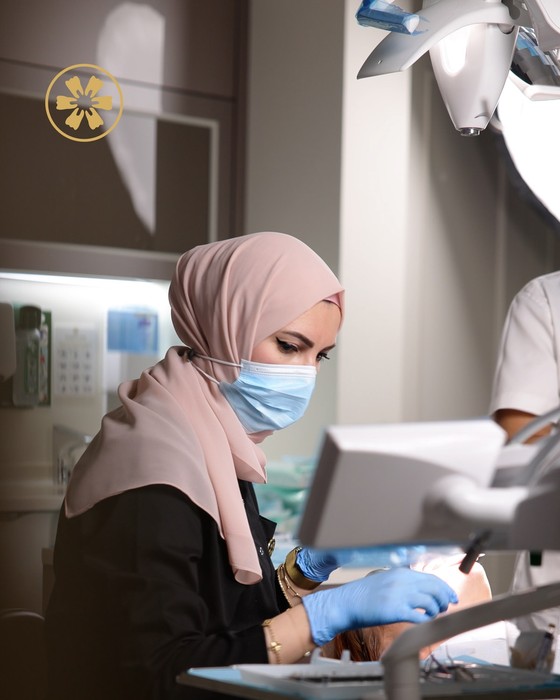
Who treats you here Dr. Duaa Ameen General Dentist · Dr. Taban Ameen Dentist
Every dentist’s licence can be checked on the DHA Sheryan medical directory.
Why is there pain after deep cleaning?
A deep cleaning is not a polish. When gum disease has formed pockets around the teeth, hardened tartar and bacterial film sit on the root surfaces below the gum line. To remove them, the dentist works inside each pocket with ultrasonic and hand instruments, usually under local anaesthetic, and smooths the root so the gum can reattach. The US National Institute of Dental and Craniofacial Research describes healthy pockets as usually 1–3 mm deep, with deeper pockets a sign of periodontal disease; the deeper the pockets treated, the more tissue there is to heal.
Three things then cause discomfort:
- Inflamed gums being handled. Gums with active disease are swollen and fragile. Instruments inside the pocket leave them tender, like a graze, for a few days.
- Exposed root surfaces. Roots are not covered by enamel. Once tartar is removed and the swelling goes down, tiny tubules in the root dentine are open to cold, sweet and touch.
- Gum shrinkage. As inflammation settles, the gum tightens and moves slightly down the tooth. This is part of healing, but it uncovers more root and can make gaps look larger.
How a deep cleaning differs from a routine clean is covered in scale and polish vs deep cleaning; this guide is about the days and weeks afterwards.
Pain after deep cleaning: what is normal, day by day?
A typical pattern. Deeper pockets, heavy tartar and smoking tend to mean a slower course; treating one quadrant at a time spreads the soreness out.
| When | What most people notice | What helps | Worth a call if |
|---|---|---|---|
| First hours | Numbness wearing off, then an ache along the treated gums; slight oozing of blood | Pain relief as directed on the label before the numbness fades; soft, lukewarm food | Bleeding does not slow with gentle pressure from gauze |
| Days 1–3 | Tender, red gums; aching when chewing; teeth sensitive to cold and brushing | Soft brush, careful cleaning, any rinse the dentist prescribed; avoid very hot, spicy and crunchy food | Pain is getting worse each day rather than better |
| Days 4–7 | Tenderness fading; gums paler and firmer; less bleeding | Return to normal brushing and cleaning between teeth | One spot throbs, swells or produces pus |
| Weeks 2–4 | Twinges with cold drinks or air; teeth may look longer and gaps bigger | Desensitising toothpaste, applied to the area and not rinsed off at night | Sensitivity is severe, constant or wakes you at night |
| Weeks 4–8 and after | Sensitivity mostly gone; gums settled | Re-evaluation visit to measure the pockets again | Bleeding or swelling returns |
Why are my teeth sensitive after scaling and root planing?
Sensitivity is the most common complaint after a deep cleaning, and it usually comes from the root surface rather than the nerve. Under the tartar, the root dentine is full of microscopic tubules. Fluid moves inside them when they meet cold, sweet or air, and the nerve reads that as a sharp, short twinge.
In most people the tubules gradually close as minerals from saliva and toothpaste settle in them, so sensitivity fades over a few weeks. What speeds that up:
- A desensitising toothpaste used twice a day, with a small amount smeared on the sensitive area at night and not rinsed off.
- Brushing gently with a soft brush: hard scrubbing keeps the tubules open.
- Avoiding acidic drinks straight after brushing, and cutting down on frequent sips of fizzy drinks and juices.
- A fluoride or desensitising treatment applied at the clinic, if it is still troublesome at the review.
Sensitivity that lingers for a long time after a cold drink, or a tooth that aches on its own, is different and should be examined; see sensitive teeth for the other causes.
Why do teeth feel loose or gaps look bigger after a deep cleaning?
A deep cleaning does not loosen teeth, but it can reveal what gum disease has already done. Two things are going on:
Tartar acts as a splint. Heavy tartar can bridge between teeth and hold them together. Once it is removed, a tooth that has lost bone support may feel more mobile for a while. As the gum inflammation settles over the following weeks, many teeth firm up.
Swollen gum was filling the gaps. Inflamed gums are puffy and fill the spaces between teeth. When they heal and shrink back, the spaces appear, sometimes as small dark triangles near the gum line. These usually look most obvious in the first weeks; some soften as the gum matures, and others remain. Options for gaps that stay are covered in black triangles between teeth.
Tooth mobility and gum levels are measured before treatment and again at the re-evaluation, so changes can be judged against real numbers rather than how the teeth feel.
When pain after deep cleaning may mean infection
Call the clinic if pain is increasing after day three instead of easing; one area becomes swollen, throbs or tastes of pus; a gum lump appears; you develop a fever or feel unwell; or bleeding restarts heavily. Occasionally a small piece of tartar or food gets trapped in a deep pocket as the gum tightens and causes a gum abscess, which needs draining and cleaning. The clinic is open daily, 10:00–20:00, and is not a 24-hour service. Facial swelling with fever, difficulty breathing or swallowing, or swelling spreading towards the eye or neck needs a hospital emergency department straight away.
How can you reduce pain after deep cleaning?
Most of what helps is simple, and the first three days matter most:
- Pain relief before the numbness wears off, using an over-the-counter painkiller that suits your health, taken as directed on the label. Ask the pharmacist if you take other medicines.
- Keep cleaning. It is tempting to avoid sore areas, but plaque left on healing gums makes them more inflamed. Brush gently with a soft brush and clean between the teeth as shown, even if there is a little bleeding.
- Use only the rinse you were given. If an antiseptic mouthwash was prescribed, use it for the time stated; long-term use can stain teeth.
- Eat soft, lukewarm food for a day or two and avoid very hot, spicy, crunchy or seedy foods that lodge in the gums.
- Do not smoke. Smoking reduces blood flow to the gums and slows healing.
Antibiotics are not routinely needed after a deep cleaning; they are prescribed only for specific findings. If you think you need them, call rather than using leftover tablets; our guide to antibiotics for a tooth infection explains why.
Gums bleeding or a deep cleaning recommended? See how gum disease is measured, treated and reviewed at Creative Arts in Dubai, with written aftercare after every visit.
Gum treatmentNormal soreness or a problem? A quick comparison
Use this alongside your written aftercare. When in doubt, call.
| Usually normal | Get it checked | |
|---|---|---|
| Gum pain | Generalised tenderness that eases each day | Pain that increases after day three, or one spot that throbs |
| Bleeding | Pink spit and some bleeding on brushing for a few days | Bleeding that will not slow with gentle pressure, or returns heavily |
| Sensitivity | Short twinges to cold for a few weeks | Pain that lingers after the cold has gone, or aches on its own |
| Swelling | Slightly puffy gums for a day or two | A lump, pus, a bad taste or facial swelling |
| Teeth | Feeling slightly different or 'clean' for a few days | A tooth that becomes more mobile week by week |
What happens after the pain settles?
A deep cleaning is the start of gum treatment, not the end. A few weeks later the pockets are measured again. Where they have shrunk to a healthy depth and stopped bleeding, you move on to regular maintenance cleaning, at intervals set by your risk. Where deep pockets remain, the options are discussed, which may include further cleaning or, in some cases, surgical access; see gum flap surgery for what that involves.
Whether gum disease can be stopped for good depends largely on what happens at home and on risk factors such as smoking and diabetes; our guide on whether gum disease can be reversed explains what is realistic. If you are planning treatment and want to know what drives the fees, see gum treatment cost.
Dentists who carry out deep cleaning at Creative Arts
Dr. Duaa Ameen (general and conservative dentistry, gum care) and Dr. Taban Ameen (laser and cosmetic dentistry, gum treatment) carry out deep cleaning, review healing and plan maintenance.