
Gummy smile: why the cause decides the treatment
Why a smile looks gummy, the three different causes and why each needs a different treatment, plus what laser gum contouring can and cannot fix.
Last medically reviewed: 12 October 2026
Smiles made at Creative Arts
Designed in the clinic and made by hand in Creative Art Dental Lab, in the same building in Jumeirah, Dubai.


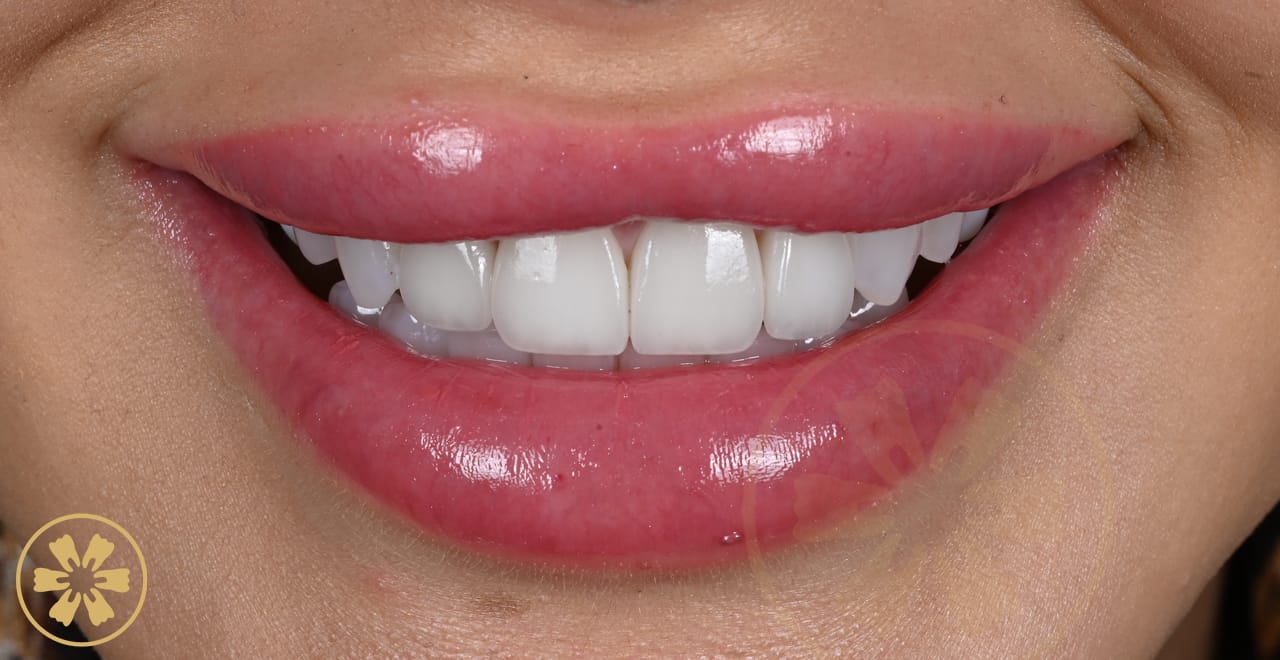


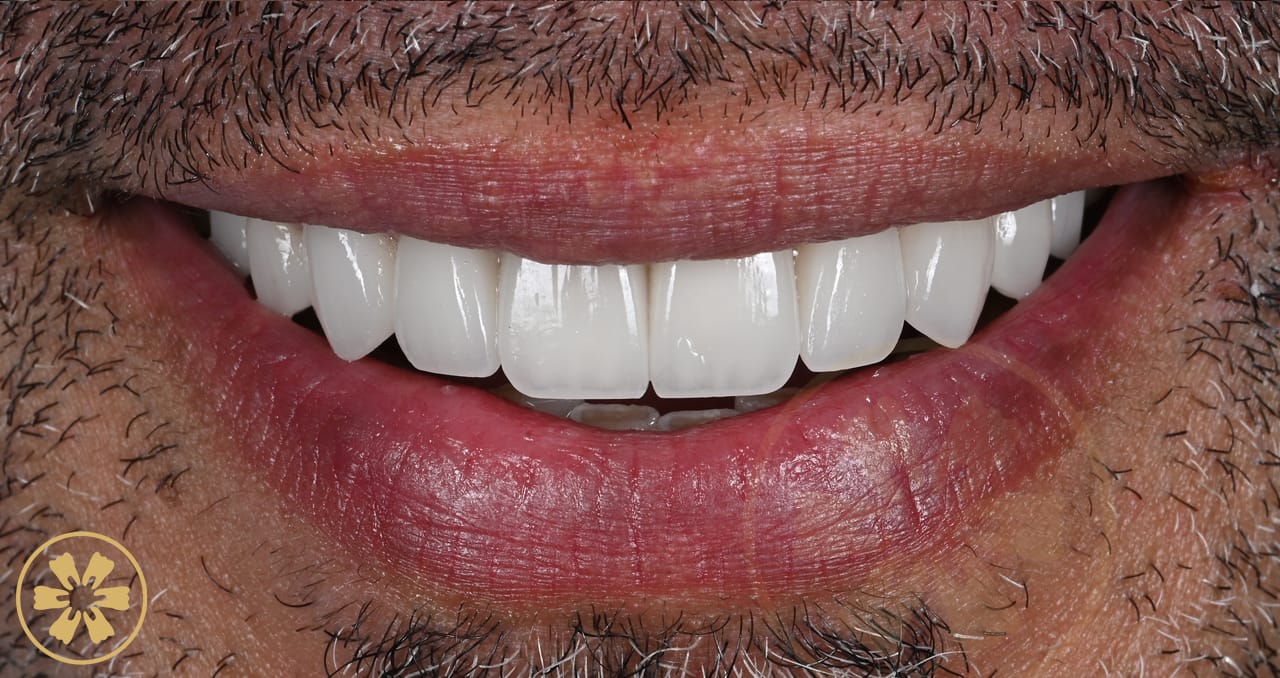
A smile is read as “gummy” when a disproportionate band of gum shows above the upper teeth. Around two millimetres is normal; beyond three or four, the gum starts to compete with the teeth for attention.
The important point — and the one most often skipped — is that a gummy smile has at least three distinct causes, and they need completely different treatments. Trimming gum on a case that is not caused by gum will not work.
The three causes
1. Altered passive eruption (excess gum tissue)
The teeth erupted fully but the gum never receded to its final position, so it still covers part of the crown. The teeth look short because they are partly hidden, not because they are actually short.
This is the case that gum contouring genuinely treats.
2. A hyperactive upper lip
The teeth and gums are in normal position, but the muscles elevating the upper lip pull it higher than average when you smile, exposing more gum.
Cutting gum here is the wrong operation — you would shorten the gum on teeth that are already correctly proportioned. Approaches that act on the lip instead, such as muscle-relaxing injections or, in selected cases, surgical lip repositioning, are used by some clinicians; they are outside the scope of this guide, so ask at your assessment which approach suits your case.
3. Vertical maxillary excess (skeletal)
The upper jaw is vertically longer than average, so everything sits lower — teeth, gums and all.
No amount of gum contouring will correct this. Management is orthodontic, or in significant cases orthognathic surgery. A clinic that offers to laser this away is treating a skeletal problem with a soft-tissue procedure.
A fourth contributor: worn or short clinical crowns from grinding, where the teeth themselves have lost height. Here the answer is restorative — often combined with a small amount of crown lengthening.
Questions about your own teeth? Send a photo on WhatsApp and the clinic will tell you what an examination would check.
WhatsApp usHow we work out which one you have
- Measuring gum display at rest and on full smile
- Assessing lip mobility — how far the upper lip travels between rest and smile
- Measuring clinical crown height — short crowns suggest cause 1 or wear
- Probing and radiographs to establish where the bone crest sits relative to the enamel margin
- Facial proportion assessment for a skeletal component
That examination takes a few minutes and determines whether contouring will help you at all.
Gum contouring and crown lengthening
Where excess tissue is the cause, the gum margin is reshaped to reveal more of the natural crown and to even out the gum line across the arch.
The critical distinction:
- Gingivectomy removes soft tissue only. Suitable where there is sufficient distance between the gum margin and the underlying bone.
- Crown lengthening also reshapes the bone crest. Necessary when the bone sits too close to where the new gum margin needs to be — because a fixed biological dimension exists between bone and gum margin, and violating it causes chronic inflammation and rebound.
This is why a case done as a simple trim, when it needed bone contouring, tends to relapse. The tissue is re-establishing a dimension it requires.
Laser reshaping offers less bleeding, better visibility and generally faster healing than a scalpel.
Sequencing with cosmetic work
If veneers or crowns are planned, gum work comes first. The tissue must be reshaped and allowed to mature — about six to eight weeks, sometimes longer — before the restoration margins are designed to meet it.
Doing it the other way round means beautiful ceramics finishing at a gum line that then changes. It is one of the more expensive sequencing errors in cosmetic dentistry.
Healing
Mild tenderness for a few days, managed with over-the-counter analgesia. Avoid brushing directly on the treated margin for the period we specify, and use the prescribed rinse. The surface looks settled within one to two weeks; the margin matures over six to eight.
The honest summary
Gum contouring is a genuinely effective, relatively minor procedure — for the right cause. Our assessment establishes which of the three you have, and if the answer is that contouring will not achieve what you want, we will tell you at consultation rather than after. Our periodontics page covers the full range of gum treatment.
Further reading from independent sources
Independent sources for readers who want the wider evidence on this topic. Study figures are averages, not a promise for any one patient.
- American Academy of Periodontology. Surgical Procedures (gum graft, crown lengthening).
- Cleveland Clinic. Gum Contouring, 2023.
Frequently asked questions
How much gum showing is 'too much'?
Around two millimetres of gum on a full smile is generally considered within normal aesthetic range. Beyond three to four millimetres tends to read as gummy. But this is a guideline, not a rule — what matters is whether it bothers you and whether it is in proportion to your face.
Is laser gum contouring painful?
It is done under local anaesthetic so the procedure is not painful. Laser reshaping causes less bleeding and generally heals faster than conventional scalpel surgery, with mild tenderness for a few days afterwards.
Will the gum grow back?
Where only soft tissue was removed and bone levels were not addressed, some rebound can occur. Where crown lengthening included appropriate bone contouring, the result is stable. This is precisely why the underlying cause must be diagnosed rather than just trimming tissue.
How long does healing take?
The gum surface looks settled within one to two weeks. Full maturation of the tissue margin takes about six to eight weeks, sometimes longer, which is why we wait before placing any veneers or crowns that must meet that margin precisely.