Bleeding when you brush or floss
Pink toothpaste froth or blood on floss is usually the first sign, often around the front teeth and between the back teeth.
Hormones make gums react more strongly to plaque in pregnancy, so they bleed and swell more easily. It is common, treatable and usually settles with thorough cleaning at home and a professional clean.
Tell us how many weeks pregnant you are when you book, so we can plan the visit around you.
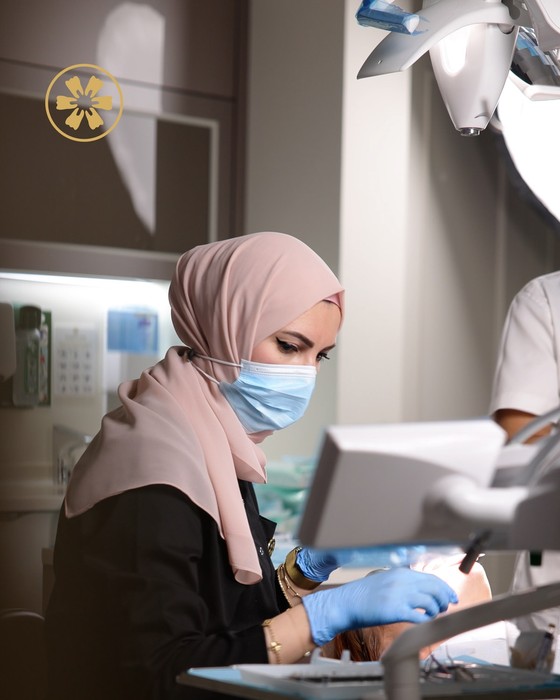
During pregnancy, hormonal changes exaggerate the gums' reaction to the bacteria in plaque, so gums become red, puffy and bleed when you brush. This is called pregnancy gingivitis. The plaque, not the pregnancy alone, is the trigger, which is why careful brushing, cleaning between the teeth and a professional clean usually settle it. At Creative Arts in Dubai, gum cleaning is carried out safely at any stage of pregnancy.
Who treats you here Dr. Duaa Ameen General Dentist · Dr. Taban Ameen Dentist
Every dentist’s licence can be checked on the DHA Sheryan medical directory.
Signs often appear from the second or third month and can increase as the pregnancy goes on.
Pink toothpaste froth or blood on floss is usually the first sign, often around the front teeth and between the back teeth.
The gum between the teeth becomes swollen and shiny instead of firm and pale pink, and may feel tender.
Inflamed gums and trapped plaque can cause a stale taste, which is easily confused with the taste changes of pregnancy.
Some women develop a red, soft growth between two teeth that bleeds easily. It is described below and needs a check, but is usually not serious.
Plaque is a sticky film of bacteria that builds up along the gum line every day. In anyone, plaque that is left there causes gingivitis: inflamed gums that bleed. In pregnancy, raised hormone levels change the blood vessels and the immune response in the gums, so the same amount of plaque provokes a stronger reaction. The American Dental Association explains that gingivitis in pregnancy may result from hormonal changes that exaggerate the gum tissue's response to bacteria.
That has two practical consequences. First, gums that bleed are not a reason to brush less. Bleeding is a sign of inflammation caused by plaque, and removing the plaque is what calms it. Second, gums that were already a little inflamed before pregnancy tend to get worse, so a gum check early in pregnancy is useful.
Other things can add to it: morning sickness that makes brushing difficult, more frequent snacking, a drier mouth, and crowded teeth or old fillings that trap plaque. If gums were bleeding before you were pregnant, or you have deeper gum pockets, gingivitis may be part of a longer-standing gum problem; our guide to gingivitis vs periodontitis explains the difference.
Despite the name, a so-called pregnancy tumour is not cancer. Its medical name is pyogenic granuloma, also called pregnancy epulis. The ADA describes it as a round growth, usually connected to the gum by a thin cord of tissue, that may develop due to hormonal changes. It is typically red or purple, soft and bleeds easily, and most often appears between two teeth where plaque collects.
In general terms it often shrinks or disappears after the birth, so the usual approach is to keep the area very clean and monitor it. Removal may be considered if it bleeds repeatedly, gets in the way of eating or brushing, or does not settle after the pregnancy. Any lump in the mouth should be examined, and one that does not behave like a typical pregnancy granuloma, or persists, is checked further.
Use this as a guide only. A gum check measures the gums and finds the cause.
| What you notice | Common in pregnancy | Book a dental visit |
|---|---|---|
| Bleeding when brushing | A little pink froth that improves within one to two weeks of careful cleaning | Bleeding that continues despite good cleaning, or bleeding without brushing |
| Swelling | Slightly puffy gum edges between the teeth | Swelling around one tooth, a gum boil, or gums that are very painful |
| Gum lump | None, or a small soft lump that has been checked | Any new lump, especially one that bleeds a lot, grows quickly or gets in the way |
| Teeth | Teeth feel normal | A tooth that feels loose, gums pulling back, or pain on biting |
| Breath and taste | Mild stale taste that improves with cleaning | A bad taste with pus or a tender, swollen area |
Most women need only the first two or three rows. Treatment is chosen after the gums are examined and measured.
| Option | When it fits | What it involves |
|---|---|---|
| Better home care | Every case | Brushing twice a day at the gum line with fluoride toothpaste, and daily cleaning between the teeth with floss or interdental brushes |
| Professional clean | Plaque or tartar along the gum line | Scaling and polishing, or Guided Biofilm Therapy; safe at any stage of pregnancy |
| Review visit | Moderate inflammation or a gum lump | A check a few weeks later to confirm the gums are settling, and further cleaning if needed |
| Deep cleaning | Gum pockets or bone loss suggest periodontitis | Cleaning below the gum line under local anaesthetic, which may be used in pregnancy; see deep cleaning |
| Removal of a gum lump | A granuloma that bleeds repeatedly or interferes with eating, or persists after the birth | A minor soft-tissue procedure under local anaesthetic, timed with your pregnancy in mind |
Mouthwash does not replace brushing and cleaning between the teeth; ask before starting a medicated rinse in pregnancy.
Appointments are kept comfortable, with the chair more upright later in pregnancy and breaks whenever you need them.
How many weeks pregnant you are, any complications, medicines and how your gums have changed.
A few minutesThe gums are looked at and gently measured around each tooth to see whether this is gingivitis alone or deeper gum disease.
Same visitPlaque and tartar are removed. If the gums are tender, the cleaning can be split into two shorter visits.
Same or next visitYou are shown which areas bleed and how to clean them, including the right size of interdental brush.
Same visitA follow-up to check the gums are improving, and a plan for another clean later in pregnancy or after the birth if needed.
A few weeks laterResearchers have studied links between gum disease and pregnancy outcomes for many years, with mixed results, and whether treating gum disease during pregnancy changes those outcomes has not been clearly shown. What is clear is that gum treatment is safe in pregnancy and good for your own health, so there is no reason to delay it.
Some people search whether gum inflammation predicts a baby's sex. It does not; gum changes are caused by hormones and plaque in all pregnancies.
For other dental questions in pregnancy, including X-rays, anaesthetic and which treatments to postpone, see dental care during pregnancy. If a tooth rather than the gum is hurting, read toothache during pregnancy.
Contact the clinic during opening hours, 10:00–20:00 daily, for a swollen, painful area around one tooth, a gum boil or pus, or a gum lump that bleeds heavily. Go to a hospital emergency department straight away for facial swelling with fever, difficulty breathing or swallowing, swelling spreading towards the eye or neck, or bleeding you cannot control.
Dr. Duaa Ameen and Dr. Taban Ameen focus on gum care and hygiene at Creative Arts. They examine and measure the gums, carry out cleaning that is safe in pregnancy, and plan follow-up around your due date.
Clinical statements on this page are consistent with these independent sources. They describe averages from studies, not a promise for any one patient.
Yes. Professional cleaning is preventive treatment, which the American Dental Association states is safe throughout pregnancy. Removing plaque and tartar is the main treatment for pregnancy gingivitis, so there is no benefit in waiting. Later in pregnancy the chair is kept more upright and you can take breaks whenever you need them.
Many women notice bleeding gums from the second or third month, and it can increase as the pregnancy goes on. Gums often calm down after the birth as hormone levels change, but plaque-related inflammation will persist if the plaque is not removed, so good cleaning remains important afterwards.
No. Bleeding is a sign of inflammation caused by plaque, and cleaning between the teeth is what removes it. Be gentle and consistent; with daily cleaning, bleeding from pregnancy gingivitis usually reduces within one to two weeks. If it does not, book a gum check, because tartar or deeper pockets may need professional cleaning.
A soft, red lump between two teeth in pregnancy is usually a pyogenic granuloma, often called a pregnancy tumour, which is not cancer. It often shrinks after the birth. It should still be examined, kept very clean, and removed if it bleeds repeatedly, interferes with eating or persists after the pregnancy.
Gingivitis affects only the gum and is reversible. If plaque and tartar stay for long periods, inflammation can spread to the tissues that hold the teeth, which is periodontitis. That is why bleeding gums in pregnancy are worth treating rather than waiting until after the birth, especially if your gums bled before pregnancy.
Usually not. Most pregnancy gingivitis settles with home care and a standard professional clean. Deep cleaning is considered only if measurements show gum pockets or other signs of periodontitis. It can be done during pregnancy under local anaesthetic when needed, and is otherwise planned around your due date.
Creative Arts has a single clinic on Jumeira Street (Jumeirah Beach Road). Ask about parking when you book.
Our clinic in Jumeirah Open in Google Maps · Rated 4.8 on Google from 238 patient reviews (October 2026) — read them
Tell us what you would like to change. The clinic replies within working hours with an appointment time.
Or call us +971 4 342 4444Or message us on WhatsApp
A consultation ends with a diagnosis and a written, itemised plan — not a sales pitch. Book online, message us on WhatsApp, or call the clinic.