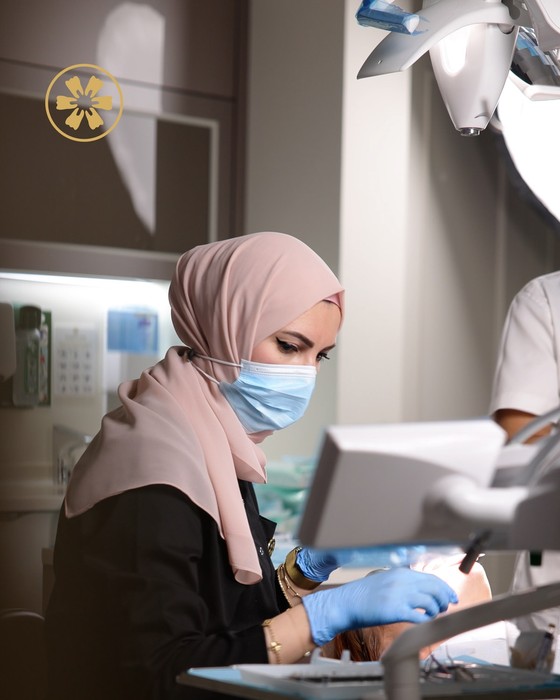
Excess gum over the teeth
The teeth erupted fully but the gum never settled back to its final position (altered passive eruption). The teeth look short because they are partly covered. This is the case gum contouring treats.
Laser contouring reshapes a gum line that covers too much of the teeth. It only works when excess gum is the cause, so the first appointment measures why your smile shows so much gum.
The first visit measures gum display, lip movement and crown height. Nothing is reshaped on the day of diagnosis.
It depends on the cause. When excess gum covers part of the teeth, laser gum contouring reshapes the gum line, sometimes with crown lengthening if the bone sits too close. A very mobile upper lip or a long upper jaw is not a gum problem, so trimming gum will not fix it. At Creative Arts the cause is measured first, then the plan is written.
Around two millimetres of gum on a full smile is usually considered within the normal range. Beyond three or four, the gum starts to compete with the teeth. There are three common reasons, and only one is actually about the gum.
The teeth erupted fully but the gum never settled back to its final position (altered passive eruption). The teeth look short because they are partly covered. This is the case gum contouring treats.
Teeth and gums are in a normal position, but the lip lifts higher than average when you smile. Removing gum here would shorten teeth that are already correctly proportioned.
The upper jaw is longer than average, so teeth and gums sit lower in the face. This is skeletal. Contouring cannot correct it; orthodontic or surgical management is considered instead.
Grinding can wear the teeth down so the gum looks prominent. The answer is usually restorative, sometimes combined with a small amount of crown lengthening.
These are the options patients are usually weighing. More than one cause can be present at once, which is why a combined plan is sometimes needed.
| Cause | What the examination shows | Usual approach |
|---|---|---|
| Excess gum tissue | Short-looking crowns; bone well below the gum margin | Laser gum contouring (gingivectomy) |
| Excess gum and bone too close | Short crowns; bone crest close to the enamel edge | Crown lengthening: gum and bone reshaped together |
| Hyperactive or short upper lip | Normal crown height; lip travels a long way from rest to smile | Not a gum procedure. Lip-elevation treatment may be discussed with the aesthetic branch |
| Vertical jaw excess | Whole upper jaw long in facial proportions | Assessment with an orthodontist; surgical referral in significant cases |
| Worn teeth | Shortened edges, wear facets, often grinding | Restorations, a night guard, sometimes minor crown lengthening |
For the full clinical explanation, read why the cause decides the treatment for a gummy smile.
Most straightforward cases are completed in a single treatment visit after the assessment; crown lengthening involving bone takes longer to heal.
Gum display at rest and on full smile, how far the lip travels, crown height, probing depths and a radiograph showing where the bone sits.
AssessmentThe planned margin is marked tooth by tooth so proportions and symmetry are agreed before anything is removed. Where veneers are planned, it is part of the smile design.
PlanningUnder local anaesthetic, the dental laser removes and recontours gum tissue. Bone is reshaped only where the examination showed it is needed.
Treatment visitThe surface usually looks settled within one to two weeks; the margin continues to mature over roughly six to eight weeks, when it is reviewed.
Follow-upA gingivectomy removes soft tissue only. It is suitable when there is enough distance between the new gum margin and the bone beneath it.
Crown lengthening also reshapes the bone crest. The gum needs a fairly constant amount of space between its margin and the bone. If the gum is trimmed but the bone stays where it was, the tissue tends to grow back towards its old position and can stay inflamed. That is the most common reason a simple trim appears to relapse.
The radiograph and probing at the assessment show which of the two your teeth need. A laser is used for the soft tissue because it generally means less bleeding and better visibility during the procedure; it does not change the biology of how much space the gum needs.
When gum reshaping and ceramic work are both planned, the gum is treated first and allowed to mature before the final restoration edges are designed. Doing it the other way round leaves new veneers finishing at a gum line that then moves. See how digital smile design plans both together.
Quoted prices for gum contouring in Dubai vary widely, mostly because the procedure varies more than the name suggests. Your written plan sets out the price for your case after the assessment.
Gum contouring is carried out by our dentists who work with the dental laser and treat gum conditions, with orthodontic input when the cause is skeletal.
The procedure is done under local anaesthetic, so you should feel pressure rather than pain. Afterwards the gum is usually tender for a few days, which is normally managed with over-the-counter pain relief. You will be told how to brush around the treated area and may be given a rinse to use while it heals.
The surface usually looks settled within one to two weeks. The gum margin keeps maturing for roughly six to eight weeks, which is why any veneers or crowns are designed after that point. Crown lengthening that involves bone generally takes longer than soft-tissue reshaping alone.
When the right procedure was chosen, the new gum line is generally stable. Relapse usually happens when gum was trimmed but the bone was too close to the new margin, so the tissue re-establishes the space it needs. Measuring the bone level beforehand is what prevents this.
No. If your teeth are a normal length and the upper lip simply rises high when you smile, removing gum would make teeth that are already correctly proportioned look too long. Approaches that reduce lip elevation are a separate conversation, which the clinic's aesthetic branch can discuss with you.
When the upper jaw itself is vertically long, gum treatment will not change the proportions. The first step is an assessment with an orthodontist. Mild cases may be managed orthodontically; significant skeletal cases may be referred for a surgical opinion. We will tell you at the consultation if contouring is not the answer.
Not quite. Gum contouring usually means reshaping soft tissue only. Crown lengthening also reshapes the bone beneath the gum, either for appearance or to expose more tooth for a crown or filling. The examination and radiograph show which one your teeth need.
Yes, and when both are planned the gum work normally comes first. The reshaped margin is left to mature, then the veneers are designed to meet it. Doing it in this order avoids ceramic edges ending up above or below a gum line that has since changed.
Tell us what you would like to change. The clinic replies within working hours with an appointment time.
Or call us +971 4 342 4444Or message us on WhatsApp
A consultation ends with a diagnosis and a written, itemised plan — not a sales pitch. Book online, message us on WhatsApp, or call the clinic.