How do I find a good orthodontist in Dubai?
Choose by checkable criteria rather than claims. Confirm the orthodontist is licensed as a specialist orthodontist in the Dubai Health Authority directory, expect a diagnosis from records (photos, scan and X-rays when needed) before any appliance is chosen, ask whether both braces and aligners are offered, and get a written plan that includes retention. Be wary of aligners sold without an in-person examination.
Specialist orthodontist or a dentist who offers aligners: what is the difference?
In Dubai, any licensed dentist may move teeth, and many general dentists offer clear aligners. A specialist orthodontist is different in one concrete way: they have completed recognised postgraduate training in orthodontics, typically several years focused on tooth movement, jaw growth, bite relationships and facial balance, and they are licensed in the specialist category.
That training matters most when the problem is not just the position of the front teeth. A deep or open bite, an underbite, a crossbite, a jaw that is growing unevenly in a child, crowding severe enough to raise the question of extractions, a case that relapsed after earlier braces, or jaw-joint symptoms all need a diagnosis that looks beyond the smile. For a minor alignment touch-up, a well-trained dentist may be perfectly appropriate; the point is that the person planning your case should be trained for the complexity it actually has.
A useful test: ask what the problem is before asking about the appliance. If the conversation starts with a product and a price, the diagnosis has been skipped.
An orthodontist checklist: what to check and how
Eight criteria you can verify before you sign anything. None of them depend on marketing.
| What to check | Why it matters | How to verify it |
|---|---|---|
| Licence category | "Specialist" is a regulated title in Dubai, not a marketing word | Search the name in the DHA medical directory (Sheryan) |
| Diagnosis before appliance | The appliance should follow the problem, not the other way round | Ask: what exactly is wrong with my bite? |
| Proper records | Photos, a 3D scan and X-rays when needed show what the eye cannot | Ask which records will be taken and why |
| Braces and aligners both offered | A clinic offering only one appliance may fit every case to it | Ask when they would recommend the other option |
| In-person monitoring | Teeth that do not track need correcting early | Ask how often you will be seen, and by whom |
| Retention in writing | Teeth can move for life after treatment ends | The plan should name the retainer type and the review rhythm |
| Written, itemised plan | Lets you compare quotes like for like | Check it lists duration estimate, refinements, retainers and alternatives |
| Honest limits | Some bites need jaw surgery or restorative work too | Ask what treatment cannot achieve in your case |
Treatment length estimates are ranges; comprehensive orthodontic treatment typically takes 12–24 months, shorter for simple cases and longer for complex ones.
How do you check that an orthodontist is a licensed specialist in Dubai?
The Dubai Health Authority's online medical directory, part of its Sheryan licensing portal, lets you search a professional by name and see their licence category, specialty and the facility they are registered with. For an orthodontist, look for the specialty listed as orthodontics and a category such as specialist or consultant. Clinics in Dubai Healthcare City are regulated separately and have their own register.
Two quick checks are worth doing: that the name on the website matches the name in the directory, and that the orthodontist is registered at the clinic where you will actually be treated. Our broader guide to choosing a dental clinic in Dubai explains licence categories in more detail.
What should a proper orthodontic assessment include?
A plan is only as good as the records behind it. A thorough first assessment usually covers the teeth, bite, gums, jaw joints, face and smile line, followed by records: clinical photographs, a 3D intraoral scan, and X-rays where the diagnosis needs them, typically a panoramic view and sometimes a side view of the skull to measure jaw relationships. Our page on dental X-rays and CBCT explains what each image shows and why not every case needs every image.
Gum health is part of this. Moving teeth in inflamed gums can worsen bone loss, so gum disease and decay are treated first. If you would like to see how this works step by step, our orthodontic consultation page describes each stage.
For children, a first orthodontic assessment around age seven is commonly recommended. It is an assessment, not a commitment to early treatment: most children simply need monitoring, and the early orthodontic assessment page explains how that decision is made.
Red flags when choosing an orthodontist or aligner provider
Any one of these is a reason to slow down and get a second opinion.
Aligners without an in-person examination
Mail-order and at-home aligner schemes plan tooth movement from photos or impressions, often without X-rays or a gum examination. Problems such as bone loss, root issues or a bite that worsens can go unnoticed.
One appliance for every case
If every patient is offered the same product, the appliance is being chosen before the diagnosis. Braces and aligners each have cases they handle better; the Invisalign vs braces guide explains where each fits.
A fixed finish date promised
Teeth move biologically at their own pace. A responsible plan gives a range and explains what could extend it.
No word about retainers
If retention is not in the plan, it may be an extra cost later, or forgotten until the teeth have moved back.
Pressure to decide today
Limited-time offers on a treatment that lasts a year or more are a sales technique, not a clinical reason.
Want to see how our specialist orthodontists diagnose and plan braces and Invisalign treatment for adults, teenagers and children?
Explore orthodontics at Creative ArtsWhy the retention plan matters as much as the braces
When braces come off or the last aligner is finished, the teeth are in their new position but the surrounding fibres and bone are still adapting. Without retention, teeth tend to drift back, and they can continue to shift slowly throughout life. That is why retention is usually long-term.
Retention can be a thin bonded wire behind the front teeth, a removable retainer worn at night, or both. Ask before you start: which type is planned for you, how many retainers are included, how often they are reviewed, and what happens if one breaks or is lost. Our retainers guide covers the options in detail.
If you had braces years ago and your teeth have moved, that is a common reason to see an orthodontist as an adult. A relapse assessment looks at why the teeth moved, not just at straightening them again; see adult orthodontics.
Questions to ask at your orthodontic consultation
- What is my diagnosis, in plain words, and is it the teeth, the jaws, or both?
- Which records do you need, and are any X-rays needed today?
- Would you treat this with braces, aligners or either, and why?
- What is the estimated treatment range, and what could lengthen it?
- Who will see me at each review, and how often?
- What retention do you plan, and is it included in the written plan?
- Could my case need extractions, tooth reshaping between teeth, or a referral for jaw surgery?
- What would happen if I chose not to treat this?
If you already have a plan from another clinic and are unsure about it, our guide to getting a second opinion on a dental treatment plan explains what to bring and how to compare.
How Creative Arts measures up against these criteria
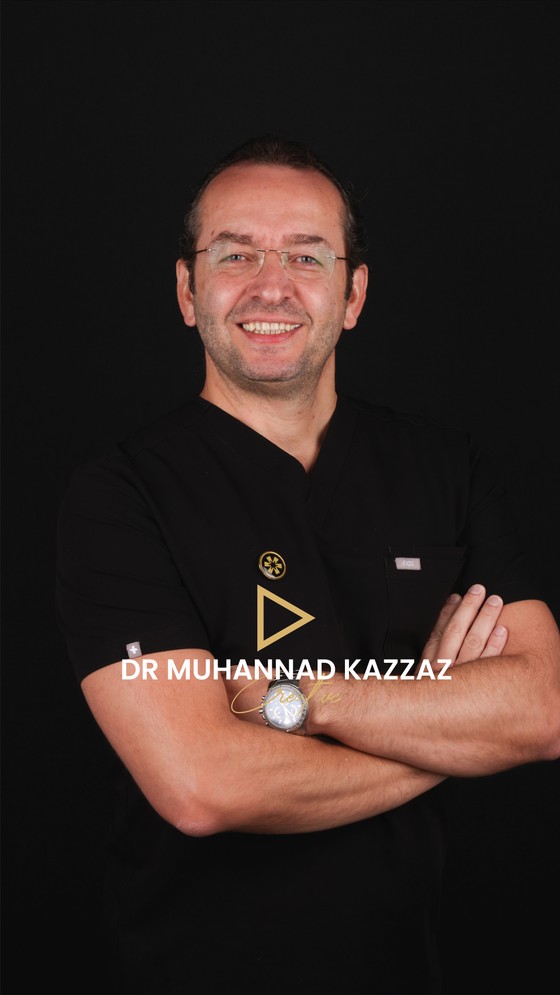
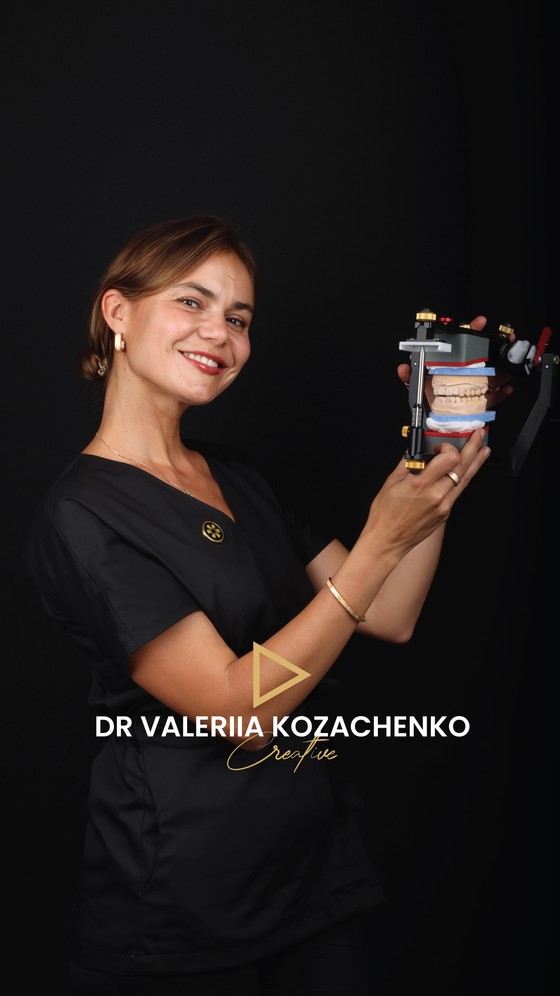
We would rather show you how we work than call ourselves the right choice. Orthodontic treatment at Creative Arts is provided by two DHA-registered specialist orthodontists. Dr. Muhannad Kazzaz holds French postgraduate orthodontic qualifications, teaches internationally, and sees complex and adult cases, including review of previous treatment. Dr. Valeriia Kozachenko treats with fixed braces and clear aligners and has a particular focus on the jaw joint and jaw function, including TMJ assessment.
Both fixed braces and Invisalign clear aligners are offered, records include a 3D intraoral scan with X-rays when needed, and treatment starts only after you accept a written plan that includes retention. Where a bite needs jaw surgery, the orthodontists plan with an oral and maxillofacial surgeon, as described on the surgical orthodontics page. The clinic is at 614 Jumeira St, Jumeirah 3, open daily 10:00–20:00; our Jumeirah orthodontist page explains how review visits fit around school and work.
The specialist orthodontists at Creative Arts
Both are registered with the Dubai Health Authority as specialist orthodontists. You can check their licences the way this guide describes.