What are the types of tooth extraction?
There are two basic types: a simple extraction, where a visible tooth is loosened and lifted out, and a surgical extraction, where the gum is opened and bone removed or the tooth divided. Wisdom-tooth, orthodontic and baby-tooth extractions are variations, and any extraction can be combined with socket preservation or an implant. At Creative Arts in Dubai, X-rays, and a CBCT scan where needed, decide the type before the appointment.
Types of tooth extraction compared
A general overview. Your X-ray and examination decide which of these applies to your tooth.
| Type | When it is used | What is involved | Anaesthesia usually |
|---|---|---|---|
| Simple extraction | A fully visible tooth with roots that can be reached | The tooth is loosened with instruments and lifted out; no cut in the gum | Local anaesthetic |
| Surgical extraction | Broken-down teeth, curved or long roots, teeth fused to bone, root fragments | A small gum flap, some bone removed or the tooth divided, then stitches | Local anaesthetic; sedation can be discussed |
| Impacted wisdom tooth removal | A wisdom tooth partly or fully buried in gum or bone that is causing problems | Surgical removal, planned on a CBCT scan when roots lie near the nerve | Local anaesthetic; sedation or general anaesthesia can be discussed |
| Extraction with socket preservation | A tooth that will later be replaced by an implant | Graft material placed in the socket at the same appointment | Local anaesthetic |
| Extraction with immediate implant | Selected cases with intact socket walls and no active infection | The implant is placed when the tooth comes out, if planning and stability allow | Local anaesthetic; sedation can be discussed |
| Orthodontic extraction | Severe crowding, when the orthodontist's plan calls for space | Usually healthy premolars, often a simple extraction | Local anaesthetic |
| Baby tooth extraction | Badly decayed, infected or retained baby teeth | A short, gentle procedure adapted for children | Local anaesthetic |
| Multiple or full-arch extractions | Several failing teeth before a full-arch implant bridge | Teeth removed in one planned session, with the replacement arranged in advance | Local anaesthetic with sedation, or general anaesthesia |
Anaesthesia is chosen for the patient and the procedure after a medical-history review.
Simple vs surgical extraction: what decides which you need?
The difference is access. In a simple extraction the whole crown is visible, so the dentist can widen the socket slightly with an elevator and lift the tooth out with forceps. In a surgical extraction the tooth cannot be gripped or would break, so a small flap of gum is lifted, a little bone is removed, or the tooth is divided into pieces that come out separately.
Several things push a tooth towards the surgical route:
- the tooth is broken off at or below the gum, or only roots remain;
- the roots are long, curved, spread wide or close to the sinus or a nerve;
- the tooth has had root canal treatment and is brittle, or is fused to the bone;
- it is impacted, meaning it never came fully through.
These are visible on an X-ray, which is why the type is usually known before the appointment. Occasionally a tooth planned as simple fractures and the procedure becomes surgical; a good consent conversation mentions that possibility. Our tooth extraction page explains how both are carried out at Creative Arts.
Wisdom tooth extraction: erupted, soft-tissue and bony impactions
Wisdom teeth are the most common reason for surgical extraction, but they are not all the same:
- Fully erupted wisdom teeth that are decayed or impossible to clean are often removed much like any other back tooth.
- Soft-tissue impacted teeth are through the bone but partly covered by gum, where food traps and infection (pericoronitis) start.
- Partially or fully bony impacted teeth are still in the jaw, often tilted forward or lying on their side, and need surgical removal.
A buried wisdom tooth that is healthy and causing no harm can often be monitored. Removal is advised for recurrent infection, decay, damage to the neighbouring molar, cysts or persistent pain. When the roots sit close to the nerve in the lower jaw, a CBCT 3D scan shows the relationship before surgery is planned. See wisdom tooth removal and our page on impacted teeth for the decision in detail.
Extraction with socket preservation or an implant
The jaw ridge shrinks after any extraction, mostly in the first months, because the bone that held the tooth is no longer needed. If the tooth is going to be replaced, it makes sense to plan the replacement before the extraction, because it changes how the tooth is taken out.
Socket preservation places graft material in the empty socket at the same appointment to limit that shrinkage; it cannot be added once the socket has healed. In selected cases, an implant can be placed when the tooth comes out. This immediate implant placement depends on intact socket walls, no active infection and good initial stability, so it is decided case by case and never assumed. Where neither suits, the socket heals first and the gap is restored later with an implant or a bridge; our guide to implants vs bridges compares the two.
Orthodontic extractions, baby teeth and impacted canines
Orthodontic extractions remove healthy teeth, usually premolars, to create room when crowding is severe. The decision belongs to the orthodontist, who plans which teeth and when, and many crowded cases are treated without any extraction.
Baby teeth are removed when they are badly decayed or infected, or when they stay in place and block the adult tooth underneath. The visit is short and adapted for children within our children's dentistry service.
Impacted upper canines are a notable exception: because they matter so much to the smile and bite, they are usually uncovered and guided into place with braces rather than extracted. See impacted canine exposure.
Before any extraction: can the tooth be saved?
An extraction cannot be undone. Many teeth that hurt can be kept with root canal treatment and a crown. The dentist should explain why a tooth cannot be predictably saved, and what replacing it would involve, before booking the extraction. Our guide on root canal vs implant sets out that comparison.
Which anaesthesia is used for each type of extraction?
Creative Arts has operating rooms equipped for dental and oral surgery. The option is chosen for you and the procedure after a medical-history review, and sedation or anaesthesia is given and monitored by an appropriately qualified, licensed clinician.
Local anaesthetic
Used for almost every extraction. The area is numb, so you feel pressure and movement but should not feel sharp pain. It wears off over a few hours.
Laughing gas
Nitrous oxide breathed through a small nose mask takes the edge off anxiety while you stay awake. See laughing gas.
Oral or IV sedation
A tablet or a sedative into a vein leaves you relaxed and drowsy; an adult escort is needed. See oral sedation and IV sedation.
General anaesthesia
You are fully asleep, with anaesthesia given by an anaesthesiologist, fasting rules and an escort. Considered for complex or multiple extractions or severe anxiety; see general anaesthesia.
Recovery after each type of extraction
Typical patterns for healthy adults. Smoking, the difficulty of the tooth and your general health all change them.
| Type | Swelling and discomfort | Usually back to normal routine | Stitches |
|---|---|---|---|
| Simple extraction | Mild tenderness for a few days | Within a day or two | Often none |
| Surgical extraction | Swelling that typically peaks around day 2–3 | About a week | Usually, reviewed after about a week |
| Impacted wisdom tooth | Swelling and jaw stiffness, peaking around day 2–3 | About a week, sometimes longer | Usually |
| With socket preservation or implant | Similar to a surgical extraction | About a week; the graft or implant then heals for months | Usually, reviewed at one to two weeks |
Discomfort is usually managed with over-the-counter pain relief and written aftercare instructions.
Which warning signs matter after an extraction?
Some bleeding on the first day, swelling for a few days and a sore jaw are normal. Contact the clinic if pain gets worse rather than better after two or three days, which can be dry socket; if swelling keeps increasing after day three; or if you have a fever or a bad taste with pus. Our guide on swelling after oral surgery explains what is expected.
The clinic can be reached daily from 10:00 to 20:00. If you have facial swelling with difficulty breathing or swallowing, go to a hospital emergency department immediately.
Facing an extraction? See how Creative Arts in Jumeirah plans simple and surgical extractions, including the replacement and aftercare, before the tooth comes out.
See tooth extractionQuestions to ask before your extraction
- Is this a simple or a surgical extraction, and could that change on the day?
- Do I need a CBCT scan because the roots are close to a nerve or the sinus?
- Which anaesthesia options suit me, and do I need an escort or to fast?
- How will the gap be replaced, and should socket preservation or an implant be done at the same time?
- What should recovery look like, and when is my review?
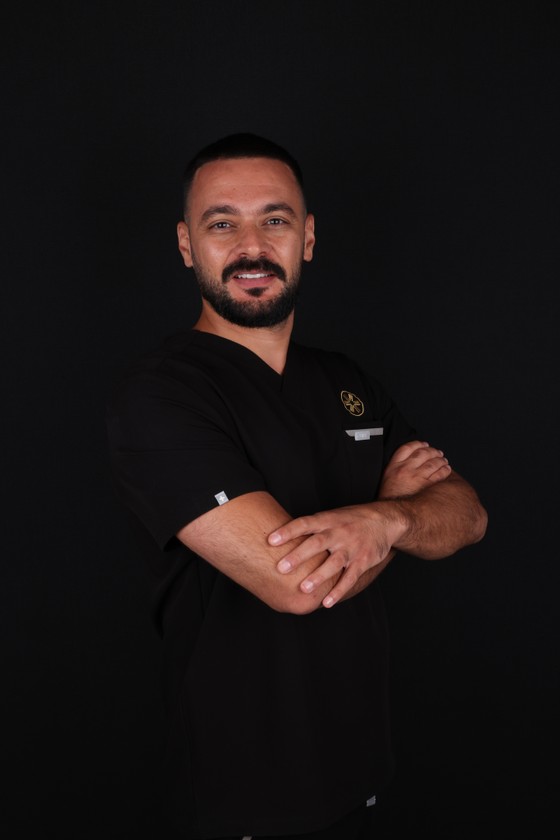
Complex surgical cases at our Dubai clinic are assessed by Dr. Firas Osman, Oral & Maxillofacial Surgeon & Implantologist. If you are unsure whether your procedure counts as minor or major surgery, our guide to minor vs major oral surgery explains the difference.
Who carries out extractions at Creative Arts?
Simple and surgical extractions, wisdom teeth and extractions combined with grafting or implants are carried out by these dentists.