A baby canine that will not budge
The small baby canine is still firm in the early teens, while the teeth around it have changed.
When an adult canine stays buried in the jaw, a surgeon can uncover it and the orthodontist can guide it into the arch, if its position, your age and the neighbouring roots allow.
The first step is an orthodontic and surgical assessment with imaging. Surgery is planned only once the orthodontic plan is agreed.
Impacted canine exposure is minor surgery to uncover an adult canine that is stuck in the jaw, most often an upper canine lying towards the palate. At Creative Arts in Dubai, Dr. Firas Osman uncovers the tooth and usually bonds a small attachment to it, then a specialist orthodontist uses braces to draw it gradually into line. A CBCT 3D scan guides the plan.
Upper canines are usually among the last front teeth to come through, often between about 11 and 13. These signs suggest one is not on its way.
The small baby canine is still firm in the early teens, while the teeth around it have changed.
By around 10 or 11, a coming canine can usually be felt as a bump high on the gum above the baby tooth.
The lateral incisor next door leans or flares, because the buried canine is pressing on its root.
One canine has come through and the other has not, or a bump is felt in the roof of the mouth.
Not every impacted canine should be brought into the arch. The CBCT findings, your age and the overall bite decide.
Exposure is one stage inside an orthodontic plan, not a stand-alone operation.
The specialist orthodontist checks the bite, the space available and the timing, and judges whether the canine is worth bringing in.
First visitShows whether the canine lies towards the palate or the cheek, its angle and depth, and whether it is wearing away the roots of the front teeth.
PlanningFixed braces are usually fitted first to open room in the arch, so the canine has somewhere to go.
Before surgeryUnder local anaesthetic, Dr. Firas Osman uncovers the crown of the canine. Either a small window is left open, or a small bracket with a fine chain is bonded and the gum is closed back over it.
SurgeryGentle orthodontic force draws the tooth towards the arch over months, with regular adjustments and progress checks.
MonthsThe canine is aligned with its neighbours, and a retainer holds the result over the long term.
End of treatment
Exposure is only half the treatment. The orthodontist decides where the attachment should sit, which direction the tooth will be pulled and when surgery should happen. The surgeon decides how to reach the tooth with the least disturbance to bone and gum.
The orthodontic side is led by specialist orthodontists from our orthodontics team; the surgery forms part of our oral and maxillofacial surgery service.
Bringing the canine into line is often worth trying, but it is one option among several.
| Option | When it is considered | Trade-offs |
|---|---|---|
| Monitor with X-rays | The canine is in a harmless position, the bite is acceptable, or you prefer no treatment | Regular checks needed; a buried tooth can occasionally form a cyst or damage neighbouring roots |
| Exposure and orthodontic alignment | The canine is in a workable position, there is or can be space, and you are willing to wear braces | Longer orthodontic treatment; the canine may still fail to move |
| Keep the baby canine | The baby tooth is still firm with a healthy root, often in adults | Can last years but will eventually need replacing |
| Remove it and close the space | The canine is badly placed or fused to the bone, and the bite allows the gap to be closed with braces | No canine on that side; the neighbouring tooth may be reshaped to resemble one |
| Remove it and replace it later | The space needs to be kept, for example once the baby canine is lost | An implant is placed only after jaw growth has finished; a bridge is an alternative |
The right option depends on the CBCT findings, your age and the overall bite. The orthodontist and the surgeon explain their reasoning in your written plan.
Most people return to school or work the next day. The area is tender for a few days and is usually managed with over-the-counter pain relief; soft food, careful brushing around the site and any rinse you are given help healing. If a protective pack covers an open window, it is removed at a review. Swelling is usually mild; our guide to swelling after oral surgery explains what is normal and what needs a call.
Tell the orthodontist promptly if the chain or bracket comes loose. The canine cannot be pulled until it is reattached, and a further small procedure is sometimes needed.
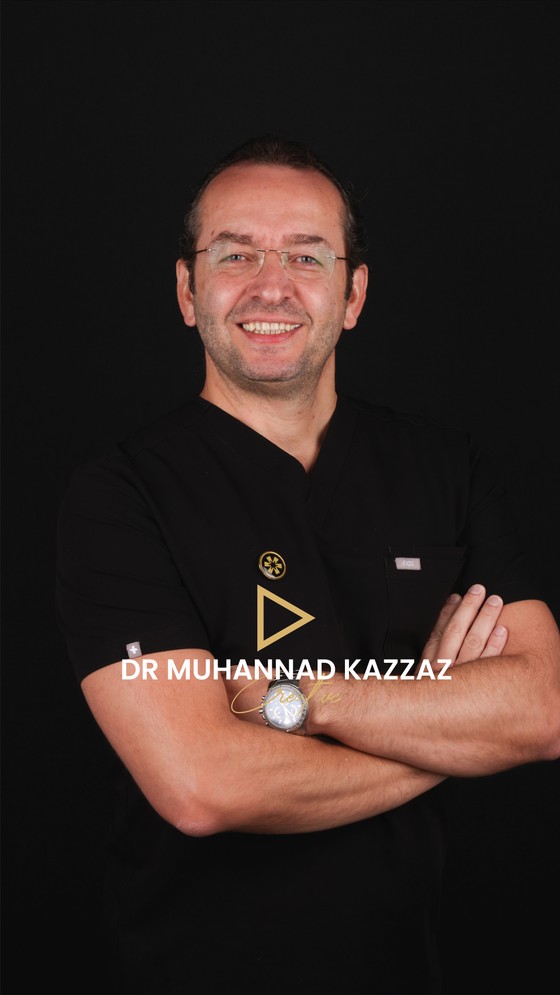
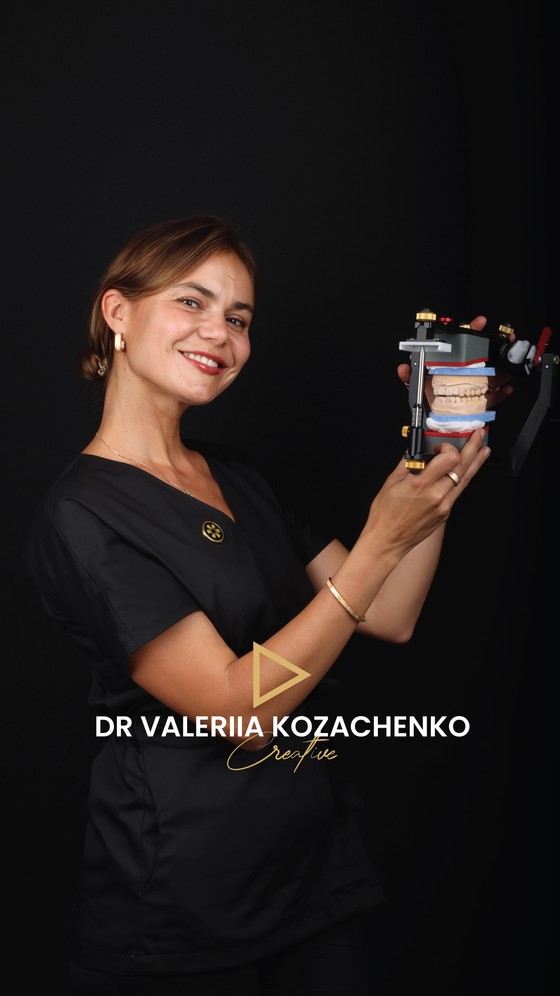
Dr. Firas Osman, Oral & Maxillofacial Surgeon & Implantologist, performs the exposure. Specialist orthodontists Dr. Muhannad Kazzaz and Dr. Valeriia Kozachenko plan the orthodontic side and guide the canine into place.
If a child of 10 or 11 has no canine bulge in the gum, or the baby canine is still firm in the early teens, an orthodontic assessment with an X-ray is sensible. Found earlier, there are usually more options. Our children's orthodontic assessment explains what is checked.
It is done under local anaesthetic, so you should feel pressure rather than sharp pain during the procedure. Afterwards the area is usually tender for a few days and is managed with over-the-counter pain relief. If you are anxious, sedation can be discussed after a medical review.
It depends on how deep the canine lies and how far it has to travel. Movement is deliberately slow, and guiding the tooth into the arch commonly adds several months to orthodontic treatment, sometimes more. The orthodontist gives an estimate after the CBCT scan and updates it as the tooth responds.
Sometimes. Adults can have successful exposure, but the chance that the canine moves is lower than in teenagers, and some adult canines are fused to the bone. The CBCT scan and orthodontic assessment help judge the outlook. If it is poor, keeping the baby canine, or removal with a bridge or implant later, may be more sensible.
Many stay harmless for years, but they are monitored because a buried tooth can occasionally form a cyst or wear away the roots of the front teeth. If it stays, periodic X-rays check for change. Our page on impacted teeth covers other teeth that can become stuck.
If the canine does not respond to traction, it is usually fused to the bone. It is then normally removed, and the space is either closed with braces or kept for a replacement tooth. The orthodontist and the surgeon decide together, based on your bite, your smile and your age.
Usually it ends up looking much like the canine on the other side, but the gum around it can sit slightly differently, especially after exposure from the cheek side. Small differences can often be refined at the end of orthodontic treatment; your dentist will explain whether any gum reshaping would help.
Tell us what you would like to change. The clinic replies within working hours with an appointment time.
Or call us +971 4 342 4444Or message us on WhatsApp
A consultation ends with a diagnosis and a written, itemised plan — not a sales pitch. Book online, message us on WhatsApp, or call the clinic.