
Lightness and tingling
Many people notice tingling in the hands and feet, warmth, and a pleasant heaviness or floating feeling.
Nitrous oxide and oxygen breathed through a small nose mask. It takes the edge off anxiety within minutes, can be adjusted throughout treatment and fades quickly once you breathe oxygen.
We review your health and the treatment you need first. Laughing gas is used only when it suits you and the procedure.
Laughing gas is nitrous oxide mixed with oxygen, breathed through a small mask over the nose. Within a few minutes most people feel light, warm and less anxious while staying awake and able to talk. The level can be adjusted throughout, and the effect fades within minutes of breathing oxygen at the end. At Creative Arts in Dubai it is used with local anaesthetic, after a medical review.
The sensations are mild and they change as soon as the level changes, which is what makes this option easy to control.
Many people notice tingling in the hands and feet, warmth, and a pleasant heaviness or floating feeling.
You still know where you are and what is happening, but it bothers you less. Sounds may seem slightly distant.
The name comes from the light-hearted mood some people feel. Plenty of others simply feel calm.
Feeling dizzy, queasy or uncomfortably far away means the level is higher than you need. Tell the clinician and it is turned down within moments.
Laughing gas is the lightest form of sedation. It suits many people well, but not every situation.
Whether laughing gas is enough depends as much on the procedure as on how anxious you feel.
| Treatment | Laughing gas is often enough when | Something else may suit better when |
|---|---|---|
| Cleaning, fillings and check-ups | Nerves are the main obstacle and the visit is short | Anxiety has kept you away from the dentist for years |
| Simple extraction | The tooth is straightforward and you want to stay alert | Several teeth are removed in one visit |
| Wisdom tooth surgery | One tooth, partly through the gum, and mild nerves | Teeth are deeply impacted or several come out together: see wisdom tooth removal |
| Implant placement | A single implant and mild anxiety | Several implants or bone grafting in one session: see implants under sedation |
| Long or extensive surgery | Rarely enough on its own | IV sedation, or general anaesthesia for selected cases |
Local anaesthetic numbs the area in every case; laughing gas changes how anxious you feel, not whether the tooth is numb. The final choice follows your medical review.
The gas is only on for as long as you need it, and the session ends with oxygen.
Your medical history, medicines and any breathing or sinus problems are reviewed. A light meal a couple of hours before is commonly advised; follow the instructions you are given.
BeforeA small, soft mask rests over your nose and you breathe normally through it, starting with oxygen.
StartNitrous oxide is added gradually until you feel relaxed but can still talk and respond.
First minutesLocal anaesthetic is given where needed and treatment goes ahead. The level can be changed at any point while your breathing and comfort are watched.
TreatmentThe gas is switched off and you breathe oxygen for a few minutes while the effect clears.
EndYou rest briefly until the clinician confirms you are steady and clear-headed.
Before leavingOften, yes. Nitrous oxide leaves the body mainly through the lungs, so most of its effect clears within minutes of breathing oxygen. Many adults drive themselves home or go back to work once the clinician has checked that they are steady and clear-headed. Follow the advice you are given on the day: if you still feel dizzy or slow, wait or arrange a lift, and do not drive if laughing gas was combined with a sedative tablet or another sedating medicine.
Laughing gas does not numb teeth, so local anaesthetic is still used for fillings, extractions and surgery. It is light sedation: if you tried it before and it was not enough, a deeper option may suit you better. The guide to sedation vs general anaesthesia explains the full range, from laughing gas to being fully asleep.
An appropriately qualified, licensed clinician gives and monitors it, in a treatment room or in our operating rooms for dental and oral surgery. Dental inhalation sedation equipment delivers oxygen together with the nitrous oxide, and the level is set for you rather than fixed. The option is chosen for you and the procedure after a medical-history review.
Laughing gas is listed as a separate line in your written plan, so you can see what it adds.
Dr. Firas Osman, Oral & Maxillofacial Surgeon & Implantologist, Dr. Khalid Saeed and Dr. Kinan Bonni plan surgical and implant treatment with laughing gas where it suits; Dr. Duaa Ameen plans general care, such as cleaning and fillings, for nervous patients. See how we approach dental care for nervous patients.
 Dr. Firas OsmanOral & Maxillofacial Surgeon & ImplantologistOral & maxillofacial surgery, implants, bone grafting
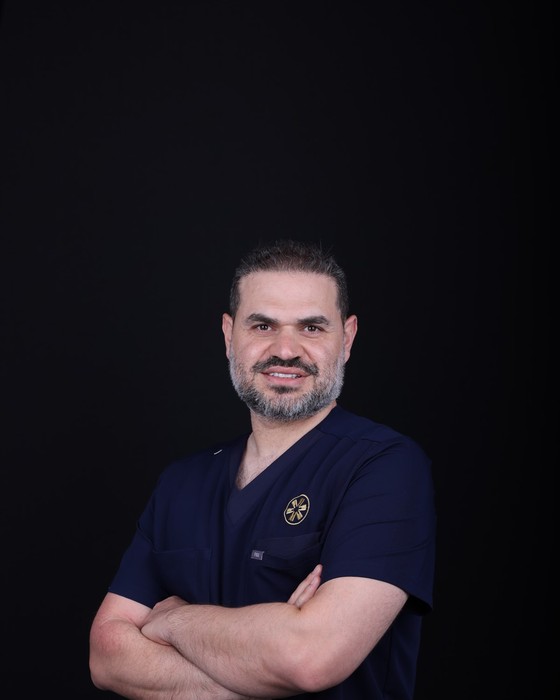 Dr. Khalid SaeedCo-founder & DentistCosmetic dentistry, veneers & implants
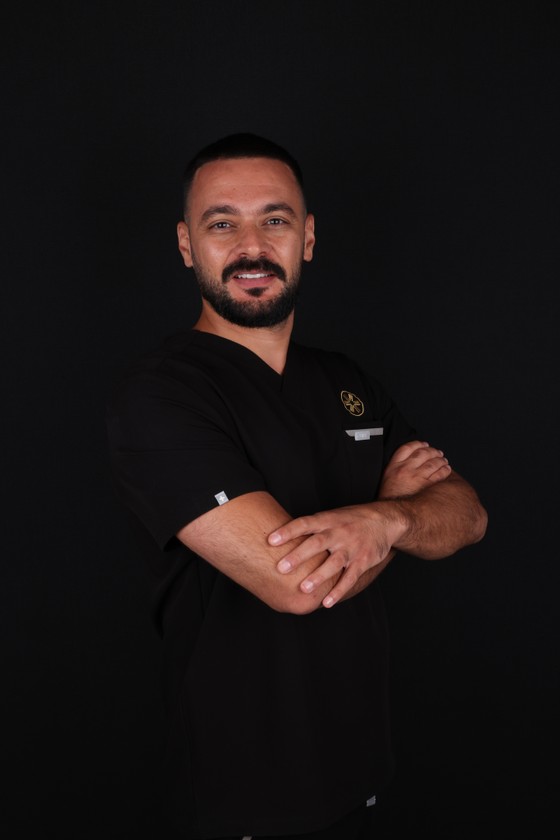 Dr. Kinan BonniDentistCosmetic & implant dentistry, full mouth rehabilitation
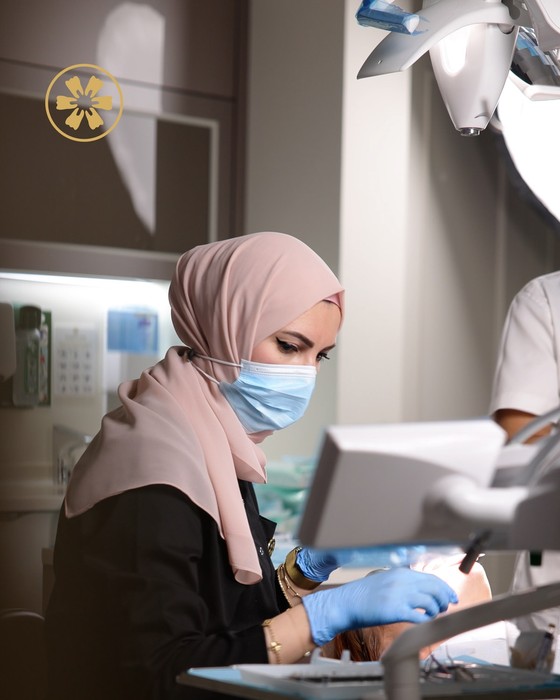 Dr. Duaa AmeenGeneral DentistGeneral & conservative cosmetic care
No. Laughing gas is light conscious sedation: you stay awake, can talk and respond, and usually remember most of the visit. It makes you feel relaxed and less bothered by what is happening. If you would rather remember little, tablet or IV sedation, or for selected cases general anaesthesia, are the deeper options.
Usually a few minutes. At the end the gas is switched off and you breathe oxygen while the effect clears. Most people feel back to normal shortly afterwards, but the clinician checks you before you leave, and mild tiredness or a slight headache can linger for a while.
Often yes, once the clinician has checked that you are steady and clear-headed, because the gas clears quickly. Follow the advice given on the day. If you still feel dizzy, or laughing gas was combined with a sedative tablet or another sedating medicine, do not drive.
No. It reduces anxiety and changes how you perceive the treatment, but it does not numb the area. Local anaesthetic is still given for fillings, extractions and surgery. A practical advantage is that the gas can be started before the injection, which helps people whose main fear is the needle.
Laughing gas is widely used for children who can accept a nose mask and breathe through their nose, and it wears off quickly. Whether it suits your child depends on their health, age, readiness and the treatment needed, and is decided at the assessment rather than in advance.
It may not suit you, or needs checking first, in pregnancy (especially the first three months), with a blocked nose, significant lung disease or a known vitamin B12 deficiency, or after recent eye surgery with a gas bubble or middle ear surgery. Tell the clinic about all medicines and conditions; the medical review decides.
Tell the clinician straight away. Nausea, dizziness or feeling too far away usually mean the level is higher than you need, and it can be lowered within moments. A light meal a couple of hours beforehand, rather than a heavy meal or an empty stomach, makes nausea less likely.
Tell us what you would like to change. The clinic replies within working hours with an appointment time.
Or call us +971 4 342 4444Or message us on WhatsApp
A consultation ends with a diagnosis and a written, itemised plan — not a sales pitch. Book online, message us on WhatsApp, or call the clinic.