Taken under supervision
The tablet is usually swallowed at the clinic, or at an exact time your clinician sets, so the effect builds while you are being watched rather than on the journey in.
A sedative tablet that leaves you calm, drowsy and still responsive. No cannula is needed, but it is slower to act and less adjustable than IV sedation, and you need an adult escort home.
Your first visit covers your health, your medicines and the treatment you need. Tablet sedation is arranged only once it is agreed as suitable.
Oral sedation is conscious sedation taken as a tablet before dental treatment. As it is absorbed you become calm and drowsy, yet you keep breathing for yourself and can respond. Because the effect varies from person to person and cannot be fine-tuned like IV sedation, it suits mild to moderate anxiety. At Creative Arts in Dubai it is chosen after a medical review, monitored by a licensed clinician, and you need an adult escort home.
Tablet sedation follows a slower curve than other options. Knowing the sequence helps you plan the day.
The tablet is usually swallowed at the clinic, or at an exact time your clinician sets, so the effect builds while you are being watched rather than on the journey in.
Medicine absorbed through the stomach takes time. Many people notice drowsiness within about 30 to 60 minutes, and treatment starts once the clinician is satisfied with the level.
You can talk, follow instructions and open wider when asked. Some people remember the appointment clearly, others only in patches.
Drowsiness, unsteadiness and slower reactions can continue for several hours after treatment ends, which is why the escort and no-driving rules apply.
All three are forms of conscious sedation: you stay awake and breathe for yourself. They differ in speed, control and recovery. Read more about IV sedation and laughing gas (nitrous oxide).
| Tablet (oral) sedation | IV sedation | Laughing gas | |
|---|---|---|---|
| How it is given | Swallowed as a tablet | Through a fine cannula in the hand or arm | Breathed through a small nose mask |
| Time to work | Slow, often 30 to 60 minutes | Within a minute or two | A few minutes |
| Can the level be adjusted? | Very little: the dose is taken in advance | Yes, in small steps during treatment | Yes, up or down at any time |
| Typical depth | Light to moderate | Moderate, deeper relaxation | Light |
| Wearing off | Gradual, over several hours | Deep effect fades soon after the last dose; drowsy for hours | Within minutes of breathing oxygen |
| Escort and driving | Adult escort; no driving that day | Adult escort; no driving that day | Often able to drive once the clinician confirms recovery |
| Needle for the sedation itself? | No | Yes, the cannula | No |
Local anaesthetic is still used with all three to numb the treatment area. The option is chosen for you and the procedure after a medical-history review.
With IV sedation the medicine goes straight into a vein, so the clinician sees its effect within minutes and can give a little more or stop. A tablet must first pass through the stomach and liver. How quickly and how strongly it works depends on things that differ between people, and even between days: whether you have eaten, your age and body size, how your liver handles the medicine, and what else you take. Some antibiotics and antifungal medicines, for example, slow the breakdown of commonly used sedatives and strengthen their effect.
For that reason the dose is set cautiously and taken in advance, and extra tablets are not simply handed out if you still feel alert. If a tablet was not enough for you in the past, IV sedation offers finer control; if you only need the edge taken off, laughing gas wears off far faster. The guide to sedation vs general anaesthesia sets out the whole range.
Tablet sedation is chosen for a reason after a medical review, not added to every appointment.
Whatever the treatment, tablet sedation follows the same stages.
Your health, allergies, regular medicines and any past reactions to sedatives are reviewed, and written instructions follow.
Before the dayConsent is confirmed and baseline pulse, oxygen level and blood pressure are recorded.
On arrivalYou take the tablet as directed and rest while it takes effect, with the clinician checking how drowsy you are.
StartOnce you are relaxed, the area is numbed and treatment goes ahead while breathing, oxygen level and pulse are monitored.
TreatmentYou rest until you can stand and walk steadily, then leave with your escort and written aftercare.
AfterwardsAn appropriately qualified, licensed clinician gives and monitors it, and longer surgery takes place in our operating rooms for dental and oral surgery. The option is chosen for you and the procedure after a medical-history review. Never take a leftover or borrowed sedative before a dental visit; if you have taken anything, tell the clinic before treatment starts.
Tablet sedation appears as its own line in your written plan, separate from the dental treatment.
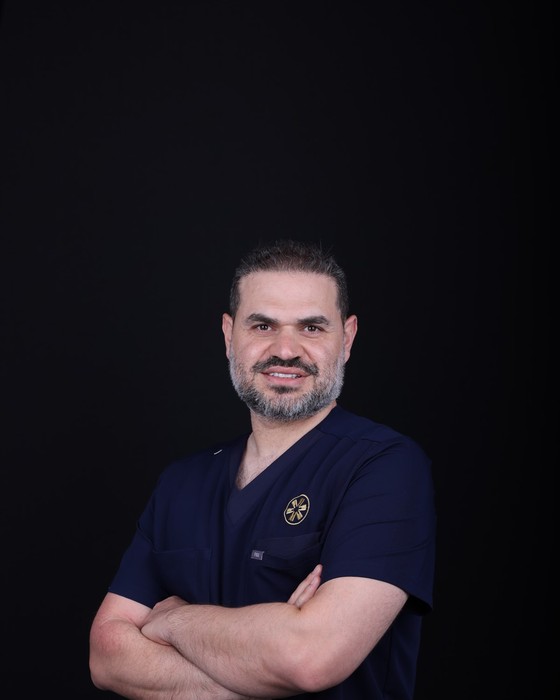
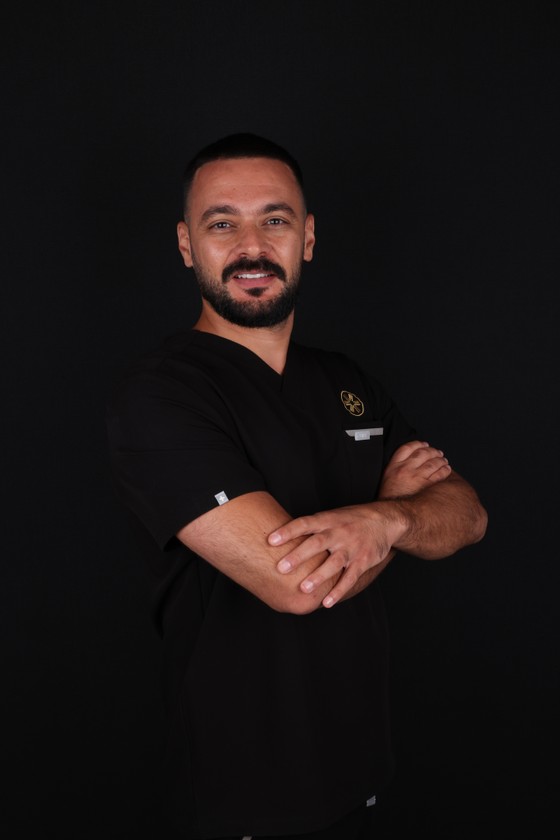
Dr. Firas Osman, Oral & Maxillofacial Surgeon & Implantologist, Dr. Khalid Saeed and Dr. Kinan Bonni plan the dental or surgical treatment and agree the sedation option with you. If anxiety rather than surgery is the main issue, our page for nervous dental patients explains what helps besides sedation.
Follow the exact timing your clinician gives you. Often the tablet is taken at the clinic so its effect can be watched as it builds, usually over about 30 to 60 minutes. Never take an extra tablet because you still feel alert: tell the clinician, who decides whether treatment can go ahead or another approach is needed.
No. Oral sedation is conscious sedation: you feel calm and drowsy and may doze lightly, but you can be roused, answer and follow instructions, and you breathe for yourself. Some people remember little of the visit. Being fully unconscious is general anaesthesia, which is a different option given by an anaesthesiologist.
No. Drowsiness and slower reactions last for hours, even when you feel normal. A responsible adult must take you home and ideally stay with you, and you should not drive, operate machinery, drink alcohol or sign important documents for the rest of the day. Many clinicians advise waiting 24 hours.
Usually, yes. A sedation tablet typically gives a deeper and longer effect than laughing gas, but it cannot be switched off. Laughing gas starts and stops within minutes and can be adjusted continuously, which is why many adults can drive afterwards. For deeper sedation that can still be controlled, IV sedation is the usual next step.
Follow your written instructions. Some clinicians ask for a light meal a couple of hours before, others for a short fast, partly because food changes how quickly the tablet is absorbed. Keep taking regular medicines unless told otherwise, and mention diabetes medicines and blood thinners at the consultation.
It may be unsuitable, or need extra assessment, in pregnancy or breastfeeding, with sleep apnoea, significant lung or liver disease or an allergy to the medicine, or if you take opioid painkillers, sleeping tablets or certain antibiotics and antifungals. It cannot go ahead without an adult escort. The medical review decides what is safe for you.
Often, if the extraction is straightforward and your anxiety is mild to moderate. For several deeply impacted teeth or a longer operation, IV sedation is usually preferred because its level can be adjusted. Local anaesthetic numbs the area either way. Read how wisdom tooth removal is planned.
Tell us what you would like to change. The clinic replies within working hours with an appointment time.
Or call us +971 4 342 4444Or message us on WhatsApp
A consultation ends with a diagnosis and a written, itemised plan — not a sales pitch. Book online, message us on WhatsApp, or call the clinic.