Why it happens
Peroxide temporarily increases fluid movement in the tiny tubules inside the tooth, so cold feels sharper for a while. It is not enamel damage.
One supervised appointment: gums shielded, a professional whitening gel activated by light, and the shade checked as it changes. What happens, what it can change, and how long it lasts.
Whitening is booked once an examination confirms it suits your teeth and gums.
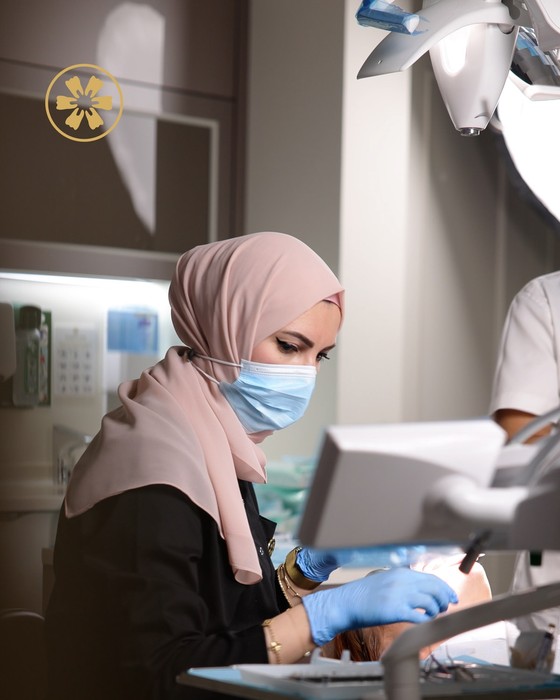
Laser teeth whitening is an in-clinic treatment in which a professional peroxide gel is applied to the teeth while the gums are shielded, and a laser or light is used to activate the gel. At Creative Arts in Dubai it is done in one appointment of about an hour, after an examination. Results vary with the starting shade and the type of stain, and it does not change crowns, veneers or fillings.
Typical ranges, not promises; the examination decides whether whitening suits you.
Starting and finishing shades are recorded so the change can be compared.
Not on its own. The whitening is done by the gel: peroxide diffuses through the enamel and breaks down the pigment molecules that make a tooth look yellow or brown. Nothing is stripped from the surface. The laser or light activates the gel to speed that reaction up within one appointment.
Research on how much the light adds beyond the gel itself is mixed, so we do not present it as the secret ingredient. What matters more is the gel strength, contact time on clean teeth and, above all, the kind of stain you have. Age-related yellowing and coffee, tea or tobacco stain usually respond well. Grey banding from tetracycline, white or brown fluorosis marks and a tooth that darkened after an injury respond far less predictably; the guide to stained teeth sets out the other options for those.
After the examination, which may be at an earlier visit, the session usually runs like this.
The dentist confirms there is no untreated decay or gum inflammation, notes restorations that will not change, and records your starting shade.
StartPlaque and surface stain block the gel, so teeth are cleaned first; heavy tobacco or coffee stain may need air-polishing beforehand.
Before the gelA retractor holds lips and cheeks away, a barrier is painted along the gum line and set, and you wear protective glasses.
Set-upGel on the front surfaces is activated with the laser or light, then refreshed over several short cycles, checking comfort each time.
Most of the hourGel and barrier come off, the new shade is compared with the old, and a desensitising product may be applied.
EndWritten aftercare covers the first 48 hours; custom trays can be made for top-ups at home.
Same dayHealthy teeth and gums come first, and the stain has to be a type whitening can change.
Both are supervised by a dentist; they differ in strength, speed and control.
| Laser (in-clinic) | Home trays | |
|---|---|---|
| Where | In the clinic, in one appointment | At home, daily for a set time |
| Gel strength | Higher, used only with the gums isolated | Lower, held in trays made for your teeth |
| Time to result | Visible change by the end of the visit | Gradual, usually over one to two weeks |
| Sensitivity | Tends to come in the first day or two | Usually milder, spread over the course |
| Control | The dentist controls every cycle | You can pause, shorten wear or skip a day |
| Often chosen for | Deadlines and a quick start | Sensitive teeth, gradual change, maintenance |
Many people combine the two: a session to start, trays to maintain. The main teeth whitening page compares every option, and the whitening cost guide explains what changes the price.
Short, sharp twinges are the most common side effect: expected, temporary and manageable.
Peroxide temporarily increases fluid movement in the tiny tubules inside the tooth, so cold feels sharper for a while. It is not enamel damage.
Usually a day or two. People with sensitive teeth or exposed roots tend to feel it more.
A potassium nitrate toothpaste for two weeks before and after, lukewarm drinks for the first day, and over-the-counter pain relief if needed.
Pain that is getting worse after two days, or one tooth aching on its own, should be checked. The whitening sensitivity guide explains more.
Ceramic and composite keep the colour they were made in. If you have visible restorations on your front teeth, whiten first, let the shade settle for about two weeks, then decide whether any need replacing to match. See why restorations do not whiten.
Typically one to three years, and longer with care. Teeth often look their brightest straight after the session because they are slightly dehydrated; the shade settles a little over the following days, which is why the result is judged after a week or two rather than in the mirror on the way out.
Coffee, tea, cola, red sauces and especially smoking shorten it. The first 48 hours matter most, while the enamel picks up colour easily, and our guide to eating and drinking after whitening lists what to choose and avoid. After that, regular professional cleaning removes new surface stain, and occasional top-ups with home trays maintain the shade more gently than repeating the in-clinic treatment.
At Creative Arts in Dubai, whitening is carried out by dentists who also treat gums and cosmetic cases, so the cause of discolouration is checked first.
Supervised whitening at professional strengths does not remove or thin enamel; the peroxide changes pigment inside the tooth rather than stripping the surface. The risks come from whitening over untreated decay or gum disease, gel on unprotected gums, and overuse, which is why teeth are examined first and gums isolated.
Several shades lighter is common, but the number depends on your starting shade and the type of stain. Yellow-brown staining from age, coffee and tea usually responds well; grey tetracycline staining and fluorosis marks respond less. The final shade is judged once it has settled, after a week or two.
No anaesthetic is needed. Most people find the cheek retractor the least comfortable part; some feel brief twinges during the cycles. Sensitivity afterwards usually settles within a day or two and can be eased with a desensitising toothpaste and over-the-counter pain relief. Tell the dentist if twinges become strong, because the cycles can be shortened.
Usually about an hour in the chair, including setting up the gum protection, several short cycles of gel and light, and the final shade check. The examination may be at an earlier appointment, especially if cleaning or a filling is needed first.
Ideally wait 48 hours. During that time the teeth pick up stain more easily, so choose water, milk and light-coloured foods, and avoid smoking. If you cannot skip coffee, drink it lukewarm and quickly, then rinse with water. After two days normal habits can resume, although heavy coffee and tea will shorten the result.
It is usually postponed during pregnancy and breastfeeding. There is no clinical urgency to whiten, so dentists prefer to wait as a precaution. A professional clean to remove surface stain is a reasonable step in the meantime.
Tell us what you would like to change. The clinic replies within working hours with an appointment time.
Or call us +971 4 342 4444Or message us on WhatsApp
A consultation ends with a diagnosis and a written, itemised plan — not a sales pitch. Book online, message us on WhatsApp, or call the clinic.