What are the main types of cosmetic dentistry?
The main types of cosmetic dentistry are professional stain removal, teeth whitening, composite bonding, composite and porcelain veneers, the Hollywood Smile, crowns, gum contouring, orthodontics such as braces or Invisalign, and replacing missing teeth with implants or bridges. A smile makeover combines several. At Creative Arts in Dubai, the most conservative option that reaches your goal is discussed first, in a written plan.
What counts as cosmetic dentistry?
Cosmetic dentistry covers treatments whose main purpose is to change how teeth and gums look: their colour, shape, size, position or the way the gum frames them. The line with restorative dentistry is blurry. A crown on a cracked front tooth both protects the tooth and improves the smile; an implant replaces a missing tooth for chewing and for appearance.
The useful way to sort the options is by what they do to your teeth. Some add nothing and remove nothing (cleaning, whitening). Some add material without cutting the tooth (bonding, some no-prep veneers). Some need enamel removed (most porcelain veneers, crowns). Some move teeth (orthodontics) or replace them (implants, bridges). Generally, the less a treatment removes, the more options you keep for later.
Types of cosmetic dentistry compared
General patterns. What a treatment involves for you depends on your teeth, gums and bite.
| Treatment | Main use | Tooth removed | Reversible? | Typical visits |
|---|---|---|---|---|
| Professional stain removal | Surface stains from coffee, tea or smoking | None | Nothing to reverse | One |
| Teeth whitening | Overall colour of natural teeth | None | Colour fades gradually | One in-clinic, or home trays |
| Composite bonding | Chips, small gaps, uneven edges | Usually none | Largely | Often one |
| Composite veneers | Colour and shape of several teeth | Little or none | Partly | One to two |
| Porcelain veneers | Colour, shape, size, wear | Usually a fraction of a millimetre | No, in most cases | Several |
| Hollywood Smile | Full-smile change with veneers or crowns | Depends on veneers or crowns | No | Several |
| Crowns | Weak, heavily filled or root-treated teeth | All around the tooth | No | Several |
| Gum contouring | Uneven gum line, gummy smile | Gum, sometimes bone | No | One, plus healing |
| Orthodontics | Crowding, gaps, rotated teeth, bite | None | Teeth can relapse without retainers | Many, over months |
| Implants and bridges | Missing teeth | Bridges: neighbouring teeth prepared | No | Several, over months for implants |
"Reversible" refers to the tooth. Bonding can usually be removed with little effect on enamel; prepared enamel cannot be restored.
Colour: stain removal and teeth whitening
Many people who think they need veneers for colour first need a clean. Surface stains from coffee, tea and smoking sit on the enamel and can often be lifted with air-polishing stain removal, which uses fine powder and warm water.
Deeper, overall yellowing responds to professional teeth whitening. Creative Arts offers in-clinic light-activated whitening and dentist-supervised home whitening with custom trays. Temporary sensitivity is common and usually settles. Whitening does not change the colour of crowns, veneers or fillings, so old front restorations may stand out afterwards; that is worth knowing before you start. The guide to types of teeth whitening compares the options.
Smile proportions, shade and shape are planned with the patient before any tooth is prepared; read about smile design with Dr. Kinan Bonni for how that works here.
Shape and small defects: bonding and composite veneers
Composite bonding adds tooth-coloured resin to the tooth and sculpts it by hand. It suits a chipped edge, a small gap, a slightly short tooth or a dark patch, usually without any drilling. When several teeth are covered completely, the result is called composite veneers.
Composite is repairable and kind to enamel, but it stains and wears faster than ceramic and needs polishing and occasional touch-ups. Old composite fillings on front teeth often discolour at the edges; replacing old front fillings is itself a common cosmetic treatment.
Ceramic: porcelain veneers, the Hollywood Smile and crowns
Porcelain veneers are thin ceramic shells bonded to the front of the teeth. They change colour, shape and size together and resist staining well. Most need a small amount of enamel removed; some cases suit minimal or no preparation. The ceramics used at Creative Arts include E.max (lithium disilicate) and hand-layered feldspathic porcelain, both made in Creative Art Dental Lab in the same building. The guide to types of veneers compares them.
A Hollywood Smile applies veneers, crowns or a mix to most of the teeth that show in the smile. It is a scale of treatment, not a separate material; the guide to types of Hollywood Smile explains the variations.
Crowns cover the whole tooth. They are the right cosmetic choice when a tooth is heavily filled, root-treated, cracked or badly worn, but they remove much more tooth than a veneer and are not an upgrade for a healthy tooth.
Start with the option that removes the least
Whitening, bonding and orthodontics keep your natural teeth intact and leave every other option open. Ceramic is often the right answer, but it should be chosen because a more conservative option cannot reach the goal, not because it is the most dramatic.
Gums and tooth position: gum contouring and orthodontics
Teeth can look too short or uneven because of the gum, not the tooth. Laser gum contouring reshapes the gum line so the teeth show their true length. The guide to gummy smile causes explains when gum reshaping helps and when the cause is the lip or jaw instead.
Crowding, gaps and rotated teeth are often better corrected by moving the teeth than by covering them. Orthodontic treatment with fixed braces or Invisalign clear aligners is provided at Creative Arts by two specialist orthodontists. Straightening first often means fewer veneers, or none, and less preparation on those that remain; see veneers vs Invisalign.
Missing teeth: implants and bridges in cosmetic work
A gap changes how a smile looks as much as a stained tooth does. Missing teeth can be replaced with dental implants, which do not involve the neighbouring teeth, or with a bridge supported by them. In a cosmetic plan the replacement has to match everything around it, which is why it is designed together with any veneers or crowns. Our page on a smile makeover with missing teeth explains the sequencing.
Which type of cosmetic dentistry addresses which concern?
Typical starting points. An examination decides what suits your teeth.
Yellow or stained teeth
Stain removal, then whitening. Veneers or crowns only for colour whitening cannot change, or for old restorations.
Chips and small gaps
Bonding first; porcelain veneers when several teeth also need colour or shape change.
Crooked or crowded teeth
Orthodontics for most cases; veneers only for mild irregularities after an honest discussion.
Short teeth or a gummy smile
Gum contouring if excess gum is the cause, sometimes combined with veneers.
Worn or heavily restored teeth
Crowns or veneers depending on what remains, with a bite assessment and night guard.
Combining treatments: the smile makeover
Most people have more than one concern, so most cosmetic plans combine types: whitening with a few veneers, orthodontics followed by bonding, gum contouring before ceramics. A smile makeover is simply that combination, chosen problem by problem. The guide comparing a smile makeover vs a Hollywood Smile explains how the two approaches differ.
Order matters. Gum disease and decay are treated first; teeth are straightened before they are shaped; whitening is finished before any ceramic shade is chosen, because ceramic does not whiten. Our guide to oral health before cosmetic treatment sets out the usual sequence. Before anything irreversible, the proposed result can be seen with digital smile design and tried as a mock-up in your mouth.
Not sure which type of cosmetic dentistry fits your concern? A consultation includes an examination, photographs and a written plan that sets the options side by side.
Explore cosmetic dentistryComparing cosmetic dentistry options and quotes
Two plans for the same smile can look very different on paper. Ask each clinic to list every tooth with its treatment and material, what preparatory treatment comes first, and what alternatives were considered. The guide on cosmetic dentistry cost explains what drives the cost of each type, and how to choose a cosmetic dentist in Dubai covers the other questions worth asking.
Cosmetic dentistry at Creative Arts: the key facts
- Treatments offered
- Stain removal, whitening, bonding, composite and porcelain veneers, Hollywood Smile, crowns, gum contouring, orthodontics, implants, bridges
- Most conservative options
- Stain removal, whitening, bonding and orthodontics
- Seeing the result first
- Digital smile design and a mock-up before any preparation
- Where ceramics are made
- Creative Art Dental Lab, in the same building
- Comfort
- Preparation, where needed, under local anaesthetic
- Where
- 614 Jumeira St, Jumeirah 3, Dubai; open daily 10:00–20:00
Dentists who plan cosmetic treatment at Creative Arts
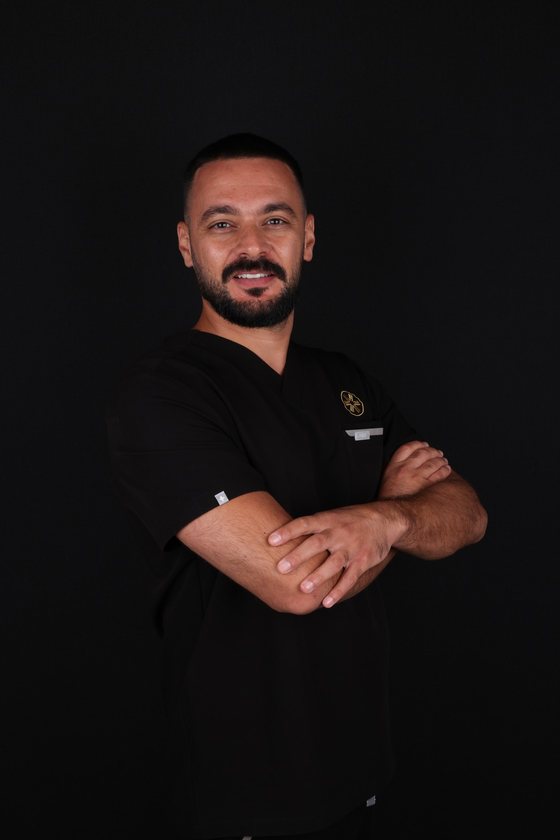
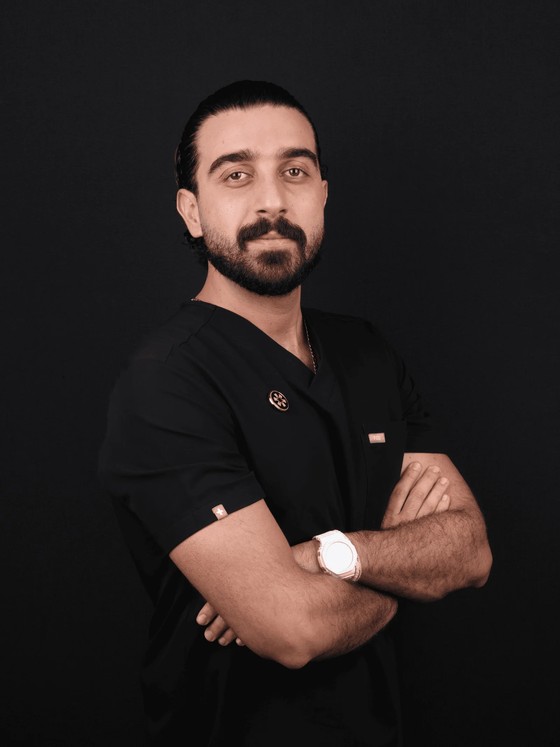
These dentists examine, plan and carry out cosmetic cases, from bonding to full smile makeovers.