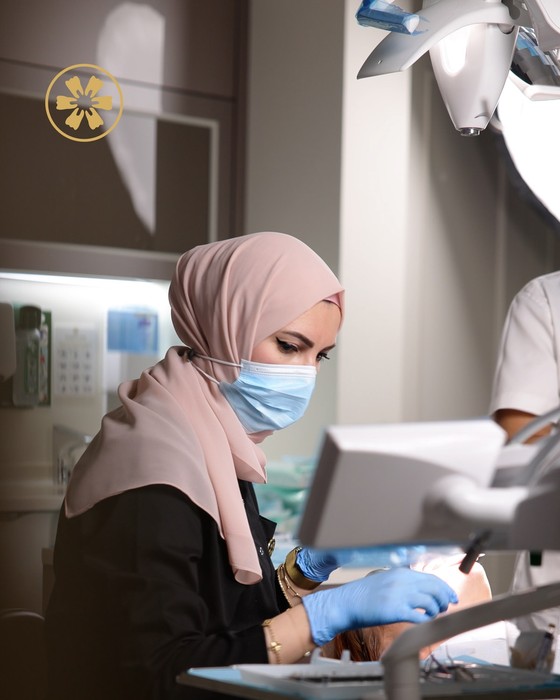
The gel needs clean enamel
Plaque, tartar and stain act as a barrier, so gel spread over them lightens unevenly, leaving darker patches near the gums.
Cleaning removes what sits on your teeth. Whitening changes the colour of the tooth itself. Many people who ask for whitening need a clean first, and some find the clean is enough.
The examination shows whether your discolouration is surface stain, tartar or the colour of the tooth itself.
Professional teeth cleaning removes plaque, tartar and surface stain from coffee, tea or tobacco, returning teeth to their own natural colour and keeping gums healthy. Teeth whitening uses a peroxide gel to lighten the colour of the tooth itself, beyond its natural shade. At Creative Arts in Dubai, cleaning comes first: it often removes more discolouration than people expect, and whitening is applied only to clean, healthy teeth.
A general comparison. What your discolouration will respond to is decided at examination.
| Professional cleaning (GBT) | Teeth whitening | |
|---|---|---|
| What it changes | Removes plaque, tartar and stain sitting on the surface | Breaks down pigment inside the enamel and dentine, lightening the tooth's own shade |
| How it works | Warm water, air and fine powder; ultrasonic scaler only where tartar remains | Peroxide gel, either in the clinic with light activation or at home in custom trays |
| Colour result | Back to your natural shade; can look clearly brighter if stain was heavy | Lighter than your natural shade; how much varies from person to person |
| Health benefit | Yes: helps prevent gum disease and decay, and protects implants | None; it is a cosmetic treatment |
| Crowns, veneers, fillings | Cleaned without dulling the ceramic glaze | No colour change at all |
| Sensitivity | Usually little; more where roots are exposed | Common, and usually temporary |
| How often | Every 3 to 6 months, depending on risk | Occasional top-ups; how long it lasts depends on diet and habits |
| Who it suits | Almost everyone, including people with braces and implants | Adults with healthy teeth and gums; usually postponed in pregnancy |
Typical characteristics, not promises. Whitening results in particular vary with the type of discolouration.
Much of what people call yellow teeth is not the tooth at all. Coffee, tea, karak, cola and tobacco leave extrinsic stain on the enamel surface, and tartar adds a yellow-brown layer near the gums and between the teeth. Both make teeth look darker than they are.
A professional teeth cleaning with Guided Biofilm Therapy removes that layer: a disclosing dye shows where biofilm sits, warm water, air and fine powder lift the stain, and the scaler is used only on remaining tartar. Teeth return to their natural colour, and veneers and crowns are cleaned without scratching. Air-polishing stain removal explains the stain step in detail.
What cleaning cannot do is make a tooth lighter than its own shade. If your teeth look clean but still more yellow than you would like, that is the colour of the enamel and dentine underneath.
Whitening gels contain hydrogen peroxide or carbamide peroxide, which passes into the enamel and dentine and breaks down the pigment molecules responsible for discolouration. Nothing is removed from the surface. At Creative Arts, teeth whitening is done in two ways: in-clinic light-activated whitening with the gums protected, or dentist-supervised home whitening with custom trays.
Whitening works best on the gradual yellowing that comes with age and diet. It is less predictable on grey tetracycline banding and the patches of fluorosis. A single dark tooth, often after an injury or old root canal treatment, needs diagnosis rather than whitening. And whitening does not change crowns, veneers or fillings, which is why the order of treatment matters.
Whitening a mouth that has not been cleaned gives a patchier result and more chance of discomfort.
Plaque, tartar and stain act as a barrier, so gel spread over them lightens unevenly, leaving darker patches near the gums.
Gums that bleed or are swollen tolerate whitening gel poorly, so inflammation is treated first.
The shade is recorded after cleaning. For some people the clean alone gets close enough to what they wanted.
Decay, leaking fillings, cracks and exposed roots are picked up at the cleaning visit. Whitening over them can cause sharp sensitivity.
A quick way to see where you are likely to start. The examination confirms it.
White spots, a single grey tooth, worn edges showing yellow dentine, or old fillings stained at their margins respond poorly to both. They may need bonding or replacement fillings instead. Our page on stained teeth sets out the full range of options.
When both are needed, a typical sequence looks like this:
Both appear as separate lines in your written, itemised plan. The teeth cleaning cost guide explains what drives the price of a clean.
Not sure whether your teeth need cleaning, whitening or both? A Guided Biofilm Therapy visit removes the surface layer first, so you can see your true shade before deciding.
See professional teeth cleaningThe same dentists assess your gums, carry out the cleaning and advise whether whitening makes sense for your teeth.
It can make teeth look noticeably brighter if they were covered in stain or tartar, because it returns them to their natural colour. It does not lighten the tooth itself. If your teeth are clean but you would like them lighter than their natural shade, that needs whitening.
Yes. Plaque, tartar and stain block the whitening gel and lead to patchy results, and inflamed gums react badly to peroxide. The clean also reveals decay, leaking fillings or exposed roots that should be treated first. Many people find their teeth are lighter after the clean than they expected.
If your gums were healthy, whitening can often follow soon after the clean. If they were inflamed, or you needed a deep cleaning, whitening is usually left until the gums have settled, typically a week or two. The dentist decides the timing after seeing how your gums respond.
No. Whitening gel changes the colour of the tooth but cannot dissolve tartar, which is hardened mineral bonded to the tooth. Whitening over tartar leaves those areas darker than the rest. Tartar has to be removed with professional cleaning first.
Start with cleaning. Coffee and tea mostly leave surface stain, which air-polishing removes well. If the teeth are still darker than you want after the stain is gone, the remaining colour is inside the tooth, and that is when whitening helps.
Sometimes, when the gums are healthy and the clean was routine. It is often scheduled separately, particularly if the gums were inflamed, deep cleaning was needed, or there is sensitivity to deal with first. The dentist will tell you which applies to you.
Cleaning with air-polishing removes stain and biofilm from veneers and crowns without dulling the glaze. Whitening has no effect on their colour, so if you whiten natural teeth next to them, the restorations may no longer match and could need replacing to the new shade.
Tell us what you would like to change. The clinic replies within working hours with an appointment time.
Or call us +971 4 342 4444Or message us on WhatsApp
A consultation ends with a diagnosis and a written, itemised plan — not a sales pitch. Book online, message us on WhatsApp, or call the clinic.