Small chips and rough corners
A shallow chip on an incisal edge can often be smoothed and blended into the neighbouring outline, so it no longer catches the light or the tongue.
Tooth reshaping smooths small chips, softens pointy tips and levels slightly uneven edges by polishing away a little outer enamel. It adds nothing to the tooth, so it suits only small corrections.
A clear photo of your smile sent on WhatsApp helps the dentist see what you would like changed.
Tooth reshaping, also called enamel contouring or enameloplasty, removes a very small amount of outer enamel with fine discs and polishers to smooth chipped corners, soften pointy canines and level slightly uneven edges. Enamel has no nerves, so anaesthetic is rarely needed, and it is usually done in one visit. The change is permanent and limited by enamel thickness. At Creative Arts in Dubai it is planned with the bite in mind and often combined with bonding.
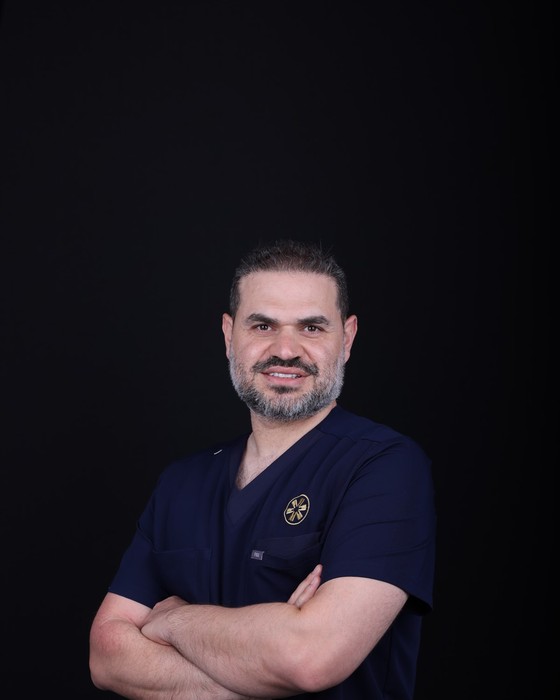
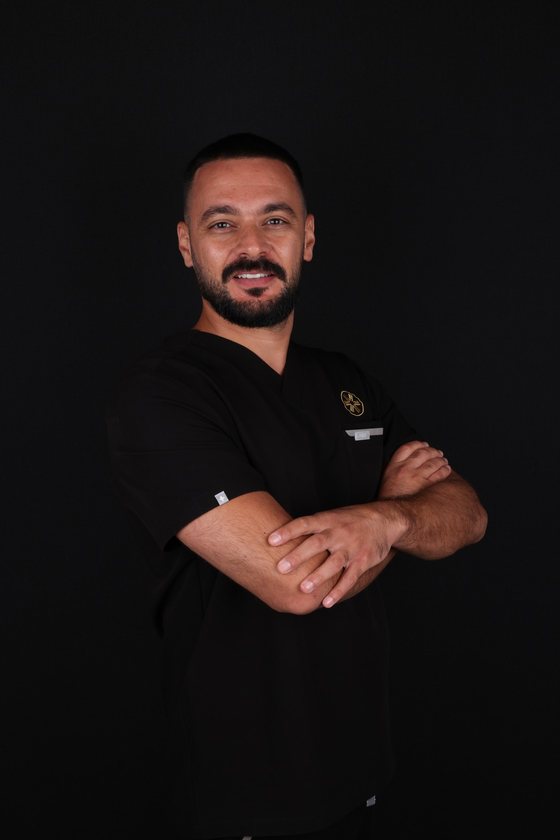
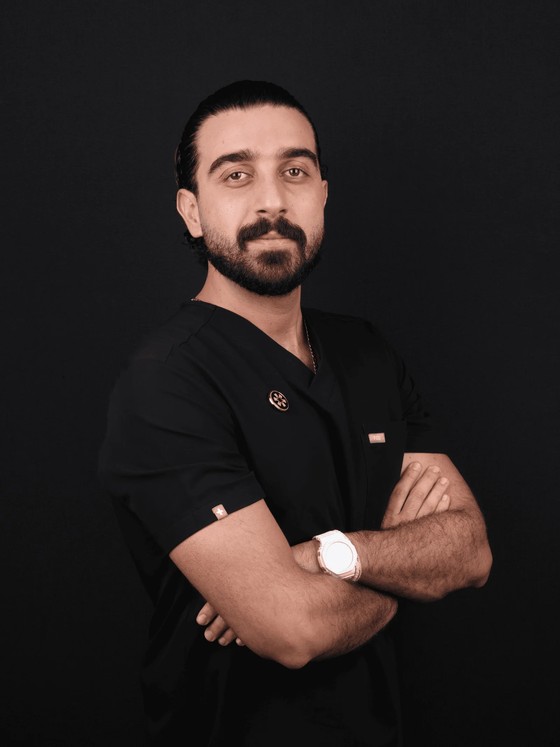
Who treats you here Dr. Khalid Saeed Co-founder & Dentist · Dr. Kinan Bonni Dentist · Dr. Somar Dahdal General Dentist
Every dentist’s licence can be checked on the DHA Sheryan medical directory.
Reshaping takes a little away, so it suits small differences noticed up close, not problems of size, colour or position.
A shallow chip on an incisal edge can often be smoothed and blended into the neighbouring outline, so it no longer catches the light or the tongue.
A sharp canine tip can be softened slightly, as long as the canine still guides the bite when you slide your jaw sideways. Our guide to pointy canines covers when reshaping is enough.
When one front tooth is a little longer than its partner, the longer edge can sometimes be shortened to match, if the smile line and bite allow it.
The small scalloped bumps some adults keep on their front teeth after childhood, or ridges left by wear, can be smoothed into an even edge.
The difference is whether material needs to be removed, added, or both.
| Tooth reshaping | Composite bonding | Veneers | |
|---|---|---|---|
| What it does | Removes a little enamel to change the outline | Adds tooth-coloured resin to build up or reshape | Covers the front of the tooth with a thin custom shell |
| Changes colour? | No | Only of the bonded area | Yes, within what looks natural |
| Can make a tooth longer? | No | Yes, within limits | Yes |
| Enamel removed | A little, from the reshaped area | Usually none | Usually some; minimal in no-prep cases |
| Typical visits | One | Often one | Several, with a design and mock-up first |
| Upkeep | None beyond normal care | Polishing and occasional repair | Check-ups; replacement eventually |
Reshaping and composite bonding are often combined: a long corner is smoothed and a short neighbour built up. For larger changes, see veneers in Dubai or the comparison of veneers and bonding.
It depends on whether there is enough enamel to reshape safely and whether the bite still works afterwards.
Most of the work is in deciding exactly where to remove enamel and where to stop. The contouring itself is usually quick.
The dentist checks the enamel, fillings and gums, takes X-rays where needed and photographs your smile.
Visit 1Your teeth are checked as you bite and slide your jaw forwards and sideways, so a canine or incisor that guides the bite is not shortened too far. See how the bite affects cosmetic work.
Visit 1The planned outline is marked and explained. When reshaping is part of a wider plan, a digital smile design or mock-up shows the result before anything is removed.
Before contouringFine discs and polishing instruments remove enamel a little at a time, checking the shape from the front and the side and against the opposite tooth.
Same visitThe new edges are polished smooth, which helps them resist staining, and the bite is checked again before you leave.
Same visitDone conservatively on healthy teeth, yes. Enamel is the hardest tissue in the body, and the edges of front teeth usually have enough of it to lose a small amount without weakening the tooth. What makes reshaping safe is how little is removed and where: smoothing a corner or softening a tip takes away a fraction of the enamel, not a layer from the whole surface.
The limits are real, though. Enamel does not grow back, and under it lies dentine, which is softer, yellower and can be sensitive. If too much is removed, the edge can look darker or translucent, feel sensitive to cold, or chip more easily. That is why the dentist works in small steps, stops well before dentine, and will say when the change you want would need material added rather than taken away.
Reshaping is different from IPR, the shaving between teeth during orthodontic treatment, which creates space for teeth to move. If your edges already look see-through, read about translucent tooth edges before asking for more to be taken off.
Enamel has no nerve endings, so most people feel vibration and light pressure rather than pain. Local anaesthetic is rarely needed for enamel-only reshaping, but it can be given if a tooth is sensitive. Mild sensitivity to cold for a day or two can happen and usually settles.
The change in shape is permanent, because the enamel that is removed does not return. That is both its advantage and its risk: there is nothing to replace or repair, but there is also no going back, which is why a preview matters when the change is visible.
The teeth will still age like any others. Edges wear slowly over the years, especially if you grind, and a reshaped tooth can still chip. If grinding is part of the picture, a night guard protects the new edges. Reshaping does not change the colour of the teeth; if you plan to whiten, whitening is usually done first so any bonding added afterwards can match the new shade.
For a smile that needs several small changes rather than veneers, see smile makeovers without veneers.
Dr. Khalid Saeed, Dr. Kinan Bonni and Dr. Somar Dahdal plan cosmetic changes to tooth shape, from contouring to bonding and veneers, and check the bite before and after.
The quote depends mostly on what else is planned with it.
On healthy teeth with good enamel thickness, conservative reshaping is considered safe because only a small amount is removed from the edge or tip. The risk comes from taking off too much: the tooth can look darker, feel sensitive or chip more easily. Your dentist works in small steps and stops well before the dentine underneath.
Often, yes, when the difference is small. A pointed canine tip can be softened and a slightly longer incisor levelled with its neighbour. The canines also guide your bite, so the dentist checks how far they can be shortened. If a tooth is too short rather than too long, bonding adds material instead.
Most people feel vibration and light pressure rather than pain, because enamel has no nerve endings. Local anaesthetic is rarely needed for enamel-only work but can be used if a tooth is sensitive. A little sensitivity to cold afterwards can happen and usually settles within a day or two.
It depends on whether the tooth needs less or more. Reshaping removes a little enamel, so it suits teeth that are slightly too long, pointed or rough. Bonding adds tooth-coloured resin, so it suits teeth that are short, chipped deeply or narrow. Many smiles use both: one tooth smoothed and its neighbour built up.
Yes. The enamel removed does not grow back, so the new shape stays. Teeth still wear and can chip over the years, especially if you grind, and reshaping does not change their colour. Because the change cannot be undone, the planned outline is explained, and previewed when the change is visible, before any enamel is removed.
Only slightly. Reshaping can shorten a long edge or round off square corners, which can make front teeth look a little less dominant. It cannot make a tooth much narrower without removing too much enamel. When front teeth are clearly larger than their neighbours, bonding or veneers on the smaller teeth may balance the smile better.
Only when the crookedness is very slight, such as one corner overlapping its neighbour. Smoothing that corner can make the line look straighter, but it does not move the tooth. Rotated, crowded or protruding teeth are corrected with orthodontic treatment such as braces or clear aligners.
Creative Arts has a single clinic on Jumeira Street (Jumeirah Beach Road). Ask about parking when you book.
Our clinic in Jumeirah Open in Google Maps · Rated 4.8 on Google from 238 patient reviews (October 2026) — read them
Tell us what you would like to change. The clinic replies within working hours with an appointment time.
Or call us +971 4 342 4444Or message us on WhatsApp
A consultation ends with a diagnosis and a written, itemised plan — not a sales pitch. Book online, message us on WhatsApp, or call the clinic.