
Smile Design Styles in Dubai: Natural, Hollywood, Youthful and More
A smile style is the look your new teeth are designed to: their outline, edges, texture and brightness. You can compare styles on your own face, and in your own mouth, before anything is prepared.
- Try the style as a mock-up
- Ceramic made in the same building
- Written plan before any commitment
The first visit is an examination and design discussion. No tooth is prepared on day one.

What are the main smile design styles?
The main smile design styles are natural (individual shapes, visible texture, a shade close to your lightest natural tooth), bright Hollywood (uniform, symmetrical and very white), youthful (slightly longer central teeth, rounded corners, translucent edges) and mature (flatter edges, warmer shade), each with more masculine or feminine tooth forms. At Creative Arts in Dubai, your dentist and the lab design the style together, and you try it as a mock-up first.
Smile design styles: the key facts
- What a style is
- The look of the new teeth: outline, edge shape, surface texture and shade
- Styles you can compare
- Natural, bright (Hollywood), youthful, mature, and masculine or feminine tooth forms, or a blend
- How you try it
- Digital smile design on your photographs, then a physical mock-up in your mouth before any preparation
- Who designs it
- Your dentist, with Creative Art Dental Lab in the same building
- Treatments that carry a style
- Whitening, composite bonding, veneers or crowns, chosen tooth by tooth
- Shade
- Agreed with you; teeth that stay natural are usually whitened first
- Where
- 614 Jumeira St, Jumeirah 3, Umm Suqeim 1, Dubai
How do natural, Hollywood and youthful smile styles differ?
Each style is a set of design decisions. Most finished smiles borrow from more than one.
| Style | Tooth outline and edges | Shade and surface | Often chosen when |
|---|---|---|---|
| Natural | Individual shapes with slight variation between teeth; softly rounded corners | Shade close to your lightest natural tooth, warmer at the gum, translucent at the edge; visible texture | You want the work to go unnoticed, or only some teeth are being treated |
| Bright (Hollywood) | Uniform, symmetrical outlines; edges aligned in a smooth curve | Very light shade, smoother and glossier surface, less translucency | You want a visibly bright result and every tooth in your widest smile is included |
| Youthful | Central teeth slightly longer and more dominant; rounded corners with small gaps between the edges | Bright but translucent edges; fine texture | Teeth have worn shorter, or the smile looks flat or tired |
| Mature | Flatter edges with tighter corners; less central dominance | Warmer shade with gentle colour variation | Bright, youthful teeth would look out of place for your face and age |
| Masculine form | Squarer outlines, flatter edges, defined vertical line angles, broader canines | Usually a natural rather than very white shade | You want a strong, straight-edged look; see veneers for men |
| Feminine form | Oval outlines, softer line angles, rounder corners, a curved edge line | Any shade; often more translucency at the edges | You want a softer, more curved look |
Some designers echo face shape (square, oval or tapering) in the tooth outline. It is a useful starting point, not a rule.

How white should your new smile be?
Shade is the part of a style people decide on fastest and regret most often. There are three broad approaches:
- Match: new teeth blend with your current natural teeth. Right when only a few teeth are treated.
- Brighter natural: the remaining teeth are whitened first, then the ceramic is matched to the new, lighter shade. The most common choice.
- Bleach-range white: lighter than any natural tooth. It can look striking, but at the brightest end ceramic loses translucency and starts to read as opaque.
Whitening does not change ceramic, so teeth that will stay natural, including the lower teeth, are whitened before the shade is chosen. Our guides to veneer shades and custom shade matching go into more detail.
When does a bright Hollywood style work, and when is natural safer?
A style has to suit your mouth as well as your taste. These are the points your dentist weighs with you.
A bright, uniform style usually works when
- Every tooth visible in your widest smile is being treated, so no darker natural tooth shows at the sides
- The lower teeth will be whitened or included, so both rows match
- Gums are healthy and the gum line is even, or will be evened first
- You want the result to be noticed and are comfortable with that
A natural or softer style is usually safer when
- Only one to four teeth are restored among natural teeth
- Your lower teeth will stay natural and noticeably darker
- A high smile line puts the gum edge on show, where opacity is visible
- You would rather people noticed a fresh smile than new teeth; see natural-looking veneers
How you compare smile styles before anything is prepared
A style is easier to judge on your own face than in a catalogue. These are the stages at Creative Arts.
Photographs and video
Your smile at rest, in full and while speaking. Bring photos of smiles you like; they show what you mean by natural or bright.
ConsultationStyles side by side
Two directions, for example natural and brighter, are drafted in a digital smile design on your own photographs.
Design stageMock-up in your mouth
The chosen style is copied onto your teeth in temporary resin, without preparation, so you can see, speak and take photos.
Before preparationRefine the details
Edge length, corner rounding and shade direction are adjusted. A second mock-up is made if the change is significant.
Same or next visitBuilt in the lab
The ceramist builds the approved style, layering shade and texture by hand where the design calls for it.
In our labTry-in before bonding
You check the style in daylight and clinic light. Shape and shade can still be adjusted before anything is fixed.
Fitting visit

Why the dentist and the lab design your smile style together
Creative Arts Aesthetic & Dental Center and Creative Art Dental Lab are in the same building at 614 Jumeira St, Jumeirah 3, Dubai. Your dentist sets what the teeth must do (bite, length, gum line); the ceramist turns the agreed style into shade, texture and translucency, and can see your teeth, lips and skin tone under the same light as your dentist instead of from photographs.
- 1Consultation & records — examination, photographs and the radiographs your case needs
- 2Digital scan — an intraoral scan replaces impression trays for most cases
- 3Design — the restoration or smile is designed digitally and reviewed with you
- 4Lab fabrication — milled from ceramic, then hand-finished for shade and texture
- 5Try-in — shade, shape and fit checked in your mouth, adjusted in-house if needed
- 6Placement & review — bonded or cemented, bite balanced, reviewed afterwards
Who is the smile designer behind the lab?
Creative Art Dental Lab is part of Creative Art Group, whose CEO, Basem Tobaji, is a Celebrity Smile Designer with about 30 years in the dental field. He is not a dentist and does not examine, diagnose or treat patients: your dentist plans and fits the treatment, and the lab team designs and makes the ceramic to that plan.
A style is not a treatment
The same style can be built in different ways. A brighter natural smile might need only whitening and a little composite bonding; a full Hollywood look usually needs veneers or crowns across the smile. Treatment is chosen tooth by tooth, then the style is applied to all of it, as our smile makeover page explains.
A style is also different from your smile type: lip line, edge curve and smile width are anatomy, covered in our guide to types of smiles. Your type sets the limits; the style is chosen within them. For a red-carpet look, see how a celebrity smile is planned without looking artificial.
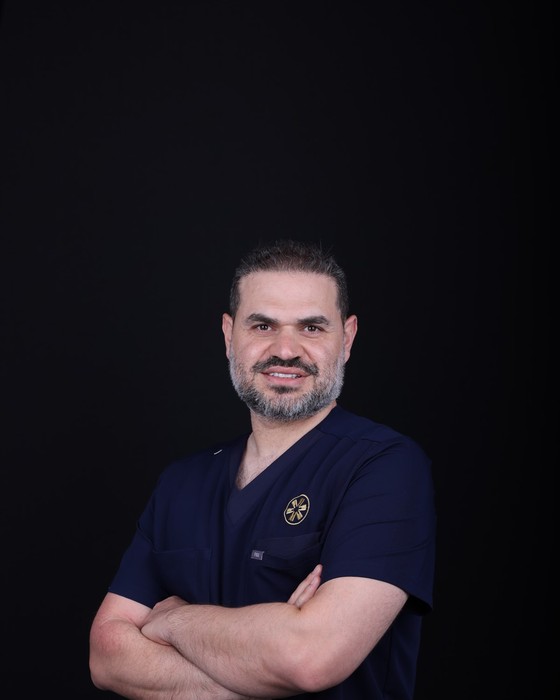
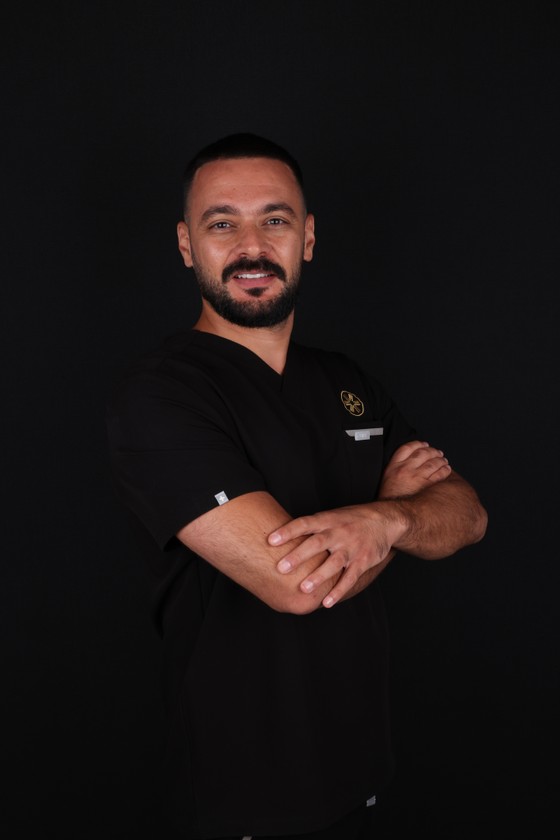
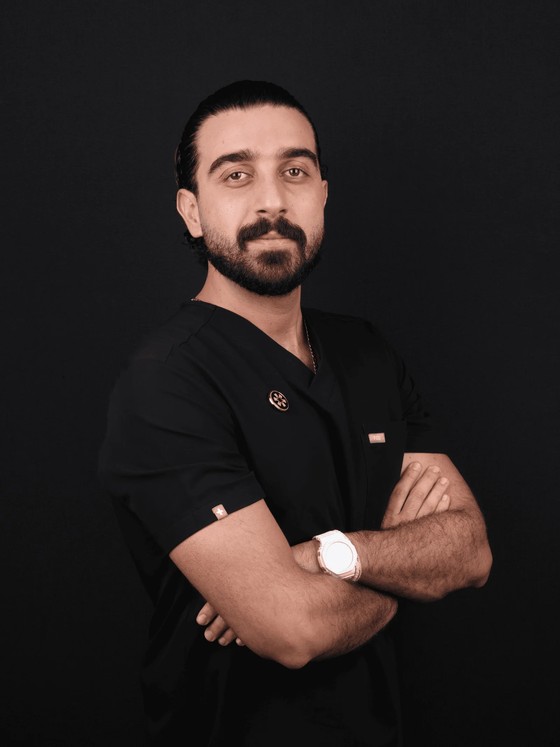
Dentists who plan smile design cases here
Each case is examined, planned and fitted by your dentist, with the lab involved from the design stage.
Frequently asked questions
Can a Hollywood smile style still look natural?
Yes, if brightness is balanced with natural detail. Keeping some translucency at the edges, fine surface texture and slight variation between teeth makes a light shade look like healthy teeth rather than a single white block. Choosing a shade that suits your skin and lips, and whitening the teeth that stay natural, matter as much as the ceramic itself.
Can I see different smile styles on my own teeth before deciding?
Yes. Styles are first compared in a digital smile design on your own photographs. The one you prefer is then copied onto your teeth as a temporary resin mock-up, with no preparation, so you can see it, speak with it and photograph it. If it is not right, the design is changed before anything irreversible happens.
Does a youthful smile style just mean longer teeth?
Not only. A youthful style usually has slightly longer, more dominant central teeth, but also rounded corners, small gaps between the edges, a curved edge line and translucent tips. Length is limited by your lip, your bite and how much tooth already shows at rest, so the design is checked in a mock-up before it is made.
What smile design style suits a man's face?
Many men prefer a masculine tooth form: squarer outlines, flatter edges, defined line angles and a natural rather than very white shade. This is a preference, not a rule; some men choose softer forms. The final choice depends on your face, lips, age and how much of the teeth show when you talk and smile.
Can I change my smile style after veneers are fitted?
Small changes such as polishing an edge are sometimes possible, but the shade and overall style of ceramic cannot be changed without replacing it. That is why the style is tested as a mock-up and checked again at try-in, before the veneers are bonded. Spend time on those stages; they are where the style is decided.
Does the smile design style change the cost?
Usually the style matters less than the treatment behind it. Cost is driven by how many teeth are treated, the material, any preparatory work and the lab time involved. A bright style that needs every visible tooth treated costs more than a natural style achieved with whitening and bonding. Your written plan itemises each tooth; see our smile makeover cost guide.
Related treatments
Request a consultation
Tell us what you would like to change. The clinic replies within working hours with an appointment time.
- Address614 Jumeira St, Jumeirah 3, Umm Suqeim 1, Dubai
- Opening hoursClinic open daily, 10:00–20:00
- Phone+971 4 342 4444 · WhatsApp +971 56 677 7537
Book Your Consultation
Or call us +971 4 342 4444Or message us on WhatsApp
Talk to a dentist about your case
A consultation ends with a diagnosis and a written, itemised plan — not a sales pitch. Book online, message us on WhatsApp, or call the clinic.