
Gum height sets visible length
Two identical veneers look like different lengths if the gum sits lower on one tooth. Evening the gum is often what makes a pair look matched, not the ceramic.
Veneers only look as even as the gum line they finish against. When the gums need reshaping, it is planned with the smile design, done first and left to settle before the ceramic is made.
The assessment measures gum display, gum depth and bone level before anyone decides whether contouring belongs in your plan.

Only if the gum line is the reason the teeth look short or uneven. When excess gum covers part of the teeth, or one tooth's gum sits lower than its partner's, laser gum contouring evens the frame before veneers are designed. At Creative Arts in Dubai the gum is reshaped first and allowed to mature, usually for several weeks, so the ceramic edges meet a stable gum line.
Patients judge veneers by the teeth, but the eye reads the shape of the gum around them first. These are the details the design works from.
Two identical veneers look like different lengths if the gum sits lower on one tooth. Evening the gum is often what makes a pair look matched, not the ceramic.
Over the two front teeth the highest point of the gum usually sits slightly behind the centre, and over the teeth beside them the gum is often a little lower. A smile that ignores this pattern looks flat.
Around two millimetres of gum on a full smile is usually considered normal. More than that may be excess gum, or a lip or jaw cause that contouring cannot change.
Veneer edges are placed at or near the gum margin. If that margin moves after bonding, a visible line can appear, which is why the gum is settled before the final scan.
Healing times are typical ranges. Your dentist confirms readiness for preparation at review.
More than one finding can apply to the same smile. Measurements and a radiograph decide which, before the veneers are designed.
| Gum finding | What is usually done | Effect on the veneer plan |
|---|---|---|
| Excess gum covering part of the teeth | Laser gum contouring of soft tissue only | Teeth gain visible length, so veneers need less added at the edge |
| Uneven gum heights between matching teeth | Contouring on the tooth with more gum, so left and right match | Paired veneers can be made to the same length |
| Bone sitting too close to the planned gum line | Crown lengthening: gum and bone reshaped together | A longer wait before the final preparation |
| Receding gum, where too much tooth shows | Contouring cannot add gum; a gum graft may be considered for some cases | Veneer edges are designed around the recession, or gum treatment comes first |
| A lip that lifts high over normal-length teeth | Not a gum problem; contouring is not advised | The design works with your lip line instead |
| Inflamed or bleeding gums | Gum treatment and professional cleaning first | Veneers wait until the gums are healthy and stable |
For the causes of a gummy smile and how each is treated, see laser gum contouring and gummy smile treatment.
The usual order puts gum work first and ceramic last. The waiting time in the middle is what keeps the edges out of sight years later.
Gum display at rest and smiling, pocket depths, a radiograph of the bone level, photographs and an intraoral scan.
Visit 1The new gum line and new tooth shapes are drawn together in the digital smile design, so neither is decided in isolation.
DesignYou try the proposed tooth shapes in your mouth, and the planned gum changes are marked and explained tooth by tooth.
Before treatmentDone under local anaesthetic. The gum is usually tender for a few days, which over-the-counter pain relief normally manages.
Gum visitThe surface settles in one to two weeks; the margin keeps maturing for roughly six to eight weeks, longer where bone was reshaped.
Several weeksThe teeth are prepared to the settled gum line, scanned, and the veneers made, tried in and bonded. A review checks the gum around every edge.
After healing
Where a veneer leaves the gum, its profile matters as much as its colour. Too bulky and it traps plaque and presses on the gum, which can become inflamed; too thin and the tooth colour beneath can show through. That profile is shaped on a model of your settled gum line, one more reason the gum should finish healing before the final scan.
Because the laboratory is in the same building, the ceramist can see the gum around your teeth in person rather than judging it from a photograph. More on what makes veneers look natural.
A freshly trimmed gum margin moves slightly as it heals, and ceramic edges made to a moving target can end up showing. Occasionally a very small soft-tissue refinement is made at the preparation visit when the bone level allows it; anything more is done first and left to settle. If you are travelling to Dubai for treatment, ask about a two-trip veneer plan.
Veneer dentists design and fit the ceramic; laser gum work is carried out by a dentist who works with the dental laser and treats gum conditions. Both work from the same smile design.
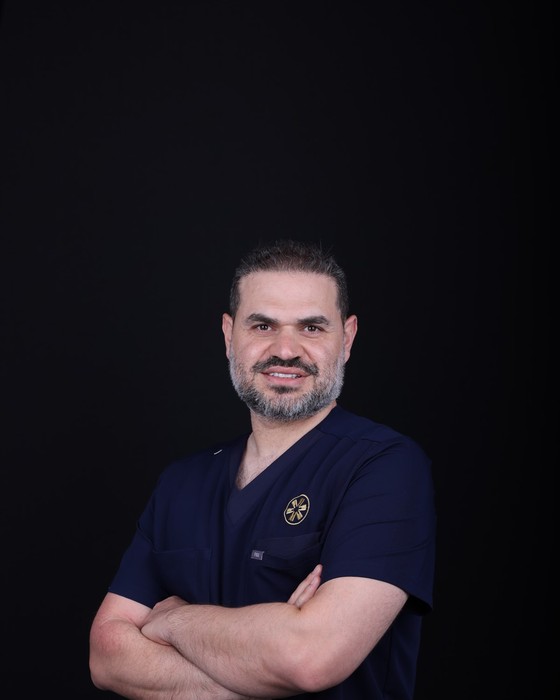 Dr. Khalid SaeedCo-founder & DentistCosmetic dentistry, veneers & implants
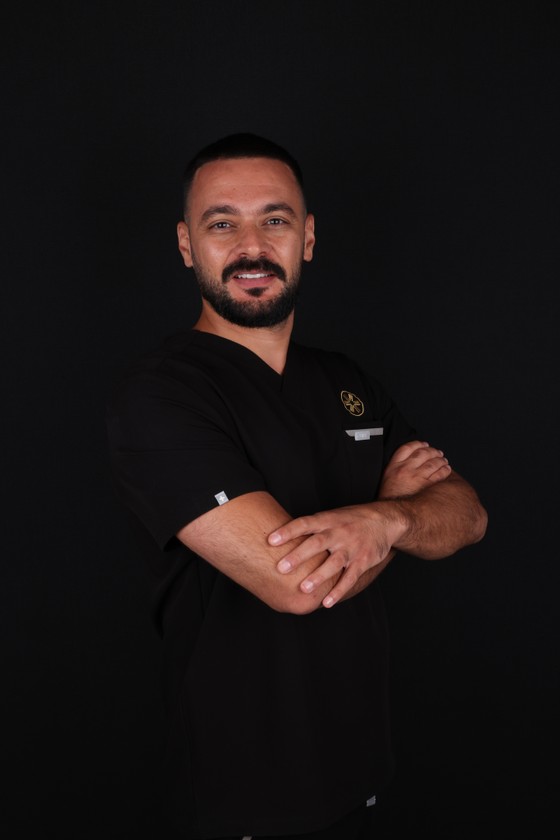 Dr. Kinan BonniDentistCosmetic & implant dentistry, full mouth rehabilitation
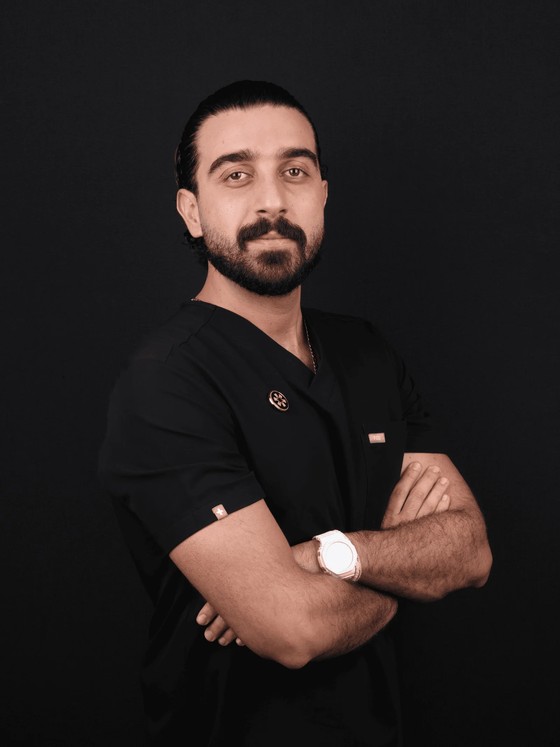 Dr. Somar DahdalGeneral DentistVeneers & smile makeovers
 Dr. Marina AntoniukDentistRestorative & microscopic dentistry
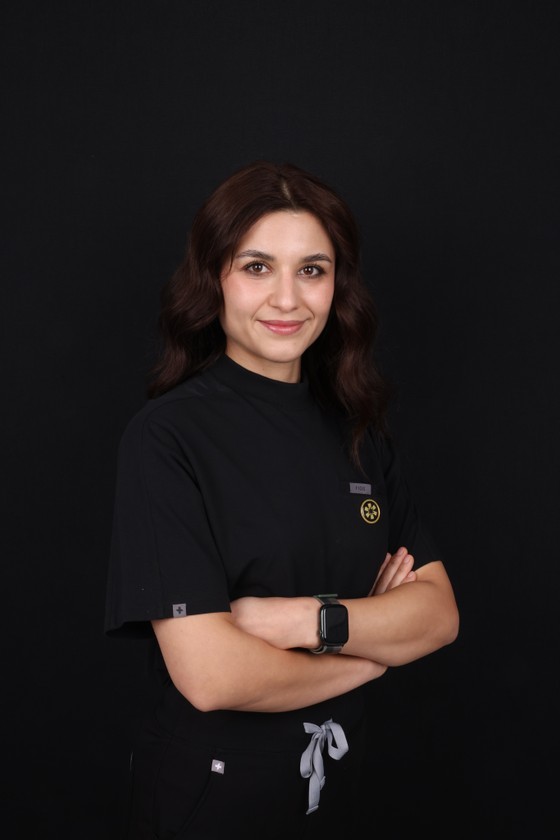 Dr. Taban AmeenDentistLaser & cosmetic dentistry
The gum surface usually looks settled within one to two weeks, but the margin keeps maturing for roughly six to eight weeks. Final veneer preparation and scanning are normally done after that, so the ceramic edges are made to where the gum will stay. Crown lengthening that also reshapes bone needs longer, and your dentist confirms readiness at review.
Usually not for anything beyond a very small soft-tissue refinement. A reshaped gum moves slightly as it heals, so veneers prepared in that same visit risk edges that later show. When only a fraction of soft tissue is involved and the bone level allows it, your dentist may combine steps; that is decided case by case.
When the right procedure was chosen and the gum was allowed to mature, the new line is generally stable. It can still change over the years with gum disease, hard brushing or ageing, which is why gentle brushing, cleaning between the teeth and regular hygiene visits protect veneer edges as much as the ceramic itself.
The reshaping is done under local anaesthetic. Afterwards the gum is usually tender for a few days, normally managed with over-the-counter pain relief. You are shown how to brush the area gently and may be given a rinse. Very hot or spicy food is best avoided while the surface heals.
Sometimes partly. If the teeth look short because their edges are worn, veneers that restore edge length can rebalance how much gum shows. If gum is covering part of the teeth, lengthening only the edges can make teeth look long and narrow, so contouring gives a better proportion. A lip or jaw cause is not solved by either.
Yes, it appears as a separate line on the written plan, priced after the assessment. The cost depends on how many teeth are reshaped and whether bone is involved. Our veneers cost guide explains how the rest of the plan is priced.
Often, once the gum surface has healed and your dentist agrees. The healing weeks are a practical window for whitening the teeth that will stay natural, so their shade has settled by the time the veneer colour is chosen. Whitening gel should not be used on gum that is still raw.
Tell us what you would like to change. The clinic replies within working hours with an appointment time.
Or call us +971 4 342 4444Or message us on WhatsApp
A consultation ends with a diagnosis and a written, itemised plan — not a sales pitch. Book online, message us on WhatsApp, or call the clinic.