
Can I get veneers after braces or Invisalign?
Yes. Veneers are often planned after orthodontics to correct colour, shape, worn edges or small leftover gaps, and aligned teeth usually need less filing. Most dentists wait until the gums have settled, the teeth are stable and your retainer is in place. At Creative Arts in Dubai the veneer design is checked against your retainer, and a new removable retainer is usually made after fitting.
Why straightening first usually means less filing
When teeth are crowded or rotated, veneers can only make them look straight by being thicker where a tooth sits forward and by filing more where it sticks out. The more crooked the tooth, the more enamel has to go to bring its front surface into line. That is the main reason many dentists suggest orthodontics before veneers rather than veneers instead of orthodontics. Our guide to veneers vs Invisalign covers that wider choice.
Once braces or aligners have placed the teeth in a good arch, the veneers only need to change what alignment cannot: colour, shape, length and surface texture. In many such cases preparation can stay within enamel, and for teeth that are small or slightly inward, a no-prep or minimal-prep design may be possible. How much is filed is always set by the design; see how thick veneers are for the typical ranges.
Straight teeth also make the veneers easier to clean around and spread bite forces more evenly, which helps the ceramic and the gums over the long term.
Common concerns after braces and the usual options
Veneers are one option among several. The least invasive one that meets the goal usually comes first.
| Concern after braces | Often enough | When veneers come in |
|---|---|---|
| Teeth look yellow | Professional whitening | Colour that whitening cannot change, or combined with shape changes |
| Small or narrow teeth (e.g. lateral incisors) | Composite bonding to add width | Several teeth to reshape, or a longer-lasting ceramic result |
| Chipped or worn edges | Bonding on the edges | Wider wear, or edges that keep chipping |
| Small gaps left by design | Bonding | Gaps combined with shape or colour concerns |
| White spots from braces | Fluoride care, monitoring, whitening | Marks that are deep, widespread and still visible |
| Uneven gum line | Laser gum contouring where suitable | Usually combined with veneers when tooth shape also changes |
How long should I wait after braces before veneers?
There is no single number, but there are three things to wait for:
- Healthy gums. Gums are often a little swollen when braces come off, because cleaning around brackets is hard. Veneer edges are designed to sit precisely at the gum line, so the gums need to settle first, usually after a professional clean and a few weeks of good home care.
- Stable teeth. Teeth can drift in the first months after treatment. Your retainer should be fitted and worn as instructed, and your orthodontist should be happy with the result before the cosmetic design is finalised.
- A settled colour. If you are whitening first, the shade is usually chosen after whitening has stabilised, and bonding is commonly delayed for a short period, often around two weeks, because whitening can temporarily weaken the bond.
Clear aligner patients also need the small tooth-coloured attachments removed and the enamel polished. Before any of this, an oral health check before cosmetic treatment makes sure there is no decay or gum problem that needs treating first.
If veneers are planned from the start, tell your orthodontist
When the orthodontist knows veneers will follow, the final tooth positions can be planned with them in mind, for example leaving even space beside narrow teeth so they can be built up to the right width, instead of closing every gap and then filing teeth to fit.
Will my retainer still fit after veneers?
Retention after orthodontics is long-term, and veneers have to work with it. Your retainer type changes what happens:
- Bonded (fixed) retainer. A thin wire glued behind the front teeth usually does not interfere with veneers, which sit on the front surface. If the design wraps over the biting edge, the dentist checks that it does not clash with the wire.
- Removable clear retainer. Because veneers change the shape and sometimes the thickness of the teeth, your old retainer may no longer fit, or may press on the new veneers. A new retainer is usually made from a scan taken after the veneers are fitted.
- Both. Many people wear a bonded wire plus a removable retainer at night. Both are checked once the veneers are in place.
Keep wearing your retainer while veneers are being made, including with temporaries, unless your dentist tells you otherwise. Teeth that move between preparation and fitting can stop the final veneers from seating properly.
Is bonding enough instead of veneers after braces?
Often, yes. Many concerns left after orthodontics are small: a narrow lateral incisor, a little gap kept deliberately, a chipped edge. Composite bonding adds tooth-coloured resin to the tooth without filing it, can be done in a single visit per tooth, and can be repaired or redone later. The trade-off is that composite stains and wears faster than ceramic and needs more maintenance.
Porcelain veneers make more sense when several teeth need shape and colour changes together, when you want a result that stays stable in colour for longer, or when bonding has already been tried and keeps chipping. If you are weighing the two, our guide to veneers vs bonding compares them directly. If the only concern is colour, teeth whitening removes no tooth at all and is worth trying first.
Finished orthodontics and still unhappy with colour or shape? See how veneers are designed, previewed as a mock-up and made in the lab in our building.
Read about veneersWhat if my teeth moved again after braces?
Some people come for veneers years after orthodontics because their teeth have crept back, often after the retainer stopped being worn. It can be tempting to hide the relapse with veneers. If the movement is significant, though, veneers face the same problem as on any crooked teeth: more filing and thicker ceramic.
In that situation a review by a specialist orthodontist is worth having first. At Creative Arts, Dr. Muhannad Kazzaz reviews previous orthodontic treatment and can say whether a short course of clear aligners or fixed braces would bring the teeth back before any veneers are designed. Sometimes the answer is that the remaining crowding is minor and veneers or bonding can manage it; the point is to know before enamel is removed.
How the veneer plan works after orthodontics
The process is the same as for any veneer case, with a few extra checks. The dentist examines the teeth and gums, reviews your retainer, and takes scans and photographs. A digital smile design shows the proposed shape and length, and a physical mock-up lets you see it on your own teeth before anything is filed. If the gum line is uneven, laser gum contouring may be planned first.
After preparation and temporaries, the ceramist makes the veneers in Creative Art Dental Lab, which is in the same building, so the shade can be checked in person. Lab time is typically 3–5 working days, depending on complexity. Once the veneers are fitted, a new removable retainer is made if needed, and a night guard is advised if you grind.
Who plans veneers after orthodontics at Creative Arts?
The cosmetic and restorative dentists design the veneers, and Dr. Muhannad Kazzaz, specialist orthodontist, reviews alignment and retention where needed.
 Dr. Khalid SaeedCo-founder & DentistCosmetic dentistry, veneers & implants
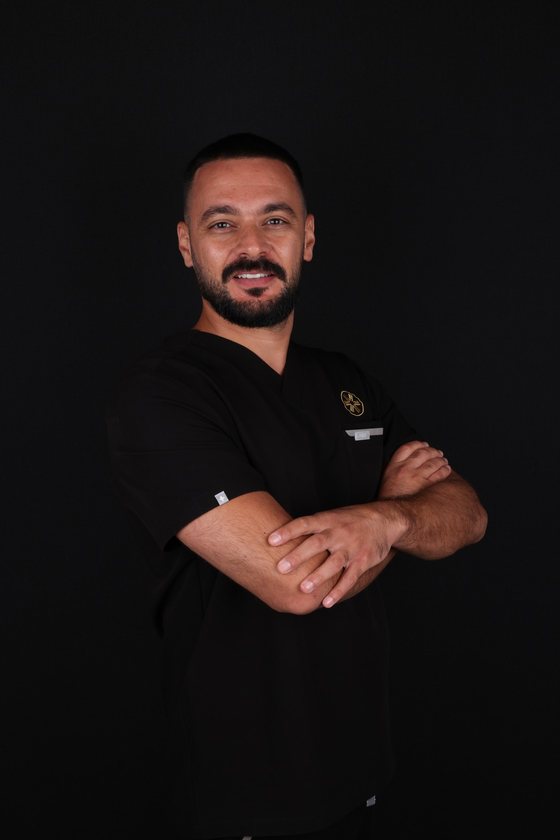 Dr. Kinan BonniDentistVeneers, cosmetic & implant dentistry, full mouth rehabilitation
 Dr. Somar DahdalGeneral DentistVeneers & smile makeovers
 Dr. Marina AntoniukDentistRestorative & microscopic dentistry
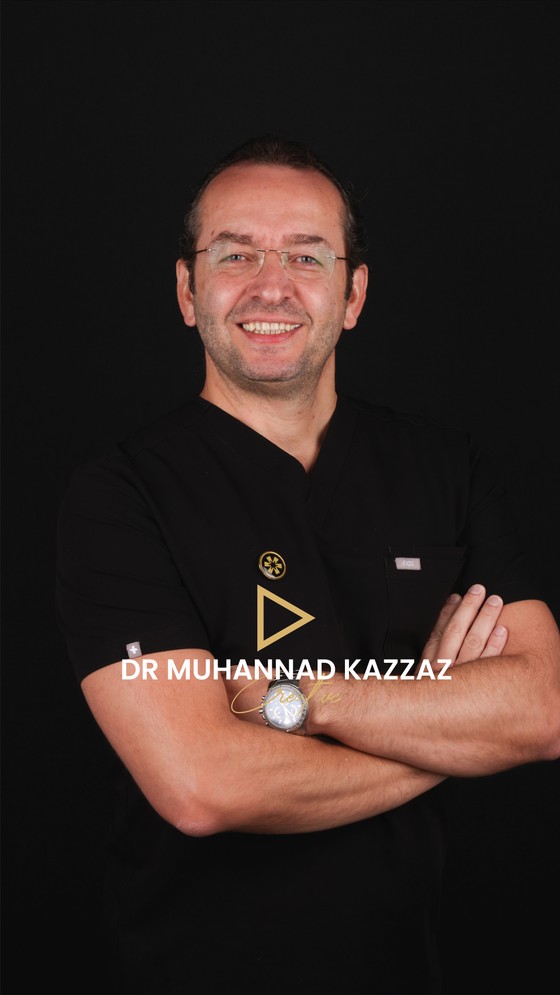 Dr. Muhannad KazzazSpecialist OrthodontistComplex orthodontic treatment