The in-house laboratory: why it changes your result
What an in-house dental laboratory changes for your treatment — CAD/CAM milling, 3D intraoral scanning, same-day adjustments, accurate shade matching and shorter treatment timelines.
Last medically reviewed: 12 October 2026

Smiles made at Creative Arts
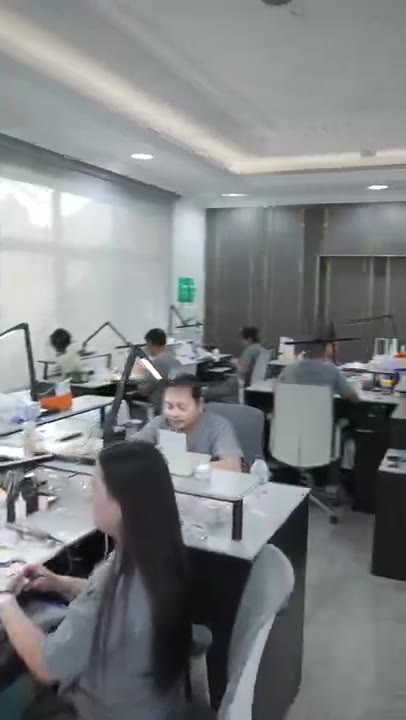
Designed in the clinic and made by hand in Creative Art Dental Lab, in the same building in Jumeirah, Dubai.




Most dental clinics send their laboratory work out. Impressions or scan files go to an external laboratory, the case is manufactured elsewhere, and it comes back days or weeks later. If something is wrong, the cycle repeats.
Our laboratory is in the same building as the clinic. This article explains what that actually changes — not as a marketing claim, but mechanically.
The digital workflow, end to end
1. 3D intraoral scanning
A handheld optical scanner captures your teeth and gums in a few minutes. Compared with traditional impression material this means:
- No impression tray, no gagging, no setting material
- No distortion from material shrinkage
- Immediate verification — if a section is incomplete, it is re-scanned in seconds
- A digital file that flows straight into design software
2. Digital smile design
For cosmetic cases, the scan is combined with facial photographs to design the proposed smile in 3D — width-to-height proportions, midline, the curve of the smile against the lower lip, and shade progression. You approve this design before any tooth is prepared.
3. CAD design
The ceramist designs the restoration digitally: margins, contact points with adjacent teeth, and the biting surface anatomy. Because the design is digital, the fit at the margin — the single most important factor in whether a crown lasts — is verified before anything is manufactured.
4. CAM milling
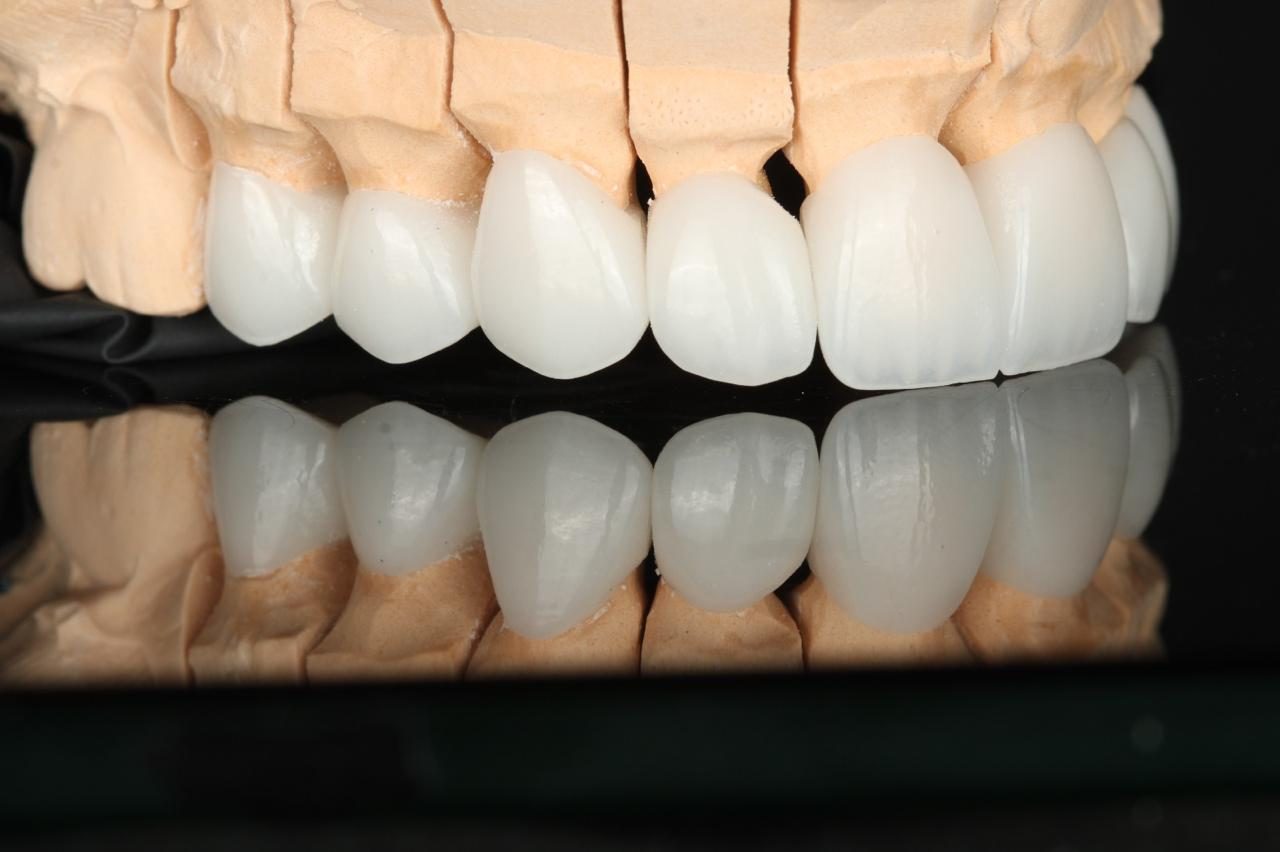
The design is milled from a solid ceramic block. Milling from a homogeneous industrial block avoids the porosity and inconsistency of hand-built restorations.
5. Hand characterisation
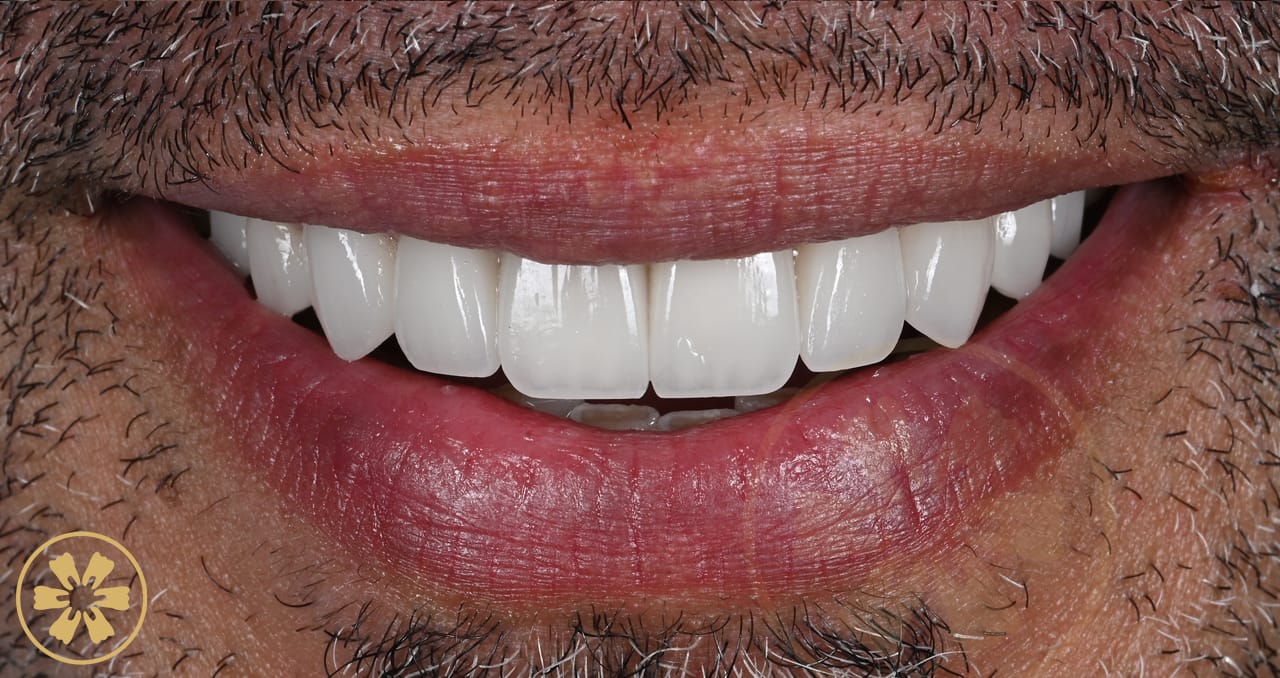
This is where machines stop and craft begins. A milled unit is uniform in colour — real teeth are not. The ceramist layers stains and glazes by hand to reproduce translucency at the incisal edge, subtle internal characterisation, and surface texture that catches light the way enamel does.
6. Fit, adjust, finish
The restoration is tried in and assessed. If the contact is slightly tight, the shade needs warming, or the contour needs refining, the ceramist makes the change during your appointment.
Questions about your own teeth? Send a photo on WhatsApp and the clinic will tell you what an examination would check.
WhatsApp usWhat this actually changes for you
Shorter treatment
A conventional crown involves preparation, impression, courier to the lab, manufacture, courier back, and fitting — typically two to three weeks with a temporary in between. With the laboratory in the same building there is no courier time: single units typically take 3–5 working days in the lab, and adjustments can often be made the same day.
Better shade matching
Tooth colour varies along the tooth and shifts with lighting. A photograph flattens that information. When the ceramist sees your teeth directly, under the same light as the clinician, alongside the adjacent natural teeth, the match improves measurably. For a single front crown next to a natural tooth — the hardest case in dentistry — this is often the difference between invisible and obvious.
Same-day adjustment
This is the practical benefit patients notice most. If something is not right at try-in, the response is not “we’ll send it back”. The ceramist is in the same building. A small correction that would otherwise mean another shipping cycle can often be made the same day.
Fewer remakes
Problems are caught and corrected during the appointment rather than discovered after another shipping cycle. That reduces both your appointment count and the total cost.
Direct accountability
When the person designing your restoration and the person fitting it are in the same building, there is no interpretive gap between them. Complex cases benefit enormously from the ceramist being able to ask the clinician a question directly.
Where staged treatment is still correct
An in-house lab makes same-day adjustments possible, but it does not remove the stages that make a result last. Full cosmetic cases involving multiple veneers are deliberately staged:
- Design and approval
- A physical mock-up you can wear and assess
- Preparation and temporaries matching the approved design
- Hand-layered final ceramics
- Try-in, refinement, and final bonding
Rushing this compresses out the steps that make the result look natural. Speed is a benefit where it helps and a risk where it does not — and knowing the difference is the point.
Materials
| Material | Best for | Characteristics |
|---|---|---|
| Lithium disilicate | Front crowns, veneers | Excellent translucency, strong aesthetics |
| Zirconia | Back teeth, bridges, implant work | Very high strength, less translucent |
| Layered zirconia | Cases needing both | Strong core with aesthetic layering |
| Feldspathic ceramic | Thin, highly aesthetic veneers | Most lifelike, requires expert handling |
Material selection is a clinical decision based on where the restoration sits, how much force it takes, and how visible it is.
Questions worth asking
- Is the laboratory in the same building, and can I see it?
- Will the ceramist assess my case in person for a front-tooth restoration?
- What happens if the shade is not right at fitting?
- Will I see a digital design and a mock-up before preparation?
Our laboratory
Our laboratory, Creative Art Dental Lab, is a separate laboratory in the same building as the clinic, and the centre has been an accredited training facility for dentists and dental lab professionals since 2008. If you are considering cosmetic or restorative work, you are welcome to see where it is made.
Further reading from independent sources
Independent sources for readers who want the wider evidence on this topic. Study figures are averages, not a promise for any one patient.
- British Dental Journal. Communication methods and production techniques in fixed prosthesis fabrication: a UK based survey. Part 1: Communication methods, 2014.
- Cureus. Shade Selection in Esthetic Dentistry: A Review, 2022.
- The Journal of Evidence-Based Dental Practice. Accuracy of intraoral scanners versus traditional impressions: a rapid umbrella review, 2022.
Frequently asked questions
Are crowns or veneers made on the same day?
No. Crowns and veneers are designed and made in the laboratory in the same building, which typically takes a few working days depending on the case, and you wear temporaries in between. What the in-house laboratory does make possible on the day is adjustment: if shade, shape or fit needs refining at try-in, the ceramist can do it without a shipping cycle.
Does an in-house lab cost more?
Usually the opposite. Removing the external laboratory margin and the courier cycle reduces both cost and turnaround. The larger saving is in avoided remakes, because problems are corrected immediately rather than after another shipping round trip.
Why does shade matching need the ceramist present?
Tooth colour is not one flat shade — it has translucency, internal characterisation and surface texture that vary along the tooth. Photographs lose much of this. When the ceramist can see your teeth under the same lighting as the doctor, the match is measurably more accurate.
What is the difference between a digital scan and a traditional impression?
A digital intraoral scan captures the teeth optically in a few minutes with no impression material, no gagging and no distortion from setting material. It can be checked and re-taken instantly, and it transfers directly into the design software without an intermediate physical model.