
Veneers vs Lumineers: What Is the Real Difference?
Lumineers is a brand name for ultra-thin, no-prep porcelain veneers. The useful question is not which brand, but whether your teeth suit a no-prep veneer or need some preparation.
- No-prep veneers where the case allows
- Veneers made in our own lab
- Mock-up before any preparation
At the consultation the dentist checks whether your teeth have room for a no-prep veneer, and shows you a mock-up before anything is decided.
What is the difference between veneers and Lumineers?
Lumineers is a trademarked brand of ultra-thin porcelain veneers that are usually placed with little or no tooth preparation. They are one product within the wider group of no-prep veneers, not a different treatment. Conventional veneers remove a fraction of a millimetre of enamel so the ceramic can be thicker and sit flush. Creative Arts in Dubai does not offer Lumineers by name, but makes no-prep and minimal-prep ceramic veneers in its own lab where the teeth allow.
Lumineers and conventional veneers: the essentials
- What Lumineers are
- A brand of ultra-thin porcelain veneers placed with little or no preparation
- What conventional veneers are
- Ceramic veneers bonded after a small, controlled reduction of the front surface
- The real choice
- No-prep vs minimal-prep vs conventional, decided by the space your teeth have
- Who suits no-prep
- Small, narrow, spaced, worn or slightly inward-set teeth with good enamel
- Who usually does not
- Crowded, forward-set or dark teeth, where no-prep can look bulky or grey
- Visits
- Typically consultation and design, then preparation or try-in, then bonding
- Comfort
- No-prep often needs no anaesthetic; preparation is done under local anaesthetic
- At Creative Arts
- Lumineers are not offered by name; no-prep and minimal-prep veneers are made in our own lab
Ultra-thin no-prep veneers vs conventional veneers
Lumineers fall into the first column. The comparison applies to any well-made no-prep veneer, whatever its name.
| Ultra-thin no-prep (e.g. Lumineers) | Conventional veneers | |
|---|---|---|
| Tooth reduction | None or very little; sometimes light smoothing of an edge | A fraction of a millimetre, kept in enamel where possible |
| Ceramic thickness | Very thin, a few tenths of a millimetre | Thicker, which gives the ceramist more room to build colour |
| Masking dark teeth | Limited; the tooth colour can show through | Better, especially with a more opaque layer |
| Effect on tooth size | Adds thickness to the front of the tooth | Replaces removed enamel, so teeth stay in line |
| Risk of a bulky look | Higher if the teeth do not have room | Lower, because space is created for the ceramic |
| Edge at the gum line | Must be finished very finely to avoid a ledge | Can be placed and shaped more freely |
| Reversibility | Mostly reversible if no enamel was removed; the bonded enamel surface is altered | Not reversible; the tooth will always need a covering |
| Typical teeth | Small, spaced, worn or slightly inward teeth | Most front teeth, including crowded or discoloured ones |
General ranges only. Your dentist measures how much space each tooth has using a digital design and mock-up.
What exactly are Lumineers?
Lumineers is a trademark owned by a US dental company for its range of ultra-thin porcelain veneers. They became widely known through marketing that stresses "no drilling" and "contact-lens thin" shells, and many people now use the name for any thin veneer, in the same way some brand names become everyday words.
Clinically, they belong to a broader category: no-prep veneers, which are bonded to the tooth with little or no reduction of enamel. Several ceramic systems can be made this thin, including lithium disilicate (E-max) and feldspathic porcelain. What makes a no-prep veneer succeed is not the brand but whether the tooth has space for extra thickness without looking bulky, and how finely the edges are finished at the gum. Creative Arts does not supply Lumineers as a branded product; when a case suits the no-prep approach, our no-prep veneers are designed and made at Creative Art Dental Lab in the same building.
Which teeth suit ultra-thin no-prep veneers like Lumineers?
No-prep veneers add a layer to the front of the tooth, so they work when there is room for that layer.
Often suitable
- Small or narrow teeth that need more width or length
- Gaps between front teeth
- Worn or slightly short edges
- Teeth that sit slightly behind the arch
- Mild shape irregularities on healthy enamel
- Patients who want to avoid preparing healthy teeth
Usually better with preparation or another option
- Crowded or forward-set teeth, which would look thicker still
- Dark or heavily stained teeth that need masking
- Teeth with large fillings or little enamel left
- Strong grinding without a plan to protect the veneers
- Large changes in tooth position, often better treated with orthodontics first
Are Lumineers better than regular veneers?
Neither approach is better in general. Each suits a different starting point.
The appeal of no-prep veneers is real: healthy enamel is kept, the visit is usually simpler and local anaesthetic is often unnecessary. On the right teeth they can look entirely natural. The limits are also real. Because nothing is removed, every veneer adds thickness. On teeth that are already full or forward, that can create a slightly puffy, over-contoured smile, and the extra ledge at the gum line can collect plaque if it is not finished precisely. Very thin ceramic also has limited power to hide a dark tooth.
Conventional veneers create a small amount of space so the ceramic can be thicker without changing the tooth's position. That gives more control over colour and contour, at the cost of enamel that cannot be replaced. Many smiles land in between: minimal-prep veneers, where only the areas that would otherwise be bulky are lightly reduced. Our guide on veneer thickness explains how much space different shade and shape changes need, and a Hollywood Smile without filing covers the same question for a full smile.
"No-prep" is not the same as "no consequences"
Even when no enamel is drilled away, bonding etches the enamel surface. If the veneers are later removed, the tooth surface needs polishing and will not be exactly as before. No-prep veneers are the most conservative ceramic option, but they are still a long-term commitment.
How we decide between no-prep and conventional veneers
The decision is made tooth by tooth, using a design you can see before anything is changed.
Examination and records
Teeth, gums and bite are checked, with photographs and an intraoral 3D scan of your teeth.
First visitDigital design
The new tooth shapes are designed over your current teeth, which shows where they would be thicker and by how much.
Mock-up in your mouth
A temporary mock-up lets you see and feel the added thickness. If a tooth looks bulky, that area needs reduction or a different plan.
Plan per tooth
Each tooth is marked as no-prep, minimal-prep or conventional in a written plan with alternatives such as whitening or bonding.
Made in our lab, then bonded
The ceramist builds the veneers at Creative Art Dental Lab in the same building, and the dentist bonds them after a try-in.
Typically 2–3 visits
Interested in the no-prep approach? See which cases suit it, how the mock-up shows the added thickness and how our lab keeps the edges fine.
Read about no-prep veneersAlternatives to Lumineers and conventional veneers
Before choosing any ceramic veneer, it is worth knowing what else can achieve the goal. Composite bonding adds tooth-coloured resin with no preparation and can be adjusted or removed more easily, although it stains and wears faster than ceramic. Whitening addresses colour alone. Orthodontics can close gaps or straighten teeth so that fewer veneers, or none, are needed. And clip-on removable veneers are a different product altogether: a removable appliance, not a bonded restoration, and not offered at Creative Arts.
In the Gulf, many patients also ask about "dental lenses", a common Arabic term for thin veneers. The same rule applies: the right thickness depends on your teeth, not on the name. For an overview of conventional options, see our main porcelain veneers page.
Who plans no-prep and conventional veneers at Creative Arts
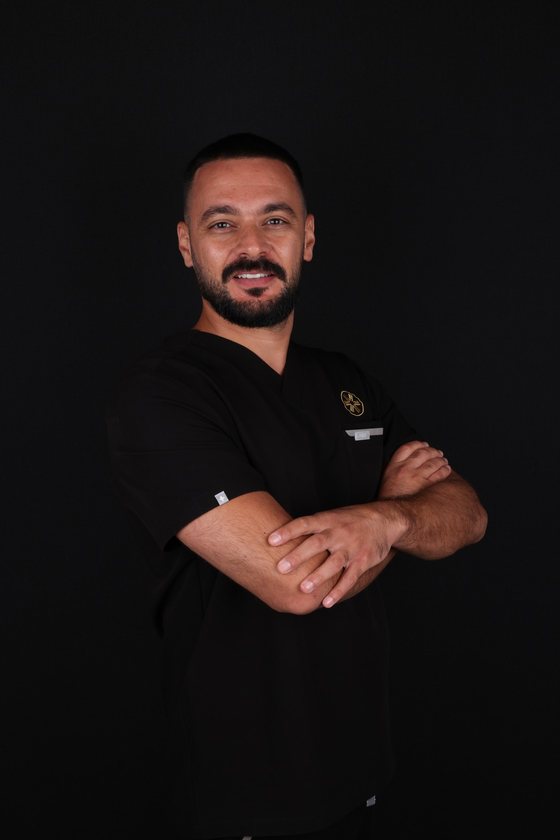
Veneer cases are planned by our cosmetic dentists, with the ceramic made by the lab team in the same building.



Frequently asked questions
Do you offer Lumineers at Creative Arts?
We do not offer Lumineers by name. When your teeth suit an ultra-thin approach, we design and make no-prep or minimal-prep ceramic veneers in our own lab. The clinical idea is the same; the difference is that the material and thickness are chosen for your case rather than a single branded system.
Are Lumineers really no drilling?
Often there is no drilling, but not always. Some teeth need light smoothing of an edge or contact point so the veneer seats properly and does not create a ledge. The enamel surface is also etched for bonding, so the tooth is not completely untouched.
Do Lumineers look bulky compared with veneers?
They can, if they are placed on teeth that are already full or forward in the arch, because they add thickness. On small, spaced or slightly inward teeth they can look natural. A mock-up shows how much thicker your teeth would look before any decision is made.
Can Lumineers or no-prep veneers cover dark teeth?
Usually only to a limited degree. Very thin ceramic lets some of the tooth colour through, so dark or heavily stained teeth often need a slightly thicker veneer, which in turn needs some preparation. Whitening first can help when the discolouration is not too deep.
Are Lumineers reversible compared with conventional veneers?
No-prep veneers such as Lumineers are more reversible than conventional veneers, because little or no enamel is removed. Removing them still means grinding off the ceramic and polishing the enamel, so the tooth surface is not exactly as before. Conventional veneers are not reversible.
Do Lumineers last as long as conventional veneers?
Well-made, well-bonded ceramic veneers of either type can last many years with good care. Longevity depends more on bonding to sound enamel, the bite, grinding and gum health than on the brand. A night guard is often advised if you grind.
Is the veneers vs Lumineers choice also a cost question?
Cost depends on the number of teeth, the material, the laboratory work and how much planning the case needs, not on whether a veneer is called no-prep. We do not publish prices; the written plan after your consultation lists each tooth and its restoration.
Related treatments
Request a consultation
Tell us what you would like to change. The clinic replies within working hours with an appointment time.
- Address614 Jumeira St, Jumeirah 3, Umm Suqeim 1, Dubai
- Opening hoursClinic open daily, 10:00–20:00
- Phone+971 4 342 4444 · WhatsApp +971 56 677 7537
Book Your Consultation
Or call us +971 4 342 4444Or message us on WhatsApp
Talk to a dentist about your case
A consultation ends with a diagnosis and a written, itemised plan — not a sales pitch. Book online, message us on WhatsApp, or call the clinic.