What it is
The upper incisors hide most or all of the lower incisors. In severe cases the lower teeth touch the palate behind the upper teeth.
A bite problem is about how the upper and lower teeth meet, not just how straight they look. Each type has different causes, and some need more than braces or aligners.
The first visit is a diagnosis. You leave with an explanation of your bite and the options, not a treatment already started.
Bite problems such as deep bite, underbite, crossbite and open bite are usually treated with orthodontics — fixed braces or, where the movement suits them, clear aligners — often with elastics, expanders or temporary anchorage devices. When the cause is the size or position of the jaws rather than the teeth, adults may need jaw surgery alongside orthodontics. At Creative Arts in Dubai, a specialist orthodontist diagnoses the bite type before recommending any appliance.
Many people have more than one of these patterns. Each is explained in its own section below.
| Bite type | What you notice | Common causes | Usual starting point |
|---|---|---|---|
| Deep bite | Upper front teeth cover most of the lower front teeth; lower teeth may bite into the gum behind the upper teeth | Jaw growth pattern, worn or short back teeth, inherited | Orthodontics; restorative work if teeth are worn |
| Underbite | Lower front teeth sit in front of the upper front teeth; lower jaw may look prominent | Lower jaw longer or upper jaw smaller than usual, often inherited | Orthodontics if mild; jaw-surgery referral if skeletal in adults |
| Crossbite | Some upper teeth bite inside the lower teeth, at the front or the side | Narrow upper jaw, crowding, a tooth erupting out of line | Expansion and orthodontics; early assessment in children |
| Open bite | Front teeth do not meet when the back teeth are together | Thumb sucking, tongue posture, mouth breathing, vertical jaw growth | Address habits, then orthodontics; surgery if skeletal |
Upper front teeth that stick forward ("buck teeth") are covered on our protruding teeth page, and crowding on our crooked teeth page.
In dental terms, "overbite" is the vertical overlap of the upper front teeth over the lower ones, and a little is normal. Deep bite means that overlap is excessive. In everyday speech, though, many people say "overbite" when they mean upper teeth that stick forward — dentists call that overjet, and it is explained on our protruding teeth page.
The upper incisors hide most or all of the lower incisors. In severe cases the lower teeth touch the palate behind the upper teeth.
Usually a mix of inherited jaw growth, lower front teeth that have over-erupted, and back teeth that are short, worn or missing so the bite collapses.
When the lower teeth damage the gum behind the upper teeth, front teeth are wearing quickly, crowns or veneers keep chipping, or there are jaw symptoms worth a TMJ assessment. A mild deep bite with no damage may simply be monitored.
Fixed braces level the bite by intruding front teeth or allowing back teeth to erupt. Clear aligners can manage some deep bites. Temporary anchorage devices help in harder cases, and restoring worn teeth may be part of the plan.
Orthodontists call this a Class III bite. Whether it comes from the teeth or the jaws decides what orthodontics alone can achieve.
When you close, the lower front teeth sit ahead of the upper ones. It may involve one or two teeth, or the whole front of the mouth with a prominent chin.
A dental underbite comes from tipped teeth. A skeletal underbite comes from a lower jaw that has grown longer, or an upper jaw that is smaller or further back, than usual — often inherited and often continuing to change until growth finishes.
Difficulty biting through food, wear or chipping of front teeth, receding gum on the lower incisors, or concern about the profile. Children with an underbite should be assessed early so growth can be monitored.
Mild dental underbites are often corrected with braces, sometimes with elastics, and selected cases with clear aligners. In adults with a skeletal underbite, orthodontics may be combined with jaw surgery by a maxillofacial surgeon, to whom we refer.
A crossbite can involve a single front tooth (anterior) or back teeth on one or both sides (posterior). Timing matters more here than for most bite problems.
Normally the upper teeth sit slightly outside the lower teeth all the way round. In a crossbite, some close inside them, and the lower jaw may shift sideways to fit.
Most posterior crossbites come from a narrow upper jaw, which can be linked to prolonged thumb sucking or mouth breathing. Anterior crossbites often come from a single tooth erupting behind its neighbours because of crowding.
In children, a crossbite with a sideways shift can encourage uneven jaw growth and wear. An orthodontic assessment around age seven shows whether waiting or acting is more sensible; that decision is made case by case.
Expanders widen a narrow upper jaw, which works most easily while a child is still growing. Braces or aligners correct tooth-level crossbites at any age. In adults, a wide skeletal discrepancy may need surgically assisted expansion through a maxillofacial surgeon.
With an anterior open bite, there is a vertical gap between the upper and lower front teeth when the back teeth are closed.
You may not be able to bite through food with the front teeth, and the tongue may show between them when you swallow or speak.
Long-term thumb or dummy sucking, a tongue that rests forward or pushes between the teeth when swallowing, mouth breathing linked to airway problems, and a vertical jaw growth pattern that is largely inherited.
When biting and chewing are affected, back teeth are overloaded and wearing, speech is affected, or the gap is growing. Jaw-joint changes can also open the bite in adults, so the joint is examined.
Stopping the habit comes first. Braces or aligners close many dental open bites, and temporary anchorage devices can help by intruding back teeth. Skeletal open bites in adults may need jaw surgery. Open bites tend to relapse, so long-term retainers matter.
In an edge-to-edge bite the front teeth meet tip to tip, which tends to chip and wear them. In a scissor bite, upper back teeth close completely outside the lower ones and do not grind food properly. Both are assessed on the same principles as above.
Not every imperfect bite needs correcting.
The appliance is chosen after the diagnosis.
The orthodontist checks how the teeth meet, how the jaw moves, the jaw joints, gums and any wear. Gum disease or decay is treated first.
Visit 1An intraoral 3D scan, photographs and the X-rays your case needs show whether the problem is dental, skeletal or both.
Visit 1You hear which bite type you have and what braces, aligners, auxiliaries, restorative work or a surgical referral could each achieve.
ReviewAn itemised plan sets out the timeline, cost, retention and alternatives before you commit. Our orthodontic cost guide explains what drives the figure.
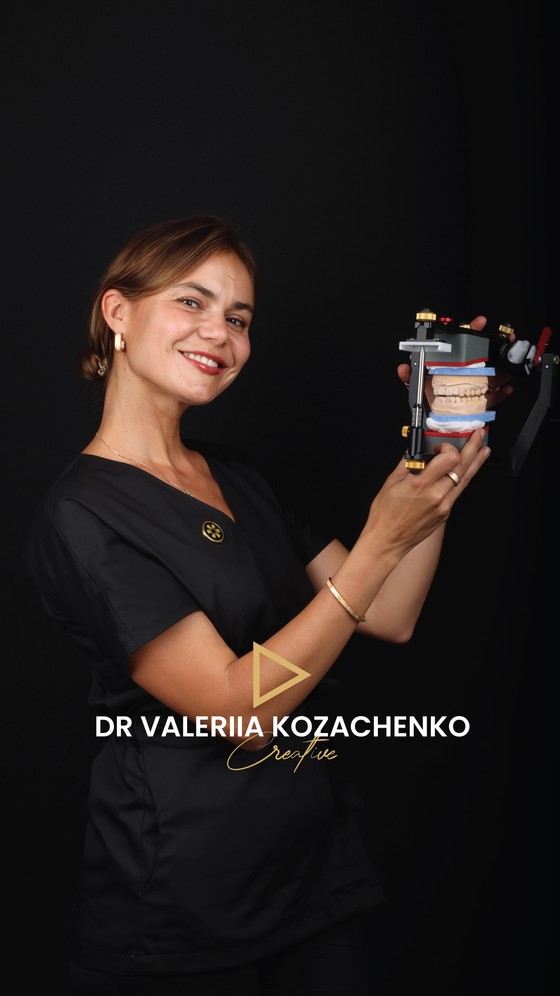
Before treatmentBite cases are diagnosed and treated by the two specialist orthodontists of our orthodontic team. Dr. Valeriia Kozachenko has a particular focus on jaw function.
Strictly, overbite is the normal vertical overlap of the upper front teeth over the lower ones, and deep bite is when that overlap is excessive. In everyday use, people often say overbite when they mean upper teeth that stick forward, which dentists call overjet. The two can occur together, and the orthodontist will measure both.
Clear aligners can correct some mild underbites where the problem lies in the position of the teeth, often with elastics. They cannot change the size of the jaws, so a skeletal underbite is a different matter. Whether aligners or fixed braces suit your case is decided after records show what is causing the underbite.
Not always. Many adults with a mild or moderate underbite can have it improved with orthodontics alone by moving the teeth to compensate. When the lower jaw is markedly longer or the upper jaw markedly smaller, the bite and profile may only be fully corrected by combining orthodontics with jaw surgery, carried out by a maxillofacial surgeon.
An orthodontic assessment around age seven is a sensible time, because the first permanent molars and front teeth are coming through and problems such as crossbites and jaw shifts become visible. Most children seen at that age need no treatment yet; the check decides whether monitoring or earlier action makes sense, case by case.
Sometimes it contributes, but jaw pain has many causes, including clenching, grinding, stress and joint changes, and many people with marked bite problems have no pain. A TMJ assessment looks at the joint and muscles before anyone assumes the bite is responsible.
Comprehensive orthodontic treatment typically takes around 12 to 24 months. Simpler tooth-level problems can be quicker; skeletal cases, expansion or combined surgical treatment usually take longer. Your written plan gives an estimate once records have been reviewed.
Teeth can drift after any orthodontic treatment, and open bites and deep bites are among the more relapse-prone corrections. Retention with a bonded wire, a removable retainer or both is therefore planned from the start and continued long term.
Tell us what you would like to change. The clinic replies within working hours with an appointment time.
Or call us +971 4 342 4444Or message us on WhatsApp
A consultation ends with a diagnosis and a written, itemised plan — not a sales pitch. Book online, message us on WhatsApp, or call the clinic.