
Guided Biofilm Therapy: modern hygiene, explained
What Guided Biofilm Therapy is, how the eight-step protocol works, why it is more comfortable than traditional scaling, and how often you should have it — explained by our hygiene team.
Last medically reviewed: 12 October 2026

Smiles made at Creative Arts
Designed in the clinic and made by hand in Creative Art Dental Lab, in the same building in Jumeirah, Dubai.


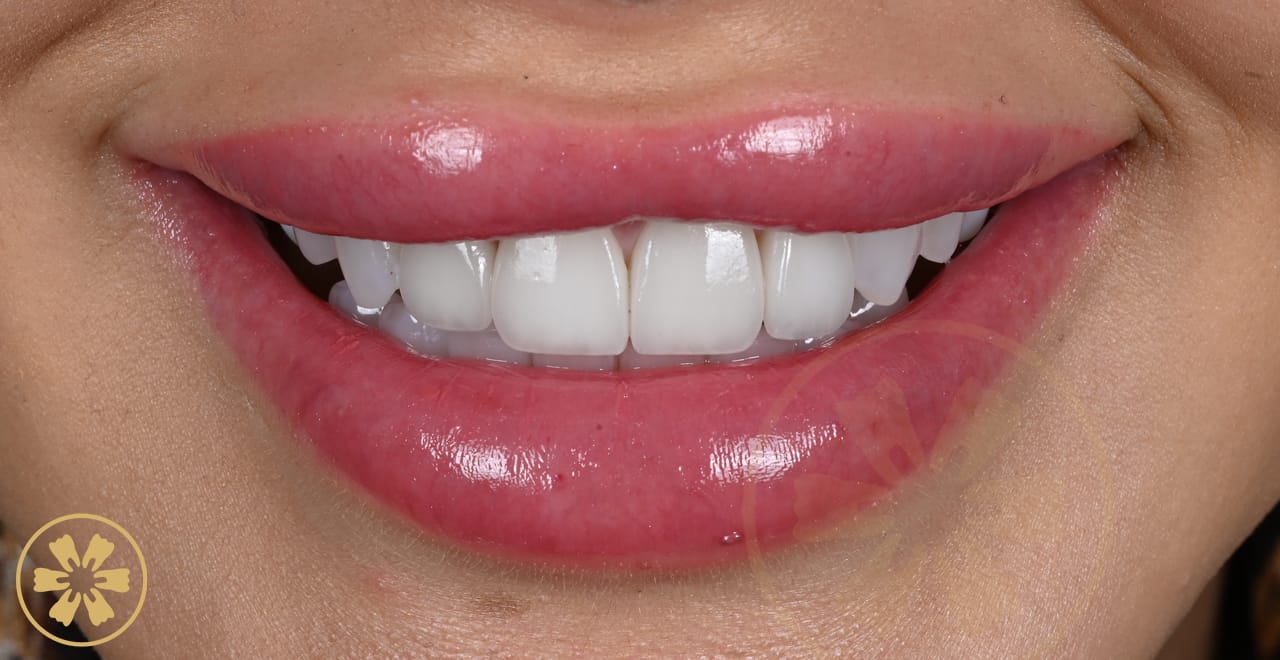


Most people’s mental model of a dental cleaning is a metal scaler, some scraping, and a gritty polish at the end. Guided Biofilm Therapy inverts that sequence. Studies show clinical results comparable to other non-surgical cleaning, and it is often more comfortable, with less instrumentation of clean surfaces.
The problem GBT solves
Biofilm is the organised community of bacteria that forms on teeth within hours of cleaning. It is the origin of both decay and gum disease. Its defining property is that it is invisible — you cannot reliably see it, and neither can a clinician.
Traditional cleaning therefore works from assumption: scale everything, polish everything, hope nothing was missed. That approach over-instruments clean surfaces and can be uncomfortable.
GBT makes the biofilm visible first, then removes it in order of what is actually there.
Questions about your own teeth? Send a photo on WhatsApp and the clinic will tell you what an examination would check.
WhatsApp usThe eight-step protocol
1. Assess
Examine teeth and gums, probe pocket depths, and check implants and restorations. Every appointment starts with a current picture, not last year’s notes.
2. Disclose
A dye is applied that stains biofilm. It becomes plainly visible — to the clinician and to you, in a mirror. This is diagnostic and educational at once: you see exactly where your brushing is missing.
3. Motivate
Using what the disclosing agent revealed, we show you the specific areas you are missing and adjust technique. This is the step with the largest long-term impact, and the one most often rushed.
4. Airflow
Warm water, air and a fine erythritol powder remove stained biofilm and surface staining from enamel, along the gum line and in the spaces between teeth. It is gentle enough for soft tissue and safe on ceramic and implant surfaces.
5. Perioflow
For deeper pockets around teeth and implants, a specialised nozzle delivers powder below the gum line where instruments reach poorly and cause discomfort.
6. Piezon
Only now — and only where deposits remain — is an ultrasonic scaler used to remove hardened calculus. Because disclosing showed exactly where it is, instrumentation is targeted instead of applied everywhere.
7. Check
Re-examine to confirm all biofilm and calculus are gone. Apply fluoride where indicated.
8. Recall
Set the next interval based on your risk profile rather than a default six months.
Why the order matters
The sequence is the innovation. Conventional cleaning scales first and polishes last. GBT discloses first, removes biofilm gently, and reserves hard instrumentation for the minority of surfaces that genuinely need it.
The consequences:
- Less instrumentation of clean surfaces — metal instruments are used only where required.
- Less discomfort — most of the work is done with air, water and powder.
- Gentler on implant surfaces — conventional metal scalers can scratch implant surfaces, creating sites where bacteria adhere more readily.
- Genuine patient education — seeing your own biofilm changes behaviour far more effectively than being told about it.
- No gritty polish paste — the airflow step replaces it.
Who benefits most
- Implant patients — peri-implantitis is the leading cause of late implant failure, and appropriate maintenance is preventive.
- Orthodontic patients — brackets and aligner attachments trap biofilm in places brushing struggles to reach.
- Patients with veneers or crowns — non-abrasive cleaning that will not dull ceramic surfaces.
- Anyone who dreads the hygienist — comfort is the most common reason people avoid appointments, and avoidance is what causes the expensive problems.
- Patients with gum disease history — targeted subgingival cleaning where it matters.
How often should you come?
Risk-based recall replaces the fixed six-month convention:
| Risk profile | Typical interval |
|---|---|
| Healthy gums, good home care, no restorations | 6 months |
| Implants, orthodontics, or heavy staining | 4 months |
| History of periodontitis, diabetes, or smoking | 3 months |
Your interval is set at the appointment, based on what we find.
What it does not do
GBT is preventive and therapeutic maintenance. It does not:
- Change the intrinsic colour of teeth — that requires whitening
- Treat advanced periodontitis alone — that needs a structured periodontal course
- Repair existing decay
Being clear about scope matters. GBT is the foundation that protects everything else.
Next step
If it has been more than six months, or you have implants or orthodontic appliances that need appropriate maintenance, a GBT appointment is the right starting point.
Further reading from independent sources
Independent sources for readers who want the wider evidence on this topic. Study figures are averages, not a promise for any one patient.
- Medicina. Effectiveness and Clinical Performance of Erythritol Air-Polishing in Non-Surgical Periodontal Therapy: A Systematic Review of Randomized Clinical Trials, 2022.
- NICE. Dental checks: intervals between oral health reviews (CG19), 2004.
- American Academy of Periodontology. Peri-Implant Diseases.
- Cochrane. Featured Review: Routine scale and polish for periodontal health in adults, 2019.
Frequently asked questions
Is GBT painful?
It is markedly more comfortable than traditional scaling and polishing. The airflow powders are fine and low-abrasive, and warm water reduces sensitivity. Most patients who found conventional cleaning unpleasant report GBT as comfortable.
How often should I have GBT?
Risk-based, not fixed. Low-risk patients with healthy gums generally attend every six months. Patients with a history of gum disease, implants, orthodontic appliances, diabetes or smoking often need three to four month intervals.
Is GBT safe for implants and veneers?
Yes — this is one of its principal advantages. Erythritol powder and the appropriate tips clean around implants, veneers, crowns and orthodontic appliances without scratching ceramic surfaces or damaging implant surfaces the way metal instruments can.
Will GBT whiten my teeth?
It removes surface staining from coffee, tea, wine and smoking, which often makes teeth appear noticeably brighter. It does not change the intrinsic colour of the tooth — that requires whitening treatment.


