What are the types of Hollywood smile?
Hollywood smiles differ in three ways: material (E.max lithium disilicate, feldspathic porcelain, zirconia or composite), how much tooth is prepared (no-prep, minimal-prep or conventional), and style (natural or bright). Some patients also use the term for a full set of crowns. At Creative Arts in Dubai the combination is chosen after examination, and you see the design as a mock-up before any tooth is prepared.
What counts as a Hollywood smile?
"Hollywood smile" is not a clinical term. It usually means a coordinated set of veneers, or sometimes crowns, covering the upper teeth that show when you smile, often eight to ten of them, occasionally the lower teeth too, designed as one smile rather than tooth by tooth.
Because it is a description of a result, the "type" depends on three separate choices:
- Material: which ceramic or resin the teeth are made from.
- Preparation: how much natural tooth is reshaped, from none to a full crown.
- Style: how bright, translucent and characterised the finished teeth look.
So a real plan is a combination, for example an E.max, minimal-prep, natural-style smile. Understanding each choice on its own makes it much easier to compare quotes and designs. If you are unsure whether you need a full smile or just a few veneers, start with Hollywood smile vs veneers.
Hollywood smile types by material
The four materials used for full smiles. All the ceramics listed are made in our own laboratory; the right one depends on your teeth and bite.
| Material | What it is | Strengths | Limits | Often chosen for |
|---|---|---|---|---|
| E.max (lithium disilicate) | A strong glass-ceramic, pressed or milled | Good balance of strength and translucency; can be thin | Less able to hide very dark teeth when thin | Most full-smile cases with reasonably healthy teeth |
| Feldspathic porcelain | Ceramic built up in fine layers by hand | Very lifelike depth and translucency; very thin | More fragile before bonding; needs good enamel | Thin, highly aesthetic cases with healthy enamel |
| Zirconia (layered) | A very strong ceramic core with hand-applied ceramic on top | High strength; good at masking dark teeth | More opaque; needs more space | Dark teeth, existing crowns, heavy bites |
| Composite | Tooth-coloured resin shaped directly on the teeth | Little or no drilling; repairable; fewer visits | Stains and wears faster; shorter lifespan | Trying a change, younger patients, tight budgets |
Lifespans depend on the bite, grinding and aftercare more than on the label. See also our overview of types of veneers.
The ceramic types in more detail
E.max Hollywood smile. Lithium disilicate is the most common choice for a full ceramic smile because it combines strength with translucency and bonds well to enamel. It can be made thin for conservative cases or slightly thicker and more masking where teeth are discoloured. Our page on E.max veneers explains how it is designed and made.
Feldspathic porcelain. Built up by hand in layers, feldspathic porcelain gives the most natural depth and can be extremely thin. It suits patients with good enamel and a modest colour change. It is more delicate until bonded, so case selection matters. See feldspathic veneers.
Zirconia. Zirconia is the strongest option and blocks dark colours well, which makes it useful over heavily stained or root-treated teeth, around existing crowns, or for strong bites. On front teeth it is usually layered with ceramic so it does not look flat. The trade-offs are covered in our guide to the zirconia Hollywood smile.
One smile can combine materials, for example E.max veneers on healthy teeth with zirconia crowns on two root-treated ones, provided they are layered to match.
Composite Hollywood smile: the non-ceramic option
A composite smile uses tooth-coloured resin sculpted directly onto the teeth, usually with little or no drilling, and is often completed in fewer, longer visits than ceramic. It is easier to repair and partly reversible, which makes it a reasonable way to test a new shape or to wait until a later ceramic plan.
The trade-offs are real: composite picks up stain from coffee, tea and smoking, loses its polish, chips more easily and generally needs refurbishing or replacing sooner than ceramic. Regular polishing is part of owning one. Our guide to the composite Hollywood smile covers who it suits and how to look after it.
Hollywood smile types by preparation
How much tooth is reshaped matters more for your long-term dental health than the brand of ceramic.
| Preparation | Tooth reduction | Works when | Watch-outs |
|---|---|---|---|
| No-prep | None, or only smoothing | Teeth are small, short, spaced or slightly behind the arch | Can look bulky if teeth are already full or forward |
| Minimal-prep | A fraction of a millimetre, mostly in enamel | Moderate colour or shape change on well-aligned teeth | Very dark teeth may need more thickness |
| Conventional veneers | More reduction on the front and edge | Larger colour change or reshaping crooked teeth | Irreversible; requires a committed long-term plan |
| Full crowns | Reduction all around the tooth | Teeth are heavily filled, cracked or root-treated | Removes the most tooth; not needed for healthy teeth |
Whether the no-prep route can work for you is explained in Hollywood smile without filing; crowns versus veneers in Hollywood smile: crowns or veneers?
Natural, bright or somewhere in between
The same material and preparation can produce very different looks. Style is a design decision you make with your dentist.
Natural
A shade close to the whites of your eyes, translucent edges, gentle texture and slight variation between teeth. People see a healthy smile rather than dental work. See the natural Hollywood smile.
Bright
Very light shades with higher opacity and smoother surfaces. Striking on camera; can look artificial against some skin tones or in daylight if pushed too far.
Balanced
Lighter than your current teeth, with natural texture and translucency kept. A common choice when patients want a visible change that still reads as their own teeth.
Designed to you
Shape, length and edge line follow your face and lips. Our page on smile design styles shows how shape and shade combine.
Want to see which combination of material, preparation and style suits your teeth? Find out how a Hollywood smile is planned at Creative Arts, from examination to mock-up and fitting.
Explore the Hollywood smileHow the right type is chosen for you
The type follows your starting point, not a menu. The dentist weighs:
- Starting colour. Darker teeth need more masking, which means more thickness, a more opaque ceramic or zirconia.
- Alignment. Crowded or rotated teeth may need more preparation to look straight, or orthodontic treatment first to keep preparation minimal.
- Existing work. Crowns, large fillings and root-treated teeth often push those teeth towards full coverage.
- Bite and grinding. Heavy bites or grinding favour stronger materials and a night guard.
- How many teeth show. A wide smile may need more units so the sides do not look darker. See how many veneers you need.
- Your priorities. Lifespan, maintenance, how much tooth you want to keep and the look you want.
The result is shown to you as a digital design and then a mock-up on your own teeth. You can change the style at that stage, before anything irreversible happens. Your written plan sets out the materials per tooth and the alternatives.
There is no premium type, only a suitable one
Zirconia is not an upgrade from E.max, and a no-prep smile is not automatically better than minimal prep. The right type is the one that gives the look you want with the least tooth removed and a realistic maintenance plan for your mouth.
Who plans Hollywood smiles at Creative Arts
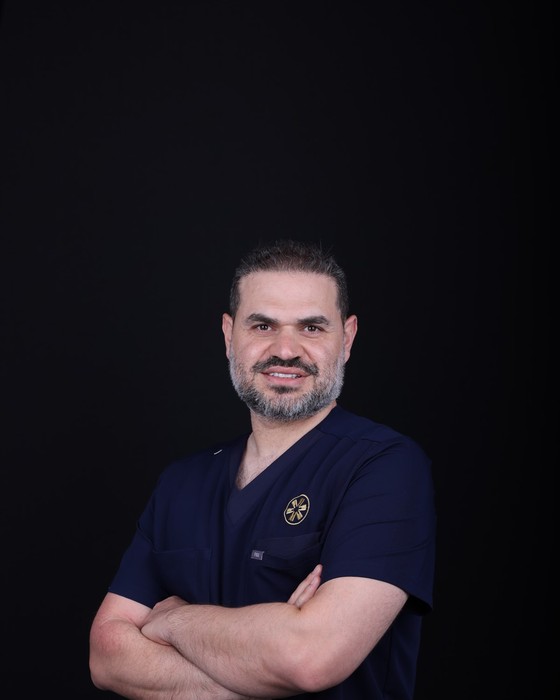
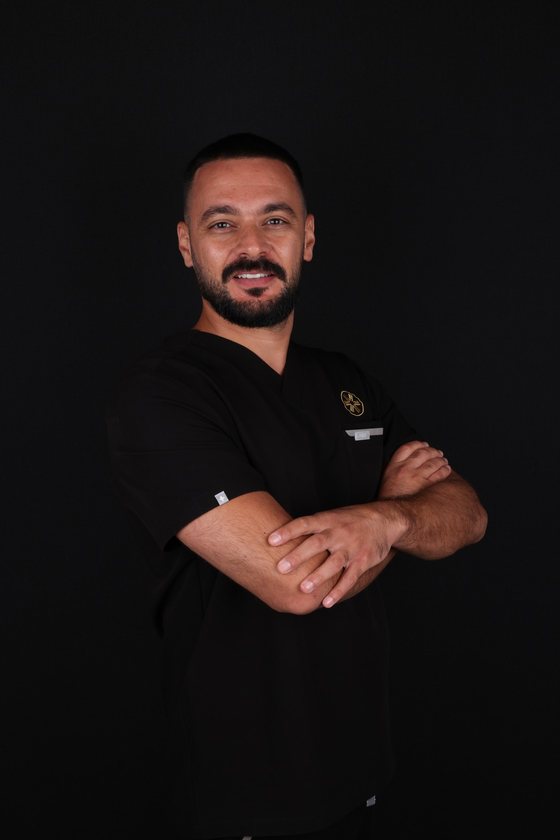
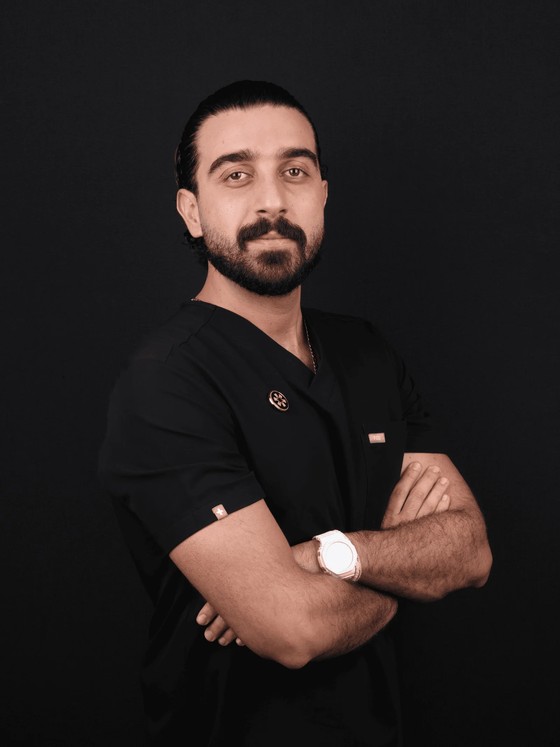
Dr. Khalid Saeed, Dr. Kinan Bonni and Dr. Somar Dahdal examine, design and fit full-smile cases, working with Creative Art Dental Lab in the same building.