An adult front tooth that is late
A baby incisor has fallen out, or the tooth on the other side came through months ago, but the permanent incisor has not appeared. An unerupted extra tooth in the way is one of the classic causes.
An extra tooth is often discovered by chance on an X-ray. Some cause no trouble and are simply watched; others stop an adult front tooth coming through and are best removed at the right time.
Bring any X-rays or reports you already have, including those taken elsewhere.
Not always. Extra teeth (supernumerary teeth) are removed when they cause or threaten a problem: blocking or displacing an adult tooth, creating a gap or crowding, getting in the way of braces, or forming a cyst. An extra tooth that sits quietly and affects nothing may simply be monitored with X-rays. At Creative Arts in Dubai the decision is made after an examination and imaging, with the orthodontist involved when the bite is affected.
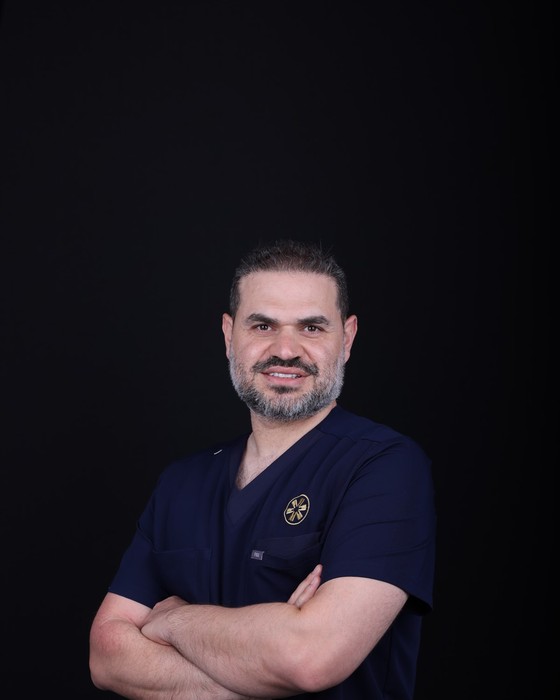
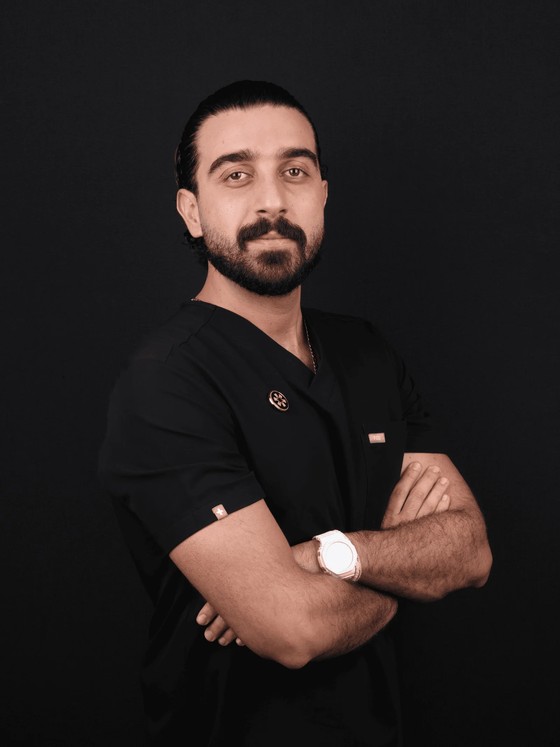
Who treats you here Dr. Firas Osman Oral & Maxillofacial Surgeon & Implantologist · Dr. Khalid Saeed Co-founder & Dentist · Dr. Somar Dahdal General Dentist
Every dentist’s licence can be checked on the DHA Sheryan medical directory.
Many extra teeth never come through the gum, so the first clue is often something that has not happened rather than something you can see.
A baby incisor has fallen out, or the tooth on the other side came through months ago, but the permanent incisor has not appeared. An unerupted extra tooth in the way is one of the classic causes.
An extra tooth between or behind the upper front teeth can hold them apart, rotate one of them or push it forwards or backwards.
Some come through, often behind or between the upper front teeth. They are frequently cone-shaped or smaller than their neighbours.
Adults and children often learn they have an extra tooth from a routine X-ray, an orthodontic assessment or a scan taken for another reason.
Supernumerary teeth, also called hyperdontia, are teeth in addition to the normal set of 20 baby teeth or 32 adult teeth. They are more common in the permanent teeth than in baby teeth and can appear anywhere in the jaws, but most are found in the upper jaw.
The most common type is a mesiodens: an extra tooth in the midline between or behind the two upper central incisors. A review of the literature in the Journal of Dentistry (Tehran) describes mesiodens as the most common supernumerary tooth and reports that it is seen more often in males. Mesiodens are usually small and cone-shaped; some are inverted, pointing up towards the nose, and these rarely come through on their own.
Other extra teeth include additional premolars and fourth molars behind the wisdom teeth, which are often found on X-rays taken before wisdom tooth removal. Some extra teeth look exactly like their neighbours (supplemental teeth), which can make it hard to tell which tooth is the extra one without an X-ray.
The cause is not fully understood. Family history plays a part, and multiple extra teeth are associated with some conditions, such as cleft lip and palate and cleidocranial dysplasia. For most people, though, a single extra tooth is an isolated finding with no wider significance.
It can. The same review lists delayed eruption and displacement of the permanent incisors as the most frequent problems. Whether yours is causing trouble depends on where it sits.
| What the extra tooth can do | What you or the dentist notice | Why it matters |
|---|---|---|
| Delay an adult tooth | A permanent incisor is months late or one side erupts long before the other | The blocked tooth may need help to come through, and the longer the delay the more complex that becomes |
| Displace or rotate neighbours | A front tooth is turned, tipped or out of the arch | Alignment and bite are affected; braces may be needed after removal |
| Create a gap | A space between the upper front teeth that does not close | Closing the gap is difficult while the extra tooth is still there |
| Cause crowding | Not enough room for the normal teeth | Can lead to overlapping teeth and harder cleaning |
| Form a cyst or damage roots | Usually silent; seen on an X-ray | Uncommon, but a reason to remove a tooth that otherwise causes no symptoms |
Not every late tooth has an extra tooth behind it. Eruption timing varies; our guide to late teething explains normal ranges, and some people are instead missing a tooth, as described on congenitally missing teeth.
The aim is to find out exactly where the tooth is, what it is touching, and what would happen if it were left alone.
The dentist checks which teeth have come through, compares the two sides, and asks about family history and any earlier X-rays.
Visit 1A two-dimensional X-ray shows whether there is an extra tooth and roughly where it lies. It may be the first time the tooth is seen at all.
Visit 1If removal is being considered, a CBCT scan shows whether the tooth lies in front of or behind the other roots, how close it is to the nose or nerves, and the safest way to reach it.
If neededWhen the bite, a gap or a delayed incisor is involved, our specialist orthodontists look at the timing and whether braces will be needed afterwards.
If neededYou receive a written, itemised plan explaining whether to remove or monitor, the timing, the anaesthesia options and the alternatives.
Before treatmentOptions run from simply watching to surgery combined with orthodontics. Most cases need only one or two of these.
| Option | When it fits | What to expect |
|---|---|---|
| Monitoring | The extra tooth causes no problem, is not in the path of other teeth and no orthodontic work is planned nearby | Review with an X-ray at intervals the dentist sets; removal is reconsidered if anything changes |
| Simple extraction | The extra tooth has come through the gum and is crowding or displacing others | Usually a short procedure under local anaesthetic, similar to a routine tooth extraction |
| Surgical removal | An unerupted extra tooth is blocking an adult tooth, will obstruct braces, or shows a cyst | A small opening in the gum and bone to remove the tooth, planned from the CBCT scan; stitches and a review afterwards |
| Orthodontic treatment | A gap, rotation or crowding remains, or space must be made for the blocked tooth | Braces or aligners planned by the orthodontic team, often after removal |
| Exposure of a blocked adult tooth | The permanent tooth still does not come through after the extra tooth is removed | The tooth is uncovered and guided into place with braces, similar to the approach for an impacted canine |
In children, early removal during the mixed-teeth stage is often favoured so the adult incisor has a better chance of coming through by itself; an extra tooth that affects nothing may be left and watched.
Most extra teeth are removed under local anaesthetic. Adults and older children usually manage well with local anaesthetic alone, and discomfort afterwards is typically controlled with over-the-counter pain relief as advised.
For anxious patients, or for a deeply placed tooth, conscious sedation may be discussed. The option is chosen after a review of your medical history, and sedation is given and monitored by an appropriately qualified, licensed clinician. For a young child who needs surgery, the comfort plan is discussed with the parents at the assessment, including whether any treatment would be done at the clinic or by referral.
Healing after removal is usually straightforward: some swelling and tenderness for a few days, soft food and careful cleaning around the area. The surgical team gives written aftercare, and our guide to stitches after extraction explains what to expect from the sutures.
an adult front tooth is more than a few months late compared with the other side; there is swelling, pain or a discharge near an extra tooth; a tooth is being pushed visibly out of line; or a child injures an area where an extra tooth is known to be. The clinic is open daily, 10:00–20:00, and is not a 24-hour service. Facial swelling with fever, difficulty breathing or swallowing, or swelling spreading to the eye or neck needs a hospital emergency department straight away.
An extra tooth on an X-ray can sound alarming. Most cases are simple once the position is clear.
Dr. Firas Osman, Oral & Maxillofacial Surgeon & Implantologist, with Dr. Khalid Saeed and Dr. Somar Dahdal, who carry out extractions and oral surgery at the clinic, assess extra teeth and plan their removal, working with our specialist orthodontists when the bite is involved.
Clinical statements on this page are consistent with these independent sources. They describe averages from studies, not a promise for any one patient.
The exact cause is not known. Extra teeth seem to form when the tissue that builds teeth is more active than usual in one area, and family history plays a part. Multiple extra teeth are linked with a few conditions, such as cleft lip and palate and cleidocranial dysplasia, but a single extra tooth is usually an isolated finding in an otherwise healthy person.
It can. An extra tooth in the path of an adult incisor is one of the commonest reasons a front tooth is late, and it can also rotate or displace neighbouring teeth. An X-ray shows whether the extra tooth is actually in the way. If it is, removing it in good time often lets the adult tooth come through without further help.
A mesiodens is usually removed when it is delaying or displacing an upper front tooth, holding a gap open, getting in the way of planned braces, or associated with a cyst. In children this is often done during the mixed-teeth stage to give the adult incisor a better chance. A mesiodens causing no problems may be monitored instead.
Most extra teeth are removed under local anaesthetic. Conscious sedation may be discussed for anxious patients or a deeply placed tooth, after a medical-history review, with sedation given and monitored by an appropriately qualified clinician. For young children the comfort plan is discussed with parents at the assessment, including whether treatment would take place at the clinic or by referral.
Often, yes. If an extra tooth has been stable for years, is not damaging other roots, shows no cyst and is not in the way of orthodontic or implant treatment, monitoring is a reasonable choice. The dentist will suggest how often to check it with an X-ray. Removal is reconsidered if symptoms appear or if other treatment in that area is planned.
Not always. Sometimes the adult tooth comes through and straightens on its own once the obstruction is gone. If a gap stays open, a tooth is rotated, or the adult incisor does not appear after several months, an orthodontic assessment is the next step. Braces or aligners, and occasionally exposure of the blocked tooth, may then be planned.
An extra molar behind a wisdom tooth, sometimes called a fourth molar, is often found on X-rays before wisdom tooth surgery. If it is buried and causing nothing, it may be left. If it is next to a wisdom tooth that is being removed, or is linked to gum infection or a cyst, removing it at the same time may be discussed.
Creative Arts has a single clinic on Jumeira Street (Jumeirah Beach Road). Ask about parking when you book.
Our clinic in Jumeirah Open in Google Maps · Rated 4.8 on Google from 238 patient reviews (October 2026) — read them
Tell us what you would like to change. The clinic replies within working hours with an appointment time.
Or call us +971 4 342 4444Or message us on WhatsApp
A consultation ends with a diagnosis and a written, itemised plan — not a sales pitch. Book online, message us on WhatsApp, or call the clinic.