A baby tooth that will not fall out
A baby tooth still firm well after its usual time, often a lower back baby molar or an upper side tooth, may have no adult tooth underneath.
Some adult teeth simply never develop. The decisions that matter most, whether to close the gap or keep it for a replacement, are made in the early teens, long before an implant is possible.
Bring any X-rays or orthodontic records you already have; they help show how the teeth have developed.
Congenitally missing teeth are adult teeth that never formed, also called hypodontia. Apart from wisdom teeth, the upper lateral incisors and lower second premolars are the teeth most often affected. Treatment either closes the space with braces or keeps it for a replacement such as a bonded bridge or, once jaw growth has finished, an implant. At Creative Arts in Dubai, a specialist orthodontist and the implant team plan the options together.
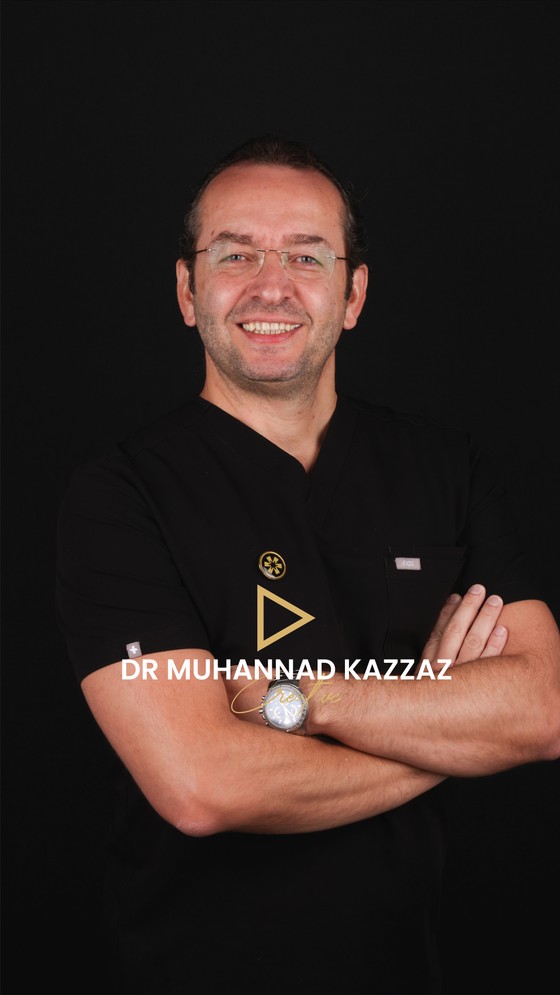
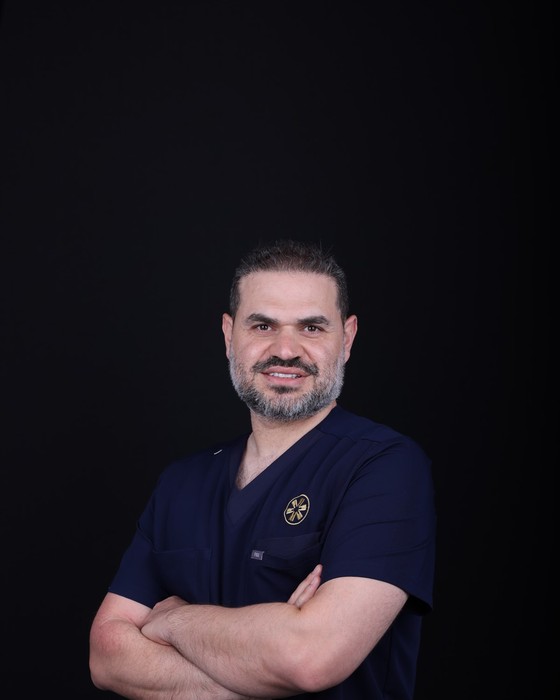
Who treats you here Dr. Muhannad Kazzaz Specialist Orthodontist · Dr. Firas Osman Oral & Maxillofacial Surgeon & Implantologist · Dr. Khalid Saeed Co-founder & Dentist
Every dentist’s licence can be checked on the DHA Sheryan medical directory.
Every tooth starts as a small bud of tissue in the jaw, long before birth for baby teeth and in early childhood for most adult teeth. In congenitally missing teeth, the bud for a particular adult tooth never develops, so there is nothing to grow. It is one of the most common developmental differences in the mouth, it often runs in families, and it is not caused by anything a parent did or did not do.
Missing teeth often come with related features: a neighbouring tooth that is small or peg-shaped (especially the other upper lateral incisor), baby teeth that stay well past the usual age, spacing, or adult teeth that come through late. When many teeth are missing, particularly with differences in hair, skin, nails or sweating, the dentist may suggest a medical opinion, because a small number of people have a wider condition such as ectodermal dysplasia.
Most cases are found on a routine X-ray. These are the signs that prompt one.
A baby tooth still firm well after its usual time, often a lower back baby molar or an upper side tooth, may have no adult tooth underneath.
Space between the upper central incisor and the canine, or a canine erupting right next to the front tooth, suggests a missing lateral incisor.
A peg-shaped lateral incisor on one side often goes with a missing one on the other.
A retained baby molar can look lower than its neighbours over time as the surrounding teeth and bone keep growing.
Many plans combine several of these over a number of years. The right mix depends on the bite, the space, the shape and colour of the neighbouring teeth, and the patient's wishes.
| Option | When it fits | What it involves |
|---|---|---|
| Keep a healthy baby tooth | The baby tooth is firm, well positioned and has good roots | Monitoring; it may last years, sometimes into adulthood |
| Close the space with braces | Crowding, a suitable bite and canines that can be shaped to look like side teeth | Braces or aligners move teeth forward; the canine is reshaped and often bonded |
| Open or keep the space with braces | The bite or face suits keeping the gap for a replacement | Orthodontics positions the teeth and sets the space; a retainer holds it |
| Resin-bonded (Maryland) bridge | Front gaps, especially while growth continues | A false tooth bonded to the back of a neighbour with minimal filing |
| Dental implant | Jaw growth has finished and there is enough bone and root space | 3D CBCT planning, implant placement and a crown; sometimes a bone graft first |
| Conventional bridge | Neighbouring teeth already need crowns | Neighbours are filed down to carry the false tooth |
| Bonding or veneers on small teeth | Peg-shaped or narrow neighbouring teeth | Composite bonding to build up size; veneers in adulthood if needed |
Each option is set out in a written plan with its timing and alternatives before treatment begins.
For a missing upper lateral incisor, this is the central question, and there is no single right answer. Closing the space moves the canine forward into the lateral position. Its advantages are that the result uses only natural teeth, with no implant or bridge to maintain for life. Its trade-offs are that canines are wider, more pointed and often a little darker than lateral incisors, so they usually need reshaping and sometimes bonding to blend in, and the bite at the side of the mouth has to be adapted.
Keeping the space places the teeth so the gap matches the missing tooth, giving a more symmetrical smile once it is filled. The trade-off is a long period with a temporary tooth, then an implant or bridge that needs lifelong care. Factors that tip the balance include crowding, the bite, the facial profile, the size and colour of the canines, and how the gum line will look. Dr. Muhannad Kazzaz, Specialist Orthodontist, assesses these with the patient and family, and the implant team is involved early if keeping the space is chosen. Our guide to gaps between a child's front teeth explains which gaps are normal while teeth are still coming through.
Only once the jaws have stopped growing. A natural tooth keeps erupting slowly as the face grows, but an implant is fixed in the bone like an anchor. If it is placed too early, the surrounding teeth carry on moving down with growth and the implant crown ends up looking shorter and higher than its neighbours, which is hard to correct. Growth often finishes in the late teens or early twenties, earlier in many girls than boys, but it varies, so it is judged from the individual's growth records rather than age alone.
Until then, the space is held and the tooth replaced temporarily, most often with a retainer carrying a false tooth or a Maryland bridge. When the time comes, a 3D CBCT scan checks the bone width and the space between the neighbouring roots, which orthodontics must leave wide enough. Implant surgery at Creative Arts is carried out by Dr. Firas Osman, Oral & Maxillofacial Surgeon & Implantologist, and Dr. Khalid Saeed; see front tooth implants.
Not straight away. A baby tooth with no adult tooth beneath it can stay healthy and useful for many years, sometimes well into adulthood, and keeping it also preserves the bone around it. It is monitored for root shortening, looseness, decay and sinking below the level of the other teeth. Planning ahead matters: when it eventually needs removing, the options are the same as for any missing tooth, and our guide to what happens if a missing tooth is not replaced explains why the timing of that step counts.
Dr. Muhannad Kazzaz, Specialist Orthodontist, manages the space and the timing. Dr. Firas Osman, Oral & Maxillofacial Surgeon & Implantologist, and Dr. Khalid Saeed plan and place implants once growth allows, with crowns made by Creative Art Dental Lab in the same building.
Missing wisdom teeth are very common, and missing other adult teeth is one of the most frequent developmental differences dentists see. After wisdom teeth, the lower second premolars and upper lateral incisors are the teeth most often affected. It frequently runs in families, so if a parent or sibling has a missing tooth, it is worth mentioning at a child's check-up.
They are often spotted on an X-ray in childhood, once the adult teeth should be visible developing under the gum, or later when a baby tooth fails to fall out. An early orthodontic assessment is a good point to check, because knowing early gives more time to plan whether to close or keep the space.
Sometimes. Braces can close the space by moving the canine into the lateral incisor position, then the canine is reshaped and often bonded so it looks like a side tooth. This suits some bites and faces better than others. If the space is kept instead, braces position the teeth and a bridge or implant fills the gap later.
Not always. An implant is a strong long-term option once jaw growth has finished and there is enough bone and root space, but closing the space with braces or using a bonded bridge can suit some patients better. The choice depends on the bite, the neighbouring teeth, appearance and personal preference, and is made after a joint orthodontic and implant assessment.
The usual options are a removable retainer carrying a false tooth, worn after braces, or a resin-bonded (Maryland) bridge, a false tooth glued to the back of a neighbouring tooth with minimal filing. Both hold the space and look natural. The orthodontist and dentist choose based on the bite and how long the wait is likely to be.
Genetics play a large part. Missing teeth often run in families, and several genes involved in tooth development have been linked to it. It is not caused by diet, illness or anything parents did. When many teeth are missing along with differences in hair, skin, nails or sweating, a medical opinion may be suggested to look for a wider condition.
Creative Arts has a single clinic on Jumeira Street (Jumeirah Beach Road). Ask about parking when you book.
Our clinic in Jumeirah Open in Google Maps · Rated 4.8 on Google from 238 patient reviews (October 2026) — read them
Tell us what you would like to change. The clinic replies within working hours with an appointment time.
Or call us +971 4 342 4444Or message us on WhatsApp
A consultation ends with a diagnosis and a written, itemised plan — not a sales pitch. Book online, message us on WhatsApp, or call the clinic.